Ebola | News
-
L'Express de Madagascar - 02:55 Aug 06, 2026
 Le gouvernement s’active pour prévenir l’Ebola. Le Conseil des ministres du 4 août a approuvé une communication verbale relative au renforcement des mesures de contrôle sanitaire aux frontières. L’aéroport d’Ivato est un potentiel point d’entrée d’Ebola dans le pays. Madagascar pourrait restreindre l’accès à ses frontières aux personnes en provenance de la zone épidémique d’Ebola. La Primature examine un projet de décision visant à empêcher l’introduction et la propagation du virus dans le pays. « Nous avons proposé d’interdire l’accès aux personnes en provenance des pays touchés par la maladie, comme l’Ouganda ou la République démocratique du Congo, à nos points d’entrée. C’est une des mesures que nous envisageons de prendre, parce que la circulation de l’Ebola fait énormément de victimes », indique un responsable auprès du ministère de la Santé publique, hier. Dans cette proposition, il est indiqué que, si des personnes en provenance de ces pays doivent entrer à Madagascar, comme des étudiants ou des missi...
 -
Adevarul Romania - 16:07 Aug 01, 2026
Organizația Mondială a Sănătății (OMS) avertizează că epidemia de Ebola din Republica Democrată Congo se intensifică într-un ritm „excepțional”, devenind cea mai mare epidemie înregistrată vreodată în această țară. -
JPost.com - Business & Innovation - 07:00 Jun 25, 2026
A document obtained by Walla Money reveals the costs of establishing the special complex for receiving patients, which was approved under an exemption from tender.
-
Dawn - 14:37 Jun 20, 2026
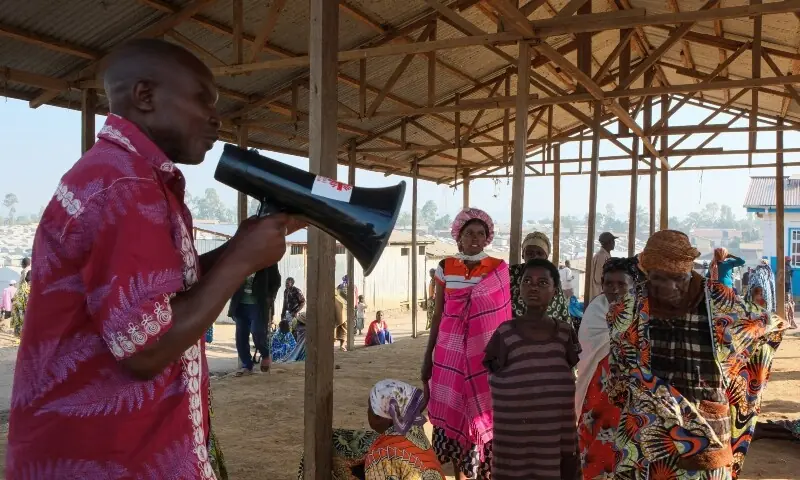 At least 30 people have died since the start of May in one camp for displaced civilians in northeastern Congo, a death rate that camp officials said was unprecedented, with some confirmed to have died from Ebola in a sign the disease could be spreading fast there. It was not possible to confirm the causes of all the deaths because patients or their relatives in Kigonze camp in Bunia — the epicentre of the Ebola outbreak in Democratic Republic of Congo (DRC) — had until Thursday refused testing, a camp spokesperson and aid organisation Caritas said. However, all had symptoms including headaches, fever and vomiting, which are associated with Ebola, a camp spokesperson, a bereaved father, three aid sources and a civil society leader told Reuters. People didn’t just die like this before, camp spokesperson Desire Grodya Bapi told Reuters. The deaths in Kigonze, which has more than 15,000 residents, raise fears that Ebola may be circulating undetected among eastern Congo’s over five million displaced people, with r...
 -
L'Express de Madagascar - 02:40 Jun 11, 2026
 Des passagers à l’aéroport international d’Ivato. Un dispositif de contrôle sanitaire est en place à l’aéroport international d’Ivato afin de prévenir tout risque d’importation de la maladie à virus Ebola. « Un suivi sanitaire est mis en place aux frontières pour les personnes en provenance des pays touchés par Ebola. Il s’agit d’une surveillance de routine pour les zones à risque », a indiqué le Dr Ravakasoa Harinavalona, chef du service de la veille et de la vigilance aux frontières, hier, lors d’une cérémonie de remise d’équipements de protection et de surveillance par le programme Strengthening Infectious Disease Detection Systems (STRIDES). Les passagers en provenance d’Ouganda et de la République démocratique du Congo font l’objet d’un suivi particulier. Celui-ci repose notamment sur une évaluation de leur état de santé à leur arrivée. « Une personne est considérée comme un cas suspect de la maladie à virus Ebola si elle arrive d’un pays touché par l’épidémie et présente des symptômes tels que la fièvre...
 -
Dawn - 13:16 Jun 02, 2026
The World Health Organization (WHO) on Tuesday dramatically scaled back the number of suspected Ebola cases in central Africa to 116, down from more than 900 previously, with 330 cases now confirmed. As of May 31, the WHO said 116 suspected cases of the deadly virus had been registered in the Democratic Republic of Congo (DRC) — down from 906 late last week. Some 321 cases have now been confirmed in the DRC, including 48 deaths, while nine confirmed cases have been registered in neighbouring Uganda, including one fatality. While some suspected cases have been confirmed, many more “have been cleared out” from the data after having been shown to have other diseases with similar early symptoms or an unlinked fever, said WHO spokesman Christian Lindmeier. He stressed that “anybody who gets picked up by surveillance or presents themselves in a health facility with any symptoms that could be Ebola-like” is counted as a suspected case in the outbreak, pending testing. The outbreak was declared on May 15 in conflict-... -
Dawn - 12:50 May 30, 2026
UN health chief Tedros Adhanom Ghebreyesus landed on Saturday in the eastern Democratic Republic of Congo (DRC) province worst-hit by a severe Ebola outbreak. The World Health Organisation’s director general told reporters in Bunia, capital of Ituri province, that the international community was helping the DRC government cope with the outbreak, but “at the same time, community ownership is important”. He said that was the reason for his trip: “We are here to discuss with the community, to see how the response is running and if there are challenges to help.” The highly contagious haemorrhagic fever is already present in three eastern DRC provinces and in neighbouring Uganda, where nine confirmed infections, including one death, have been recorded. There have been at least 1,077 suspected cases of Ebola in the DRC since the outbreak was declared on May 15, including 246 deaths, the Africa Centres for Disease Control and Prevention said on Thursday. The true reach of the outbreak in the DRC, which is thought to... -
Dawn - 16:04 May 29, 2026
The World Health Organisation (WHO) said on Friday that there were 906 suspected cases of Ebola in the Democratic Republic of Congo (DRC), including 223 suspected deaths that were being investigated. An outbreak of the Bundibugyo strain of Ebola is ongoing in the DRC, with cases also reported in Uganda. There have been 125 confirmed cases of Ebola in the DRC, including 17 confirmed deaths in Ituri, North Kivu and South Kivu. There have also been seven confirmed cases of Ebola in Uganda, three of which were imported from the DRC, and one death. However, no community transmission has been reported, the WHO said. The Ebola outbreak in eastern DRC likely started two months ago, the WHO said in early May. The outbreak of the rare Bundibugyo strain, for which there is no vaccine, was declared by the WHO a public health emergency of international concern. It has alarmed experts because of how long it went undetected while spreading across a densely populated area, making it difficult to trace and isolate the contact... -
Adevarul Romania - 16:24 May 27, 2026
Uganda a anunțat închiderea temporară a granițelor cu Republica Democratică Congo, ca măsură de urgență în fața extinderii epidemiei de Ebola din țara vecină, a declarat un oficial de rang înalt al Ministerului Sănătății din Kampala. -
Dawn - 12:57 May 25, 2026
World Health Organisation (WHO) Director-General Tedros Adhanom Ghebreyesus said on Monday that there had been 220 suspected deaths in the current Ebola outbreak and that a delay in detecting cases meant responders were now “playing catch-up”. “We are urgently scaling up operations, but at the moment the epidemic is outpacing us,” Tedros said, adding that countries bordering the Democratic Republic of Congo — the epicentre of the outbreak — should take immediate action. The WHO has declared the outbreak of the rare Bundibugyo strain of Ebola a public health emergency of international concern. Ebola is a deadly viral disease that spreads through direct contact with bodily fluids. It can cause severe bleeding and organ failure. The Bundibugyo strain has no approved vaccine or treatments. Tedros said he would travel to Congo on Tuesday and that addressing the fast-moving outbreak was complicated by the fact that Congo’s Ituri and North Kivu provinces were highly insecure and there were no approved vaccines for t... -
Dawn - 08:23 May 23, 2026
Pakistan has intensified screening measures at airports across the country, along with other precautionary steps, amid the recent Ebola virus outbreak in Africa, the health ministry said on Saturday. In a handout, the minister said Health Minister Mustafa Kamal had directed authorities to implement precautionary screening protocols at all airports to prevent the possible spread of the virus. The spread of the recent Ebola virus outbreak is limited to the Democratic Republic of Congo (DRC) and Uganda, and the risk to Pakistan is extremely low due to limited travel links with the affected countries, the health ministry said. The ministry added that the National Institutes of Health (NIH) and the World Health Organisation’s (WHO) office in Pakistan were continuously monitoring the situation. The ministry directed all provinces and the Border Health Services to remain on alert. The ministry also noted that Pakistan possessed the capacity to diagnose Ebola and said directives had been issued to ensure all necessar... -
Adevarul Romania - 21:39 May 22, 2026
O echipă de cercetători de la Universitatea Oxford lucrează la dezvoltarea unui nou vaccin împotriva Ebola, pe fondul unui focar care se răspândește rapid în Republica Democratică Congo. -
Dawn - 15:55 May 22, 2026
The risk from the deadly Ebola outbreak has been raised to the highest level for the Democratic Republic of Congo (DRC), the World Health Organisation (WHO) said Friday, as the toll continues to rise. The WHO upgraded its risk assessment level from high to very high for the DRC, while keeping the regional risk level at high and the global risk level at low. WHO chief Tedros Adhanom Ghebreyesus said the situation was “deeply worrisome”. He said there were now nearly 750 suspected cases in the DRC and 177 suspected deaths, as health workers scramble to track down contacts of everyone thought to be infected with the virus. “The Ebola outbreak in the Democratic Republic of the Congo is spreading rapidly,” he told a press conference. “So far, 82 cases have been confirmed in DRC, with seven confirmed deaths. “But we know the epidemic in DRC is much larger. There are now almost 750 suspected cases and 177 suspected deaths.” He said the situation in Uganda was “stable”, with two cases confirmed in people who travelle... -
Dawn - 13:03 May 20, 2026
The World Health Organisation (WHO) on Wednesday said the risk of the Democratic Republic of Congo’s (DRC) deadly Ebola outbreak was currently high at the national and regional levels but low worldwide. WHO experts said that while investigations into its origins were ongoing, given the scale of the situation in the eastern DRC, the outbreak probably began a couple of months ago. But the UN health agency’s emergency committee said it did not currently meet the pandemic emergency threshold. “WHO assesses the risk of the epidemic as high at the national and regional levels, and low at the global level,” said the organisation’s chief Tedros Adhanom Ghebreyesus. So far, 51 cases have been confirmed in the DRC, in the eastern provinces of Ituri and North Kivu, “although we know the scale of the epidemic in DRC is much larger,” he told a press conference at the WHO’s headquarters in Geneva. He said Uganda had also reported two confirmed cases in the capital Kampala, including one death, while a US national working i... -
Dawn - 13:10 May 19, 2026
The head of the World Health Organisation (WHO) on Tuesday expressed concern at the speed and scale of the Ebola outbreak in central Africa — declared a “continental” emergency — as the number of deaths in the Democratic Republic of Congo (DRC) jumped to 131. The toll from the Ebola outbreak in the DRC has risen to an estimated 131 deaths from 513 suspected cases, health minister Samuel Roger Kamba said. There has also been one death in neighbouring Uganda. However, speaking to Congolese national television overnight, Kamba cautioned that the toll was an estimate and further research was needed to confirm whether all 131 suspected deaths were indeed linked to Ebola. No vaccine or treatment exists for the Bundibugyo strain of Ebola behind the latest outbreak of the deadly disease, which has killed more than 15,000 people in Africa in the past half century. The outbreak’s epicentre is in the northeastern Ituri province on the border with Uganda and South Sudan, whose status as a gold-mining hub leads to people ... -
Dawn - 16:11 May 18, 2026
 By the time health officials confirmed new Ebola infections in eastern Democratic Republic of Congo last week, the total number of suspected cases meant the outbreak was already one of the largest on record. A series of challenges and missteps delayed detection, two Congolese officials familiar with the response told Reuters, allowing the disease to spread undetected into rebel-held territory in the east and across the border to the capital of Uganda. Local funeral practices helped the virus spread before any alarm was raised, diagnostic tests in a local laboratory were calibrated for the wrong strain of Ebola, and samples sent to Kinshasa were not stored or shipped properly, the officials said. Experts say the resulting delays risk hobbling efforts to contain the outbreak, which the World Health Organisation (WHO) at the weekend declared a public health emergency of international concern. “It’s just a scattered mess right now. I don’t think we have anything close to a real idea of how many cases there are,” ...
 -
ukrinform.net - 00:31 May 18, 2026
The World Health Organization has declared the Ebola outbreak in the Democratic Republic of the Congo and Uganda a public health emergency of international concern. -
Dawn - 12:00 May 17, 2026
The World Health Organisation (WHO) on Sunday declared an Ebola outbreak in the Democratic Republic of Congo (DRC) and Uganda a “public health emergency of international concern”, posing risks to neighbouring countries. The WHO said the outbreak, caused by the Bundibugyo virus, does not meet the criteria of a pandemic emergency, but that countries sharing land borders with the DRC are at high risk for further spread. The UN health agency said in a statement that 80 suspected deaths, eight laboratory-confirmed cases and 246 suspected cases had been reported as of Saturday in the DRC’s Ituri province across at least three health zones, including Bunia, Rwampara and Mongbwalu. International spread documented, WHO says The DRC health ministry had said on Friday that 80 people had died in the new outbreak in the eastern province. The 17th outbreak in the country, where Ebola was first identified in 1976, could in fact be much larger, given the high positivity rate of the initial samples and increasing number of su... -
Adevarul Romania - 14:16 May 16, 2026
Treisprezece cazuri de infectare cu varianta rară Bundibugyo a virusului Ebola au fost confirmate după izbucnirea unui nou focar în Republica Democrată Congo (RDC), a anunţat sâmbătă agenţia sanitară africană CDC, relatează DPA. -
Adevarul Romania - 20:06 May 15, 2026
O epidemie de Ebola a ucis 65 de persoane în Republica Democrată Congo , au declarat oficiali din domeniul sănătății.