New York | News
-
AD.nl - 17:18 Jul 07, 2026
Appartementencomplex met 37 verdiepingen in New York staat op instorten, meerdere straten afgesloten
Meerdere straten in het centrum van Manhattan zijn afgesloten vanwege instortingsgevaar van een wolkenkrabber. Volgens burgemeester Zohran Mamdani van New York blijft het 37 verdiepingen tellende gebouw bewegen. Hij beschreef de situatie als ernstig en heeft een groot gebied om de toren heen afgesloten. -
Cointelegraph.com - 09:20 Jul 06, 2026
 A Bitcoin address dormant for nearly 15 years moved $1.9 million in BTC as a New York lawsuit seeks ownership of thousands of inactive holdings. A dormant Bitcoin address transferred 30 BTC worth about $1.88 million for the first time in almost 15 years. Bitcoin address "1KV47" made its first outgoing transfer on Saturday since receiving 30 BTC in August 2011, blockchain data shared by Galaxy Research shows. The address is among 39,069 listed in a New York lawsuit filed by "Noah Doe" and two Wyoming-based companies seeking ownership of dormant Bitcoin holdings. The case could test how inactive cryptocurrency holdings are treated under the state's lost-property law. Read more
 -
Dawn - 02:31 Jul 04, 2026
WASHINGTON: Police in New York City said on Thursday a man died from severe burns near the United Nations headquarters, and activists and a media outlet of exiled Tibetans identified him as a Tibetan who set himself on fire in an appeal for independence. A New York City Police Department spokesman said police, responding to an emergency call made around 6:30pm ET (2230 GMT) on Thursday, found the man badly burned. He was taken to Bellevue Hospital where he was pronounced dead, police said, adding an investigation was ongoing. Police did not name the man and did not provide any potential motive for his action. Voice of Tibet, a media outlet of exiled Tibetans, said Tibetan activist Lobga Rangzen “self-immolated outside the UN headquarters in New York after a live appeal for Tibetan independence and unity”. He was an Uber driver, local news site amNewYork reported. The website quoted fellow Uber driver Lobsang Paljor as saying he knew Rangzen from gatherings in the Tibetan community. A spokesperson for UN Secre... -
Cointelegraph.com - 11:10 Jul 03, 2026
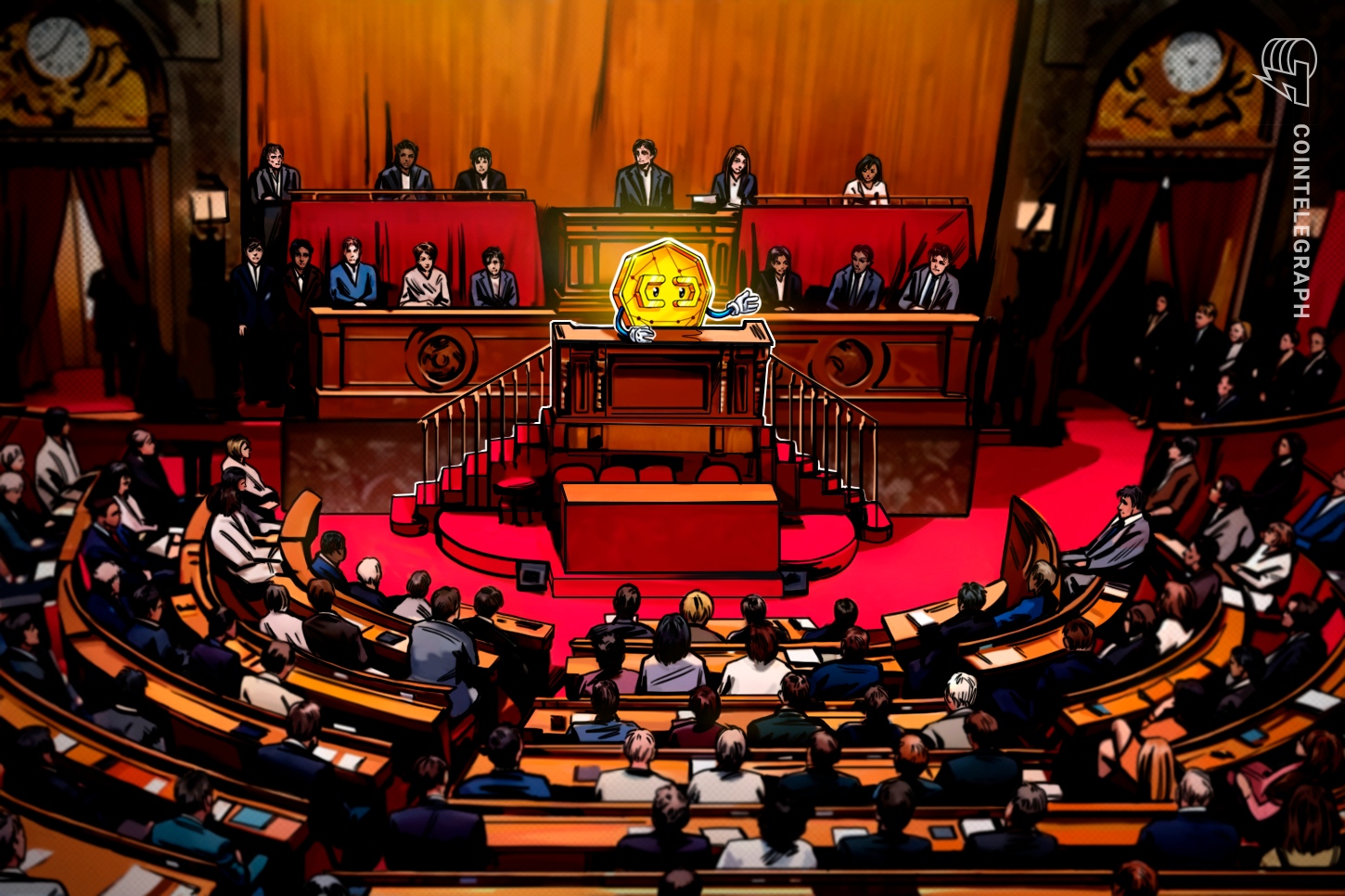 A defendant who owns one of the dormant Bitcoin wallets filed to dismiss the New York case, which seeks ownership of $229 billion worth of Bitcoin considered lost. A pseudonymous defendant has moved to dismiss a New York lawsuit seeking ownership of 39,069 dormant Bitcoin addresses, arguing that Bitcoin addresses are merely data strings that cannot be sued. The defendant, identifying themselves as “John Doe 33,” filed a notice of appearance and motion to dismiss on Thursday, claiming they control one of the dormant wallets named in the lawsuit. According to the motion, the lawsuit is legally defective because Bitcoin address strings are neither persons nor legal entities subject to the court's jurisdiction. The filing argues that a public Bitcoin address cannot itself be “found” under New York's lost-property law because it has always been publicly visible on the blockchain. Read more
 -
AD.nl - 23:16 Jul 02, 2026
De bruiloft van zangeres Taylor Swift en American football-speler Travis Kelce begint vrijdag om 17.00 uur lokale tijd (23.00 uur in Nederland) in New York en duurt tot in de vroege ochtenduren van zaterdag. -
CryptoSlate - 15:00 Jul 02, 2026
A pseudonymous respondent has appeared in New York court to challenge a lawsuit seeking control of over $200 billion worth of long-dormant coins tied to the network’s earliest days, including those linked to Satoshi Nakamoto, Bitcoin's pseudonymous founder. The respondent, using the name John Doe 33, filed a notice of appearance on June 30 in […] The post Mystery owner challenges the $200B ‘lost’ Satoshi Bitcoin claim in New York court appeared first on CryptoSlate. -
NU.nl - 17:43 Jul 01, 2026
Een man en een vrouw zijn dinsdagmiddag in een antenne op het dak van het Empire State Building in New York geklommen. Ze lieten een vlag zien met een vredesoproep en de man deed een huwelijksaanzoek. De twee zijn gearresteerd. -
Haaretz - 10:59 Jul 01, 2026
Federal authorities announced the arrest of the 37-year-old from upstate New York, who is accused of providing material support and resources to a designated foreign terrorist organization -
Haaretz - 17:38 Jun 29, 2026
A new exhibition reveals how, despite biblical prohibitions on sorcery and divination, Jews from Eastern Europe to New York consulted miracle-working rabbis, psychics and amulet makers to cure illness, locate missing husbands and ward off evil -
Haaretz - 16:51 Jun 24, 2026
The victories of three progressive Mamdani-backed candidates in Democratic primaries in New York show that the party's progressive flank is gaining favor with voters seeking change in U.S.-Israel relations and wary of AIPAC's power. The party establishment must take note -
Cointelegraph.com - 19:57 Jun 22, 2026
Crypto-backed PACs disclosed spending more than $8 million on media to support candidates in three US states, as some Maryland Democrats have called on one candidate to reject “outside spending from crypto billionaires.” Political action committees (PACs) backed by cryptocurrency companies and aligned interest groups have bet more than $8 million to support candidates in Tuesday’s primaries across three US states, which could impact the makeup of the country’s Congress in 2027. As of Monday, the Protect Progress PAC, an affiliate of Fairshake that supports Democratic candidates, reported spending more than $516,000 on media for April McClain Delaney, running in Maryland’s 6th congressional district. However, much of the PAC’s attention has been focused on two races in Maryland and New York, where it reported combined expenditures of more than $5.5 million and $1.4 million, respectively, for primary races in the states’ 5th and 15th congressional districts, for Adrian Boafo and Ritchie Torres. Filings with the... -
AD.nl - 20:26 Jun 07, 2026
Zaterdag was er nog tijd voor een ontspannen avondje in het centrum van New York, maandag geldt het oefenduel met Oezbekistan als de grote generale repetitie voor het WK. Crysencio Summerville is heel dicht bij een basisplaats, bevestigde bondscoach Ronald Koeman alvast. -
AD.nl - 17:04 Jun 05, 2026
Oranje is in New York. Daar begint de volgende fase van de WK-voorbereiding. Ronald Koeman smeedt een elftal dat straks moet gaan winnen. De spelers wennen alvast aan de combinatie van warmte en hoge luchtvochtigheid. Vrijdagavond werd er voor het eerst getraind. -
Cointelegraph.com - 06:58 Jun 03, 2026
 Some of the information that New York and the European Union’s watchdogs will share includes the issued stablecoins, total volume in circulation and the number of holders. The European Banking Authority and the New York State Department of Financial Services (NYDFS) have signed a memorandum of understanding to police cross-border stablecoin activities. The EBA said on Tuesday that the deal is part of its duties under the Markets in Crypto-Assets (MiCA) Regulation and sets out principles and procedures for exchanging information and coordinating stablecoin supervisory activities, market trends, and risks between New York and the European Union. NYDFS said the deal would “enhance the supervision of entities engaged in stablecoin activities, identify market trends and risks, and promote the integrity of the stablecoin market.” Read more
 -
Haaretz - 19:23 May 31, 2026
The Israeli delegation was presented as part of efforts to bolster Israel's public image in the U.S. and as a response to Mayor Mamdani, who did not attend the parade, breaking with a tradition largely observed by New York mayors since 1964 -
The Nation - National - 06:39 May 26, 2026
Deputy Prime Minister and Foreign Minister Mohammad Ishaq Dar arrived in New York on Tuesday for an official visit scheduled from May 26 to 28, according to the Foreign Office. -
The Nation - National - 04:55 May 26, 2026
ISLAMABAD - Deputy Prime Minister and Foreign Minister (DPM/FM), Senator Mohammad Ishaq Dar will depart for New York on Monday night to participate in the United Nations Security Council (UNSC) Open Debate on “Maintenance of International Peace and Security” following the conclusion of Prime Minister Shehbaz Sharif’s. -
Dawn - 15:40 May 25, 2026
Deputy Prime Minister and Foreign Minister Ishaq Dar will depart from Beijing on Tuesday for New York to participate in UN meetings, according to a press release from the Ministry of Foreign Affairs. In New York, Dar is set to participate in the United Nations Security Council’s open debate on “Maintenance of International Peace and Security: Upholding the Purposes and Principles of the UN Charter and Strengthening the UN-centred International System.” The debate will be chaired by Chinese Foreign Minister Wang Yi. “Pakistan welcomes this timely initiative by China, which highlights the importance of strengthening multilateralism and upholding the central role of the United Nations in addressing today’s complex global challenges,” the ministry’s press release stated. On Thursday, Dar is scheduled to attend a meeting of the Group of Friends on Global Governance. The theme of the meeting is “Reforming and Improving Global Governance, Working Together to Address Global Challenges.” The group comprises 43 countri... -
The Nation - National - 12:44 May 25, 2026
Deputy Prime Minister and Foreign Minister (DPM/FM), Senator Mohammad Ishaq Dar, will depart for New York on Monday night to participate in the United Nations Security Council (UNSC) Open Debate on “Maintenance of International Peace and Security” following the conclusion of Prime Minister Shehbaz Sharif’s high-level engagements. -
Cointelegraph.com - 11:45 May 25, 2026
 A New York lawsuit seeks ownership of 39,069 dormant Bitcoin wallets, raising questions over lost crypto, private keys and property law. A New York lawsuit filed by Noah Doe and two Wyoming-based LLCs, ABC Company and XYZ Company, seeks a court order declaring ownership of 39,069 dormant Bitcoin addresses, raising important questions about the legal treatment of inactive Bitcoin under property laws. Filed on May 1, the suit claims that the coins tied to the listed addresses represent legally abandoned property they found and reported to the New York Police Department and claimed under New York lost-property law. The plaintiffs claim that the dormant Bitcoin wallets were legally “abandoned” property that they found, including wallets belonging to early Bitcoin miners and addresses attributed to Bitcoin creator Satoshi Nakamoto, among other lost coins and unidentified entities. They claim that these constitute seizable property, akin to traditional bank accounts. Read more