Publisher items dated Friday, 28 November 2025, grouped by their original publication date in UTC. Open the source for the full report and its later updates.
The fire forced the facility to go offline to maintain safety, but none of the company's mining hardware was damaged in the incident. Greenidge Generation Holdings, a Bitcoin (BTC) mining company, disclosed that a fire broke out at its mining facility in Dresden, New York, where it co-hosts operations with mining company NYDIG. The fire broke out on Sunday due to an “electrical switchgear failure,” forcing the company to de-energize the entire facility, according to a Securities and Exchange Commission (SEC) filing. The fire did not damage the mining rigs, and the company said it would resume normal operations within a “few weeks,” without providing specific dates.
Bitcoin recovered after four consecutive weeks in the red, surpassing the key $89,600 flow-weighted cost basis of Bitcoin ETF holders, the most significant cohort driving BTC inflows. This week, cryptocurrency markets staged a long-awaited recovery, following four consecutive weeks of downside momentum. Bitcoin’s (BTC) price reclaimed the $90,000 psychological mark on Wednesday, bringing some much-needed relief for Bitcoin exchange-traded fund (ETF) holders, who were once again back in profit as BTC traded above the key $89,600 flow-weighted cost basis of ETF buyers. Bolstering investor sentiment, Cathie Wood, the CEO and chief investment officer of ARK Invest, said the company’s $1.5 million Bitcoin bull market price prediction remained unchanged, pointing to billions in returning liquidi…
Crypto regulation has shifted this week as the SEC grants Fuse a no-action letter on a Solana-based token, Congress targets AI-powered fraud schemes, and the CFTC outlines new oversight priorities for prediction markets and emerging financial technologies.
XRP Price Prediction has strengthened after Binance reserves have fallen to multi-year lows, U.S. spot XRP ETFs from firms including Franklin Templeton and Grayscale have launched, and a long-term breakout structure has set sights on the $3.8–$4 zone.
Trading was halted for about 10 hours before being restored on Friday, sparking a public backlash from derivatives and commodities traders. The Chicago Mercantile Exchange (CME), the world’s largest financial derivatives exchange, halted trading for about 10 hours from Thursday into Friday, causing an outcry from traders before service was restored. Trading halted due to a “cooling issue” at the CyrusOne data center in Illinois, a US state, according to an announcement from the CME. Trading was fully restored, and trading for all markets resumed at 1:30 pm UTC on Friday, the CME said in an update. Meanwhile, traders voiced their discontent with the critical failure, which locked some users in their positions, prevented others from placing new trades, and halted price discovery.
KuCoin has secured an Austrian MiCAR license, allowing KuCoin EU to provide regulated, audited digital asset services across most of the EEA, as part of its Trust and Compliance strategy and broader shift toward licensed exchanges, with peers such as Bybit also receiving MiCAR approval.
The U.K. released new guidelines that include rules for crypto exchanges to start providing the British tax authority with full customer information on all their digital assets.
Turkmenistan has adopted a 2026 framework for digital assets, licensing exchanges, custodians and mining while reserving central bank control over networks, keeping cryptocurrencies outside legal-tender and securities definitions, and aligning with tighter global oversight.
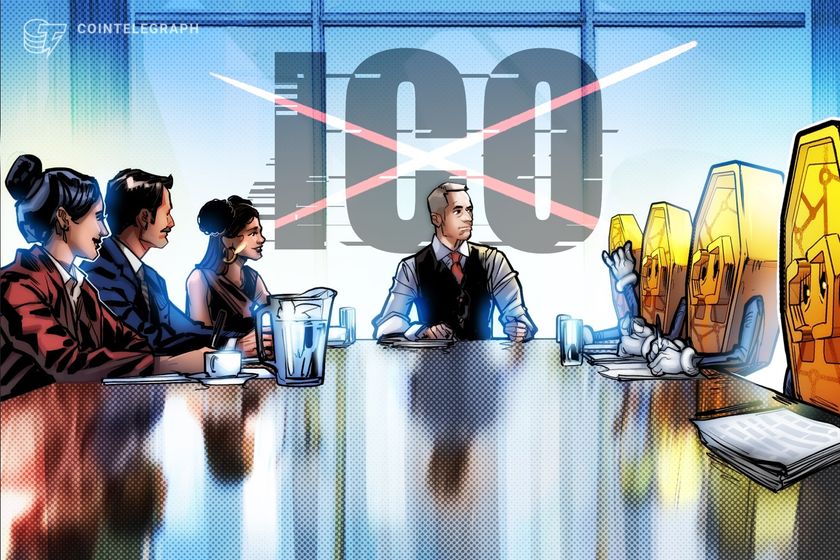
As Tharimmune raises $540 million to build a Canton Coin treasury, the story behind the Canton Network shows that ICOs are not the only way to launch new blockchains. The blockchain ecosystem is home to several highly successful smart contract protocols, which makes the arrival of newcomers highly competitive. Canton Network is one of the newest ‘next generation layer one’ to vie for users and capital from incumbents like Ethereum and Solana. Alongside SUI and Aptos, Canton’s rise challenges the assumption that we have too many blockchains. Rooz said that the developers had taken a lot of learnings from the launches of other layer-1 protocols as well as the teething problems of established players like Ethereum.
Quantum security is moving from theory to practice as layer-1 blockchains prepare long-term plans to adopt post-quantum cryptography. Quantum computers still look like lab toys: Racks of hardware, error-prone qubits and almost no real-world applications. Yet if you check the roadmaps of major layer-1 blockchains, a new priority now sits next to scaling and modularity: post-quantum security. The concern is simple even if the math isn’t. Most major blockchains rely on elliptic-curve signatures (ECDSA and Ed25519) to prove that a transaction came from the owner of a private key. A sufficiently powerful quantum computer running Shor’s algorithm could, in theory, recover those private keys from their public counterparts and let an attacker sign fake transactions.
The IMF has issued a fresh warning over tokenized financial markets, arguing that increased automation might amplify market volatility — potentially triggering “flash crashes.”
After the network split incident and that sudden drop to 0.38, ADA has climbed back above 0.42 and is trying to catch momentum again as the broader market recovers.November was rough for Cardano’s open interest. It hit around 580 million dollars on November 5, marking its worst period since 2024 when ADA was trading under …
Crypto plunged over $1 trillion in weeks, but analysts say the downturn isn’t systemic and break down the macro drivers, institutional behavior and investor survival strategies. The crypto market’s most turbulent period of 2025 resulted in a drawdown that erased more than $1.2 trillion in value and sent Bitcoin (BTC) plunging from its brief $120,000 peak to the $80,000 range. For many investors, the speed and severity of the selloff stirred déjà vu from 2017 and 2022. This week’s episode of Byte-Sized Insight hears from experts that this downturn is different — and far less catastrophic — than the headlines suggest. Macro analyst and author of the Crypto is Macro Now Substack Noelle Acheson argued that the latest dip is “not a big deal” and, crucially, “not systemic.” Instead, she called i…