
Pi Network (PI) Recent Updates, Ripple (XRP) Price Targets, and More: Bits Recap Jan 9
Here's everything most interesting surrounding PI, XRP, and ETH.
Publisher items dated Friday, 9 January 2026, grouped by their original publication date in UTC. Open the source for the full report and its later updates.
Here's everything most interesting surrounding PI, XRP, and ETH.
A crypto user who lost $5,000 from a hot wallet after a stay at a hotel said the real culprits were open WiFi, a casual lobby phone call and one careless wallet approval. A crypto user known as The Smart Ape said he lost about $5,000 from a hot wallet after spending three days in a hotel, not because he clicked a phishing link, but because he made a series of “stupid mistakes,” including using an open WiFi network, taking a phone call in the lobby and approving what looked like a routine wallet request. The incident, analyzed by security firm Hacken for Cointelegraph, shows how attackers can combine network‑level tricks with social cues and wallet UX blind spots to drain funds days after a victim signs a seemingly benign message. According to the victim’s account, the attack began when he…

Your day-ahead look for Jan. 9, 2026
This Friday, we examine Ethereum, Ripple, Cardano, Binance Coin, and Hyperliquid in greater detail. Ethereum (ETH) Ethereum started 2026 in the green, but buyers stopped it at the $3,340 resistance level. Despite this, as long as the price holds above the $3,000 support, buyers have the advantage. ЕТХ closed the second week in January with …
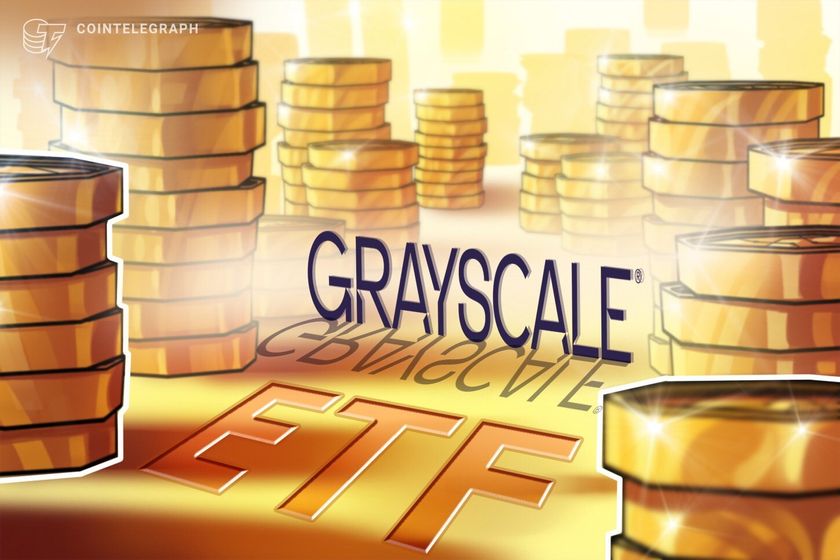
Grayscale registered Delaware trusts linked to potential BNB and HYPE ETPs, an early step that often precedes but does not guarantee ETF filings. Asset manager Grayscale has taken an early step toward expanding its crypto investment lineup by forming new Delaware statutory trusts tied to potential products linked to BNB and HYPE, according to state records. According to Delaware records, the trusts were registered on Thursday. They list CSC Delaware Trust Company as their registered agent. Such trust formations are common preparatory steps for asset managers considering exchange-traded fund (ETF) launches before filing official applications at the US Securities and Exchange Commission, but they do not indicate any regulatory approvals or confirm that filings have been submitted. The inclu…
Bitcoin remained near $90,000 as trading volumes fell. Thin liquidity fueled choppy price action across major cryptocurrencies, while altcoins were mixed.
A new Digital Asset Act will regulate stablecoins, requiring 100% reserve backing and user redemption rights.
Optimism announced a 12-month token buyback program on Jan. 8, allocating 50% of Superchain revenue to monthly OP token purchases starting in February. The buyback pressure is estimated at roughly $9.1 million annually, based on the past year's 5,868 ETH in collected fees. The proposal frames the shift as a transition from pure governance token …
Zcash developer activity has fallen to its lowest level since 2021 as a governance dispute weighs on sentiment and ZEC extends a two-month decline. Developer activity linked to the privacy-focused cryptocurrency Zcash has fallen to its lowest level in years, as a governance dispute and a prolonged price decline weigh on the project’s ecosystem. Data from market intelligence company Santiment shared in a Thursday X post showed that developer activity tied to Zcash dropped to its weakest level since November 2021. Over the same period, the Zcash (ZEC) token has fallen about 40% over the past two months. “Historically, rising development activity leads to standout altcoins being able to emerge above the pack. The opposite result holds true for those that ‘let off the gas’ and decline in their…

Bitcoin falls below $90K as MACD hits record low, with analysts warning a break under $87,200 could lead to a drop toward $69,230.
A newly discovered vulnerability may enable malicious validators to omit the hash field when posting blocks, leading to validator crashes and slowing block production. A newly disclosed software flaw in the Bitcoin staking protocol Babylon may allow malicious validators to disrupt parts of the network’s consensus process, potentially slowing block production during key periods, according to developers. The vulnerability affects Babylon’s block signature scheme, known as the BLS vote extension, which is used to prove that validators have agreed on a block. The bug enables malicious validators to intentionally omit the block hash field when sending their vote extension, which could lead to validator consensus issues during the epoch boundaries of the network, according to a GitHub post publi…

Bitcoin (BTC) opened 2026 with the kind of price action that tests conviction, with the first five days taking BTC close to $95,000, only for it to test the $90,000 footing again. The movement follows weeks of choppy trading, failed breakout attempts, and a Fear & Greed Index reading of 28, firmly in “Fear” territory. …
After a brief January rebound, US spot Bitcoin and Ether ETFs saw heavy redemptions, extending a cautious trend that began after October’s market reset. United States spot Bitcoin and Ether exchange-traded funds (ETFs) have shed over $1 billion in combined outflows since Tuesday, marking an early-year pullback after a brief rebound to start 2026. SoSoValue data shows spot Bitcoin (BTC) ETFs recorded $1.13 billion in outflows between Tuesday and Thursday, offsetting $1.17 billion in inflows on Jan. 2 and Monday. Spot Ether (ETH) ETFs had a similar pattern, with about $258 million exiting since Wednesday, after posting modest inflows earlier in January. The reversal erases gains accumulated in the opening days of the year and signals renewed caution among investors. It also suggests that…
The exploit leveraged a flaw in Truebit’s pricing logic, letting the attacker mint unlimited TRU tokens and drain ETH reserves.
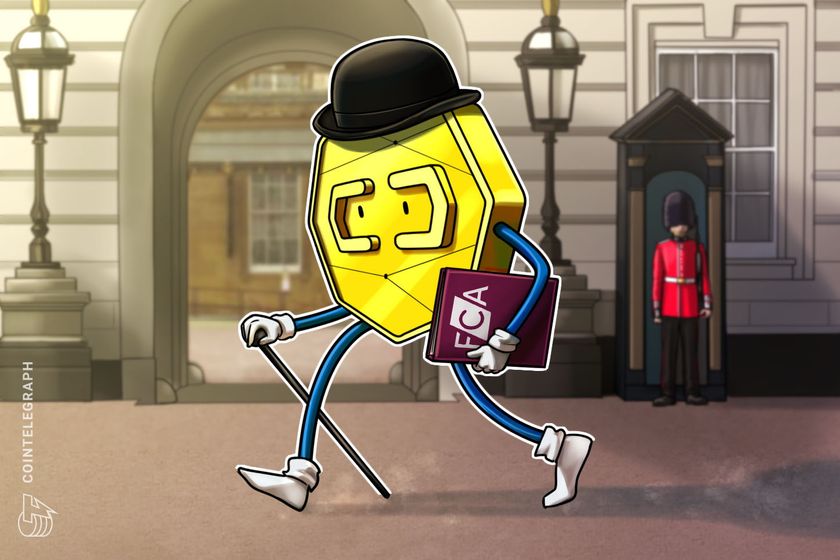
UK crypto businesses must secure FCA authorization well before the crypto regime starts in October 2027 or face transitional restrictions on new services. Financial authorities in the United Kingdom set a timeline for a new crypto licensing regime, requiring aspiring companies to seek full authorization before the framework comes into force. Crypto asset service providers (CASPs) will be able to apply to enter the UK under the crypto licensing regime starting this fall, the Financial Conduct Authority (FCA) said Thursday. “We expect the application period will open in September 2026,” the FCA noted, adding that the timeline will be confirmed in due course.
The ruling confirms that Bitcoin in South Korean exchange accounts is an “object of seizure” under criminal law, aligning Seoul with US and EU enforcement practices. South Korea’s Supreme Court handed down its first explicit ruling that Bitcoin held in centralized exchanges can be seized by investigators, marking a notable shift in how exchange‑custodied crypto is treated under criminal law. In a decision on Dec. 11, 2025, and disclosed via the court’s official bulletin, the court upheld the seizure of 55.6 Bitcoin (BTC) held in a Korean exchange account by a suspect under a money laundering investigation. Bitcoin is now an “object of seizure” under the Criminal Procedure Act because it is electronic information with independent manageability, tradability and economic value.

A7A5, a ruble-linked stablecoin few outside Russia had heard of a year ago grew the most of any stablecoin, outpacing both USDT and USDC over the past 12 months.
The strategy combines native Ethereum staking yield with restaking rewards and incentives from Linea and ether.fi, under a qualified custodian structure.
Rapid pushback from prominent accounts highlighted how quickly misinformation can be challenged, yet still travel widely.
Bitcoin ETFs have registered a net outflow of over $1 billion in three days.


