Publisher items dated Thursday, 12 March 2026, grouped by their original publication date in UTC. Open the source for the full report and its later updates.
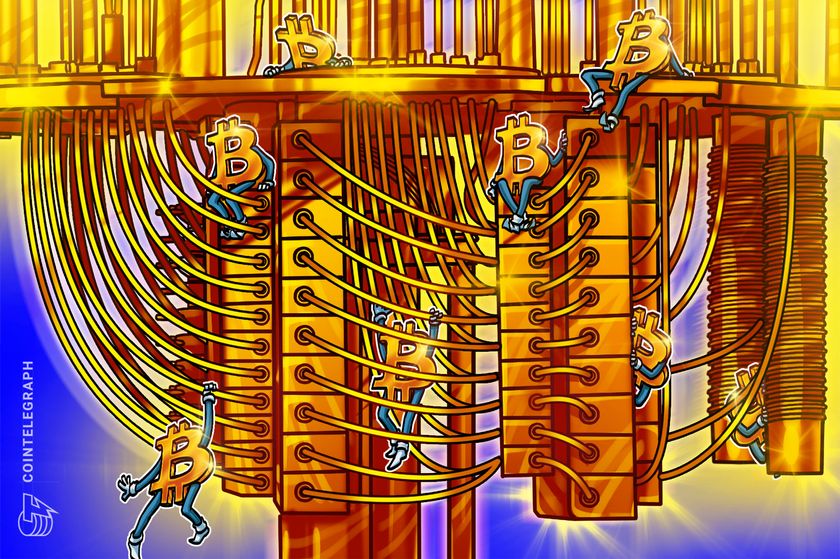
Ark and Unchained say about one-third of the Bitcoin supply remains exposed to future quantum threats, though the risk is still years away. US investment manager Ark Invest claims that the lion’s share of the Bitcoin supply is already safe from the quantum computing breakthrough, leaving ample warning signals for builders to quantum-proof the rest of the supply. Around 65.4% of the Bitcoin (BTC) supply is not vulnerable to the threat of a quantum computing breakthrough, but about 34.6% of the BTC supply remains at risk, according to a Wednesday white paper published by Ark Invest and Bitcoin-focused financial services company Unchained. This includes around 5 million BTC, or 25% of the total supply, assumed migratable due to address re-use, and 1.7 million BTC, or 8.6% of the supply, assum…
New research examines how investor behavior, wallet architectures, and operational security practices determine what genuine self-custody requires in 2026. The foundational promise of cryptocurrency is decentralized, sovereign ownership. But this promise has run into a far more sobering reality, as a lot of funds held on centralized exchanges have been lost over the years. Users have learned the same lesson in different forms: Not your keys, not your coins. Cointelegraph Research’s latest report, produced in collaboration with Trezor, the original hardware wallet, and titled “The Future of Self-Custody: Turning Ownership Into Security,” examines how this realization has reshaped investor behavior. Drawing on survey responses, post-mortem analyses of exchange failures, and a breakdown of mo…
Crypto ATMs or kiosks are the “lowest-friction extraction channel available to scammers,” said cybersecurity firm CertiK. Crypto ATM fraud surged to $333 million in the US in 2025, with complaints received by the FBI growing 33% in the year as scam networks became more industrialized while tapping into advanced AI deepfake technology. Crypto ATM fraud is one of the fastest-growing financial crime categories in the US, according to cybersecurity firm CertiK in its latest report shared with Cointelegraph on Thursday, explaining that criminal organizations are exploiting the “speed and pseudonymity” of crypto ATMs or “kiosks” to extract funds from victims at an accelerating pace. The FBI recorded more than 12,000 complaints between January and November 2025, also a 33% increase from the prior…
Ethereum is trying to build a base, but the general picture has not changed enough to call for a real trend reversal yet. The asset is holding above the February floor, and that matters, yet ETH is still trading beneath major overhead resistance, which leaves the market in a recovery attempt rather than a confirmed …
Bitcoin reacted in kind to calm US macro data, while oil stayed volatile amid uncertainty over the duration of the Middle East conflict. Bitcoin (BTC) circled $70,000 into Thursday’s Wall Street open after US jobs data matched expectations. Key points: Bitcoin shrugs off more US macro data as jobless claims copy flat CPI numbers.
The issuer behind the USDT stablecoin joined a $5.2 million funding round for Ark Labs, backing software that could let stablecoins move and settle on Bitcoin rails.
A new FATF report says crypto exchanges operating offshore can create gaps in AML enforcement, making it harder for regulators to track illicit activity. A new report from the Financial Action Task Force (FATF) warns that crypto service providers operating offshore pose risks of money laundering, sanctions evasion and other illicit financial activity. In the report, titled “Understanding and Mitigating the Risks of Offshore Virtual Asset Service Providers (oVASPs),” the FATF said some offshore firms exploit gaps and differences in regulatory and supervisory coverage, making it harder for authorities to monitor activity and enforce Anti-Money Laundering (AML) and Counter-Terrorist Financing rules. “As a result, effective international co-operation may not be possible, including with the rel…
BlackRock’s iShares Staked Ethereum Trust ETF will trade on the Nasdaq, offering spot exposure and staking income with a reduced 0.12% fee on the first $2.5 billion. BlackRock is expanding its crypto investment lineup with a new Nasdaq-listed product tied to Ethereum staking. BlackRock on Thursday introduced its iShares Staked Ethereum Trust ETF, or ETHB, describing it as an exchange-traded product (ETP) that combines spot Ether (ETH) exposure with “monthly income potential” by staking a portion of its ETH holdings. The product expands BlackRock’s digital asset offerings, which include the iShares Bitcoin Trust ETF (IBIT) and the iShares Ethereum Trust ETF (ETHA). Both ETPs are the largest in their class, with more than $55 billion and $6.5 billion in assets under management, respectively.
The company's platform tracks digital assets, storage locations and crypto loans, enabling financial institutions and corporations to produce accounting records and financial reports.
President Donald Trump's announcement of the first major new US oil refinery in nearly 50 years arrives as gasoline prices have become a political problem and energy has turned inflationary again. The Brownsville project is being pitched as an industrial revival and consumer relief. Still, the sharper question is whether a refinery that won't produce …
Binance Research says US midterms could set up a rebound for Bitcoin and stocks, though oil shocks and Middle East tensions may weigh near term. Update March 12, 1:21 pm UTC: This article has been updated to include comments from Gracy Chen, CEO of crypto exchange Bitget. The US midterm elections may be the next catalyst to kickstart the crypto and stock market recovery, according to historical data shared by Binance Research. According to a Wednesday report from Binance Research, US midterm election cycles have historically been followed by strong rebounds in stocks and Bitcoin (BTC), potentially setting up a recovery window for risk assets after the 2026 vote.
Chains are launching perp DEXs to capture trading activity, but history suggests liquidity will consolidate around only a handful of platforms. In crypto’s latest infrastructure race, blockchains are competing to host perpetual futures exchanges. Many are now launching or incubating decentralized derivatives markets themselves, even as centralized platforms continue to dominate. Derivatives make up most of today’s crypto trading activity, often accounting for the majority of total volume. On Tuesday, Bitcoin (BTC) spot trading volume across centralized exchanges reached about 55,230 BTC while derivatives volume totaled more than 506,600 BTC, according to CryptoQuant. Perpetual decentralized exchanges, or perp DEXs, now act as core infrastructure as they give traders, market makers and inst…