Publisher items dated Friday, 23 October 2026, grouped by their original publication date in UTC. Open the source for the full report and its later updates.
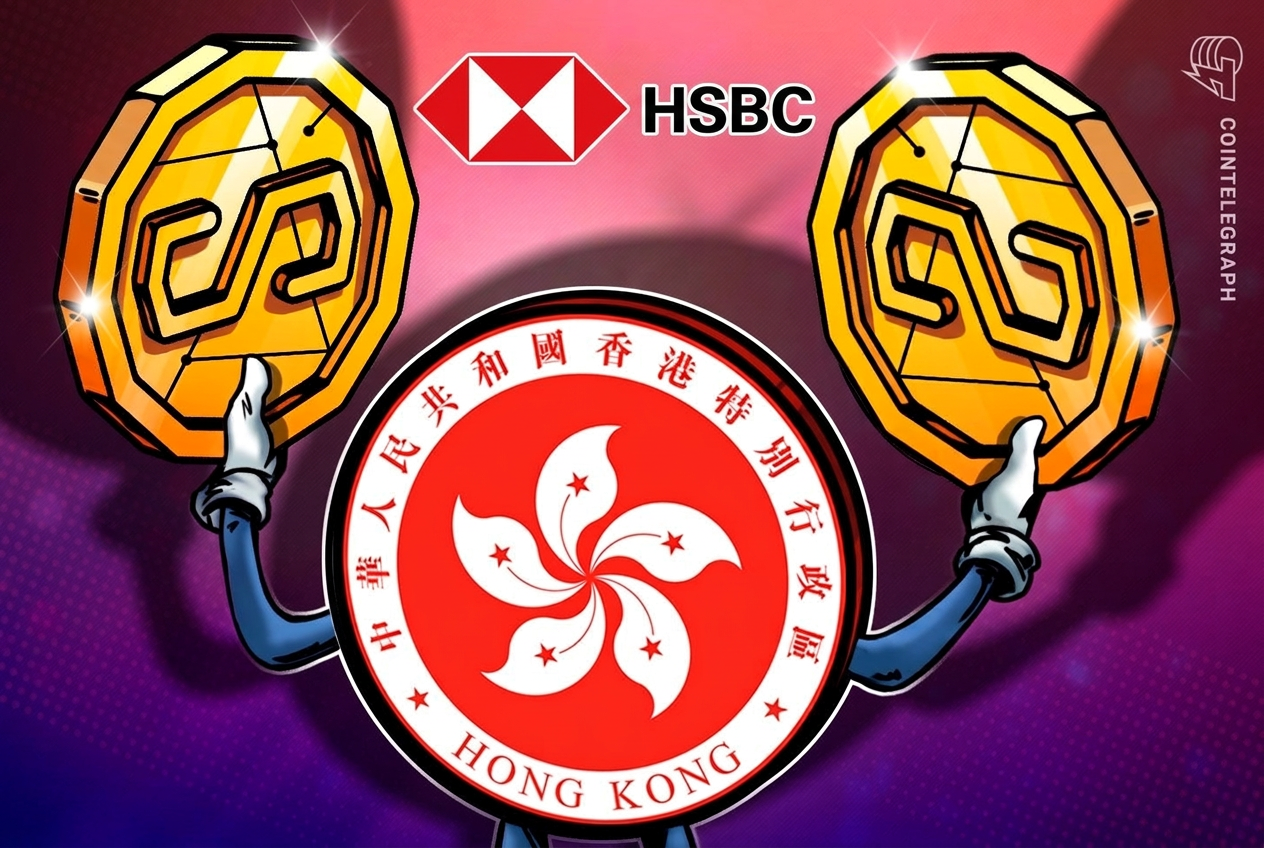
HSBC is rolling out RedCoin wallets to PayMe users, with plans to support tokenized investment subscriptions and expand into institutional uses. HSBC has launched its first Hong Kong-dollar stablecoin, RedCoin (RCHKD), for transfers and merchant payments through its PayMe app. More than 3.3 million PayMe users will be able to activate stablecoin wallets in the app in the coming days, the bank announced Friday. RedCoin is designed to be redeemable one-for-one for Hong Kong dollars. HSBC Digital Assets Custody provides safekeeping services for the stablecoin.
Monero (XMR) is built so that an outside observer cannot see who paid whom, or how much. Every transaction hides its sender, its receiver, and its amount by default, and there is no way to send a transparent Monero payment by mistake. That is why the question “Is Monero traceable?” usually gets a short answer: …
The resurfaced TOKEN2049 exchange captures his belief that the wallets will eventually reach billions despite the reported paper drawdown. Read the full story on CryptoSlate Understand the crypto stories that matter and what to watch next. Get The Catalyst in your inbox
BLOOM seeks to cut costs by helping financial institutions coordinate cross-border use of stablecoins and tokenized deposits. Bank Negara Malaysia and the Bank of Thailand joined Singapore’s BLOOM initiative on Friday as policymaker members. BLOOM, short for Borderless, Liquid, Open, Online, Multi-currency, is a public-private initiative that intends to help financial institutions use stablecoins and tokenized deposits for cross-border payments. According to the Monetary Authority of Singapore, BLOOM aims to cut costs and help institutions bring services to market faster by reducing the need for institutions to set up arrangements with each counterparty or market.
Thursday’s withdrawals ended a three-day inflow streak and left US spot Bitcoin ETFs with $175 million in net outflows for October. US spot Bitcoin exchange-traded funds (ETFs) recorded $635 million in net outflows on Thursday, pushing October’s flows back into the red. The withdrawals more than erased Wednesday’s $528 million in inflows and brought October’s net outflows to $175 million, according to SoSoValue data. It was the largest single-day net outflow since June 25, when Bitcoin ETFs lost $696 million. The withdrawals snapped a three-day inflow streak that attracted $1.08 billion.
The exchange says a failed deposit-sweeping process caused losses it absorbed, while ZachXBT's $15.8 million allegation remains unreconciled. Read the full story on CryptoSlate Understand the crypto stories that matter and what to watch next. Get The Catalyst in your inbox
ChainSecurity said it identified 13 real-world examples of smart contracts potentially affected by Glamsterdam’s gas changes and is coordinating responsible disclosure with affected projects. Ethereum developers have postponed the Glamsterdam hard fork on the Hoodi testnet after researchers identified gas-related security risks that could affect how existing smart contracts handle failed transactions. The Ethereum Foundation (EF) said that the upgrade, originally scheduled for Oct. 26, would be delayed to allow developers to investigate how some proposals interact with smart contracts deployed on Ethereum. On Oct. 13, Blockchain security firm ChainSecurity warned that two proposals included in Glamsterdam, EIP-8037 and EIP-8038, could weaken safeguards against a type of attack called insu…
Developers canceled Monday's Hoodi activation after researchers showed how new gas rules could let smart contracts permanently record failed operations.
Toto Finance wants 22 million ADA from Cardano’s treasury to buy tokenized copper, and the metal would have to trade well above its all-time high for holders to get their money back.
Bitcoin Core says keeping certain vulnerabilities secret no longer offers much protection in the wake of AI-assisted bug hunting. Bitcoin Core is changing how it handles security vulnerabilities, explaining that large language models have made certain software flaws significantly easier to discover. In an email to the Bitcoin Development Mailing List on Thursday, Bitcoin Core developer Antoine Poinsot said that in the past, vulnerabilities were generally kept under lengthy disclosure embargoes to give users time to upgrade before details became public. Maintaining that secrecy generally meant fixes could not be backported to older software versions, leaving users waiting until the next major release. However, Poinsot said LLMs have made some flaws so easy to rediscover that delaying fixes…
HSP-029 would gradually cut the annual issuance cap by 36%, while tokens bought and held or staked remain in total supply. Read the full story on CryptoSlate Understand the crypto stories that matter and what to watch next. Get The Catalyst in your inbox