OpenAI
Source:
https://openai.com
Found 1249 news
-
OpenAI - 18:00 Nov 30, 2022
We’ve trained a model called ChatGPT which interacts in a conversational way. The dialogue format makes it possible for ChatGPT to answer followup questions, admit its mistakes, challenge incorrect premises, and reject inappropriate requests. ChatGPT is a sibling model to InstructGPT, which is trained to follow an instruction -
OpenAI - 08:00 Nov 30, 2022
We’ve trained a model called ChatGPT which interacts in a conversational way. The dialogue format makes it possible for ChatGPT to answer followup questions, admit its mistakes, challenge incorrect premises, and reject inappropriate requests. -
OpenAI - 15:39 Sep 28, 2022
New users can start creating straight away. Lessons learned from deployment and improvements to our safety systems make wider availability possible. Sign up Starting today, we are removing the waitlist for the DALL·E beta so users can sign up and start using it immediately. More than 1.5M -
OpenAI - 07:00 Sep 28, 2022
New users can start creating straight away. Lessons learned from deployment and improvements to our safety systems make wider availability possible. -
OpenAI - 16:00 Sep 21, 2022
We’ve trained and are open-sourcing a neural net called Whisper that approaches human level robustness and accuracy on English speech recognition. Read Paper View Code View Model Card Whisper examples: Reveal Transcript Whisper is an automatic speech recognition (ASR) system trained on 680,000 hours of multilingual and -
OpenAI - 16:00 Aug 31, 2022
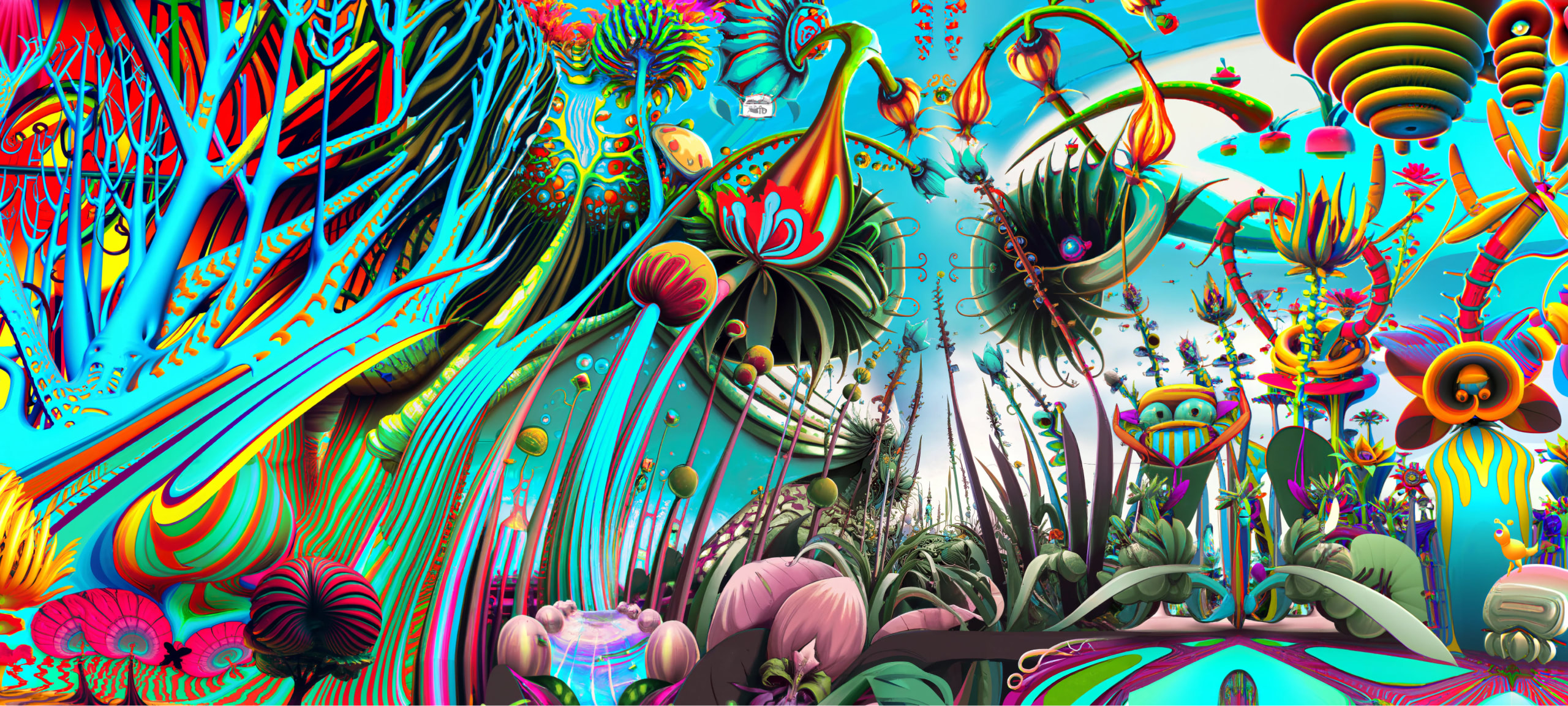 Extend creativity and tell a bigger story with DALL-E images of any size Original outpainting by Emma Catnip Today we’re introducing Outpainting, a new feature which helps users extend their creativity by continuing an image beyond its original borders — adding visual elements in the same style, or
 -
OpenAI - 07:00 Aug 31, 2022
Extend creativity and tell a bigger story with DALL·E images of any size. -
OpenAI - 18:00 Aug 24, 2022
Our approach to aligning AGI is empirical and iterative. We are improving our AI systems’ ability to learn from human feedback and to assist humans at evaluating AI. Our goal is to build a sufficiently aligned AI system that can help us solve all other alignment problems. Introduction Our -
OpenAI - 07:00 Aug 24, 2022
We are improving our AI systems’ ability to learn from human feedback and to assist humans at evaluating AI. Our goal is to build a sufficiently aligned AI system that can help us solve all other alignment problems. -
OpenAI - 16:00 Aug 10, 2022
We are introducing a new and improved content moderation tool: The Moderation endpoint improves upon our previous content filter, and is available for free today to OpenAI API developers. To help developers protect their applications against possible misuse, we are introducing the faster and more accurate Moderation endpoint. This endpoint -
OpenAI - 07:00 Aug 10, 2022
We are introducing a new and improved content moderation tool. The Moderation endpoint improves upon our previous content filter, and is available for free today to OpenAI API developers. -
OpenAI - 16:29 Jul 20, 2022
We’ll invite 1 million people from our waitlist over the coming weeks. Users can create with DALL·E using free credits that refill every month, and buy additional credits in 115-generation increments for $15. Join DALL·E 2 waitlist DALL·E, the AI system that -
OpenAI - 07:00 Jul 20, 2022
We’ll invite 1 million people from our waitlist over the coming weeks. Users can create with DALL·E using free credits that refill every month, and buy additional credits in 115-generation increments for $15. -
OpenAI - 16:30 Jul 18, 2022
Today, we are implementing a new technique so that DALL·E generates images of people that more accurately reflect the diversity of the world’s population. This technique is applied at the system level when DALL·E is given a prompt describing a person that does not
1249 items