Follow crypto and Web3 coverage across digital assets, networks and the organizations building them. This feed brings publisher excerpts together so you can compare reporting, find the original source and follow developments without relying on a single stream of headlines.
Separate protocol changes and documented announcements from price commentary or promotion. Repeated versions of one announcement are not independent confirmation; follow the evidence back to its source.
BTCS sold more than half its Ether holdings to reduce leverage following the market sell-off, while BitMine added another 7,819 ETH to its treasury. Nasdaq-listed blockchain company BTCS sold approximately 27,300 Ether on Friday to repay $43.8 million in loans on decentralized lending protocol Aave as cryptocurrency markets plunged. According to a Monday filing with the US Securities and Exchange Commission, BTCS sold the Ether (ETH) on Nov. 20 and used the proceeds to reduce its outstanding Aave debt to approximately $10.5 million. The transaction reduced BTCS’s Aave borrowings by approximately 81%, as the company sought to limit liquidation risk amid heightened market volatility. Its remaining Aave positions had a loan-to-value ratio of approximately 32% following the repayment.
Phylax’s system lets decentralized protocols block potentially harmful transactions, but raises questions about potential censorship and Ethereum’s concentrated builder market. Phylax’s new security system could help decentralized finance (DeFi) protocols stop malicious transactions before they settle. That may bolster crypto’s defenses against North Korean hackers and United States-sanctioned actors, but it may also introduce a way to freeze smart contract functions without explicitly giving anyone the power to do so. And that’s the kind of control that raises concerns the system could end up as a centralized tool for law enforcement rather than decentralized finance.
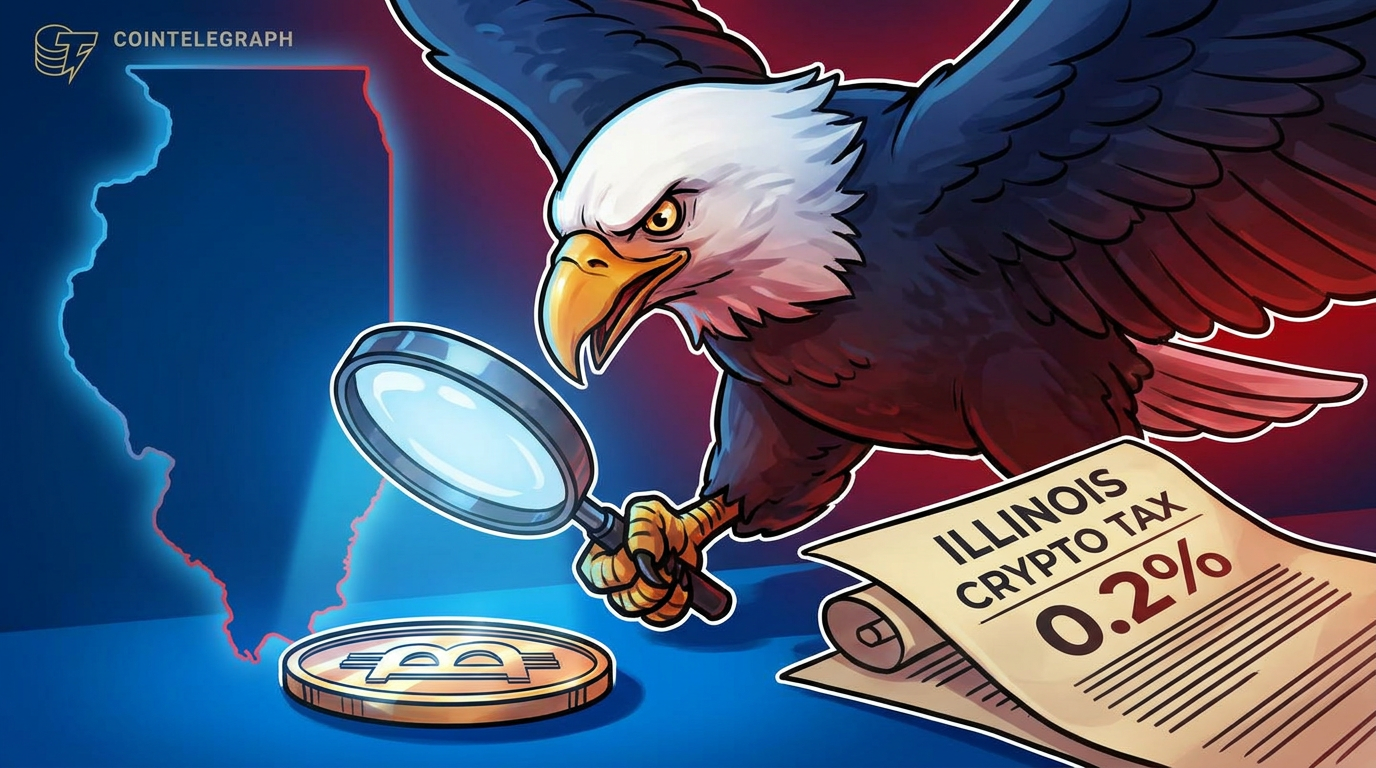
Industry groups argued in court filings that Illinois’ crypto tax, which applies even when a transaction yields no profit, could raise compliance costs and violate federal law. The US Department of Justice, business and financial industry groups and a coalition of decentralized finance (DeFi) firms have backed a legal challenge to Illinois’ 0.2% digital asset tax, arguing that the measure unfairly targets cryptocurrency transactions and could impose taxes even when investors make no profit. Over the past week, the Justice Department filed a statement of interest, while the US Chamber of Commerce and the Securities Industry and Financial Markets Association (SIFMA) submitted an amicus filing. A coalition that includes venture capital firms Andreessen Horowitz and Paradigm as well as crypto…
Coinbase’s EU policy chief says applying suitability tests beyond crypto lending and borrowing could limit access and fragment liquidity. European Union efforts to tighten oversight of decentralized finance (DeFi) could drive crypto users toward platforms offering fewer investor protections, according to Coinbase’s head of EU policy. Roeland Van der Stappen told Cointelegraph that regulated crypto platforms could respond by limiting or dropping access to DeFi services. “Rules designed to protect investors would end up pushing activity towards the places with the least protection,” Van der Stappen said.
Institutions weighing DeFi lending tend to ask which markets are safest. Mike Hathaway and Joseph Quintilian of Ajna argue the better question is who can change a loan’s terms after the money is lent, and why a fully backed stablecoin offers no protection against a token vote or a faulty price feed.
Greece has approved a crypto tax framework with a €500 ($557) annual gains threshold and new rules for staking and DeFi income, but lawmakers left important questions about token swaps unresolved.
The UK’s 2027 crypto rules risk a de facto ban on regulated firms providing access to DeFi, argues Coinbase’s European policy head Katie Harries. Opinion by Katie Harries, head of policy, Europe, Coinbase The United Kingdom is approaching a choice that could define its financial future: should decentralized finance (DeFi) be allowed to develop through regulated gateways or will it be constrained to a silo? This is not just relevant to crypto enthusiasts; it goes to the future of capital markets, the competitiveness of the City and the UK’s ability to shape the next generation of financial infrastructure.
The foundation called for regulation based on financial risks rather than technology, warning that overlapping rules could create uncertainty for crypto businesses across the EU. The Cardano Foundation has urged the European Union not to introduce new, standalone regulations for decentralized finance and staking, arguing that existing financial laws should govern such activities based on their functions and risks rather than the technologies they use. In a Wednesday blog post outlining its 19-page Sept. 30 submission to the European Commission, the foundation called for a distinction between direct participation in decentralized networks and financial services provided by intermediaries, particularly those involving custody or control of users’ assets. “Regulation should follow the substan…
The UK Financial Conduct Authority consultations came just weeks after the agency opened applications for companies under its new crypto regulatory regime. The UK’s Financial Conduct Authority (FCA) announced two consultation periods for how companies using decentralized finance can comply with its guidance, and exclusions for certain crypto assets following “recent legislative changes.” In a Wednesday notice, the FCA opened consultation periods for helping DeFi companies comply with the financial watchdog’s rules on money laundering and financial crime. The agency also announced a consultation for “exclusions from cryptoasset regulation,” citing recent legislation in the country. Regarding DeFi, the FCA said that the proposed guidance “seeks to clarify existing rules rather than establish…
French authorities want crypto exchanges to conduct checks on DeFi protocols and face liability for certain customer losses under proposed changes to EU crypto rules. France wants cryptocurrency platforms to face liability for certain decentralized finance (DeFi) incidents if they fail to vet protocols or ignore known security risks. French authorities published proposals Wednesday to revise the European Union’s Markets in Crypto-Assets Regulation (MiCA). The joint response to a European Commission consultation came from France’s Treasury, the Financial Markets Authority (AMF), the central bank and the Prudential Supervision and Resolution Authority (ACPR). “CASPs [crypto-asset service providers] should be liable for certain incidents affecting clients where they actively facilitated acces…
Starknet’s Shadow Accounts allow users to obscure connections between their main wallets and DeFi activity, though transactions remain visible onchain. Ethereum layer-2 network Starknet has launched a wallet privacy feature that lets users interact with decentralized finance (DeFi) apps without publicly linking activities to their main wallets. StarkWare, the team behind Starknet, said that its new Shadow Accounts feature creates separate, persistent addresses for individual applications. Users can fund the accounts using shielded balances held in the network’s STRK20 privacy pool. This allows them to maintain lending, trading or other DeFi positions under different onchain identities. The new privacy feature obscures the connection between the shadow account and the wallet funding it. H…
Eligible retail holders rely on market liquidity, while verified institutions can request issuer redemption and stakers absorb losses after protocol reserves.
Illinois’ draft rules spell out how its 0.2% digital asset transaction tax would apply to stablecoins, DeFi platforms, crypto bridges and self-custody transfers. Illinois tax officials have published draft rules detailing how the state’s already-enacted 0.2% digital asset transaction tax would apply to stablecoins, decentralized finance (DeFi) platforms and other crypto activity. The new draft rules provide implementation details for the law, including which transactions and digital assets would fall within its scope. Under the proposal, stablecoins would be treated as digital assets subject to tax, while nonfungible tokens would be excluded. DeFi transactions would generally be exempt unless users pay fees considered “valuable consideration,” such as protocol fees collected for operating…