Follow crypto and Web3 coverage across digital assets, networks and the organizations building them. This feed brings publisher excerpts together so you can compare reporting, find the original source and follow developments without relying on a single stream of headlines.
Separate protocol changes and documented announcements from price commentary or promotion. Repeated versions of one announcement are not independent confirmation; follow the evidence back to its source.
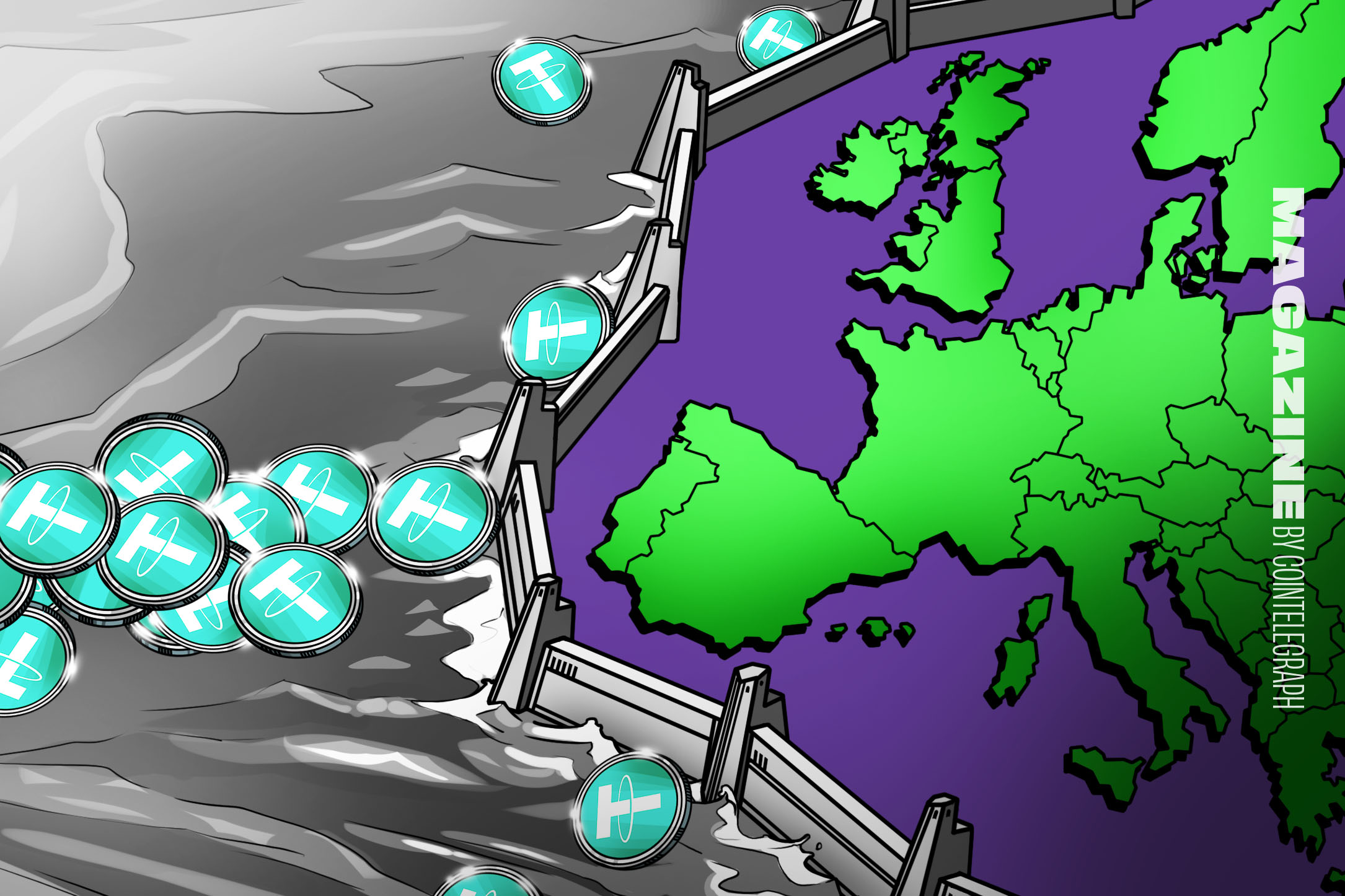
USDT is disappearing from regulated European platforms, but there is little sign that it has resulted in weakening global demand for Tether. Europe’s crackdown on Tether’s USDT is entering a new phase. When Revolut told European users it would delist USDT after Aug. 31, it became another in a long line of European platforms restricting access to the world’s largest stablecoin as firms adapt to the requirements of the EU’s Markets in Crypto-Assets (MiCA) regulation. MiCA’s stablecoin rules have been phasing in since 2024, and the EU-wide transition period ended on July 1, putting further pressure on platforms to drop tokens that don’t meet the rules.
The FMA said Bitpanda breached MiCA rules on crypto white papers and marketing communications, with the decision now final. [Update 10:40 UTC, Aug. 17: This article has been updated to include a statement from Bitpanda in sixth and seventh paragraphs.] Austria’s financial regulator has fined crypto platform Bitpanda 70,000 euros ($82,000) for violating the European Union’s Markets in Crypto-Assets Regulation, in the watchdog’s first published final penalty under MiCA. The Austrian Financial Market Authority (FMA) said Friday that Bitpanda failed to submit a crypto-asset white paper to the regulator at least 20 working days before its publication, as required under MiCA.
Slovenia entered the EU’s MiCA stablecoin register through electronic money institution Dinaro, as the update also added two new CASPs. Slovenia has appeared for the first time in the European Union’s Markets in Crypto-Assets Regulation (MiCA) register of electronic money token (EMT) issuers. Dinaro, a Slovenia-based electronic money institution supervised by the Bank of Slovenia, joined the EMT list in the latest European Securities and Markets Authority (ESMA) register update on Wednesday. According to its website, Dinaro provides payment services, including card issuing and acquiring, and says it holds Mastercard principal membership. Its addition marks the first appearance of a Slovenia-based issuer in ESMA’s EMT dataset.
Stripe-owned Bridge has entered the EU MiCA register following Luxembourg approval, joining regulated providers under the bloc’s crypto framework. Bridge Building, the Luxembourg-based entity behind Stripe-owned stablecoin infrastructure company Bridge, has joined the European Union’s Markets in Crypto-Assets Regulation (MiCA) register after receiving regulatory approval in Luxembourg. Bridge’s inclusion brings the number of MiCA-authorized electronic money token (EMT) issuers in the EU register to 42, according to the latest European Securities and Markets Authority (ESMA) update published on Wednesday. The addition came weeks after Bridge announced on July 2 that it had secured a Crypto-Asset Service Provider (CASP) authorization under MiCA and an Electronic Money Institution (EMI) licen…
Blockchain.com secured a VASP custody license from the Cayman Islands Monetary Authority, expanding its regulated crypto services in the region. Blockchain.com has secured a virtual asset service provider (VASP) license from the Cayman Islands Monetary Authority to offer custody services. Granted on July 22, 2026, the license allows the cryptocurrency services company to provide regulated crypto custody services in the Cayman Islands, according to a Thursday announcement reviewed by Cointelegraph. The license followed a conditional approval issued by CIMA in December 2025. The license also allows Blockchain.com to provide crypto-to-fiat and crypto-to-crypto exchange services. The company has held a VASP registration in the Cayman Islands since May 2022.
Criminals are reportedly using fake websites and falsified documents to target customers searching for licensed crypto providers. Fraudsters are impersonating financial regulators and crypto businesses to target customers of crypto service providers that have failed to secure European Union licenses, according to officials cited by the Financial Times. Several of the bloc’s watchdogs have reportedly seen an increase in scams since the July 1 deadline that required firms to obtain authorization under the Markets in Crypto-Assets (MiCA) Regulation. Companies that failed to secure approval must wind down or transfer their EU operations, forcing customers to move their assets. Stéphane Pontoizeau, an official at France’s Autorité des Marchés Financiers (AMF), said the regulator encountered ca…
ESMA’s latest MiCA update brings the number of authorized CASPs to 321 and adds three entities to its non-compliant register. The European Securities and Markets Authority (ESMA) added 12 companies to its Markets in Crypto-Assets (MiCA) register in its fourth update since the July 1 transitional deadline. Published on July 31, the update brings the total number of authorized crypto-asset service providers (CASPs) listed under MiCA to 321. The latest additions include three German cooperative banks: Volksbank Raiffeisenbank Oberbayern Südost, VR Bank Schleswig-Holstein Mitte and VR-Bank Landau-Mengkofen. The list also includes two companies in Spain — Basque Pay and Fintech Payments — and four in France — Finary, Woorton, Blockchain Process Security and Shares Financial Assets.
Hungary removed mandatory third-party checks for crypto conversions as CoinCash received authorization to provide digital asset services under MiCA. Hungary is rolling back strict crypto rules as CoinCash prepares to resume services after receiving authorization under the European Union’s Markets in Crypto-Assets (MiCA) regulation. The Hungarian Parliament voted to repeal the country’s crypto validator requirement, removing mandatory third-party approval for certain crypto transactions, the Hungarian tax and legal publication Ado.hu reported on Tuesday. Finance Minister Kármán András said the government removed the validation requirement after the previous rules disrupted Hungary’s crypto market, prompting some service providers to halt operations in the country.
BNY Mellon’s European subsidiary joined the MiCA register as ESMA added 15 CASPs, including banks and crypto platforms, in the third post-deadline update. European authorities added 15 crypto companies including a BNY Mellon unit to the Markets in Crypto-Assets (MiCA) framework register in the third update of regulated providers since the July 1 transitional deadline. With the European Securities and Markets Authority’s (ESMA) update on Friday, its interim MiCA register shows 309 licensed crypto-asset service providers (CASPs). The latest entries include four banking institutions, including BNY SA/NV, the Belgian subsidiary of US banking giant BNY Mellon, and three German banks, alongside digital asset platforms such as BitPay, Coinify and Bleap.
Of the more than 3,000 companies that were legally serving crypto clients across the EU as recently as this June, fewer than 300 hold the right to do so today, according to CASP Tracker. The reason is the Markets in Crypto-Assets Regulation (MiCA), which took full effect across the European Union on 1 July 2026: …
ESMA adds 14 CASPs to its MiCA register, with banks and Ripple Payments Europe among the new entries as total providers reach 294. European authorities added 14 crypto companies to the Markets in Crypto-Assets (MiCA) framework register in the second post-deadline update, signaling a slower licensing pace after an initial surge. The European Securities and Markets Authority (ESMA) updated its interim MiCA register on Thursday, bringing the total number of licensed crypto-asset service providers (CASPs) to 294. The new entries include Ripple Payments Europe, the European payments arm of blockchain company Ripple, as well as Portugal-based Bison Bank and Croatia’s state-owned bank, Hrvatska poštanska banka (HPB).
The Dutch Authority for the Financial Markets approved BitPay’s application as a crypto-asset service provider under the Markets in Crypto-Assets requirements. Crypto payments company BitPay announced that it had secured a license by the Dutch Authority for the Financial Markets, allowing the company to operate in European Union member states under the Markets in Crypto-Assets (MiCA) framework. On Thursday, BitPay said that the approval as a crypto-asset service provider (CASP) by Dutch financial authorities would allow the company to expand its services in the region, including crypto and stablecoin payments. The company was one of the latest to be licensed under MiCA following a July 1 requirement for all entities offering crypto-related services to be regulated. “Europe is one of the…
The following is a guest post from Yuliya Barabash, Founder and Managing Partner at SBSB Fintech Lawyers. MiCA may make Europe safer, but it also risks making it smaller. In its effort to impose order on crypto, the EU is building a regulatory framework that many early-stage startups simply cannot afford to comply with. Yet …
AMLA is expanding its crypto oversight as firms complete the transition to the EU’s MiCA licensing regime. Mass user migration following the end of the Markets in Crypto-Assets Regulation (MiCA) transitional period could strain compliance at virtual asset service providers (VASPs) in the European Union, according to Bruna Szego, chair of the Authority for Anti-Money Laundering and Countering the Financing of Terrorism (AMLA). “Because we know customers will rush to withdraw, this will put additional pressure on these VASPs,” Szego said during a Wednesday briefing with the European Parliament’s Committee on Economic and Monetary Affairs. Szego said firms winding down their EU operations could come under pressure as customers rush to withdraw, while licensed crypto companies could face onbo…
Reed Smith’s Aquarius platform automates regulatory filings and legal workflows as demand for MiCA compliance tools grows across Europe. Reed Smith, a global law firm with over 30 offices across North America, Europe and Asia, has launched an automated compliance platform designed to help crypto companies navigate the European Union’s Markets in Crypto-Assets (MiCA) regulation as the bloc enters a new phase of crypto oversight. The platform, called Aquarius, automates key compliance tasks including crypto-asset classification, regulatory white paper generation, due diligence and environmental, social and governance (ESG) disclosures. Reed Smith said it plans to expand the platform to support crypto compliance regimes in the United Kingdom, the United Arab Emirates, Hong Kong and Singapore.…
A MiCA license allows crypto firms to operate in the EU, but the ESMA’s review will test whether custodians can meet the required security and resilience standards. Getting licensed under the European Union's Markets in Crypto-Assets Regulation (MiCA) framework is only the beginning for crypto custodians, as regulators turn their attention from authorization to operational resilience. The European Securities and Markets Authority (ESMA) on Wednesday launched a Common Supervisory Action (CSA) to examine the operational resilience of crypto asset service providers (CASPs), placing custody services at the center of the review. “The signal is quite clear: for custodians, a licence is the start line, not the finish,” Sebastien Dessimoz, co-founder and managing partner at digital asset infrastru…
Binance is exploring new licensing paths into Europe while continuing to expand its regulatory footprint in Asia, says co-CEO Richard Teng. Binance is in talks with regulators that have invited the exchange to apply for crypto licenses following its withdrawal from the Markets in Crypto-Assets Regulation (MiCA) application in Greece, according to co-CEO Richard Teng. Teng said at the Reuters NEXT Asia conference in Singapore on Thursday that the discussions are still “premature” and declined to identify the jurisdictions. MiCA created a single licensing framework for crypto firms across the European Union. After the bloc's transition period expired on July 1, the European Securities and Markets Authority said crypto firms must serve EU clients through a MiCA-authorized entity, with limite…
EU officials reportedly plan to consider changes to the Markets in Crypto-Assets framework, dubbed by some as “MiCA 2.0,” in response to a US stablecoin law and rules on tokenized payments and deposits. European Union officials are reportedly planning to revise the Markets in Crypto-Assets (MiCA) framework amid the implementation of a US law on stablecoins. According to a Wednesday report from Euronews, EU officials planned to revisit proposed changes to MiCA to broaden the framework's scope, specifically regarding non-EU companies issuing stablecoins. The revised rules, which authorities will reportedly consider in 2027, were in response to the US government’s Guiding and Establishing National Innovation for US Stablecoins, or GENIUS, Act, putting pressure on EU officials to clarify how…
The EU securities regulator will assess custody providers’ key management, incident response and reliance on third-party technology providers. The European Securities and Markets Authority (ESMA), a key EU regulator supporting the implementation of the Markets in Crypto-Assets (MiCA) framework, is launching a dedicated process for reviewing crypto custody providers. ESMA plans to conduct a common supervisory action (CSA) focused on the operational resilience of crypto-asset service providers (CASPs), with a specific emphasis on custody services, according to an official announcement on Wednesday. “The CSA will assess the maturity of CASPs’ digital operational resilience frameworks in relation to custody activities,” ESMA said, adding that the reviews will focus on areas including key and s…