Follow crypto and Web3 coverage across digital assets, networks and the organizations building them. This feed brings publisher excerpts together so you can compare reporting, find the original source and follow developments without relying on a single stream of headlines.
Separate protocol changes and documented announcements from price commentary or promotion. Repeated versions of one announcement are not independent confirmation; follow the evidence back to its source.
Central counterparties would need to show tokenized collateral meets liquidity and risk tests under proposed Bank of England guidance. The Bank of England has opened a consultation on how a central counterparty (CCP) can accept digital versions of eligible collateral, saying existing rules allow it when assets meet clearing standards. The draft supervisory statement would clarify what CCPs must address in applications under the current approval process. It covers collateral already accepted and types that qualify under the proposed UK CCP Rulebook but are not in use. The statement would not create new regulatory obligations. The BoE said tokenized collateral must remain capable of being valued, transferred and realized, including in stressed conditions. Faster movement across jurisdictions…
In Bitquery’s January–October 2026 cohort, recorded app fees erased narrow gains while token trades accounted for most losses. Read the full story on CryptoSlate Understand the crypto stories that matter and what to watch next. Get The Catalyst in your inbox
RedStone’s planned pricing tool will let institutions on Canton use shared market prices without exposing deal terms to data providers. The Canton Foundation approved almost 15.8 million Canton Coin (worth about $1.55 million at the time of writing) to fund RedStone’s open-source pricing tool for institutions. The CC token, last trading at roughly $0.0979, has a market cap of $3.91 billion, according to Coingecko data, with $23.23 million in trading the past 24 hours. The Canton Access and Privacy Standard (CAPS) is designed to let institutions use a shared market price to value transactions without revealing their agreed settlement amounts to data providers, according to Thursday’s announcement shared with Cointelegraph.
Alice & Bob's new model reduces the hardware required for a potential attack, bringing it closer to reality and increasing pressure to adopt quantum-resistant security sooner.
Bitcoin has returned toward $80K after another recovery failed to gain traction. With short-term trendline support already lost and large spot orders remaining prominent, the price faces an important test of demand beneath recent lows. Bitcoin Price Analysis: The Daily Chart On the daily timeframe, Bitcoin continues to form lower highs following its rejection from …
[PRESS RELEASE – Białystok, Poland, October 28th, 2026] Bitcoin mining is becoming more competitive, and every terahash and every kilowatt-hour matters more than ever. The industry is actively looking for tools to get maximum performance and efficiency from mining equipment, and firmware is one of the most powerful of them. With this in mind, BiXBiT …
Five more companies have objected, bringing the total to 38 as a rival Canton venue prepares to launch with an issuer-sponsored stock under the SEC's innovation exemption.
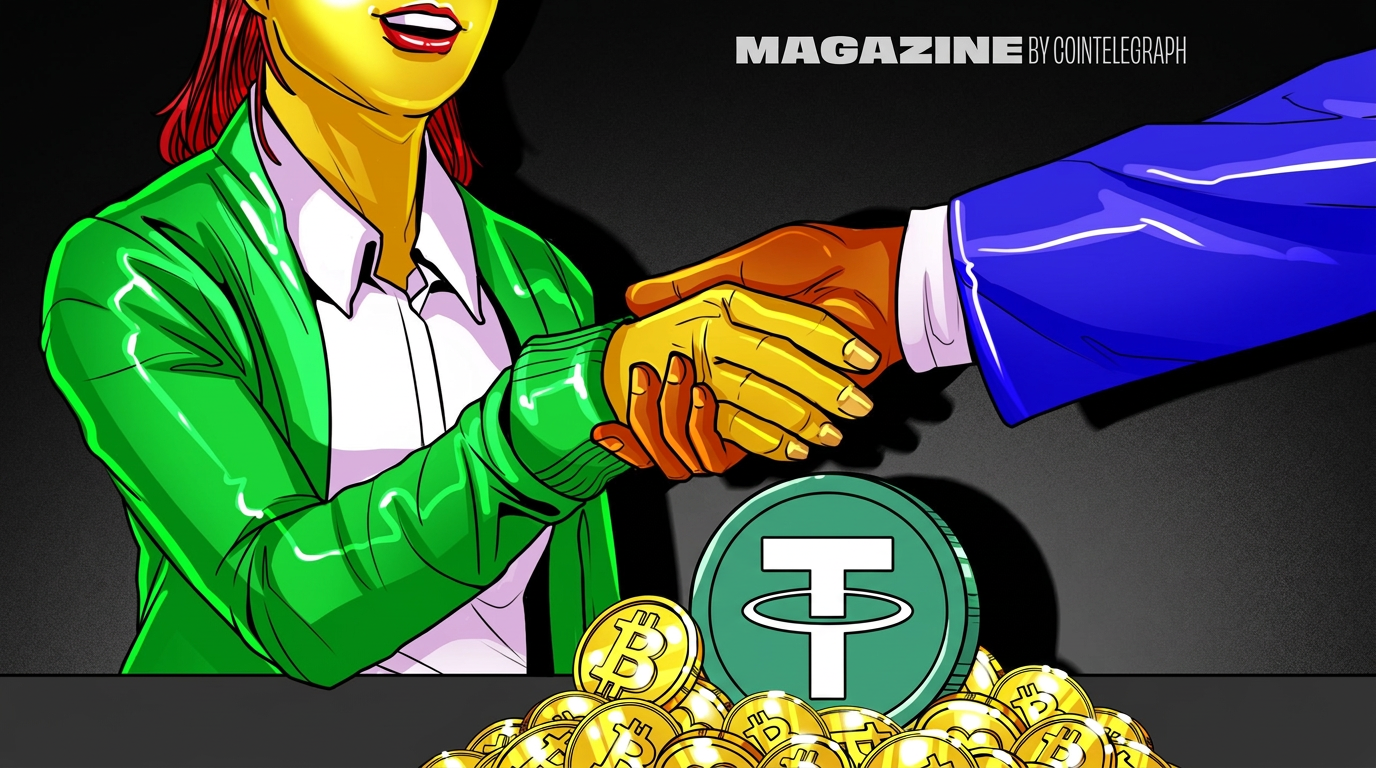
USDT is coming home to Bitcoin, offering privacy and Lightning-fast payments. But can Bitcoin’s revamped version of Tether compete with stablecoins on ETH and TRON? Utexo is preparing to bring Tether’s dollar-backed stablecoin back to Bitcoin after a three-year hiatus. The Dubai-based blockchain startup says it will achieve the integration through RGB, a protocol that keeps asset transaction data off-chain. The public launch is scheduled for Nov. 28, with Lightning Network support planned for Q1 2027, promising private transfers and fast payments via Bitcoin’s payment network.
Brazil’s crypto exchanges face an application deadline on Friday, with costly requirements and unanswered regulatory questions complicating compliance. Cryptocurrency exchanges operating in Brazil face mounting compliance costs and unanswered regulatory questions ahead of a license application deadline. Exchanges already operating in Brazil must apply for authorization by Friday to continue operating, but the cutoff date is just the start of a lengthy compliance process. “Filing is the easy part,” Fabio Cendão, founding partner at Brazilian law firm FCM Law, told Cointelegraph, pointing to challenges such as high capital requirements, complex compliance obligations and recurring audits.
The expansion gives Solana businesses one integration to connect bank funding, embedded wallets, cross-chain transfers and global payouts, with cross-border firm Kira among the first adopters.
A smaller premium in the October 26 options snapshot puts the focus on political surprise and sustained buying ahead of November 3. Read the full story on CryptoSlate Understand the crypto stories that matter and what to watch next. Get The Catalyst in your inbox
The move follows the addition of Tron support and Polygon’s acquisition of Coinme. Polygon Labs is expanding Open Money Stack, its suite of services connecting bank accounts, crypto wallets and payouts, to the Solana network. The expansion lets businesses building on Solana use Open Money Stack to accept funding from bank accounts, provide customer wallets and arrange payouts. Polygon Labs CEO Marc Boiron told Cointelegraph that customer demand and stablecoin activity drove the decision to expand to Solana and, earlier this month, Tron.
None of the numbers most commonly used to assess tokenized assets answer the question a chief investment officer would ask about those assets on her own balance sheet: what is it doing for me?
The venue, called TSV LLC, plans to start trading shares Canton Strategic Holdings shares as early as Monday, using issuer-sponsored tokenization that avoids the 30-day company objection window.
The analysis followed US sanctions against 10 people and one entity accused of helping North Korean IT worker schemes fund weapons programs. Blockchain analytics company Chainalysis mapped a long-running network of Russian intermediaries that helped North Korean IT workers cash out millions of dollars in cryptocurrency. The US Treasury Department’s Office of Foreign Assets Control (OFAC) sanctioned 10 individuals and one entity on Wednesday for supporting North Korean government-run IT worker schemes that it said funded the country’s weapons programs, according to a press release. Those sanctioned included Russian nationals Ilya Aleksandrovich Boykov and Vitold Viktorovich Obertas. Treasury said Boykov had converted about $3.5 million in crypto for sanctioned company Alis since 2024, while…