Trump | News
-
The Verge [ai] - 10:23 Jul 02, 2026
OpenAI has floated giving the US government a 5 percent ownership stake as a way of easing tensions with the Trump administration and blunting mounting public backlash against AI, according to the Financial Times. CEO Sam Altman argued that giving the public a financial interest in the company would be the best way to share […] -
Cointelegraph.com - 08:26 Jul 02, 2026
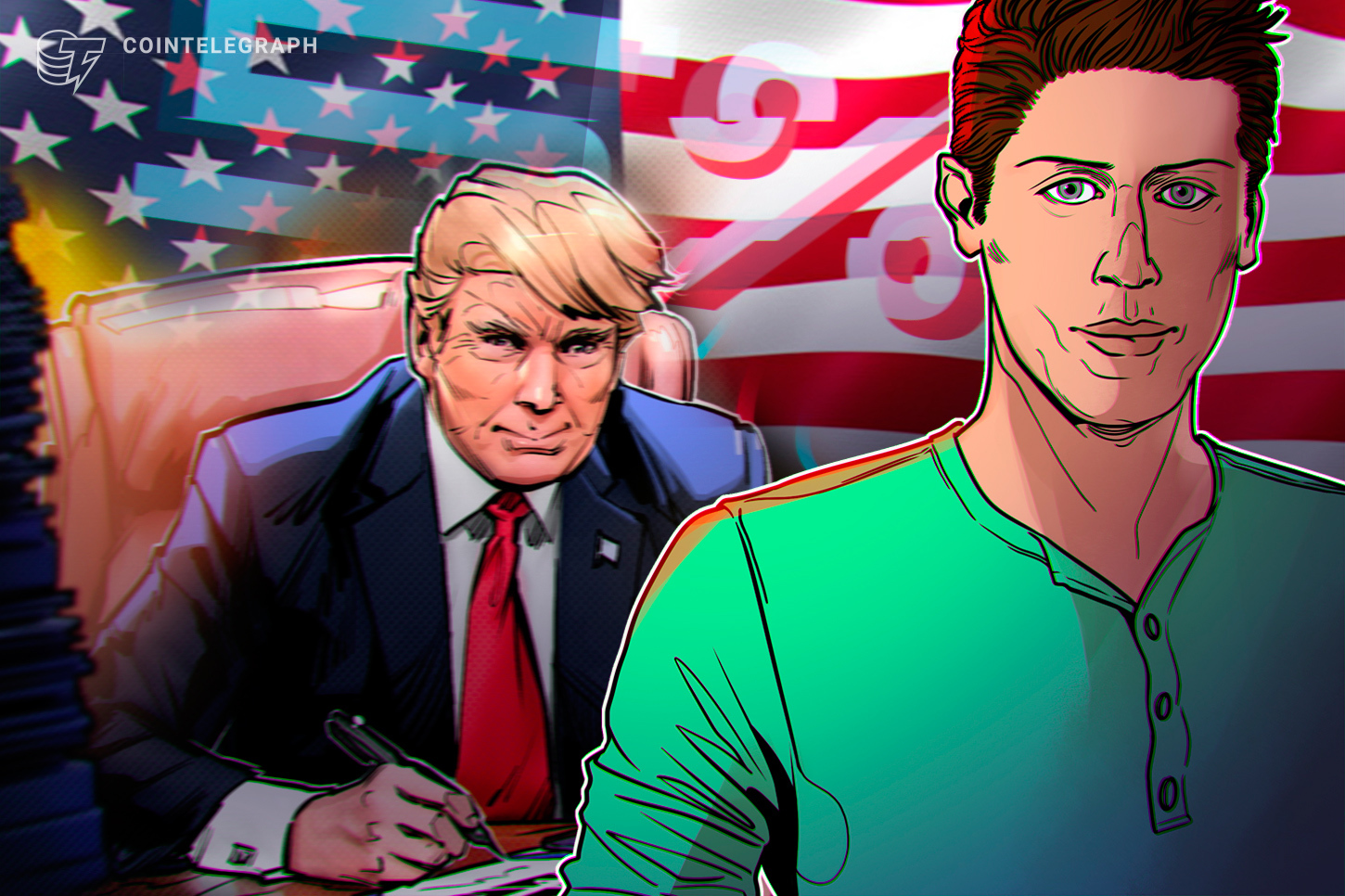 OpenAI has reportedly discussed giving the US government a 5% equity stake in early Trump administration talks as Washington tightens AI model oversight. OpenAI, the company behind ChatGPT, has reportedly discussed giving the US government a 5% equity stake as artificial intelligence oversight in Washington intensifies. The company raised the idea in early discussions with the Trump administration as it seeks to navigate a tougher political environment ahead of a potential public listing, the Financial Times reported on Thursday, citing people familiar with the matter. OpenAI CEO Sam Altman argued that giving the public a financial stake in the company would be the best way to share the economic benefits of the booming AI industry. Read more
 -
Cryptonews.com - 17:32 Jul 01, 2026
Trump's financial disclosure reveals $1.4B in 2025 crypto income from World Liberty Financial, TRUMP meme coin royalties, and a stablecoin equity sale. The post Trump’s Government Filing Just Revealed $1.4 Billion in Crypto Earnings Last Year, And His Stablecoin Is Already Under Scrutiny appeared first on Cryptonews. -
Dawn - 17:14 Jul 01, 2026
President Donald Trump said on Monday that the United States is “getting along well” with Iran, as the two countries began indirect talks via mediators in Doha on Wednesday, in a bid to advance negotiations and ease tensions following exchanges of fire between the two sides. “The denuclearisation of Iran is moving along well,” Trump told reporters before leaving for a trip. “They’ve had very good meetings, and we’ll see.” He added that Tehran had “come a long way” in negotiations with Washington. “We hit them very hard last week. I think they’re fine,” he said. “It’s the denuclearisation of Iran, it’s very simple, and Iran can never have a nuclear weapon.” Both the US and Iran said they would send officials to discuss the Islamabad Memorandum of Understanding (MoU) aimed at ending the Middle East war, but Iran insisted direct negotiations would not take place. A diplomat, speaking on condition of anonymity to discuss the sensitive talks, confirmed negotiations were underway, after earlier saying the foes woul... -
Dawn - 15:09 Jul 01, 2026
US President Donald Trump said on Wednesday he was thrilled to make his first flight aboard his new Air Force One plane, thanking Qatar for the controversial gift of the luxury jet. Trump said the United States “couldn’t build a plane like this” — despite the fact that the heavily modified Boeing 747-8 aircraft was originally made there. “To be honest with you, I’m excited about the first flight. Nobody’s ever seen anything like it,” Trump told journalists travelling with him, including an AFP photographer, ahead of a trip to North Dakota. The 80-year-old president is due to attend an event at the Theodore Roosevelt Presidential Library as part of celebrations for the 250th anniversary of American independence. “They just completed it. They made it appropriate for a president, that means the security and all of the different bells and whistles they put on. Very complex stuff, but it’s really quite something,” Trump said at Joint Base Andrews near Washington. Critics have raised a host of ethical, constitution... -
Dawn - 08:32 Jul 01, 2026
WASHINGTON: US President Donald Trump has held a series of meetings with senior national security officials to review US policy towards Iran, including whether Washington should continue negotiations with Tehran or resume broader military strikes, according to the Wall Street Journal. Trump has been briefed on options for a possible return to broader military confrontation with Iran but has, for now, chosen to continue diplomatic negotiations, according to a report by the Wall Street Journal citing US officials familiar with internal deliberations. The Journal said the discussions involved Defence Secretary Pete Hegseth and Joint Chiefs Chairman Gen. Dan Caine, as officials assessed whether the United States should abandon talks with Tehran and resume full-scale military strikes. Some officials involved in the deliberations reportedly described the harder option internally as “finishing the job”. While the deliberations reflect renewed debate within the administration over escalation, the report said Trump ha... -
Haaretz - 08:25 Jul 01, 2026
According to the report, Trump believes another round of attacks could derail diplomatic contacts and reduce the chances of ultimately dismantling Iran's nuclear program, thus preferring targeted strikes against Iran when it violates truce agreements -
Dawn - 08:18 Jul 01, 2026
US President Donald Trump reported more than $1.4 billion in income from his family’s crypto ventures last year, showing how Trump now derives most of his income from digital assets that have benefitted from his policies, according to a review of his latest financial disclosures on Tuesday. The filings, his annual disclosure for 2025 with the US Office of Government Ethics, disclosed that his companies received almost $800 million from World Liberty Financial, a crypto venture he and his sons co-founded. That income, which the president splits with family members, included more than $520m from sales of crypto tokens and more than $250m from the sale of interests in the World Liberty business. Trump reported another $635m from the sale of his Trump meme coins. The news underlines how crypto has transformed the president’s fortunes. In his disclosure a year ago, for example, the president reported $57.35m from token sales at World Liberty, which then leaped nine-fold in this year’s filing. Reuters recently esti... -
Cointelegraph.com - 04:01 Jul 01, 2026
 Memecoin sales and royalties made the most money for Trump last year, more than all of his golf courses combined. US President Donald Trump’s cryptocurrency ventures generated more income for him in 2025 than his real estate and resort businesses, according to his latest financial disclosures. Donald Trump’s annual financial disclosure report was released by the US Office of Government Ethics on Tuesday, revealing more than $1.4 billion in income from crypto-related ventures last year. The filings show Trump has profited substantially from an industry that he’s simultaneously regulating, which critics say creates a conflict of interest. In 2025, his administration pushed pro-crypto policy, a friendlier regulatory environment and executive orders favorable to digital assets, while his family’s ventures generated vast income as crypto markets surged to an all-time high. Read more
 -
AD.nl - 18:30 Jun 30, 2026
De uitspraak van het Hooggerechtshof over het inperken van geboorterecht is een grote nederlaag voor de Trump-regering. Trump hamert er al jaren op: wie geboren is in Amerika mag niet automatisch Amerikaan worden. Het Hooggerechtshof fluit hem nu terug. Voor Trump is de strijd nog niet gestreden. Dat het vrijwel onmogelijk wordt om alsnog gelijk te krijgen maakt hem niet uit, er komen namelijk verkiezingen aan. -
Defense News - 18:06 Jun 30, 2026
Trump will travel to North Dakota on Wednesday for the aircraft's inaugural presidential use over a week after its commissioning flights began. -
CryptoSlate - 09:30 Jun 30, 2026
Congress is moving to fix how the US tax code treats crypto mining and staking rewards, and for validators and their institutional clients, the fix is long overdue. H.R. 9175, the Tax Clarity for Mining and Staking Act, would let miners and stakers defer tax on newly minted tokens until they sell them, ending a […] The post Trump’s Bitcoin made in America push runs into a power problem the tax bill cannot fix appeared first on CryptoSlate. -
CryptoSlate - 11:15 Jun 29, 2026
The CLARITY Act, the crypto industry’s most important bill in Congress, is running out of time. The bill, which would establish federal rules for the crypto industry, is increasingly at risk of slipping deeper into the 2026 election year amid renewed partisan fights and a new demand from President Donald Trump that has made an […] The post CLARITY Act chances of passage this year falls to 50% after Trump’s new demands appeared first on CryptoSlate. -
Dawn - 16:56 Jun 28, 2026
Former US President Joe Biden on Saturday night criticised the policies of his successor, President Donald Trump, calling him corrupt, narcissistic, and incompetent. “It’s not just his vanity projects, tearing down the East Wing of the White House, making room for his ballroom, putting his name on the Kennedy Centre, building an arch in his own honour, even hiring his own pool guy to fix the reflecting pool. Woah! What a loser,” Biden said at a Maryland Democratic Party fundraiser event. In a 10-minute speech at a Maryland casino, Biden delivered one of his strongest criticisms of President Donald Trump since leaving office. “The reflecting pool reflects something even worse than the narcissism and incompetence at the core of this administration,” he said. “It’s the corruption, the corruption, the brazen, blatant corruption. Corruption on a scale never seen before in American history in any administration.” “What makes me angry is that Trump wants to give taxpayers’ money, your money, to the January 6th insur... -
Dawn - 10:22 Jun 28, 2026
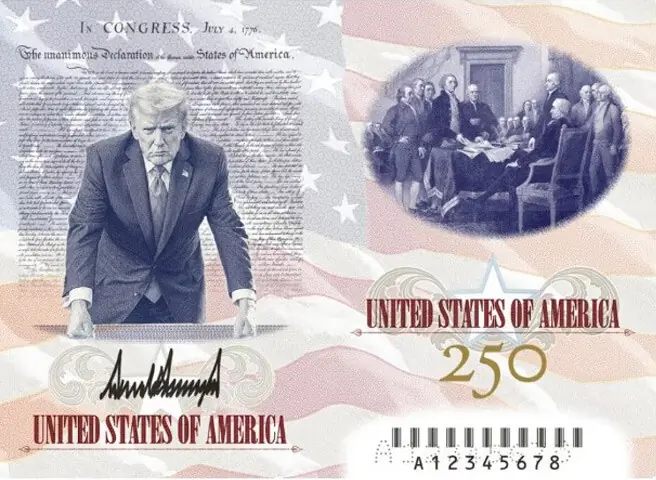 WASHINGTON: President Donald Trump has unveiled a rendering of a new limited-edition US passport to mark the country’s 250th anniversary of independence — featuring his stern-faced likeness. “The USA’s New Passport, which says, ‘Welcome, but be good!’” Trump said in a post on his Truth Social platform featuring the passport mock-up. The image features a glowering Trump leaning on his desk and his signature, with the text of the Declaration of Independence in the background. It appears to be based on a portrait taken by White House photographer Daniel Torok. The opposite page shows a painting depicting the declaration’s signing in 1776, with the words “United States of America 250.” White House calls it ‘Patriot Passport’ The White House posted the same passport rendering, with the words “PATRIOT PASSPORT”. The State Department, which had previously announced that a commemorative passport with “custom artwork” would be available from July 6, did not immediately respond to a request for comment. In A...
 -
Haaretz - 03:02 Jun 26, 2026
Trump tells Netanyahu that U.S. interests come first - and America wants the war ended • Former senior Israeli defense official Amos Gilead offers a bleak assessment of the campaign against Iran -
Dawn - 17:59 Jun 25, 2026
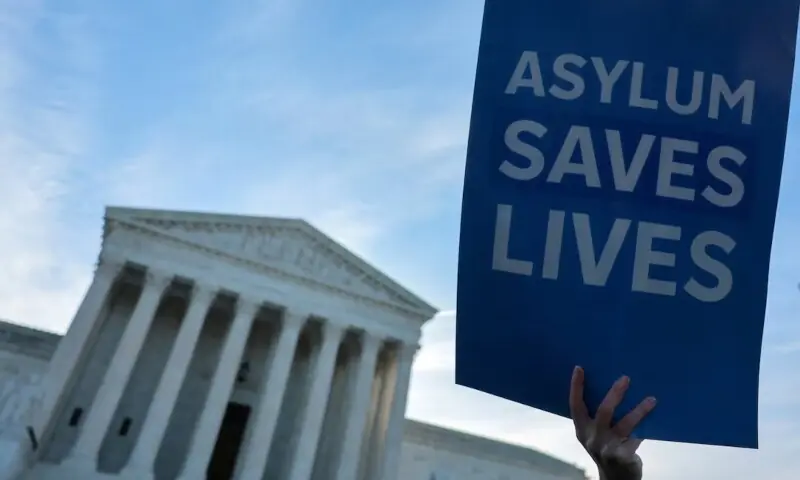 The US Supreme Court handed President Donald Trump a victory on Thursday by backing the federal government’s authority to turn away asylum seekers when officials deem US-Mexico border crossings too overburdened to handle additional claims. The court, in a 6-3 ruling powered by its conservative justices, overturned a lower court’s finding that the policy violated federal law. The Republican president’s administration has said it may seek to revive the policy, known as “metering,” after it was dropped by Trump’s Democratic predecessor, Joe Biden. The ruling was one of two in immigration-related cases issued by the court on Thursday backing Trump. The metering policy allows US immigration officials to stop asylum seekers at the border and indefinitely decline to process their claims. It is separate from a sweeping policy to deny entry to asylum seekers at the border that Trump announced after returning to the presidency last year. That policy also faces an ongoing legal challenge. A demonstrator holds a sign a...
 -
Dawn - 05:59 Jun 25, 2026
US President Donald Trump said on Wednesday it may never be known who was at fault for a deadly strike on a girls’ school in Iran on February 28, the first day of the Iran war, that killed scores of children. Reuters reported in March that an initial internal US military investigation showed US forces were likely responsible for the fatal strike in Minab in southern Iran. The Pentagon has since elevated the probe but it has not acknowledged any preliminary findings. “I don’t know that they are ever going to solve that problem,” Trump told reporters. “I don’t know that they are ever going to solve that problem in terms of whose fault was it because there were missiles flying all over the place, and it’s horrible what happened but there were missiles flying all over the place,” he said. “Somebody said it was our missile, maybe it wasn’t our missile but I have seen nothing to lead me to believe it was,” Trump remarked, adding: “I don’t think it was us.” The strike on February 28, when the US and Israe... -
Dawn - 05:14 Jun 25, 2026
United States President Donald Trump faced pointed criticism over the Iran war in a closed-door meeting with fellow Republicans on Wednesday, shortly before his administration asked Congress for tens of billions of dollars to pay for the conflict. Several Republicans who attended said Trump engaged in a shouting match with Senator Bill Cassidy, who said the administration needed to explain a framework deal Trump signed last week that gives Iran financial incentives but falls short of the goals he laid out at the war’s beginning. “The American people need to know more than we are being told,” Cassidy told reporters. “It does not appear, although I don’t know for sure, that the course of this is going the way that we were told.” Later on Wednesday, the Senate’s Republican leaders scheduled a late-night vote to block a resolution calling for an end to hostilities with Iran in what appeared to be an effort to please the president. The Senate voted by 50 to 47, largely along party lines, to block a war powers reso... -
Cointelegraph.com - 15:18 Jun 24, 2026
The 21st Century ROAD to Housing Act included a provision that the US Federal Reserve was barred from issuing or creating a CBDC until 2030, but exempted certain stablecoins. US President Donald Trump cancelled the signing ceremony for a housing bill containing a ban on a central bank digital currency (CBDC) as he looked for Republicans in Congress to prioritize a controversial voting bill. In a Wednesday morning Truth Social post, Trump said that the signing for the 21st Century ROAD to Housing Act, passed by the US Senate and House of Representatives, would be cancelled “until such time as we pass the desperately needed SAVE America Act.” Source: Donald Trump Read more