News
-
Haaretz - 04:00 Dec 21, 2025
The Israeli government has strong arguments regarding the IPC's decision to declare a Phase 5 famine in Gaza in August. This cannot erase the cruel policy of deliberate starvation led by Netanyahu that resulted in the deaths of hundreds -
FD - 04:00 Dec 21, 2025
Deze week hoor je onze klimaatverslaggever Eva Selderbeek over haar diner met activist Hannah Prins. -
Dawn - 03:58 Dec 21, 2025
KARACHI: Despite authorities’ best efforts, there is a dire shortage of dollars in the open market, and many currency exchanges are “only selling what they buy”, causing consternation among those planning to travel abroad for the holidays, or in the new year. Visits to multiple exchange outlets across different parts of the metropolis revealed that currency dealers are facing a dearth of greenbacks in their accounts. Some have stopped selling dollars altogether, while others are rationing their supply, only allowing customers to purchase up to $100 at a time. In addition, a small number of exchanges only have old-design dollar notes in stock. These are not of much use to travellers who wish to exchange greenbacks for the local currency of their destination. As a result, a number of passengers have been forced to purchase exotic foreign currencies in Pakistan, leading to them getting a ‘bad deal’ in terms of the exchange rate. One such passenger, who was travelling to Malaysia at the end of November, told Dawn... -
Dawn - 03:45 Dec 21, 2025
RAWALPINDI: As the Pakistan Meteorological Department (PMD) predicted rain in Rawalpindi and Islamabad and snowfall over the hills till December 22, the district administration of Murree said it had completed all arrangements to handle the situation. According to Met Office, landslides and snowfall may cause road closures/slippery conditions in Naran, Kaghan, Chitral, Dir, Swat, Kohistan, Mansehra, Abbottabad, Shangla, Gilgit, Astore, Hunza, Skardu, Murree, Galliyat, Neelum valley, Bagh, Poonch and Haveli on December 21. It stated that a westerly wave was affecting western and upper parts of the country. Rain (snowfall over mountains) is expected in north/west Balochistan, Khyber Pakhtunkhwa, Gilgit-Baltistan, Kashmir, Islamabad and Potohar region. Cold and partly cloudy weather is likely in other parts of the country. Fog/smog is likely to persist over districts of eastern Punjab and upper Sindh. Talking to Dawn, Murree Deputy Commissioner Agha Zaheer Shirazi said the administration was on its toes to deal w... -
Dawn - 03:33 Dec 21, 2025
QUETTA: The Quetta valley and several towns and cities across Balochistan received the first winter rainfall on Saturday, ending a prolonged dry spell and bringing much-needed relief to growers facing drought-like conditions. However, the rains also disrupted normal life, suspending power supply and mobile networks, flooding roads and houses, and triggering road accidents that left two women dead and several others injured. Clouds had been hovering over Quetta and adjoining areas for the past two days, though weather experts initially ruled out significant rainfall, describing the system over Balochistan as weak and unlikely to cause torrential rain. Contrary to these forecasts, rain began around noon in parts of the Quetta valley and soon intensified, spreading across the provincial capital. As the rainfall strengthened, roads in urban areas were inundated with rainwater, leading to widespread traffic congestion. Power supply to Quetta was suspended shortly after the rain began, plunging large parts of the c... -
Dawn - 03:32 Dec 21, 2025
• PTI to challenge guilty ruling in high court, as ex-PM says ‘not surprised’ • Asad says left with no option but ‘resistance’; Raja insists verdict not based on evidence ISLAMABAD: As a court sentenced him to jail in the Toshakhana-II case, former prime minister Imran Khan on Saturday issued a call for a nationwide protest besides announcing his intention to challenge the verdict in the Islamabad High Court. The PTI chief does not have access to his social media handles in jail. “I have sent a message to [Khyber Pakhtunkhwa Chief Minister] Sohail Afridi to prepare for the street movement. The entire nation will have to rise for its rights,” he said as per the account of the conversation between the PTI leader and his lawyer posted on X. He said his sentence in this case did not come as a surprise, but he had asked his legal team to move the high court against the decision. “Like the baseless decisions and sentences of the last three years, the Toshakhana-II decision is also nothing new to me. This decision w... -
Focus.ua - 03:24 Dec 21, 2025
Принц Гарри рассказал о "хладнокровном" подарке, который ранее получил во время празднования Рождества от одного из ключевых членов королевской семьи. -
Dawn - 03:09 Dec 21, 2025
BANNU: Security forces reportedly killed five militants, including a so-called commander, during an intelligence-based operation in the Ping area under the jurisdiction of Ahmadzai police station in Bannu on Saturday. Police officials said the operation was launched after security agencies received information about militants hiding in the area. Acting on the tip-off, security forces cordoned off the locality and engaged the suspects, resulting in the killing of five militants. The officials said the group was involved in sabotage activities and had been using the area as a base to plan attacks. Following the encounter, security forces carried out a search and clearance operation in the surrounding areas to trace any possible accomplices. Law enforcement agencies were placed on high alert, while security checkpoints in and around Bannu were strengthened as a precautionary measure. Police sources said security operations had been intensified across the district in view of recent security threats. They s... -
Dawn - 02:54 Dec 21, 2025
ISLAMABAD: In a move billed by its sponsors as reaffirming parliament’s supremacy, a process has been initiated to amend a Senate rule to limit the scope for high courts to intervene in parliamentary affairs. Amid opposition from the Ministry of Parliamentary Affairs, the Senate Standing Committee on Rules of Procedure and Privileges has approved an amendment to Rule 166(5) of the Rules of Procedure and Conduct of Business in the Senate. Backers say the change will leave no legal room for the judiciary to interfere in parliamentary matters by relying on the rule in its present form. The proposed amendment, spearheaded by former deputy chairman Saleem Mandviwalla and signed by around three dozen lawmakers, expands the definition of public petitions that can be taken up by Senate committees. It states that a public petition, submitted by a citizen or a group of citizens in the prescribed form under Rule 277, may be presented on “any matter of public importance”, including grievances arising from disputes wher... -
Dawn - 02:14 Dec 21, 2025
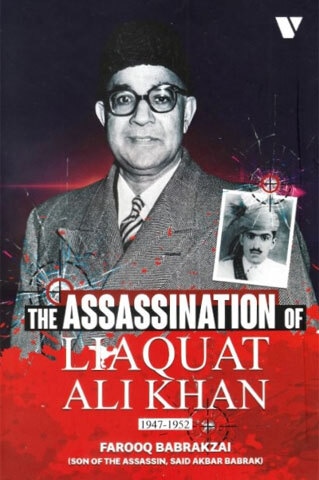 In a mystery, the sleuth must be believably involved and emotionally invested in solving the crime. — Diane Mott Davidson On Tuesday, 16 October, 1951, around 4 pm, the first prime minister of Pakistan, Liaquat Ali Khan, was going to address a public meeting in Company Garden in Rawalpindi. As he walked to the microphone and uttered the words“Baraadaraan-i-Millat” [Brothers of the Nation], a man named Said Akbar, sitting on the ground near the dais, fired two bullets at him in rapid succession with a 9mm semi-automatic pistol. Chaos and mayhem suddenly erupted in the meeting. Khan Najaf Khan, the Deputy Superintendent of Police who had personally supervised the security arrangements, yelled in Pashto, “Who fired the shots? Shoot [him]!”. Within seconds, a police inspector, Mohammad Shah, came running with his service revolver drawn and shot Said Akbar five times at close range, in such a haphazard manner that he missed one shot altogether. As Said Akbar was lying on the ground dying, he was also stabbed more ...
 -
Focus.ua - 02:11 Dec 21, 2025
Переговоры между российской и американской сторонами в Майами продолжатся, и к ним может присоединиться государственный секретарь США Марко Рубио. -
Dawn - 02:01 Dec 21, 2025
HYDERABAD: Political conditions and governance in the country was the topic of a session held on Saturday -- the second day of the 11th edition of Ayaz Melo, at the Sindh Museum. Journalist Wusatullah Khan moderated the session titled Saang siyasat ja (Deceptive moves of politics). “Our country is run like a laboratory,” he remarked, observing that powerful elites have captured it. “We will see progress [of the country] only when we are able to rid the country of these people,” he believed. In the past, ‘One Unit’ was introduced by doing away with provinces’ status. It was claimed that this would offer a solution to all ills. Now, once again, there is talk of new provinces, he wondered. Munizae Jahangir pointed out that no dictator could be a ‘progressive’ individual; people have fought a long flight here for democratic values. She said that her mother, Asma Jahangir, led this fight as well. Unfortunately, politicians, as well as the judiciary and other institutions, did not deliver to the masses despite this... -
JPost.com - Antisemitism - 01:48 Dec 21, 2025
There are "no current or impending threats to the community," AFP confirmed.
-
Adevarul Romania - 01:45 Dec 21, 2025
Indemnizațiile parlamentarilor ar urma să fie ușor diminuate, însă reducerea este nesemnificativă în comparație cu sumele totale încasate lunar. La acestea se adaugă o serie de beneficii, precum decontarea unor cheltuieli și diurne pentru deplasări. -
Dawn - 01:38 Dec 21, 2025
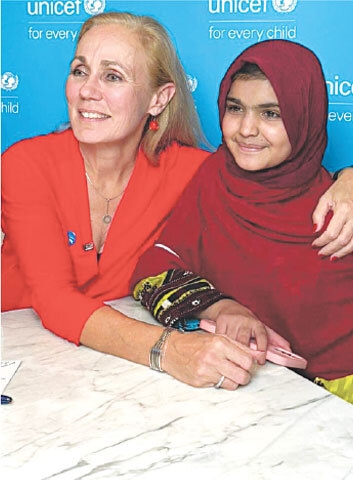 Zunaira with Unicef's Deputy Executive Director Kitty van der Heijden at COP29 in Baku, Azerbaijan, in November 2024 Zunaira Qayyum, who will turn 15 in July next year, is currently reading Crime and Punishment, arguably the most well-known work of Russian master Fyodor Dostoyevsky. A voracious reader, the ninth-grade student races and, at times, slogs through the daunting tome, balancing it with her studies and extracurricular activities. “I should be able to finish the book in the next few days,” she tells Eos in a phone interview. Finishing Dostoyesky’s psychological masterpiece is just a stepping stone for the young woman from Balochistan’s impoverished Hub district. Zunaira aspires to become the secretary-general of the United Nations (UN). “There is yet to be a female secretary-general of the UN and I want to change that,” she says with confidence. PUTTING IN THE HARD HOURS Zunaira has already racked up a string of achievements that belie her age. Her research on the impacts of climate change-induced fl...
 -
Dawn - 01:38 Dec 21, 2025
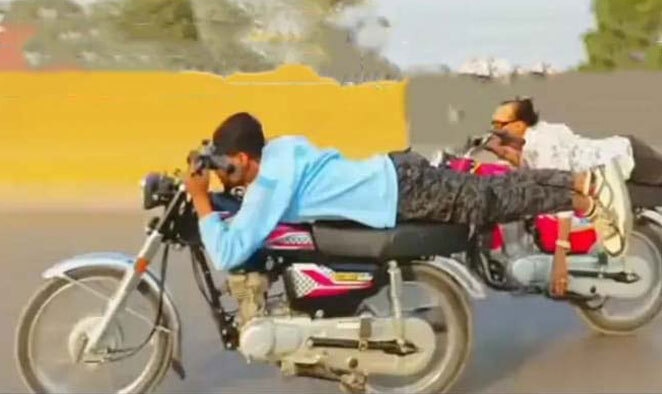 Tariq 180 (left) and Saqib Sanki during a race on the Super Highway in 2024 | Screengrab It’s a situation most drivers on Karachi’s major thoroughfares have experienced, especially on weekend nights and public holidays: a ghost motorcycle closing in at breakneck speed. At first, it is little more than a blur in the rear-view mirror. Then, as it bears down, the driver finally registers the young man lying flat along the length of the motorcycle, his eyes peering forward just above the handlebar. The speedometer is missing. The rider’s arms are tucked tight to the side — either holding the handle or, in some cases, clutching the suspension on the sides and using shoulders to steer the handlebar. His legs lie flat or are scissored tightly at the ankle, his body locked in an aerodynamic pose. Most drivers know what to do when faced with such a motorcycle: hold your line without moving in either direction. Do not brake suddenly. Do not swerve. Almost without fail, the rider veers away at the very last second, zigz...
 -
Adevarul Romania - 01:30 Dec 21, 2025
Dezrobirea romilor nu a început în momentul în care au fost adoptate legile în Țara Românească și Moldova. Goi, fără să știe carte, obligați să stea mulți ani în locul în care i-a prins dezrobirea, de grumazul lor au fost prinse alte lanțuri, mai grele. -
ukrinform.net - 01:28 Dec 21, 2025
Russian President Vladimir Putin has not changed his war aims in Ukraine over four years of full-scale war, according to U.S. intelligence assessments. -
AD.nl - 01:22 Dec 21, 2025
In Australië is zondagochtend (lokale tijd) een nationale herdenkingsdag voor de slachtoffers van de dodelijke aanslag op Bondi Beach van precies een week geleden begonnen. -
Focus.ua - 01:13 Dec 21, 2025
В Киеве несколько дней назад курьер службы Glovo разбил лицо 65-летнему пенсионеру из-за замечания: пострадавшим оказался отец известного блогера Кирилла Степанца. Он рассказал, кто совершил нападение и что было дальше.