Publisher items dated Monday, 20 July 2026, grouped by their original publication date in UTC. Open the source for the full report and its later updates.
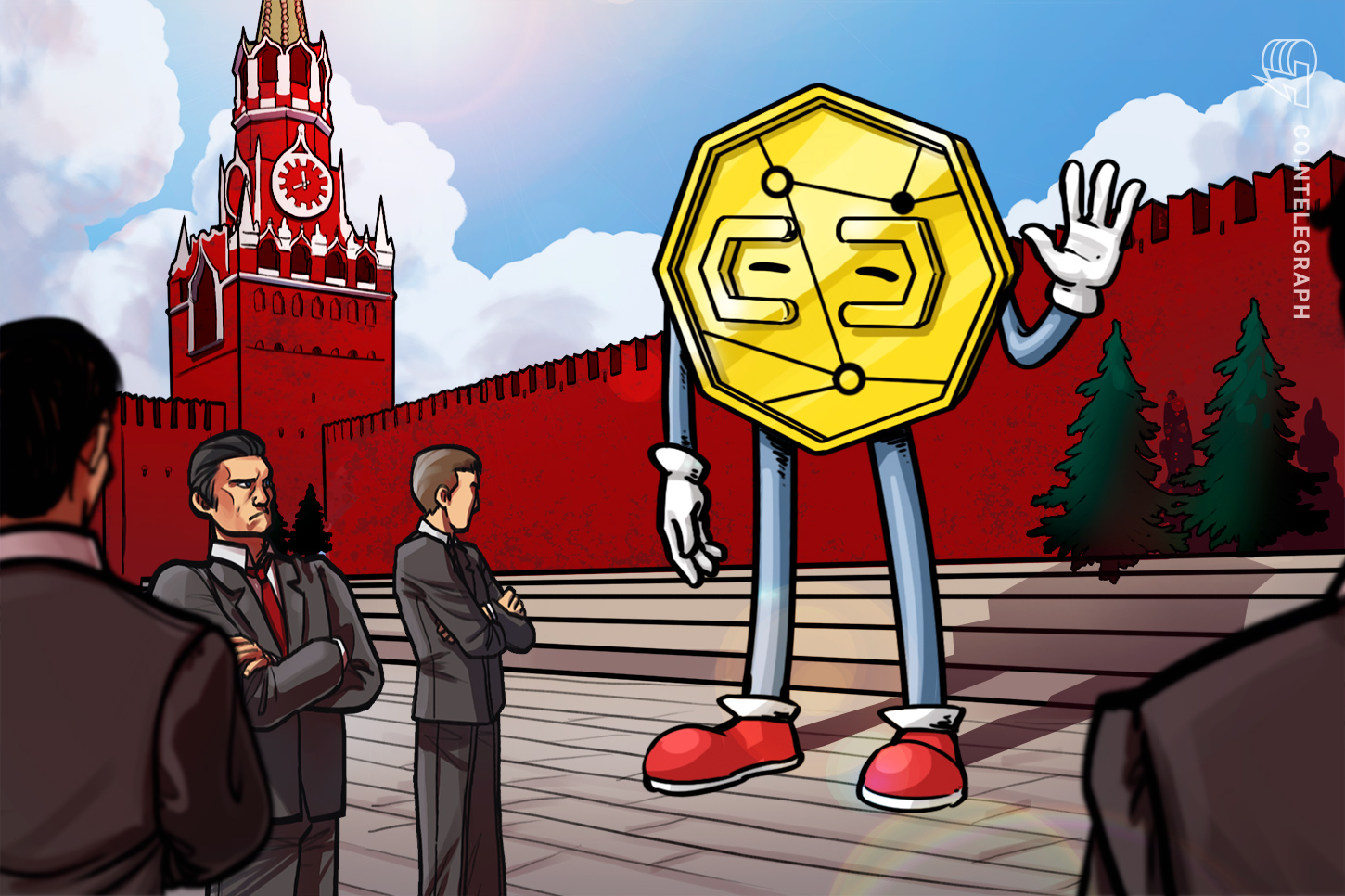
Russia’s State Duma is set to consider the crypto regulation bill in second and third readings, with rules for investors and cross-border payments included. Russia’s parliament, the State Duma, is preparing to hold final readings on a bill to regulate the cryptocurrency market. The draft bill No. 1194918-8, titled “On Digital Currency and Digital Rights,” will undergo second and third readings on Tuesday, according to Anatoly Aksakov, chairman of the State Duma Committee on Financial Markets, as reported by RBC. The bill would introduce limits for non-qualified investors, including a 300,000 ruble ($3,800) annual limit on crypto purchases through a single intermediary and a 100,000 ruble limit for transfers abroad. Qualified investors would face higher limits of 3 million rubles for purcha…
Grayscale plans to establish regular cash distributions from staking rewards generated by its Ether and Solana exchange-traded products. Asset manager Grayscale plans to establish regular cash distributions from rewards generated by its Ether (ETH) and Solana (SOL) staking exchange-traded products (ETPs), giving holders recurring access to yield generated by underlying assets. In Form 8-K filings submitted to the US Securities and Exchange Commission (SEC), Grayscale said it intends to amend the trust agreements governing the Grayscale Solana Staking ETF (GSOL) and the Grayscale Ethereum Staking ETF (ETHE) around Aug. 7. The amendments would require each trust to convert staking rewards into cash no less often than quarterly and distribute net proceeds to shareholders. The framework coul…
Trump is pushing the Senate to pass the Digital Asset Market Clarity Act before August 11. Kalshi odds, stablecoin sticking points, and what a stall means for crypto market structure.
With a Fear and Greed index pointing solidly at "fear," crypto prices drifted lower even as stock index futures rose. PUMP's 20% surge was the only real headline in an otherwise quiet session.
Bitcoin preserved a key long-term trend line as support for a third week as US-Iran war tensions delivered new five-week highs in oil prices. Bitcoin (BTC) starts the last full week of July holding key support while macro clouds continue to gather. Key points: In a familiar move, Bitcoin saw sell-side pressure soon after the weekly close going into Monday morning, with local lows reaching $63,700, data from TradingView confirms.
US spot Bitcoin ETFs extended their inflow streak to two weeks with $75.7 million in net inflows, but analysts said demand remains insufficient to fuel a sustained uptrend. US-listed spot Bitcoin exchange-traded funds (ETFs) are seeing renewed investor demand, but the latest inflow streak has yet to provide enough momentum for a stronger recovery. Bitcoin ETFs recorded $75.7 million in net inflows for the week ending July 17, marking a second consecutive week of positive flows, according to SoSoValue data. The latest inflows followed $197.4 million in net inflows the previous week, bringing July’s total ETF inflows to $200.2 million. US spot Bitcoin ETFs recorded $4.5 billion in net outflows in June, with total 2026 net flows still negative at $5.2 billion.
The attacker used a $1.12 million flash loan from Kamino to manipulate pool ratios, enabling them to withdraw assets at favorable rates before bridging funds.
XRP trades near $1.09 as Korean exchanges show stronger conviction in XRP than Bitcoin. Analyze the technical setup, key levels, and what triggers the next breakout.
The Japanese logistics firm plans to pay 2,300 partners, including truck drivers, using JPYC in Japan’s first large-scale corporate stablecoin rollout.
Zcash’s Orchard implementation has increased interest in how users move between different privacy-focused assets, including swaps between Zcash and Monero. For those not familiar with Orchard, this is Zcash’s third-generation shielded pool, which is built to replace older privacy systems with stronger efficiency and more modern cryptography. It uses the Halo 2 proving system, Pallas-based …
The Bank of Korea’s CBDC pilot will add two regional banks, new payment features and tests of government subsidy payments using tokenized bank deposits The Bank of Korea may launch the second phase of Project Hangang, its wholesale central bank digital currency (CBDC) pilot, as early as September, according to Yonhap News. The next stage expands participation to nine banks from seven, introduces new payment features and tests government subsidy disbursements through tokenized bank deposits. Regional lenders Kyongnam Bank and iM Bank will join the existing group of participants. Project Hangang uses a blockchain-based wholesale CBDC issued by the central bank as the settlement asset for deposit tokens issued by commercial banks. Consumers can then use the bank-issued tokens for everyday pay…
Days after Kimi K3 rattled chip stocks, Moonshot is moving toward a Hong Kong listing at a $30 billion-plus valuation while Alibaba's Qwen goes open-weight.