ISW Blog
-
ISW Blog - 00:33 Sep 04, 2022
 Karolina Hird, Grace Mappes, Angela Howard, George Barros, and Mason Clark September 3, 8:00 pm ET Click here to see ISW’s interactive map of the Russian invasion of Ukraine. This map is updated daily alongside the static maps present in this report. Ukrainian officials directly stated on September 3 that the ongoing Ukrainian counteroffensive in southern Ukraine is an intentionally methodical operation to degrade Russian forces and logistics, rather than one aimed at immediately recapturing large swathes of territory. Ukrainian Presidential Advisor Oleksiy Arestovych told the Wall Street Journal on September 3 that the current goal of Ukrainian forces in the south is the “systemic grinding of Putin’s army and that Ukrainian troops are slowly and systematically uncovering and destroying Russia’s operational logistical supply system with artillery and precision weapon strikes.[1] Arestovych’s statement echoes ISW’s assessment that the ongoing counteroffensive will likely not result in immediate gains and that ...
 -
ISW Blog - 02:05 Sep 03, 2022
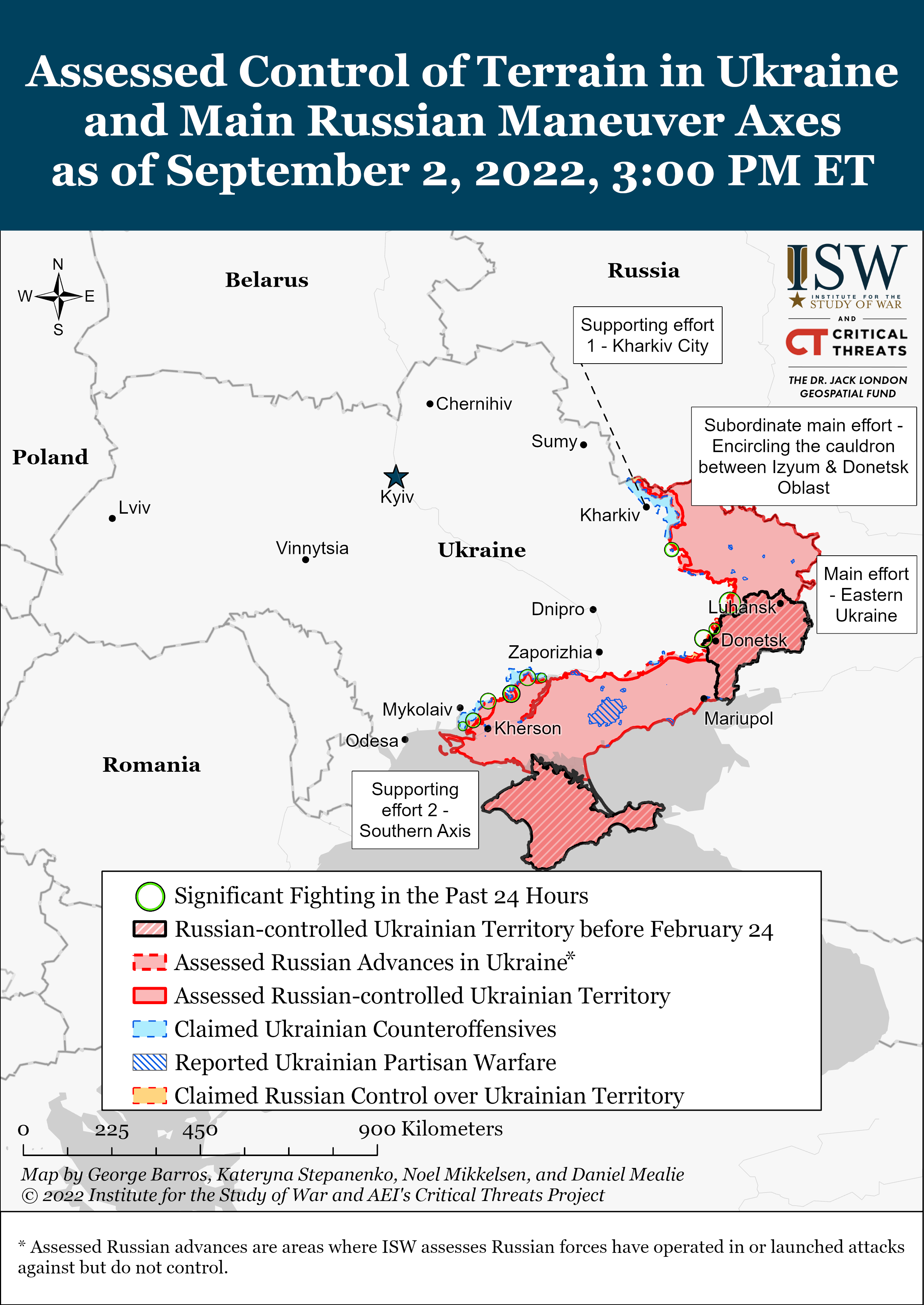 Kateryna Stepanenko, Karolina Hird, Grace Mappes, Layne Philipson, George Barros, and Mason Clark September 2, 9:00 pm ET Click here to see ISW’s interactive map of the Russian invasion of Ukraine. This map is updated daily alongside the static maps present in this report. Russian independent polling organization Levada posted survey results on September 1 indicating that while the majority of Russians still support military operations in Ukraine, public support for the war may be gradually declining. Levada stated that the overall support for Russian forces in Ukraine has not changed significantly over the summer, with 76% of the survey’s respondents in favor of the action of Russian forces in Ukraine (46% strongly supporting and 30% generally supporting).[1] Levada also noted that 48% of respondents believe that it is necessary for Russian operations in Ukraine to continue.[2] The polls showed that 44% of respondents were in favor of peace negotiations and that a majority of Russia’s younger segments of the...
 -
ISW Blog - 04:07 Sep 01, 2022
 Kateryna Stepanenko, Karolina Hird, George Barros, and Frederick W. Kagan August 31, 10:45 pm ET Click here to see ISW's interactive map of the Russian invasion of Ukraine. This map is updated daily alongside the static maps present in this report. Ukrainians and the West should not fall for Russian information operations portraying the Ukrainian counteroffensive in Kherson Oblast as having failed almost instantly or that depict Ukraine as a helpless puppet of Western masters for launching it at this time. The Russian Ministry of Defense began conducting an information operation to present Ukraine’s counteroffensive as decisively failed almost as soon as it was announced on August 29.[1] Several prominent military bloggers—even bloggers who have historically been critical of the Kremlin—are promoting this message.[2] Other milbloggers are additionally promoting the narrative that Ukraine’s Western handlers pushed Ukraine to launch the counteroffensive prematurely and/or too late for “political” reasons and...
 -
ISW Blog - 03:52 Aug 31, 2022
 Kateryna Stepanenko, Karolina Hird, George Barros, Grace Mappes, and Frederick W. Kagan August 30, 10:30 pm ET Click here to see ISW's interactive map of the Russian invasion of Ukraine. This map is updated daily alongside the static maps present in this report. Ukrainian forces began striking Russian pontoon ferries across the Dnipro River on August 29, which is consistent with the start of the Ukrainian counteroffensive. The effects of destroying ferries will likely be more ephemeral than those of putting bridges out of commission, so attacking them makes sense in conjunction with active ground operations. Ukrainian military officials confirmed that Ukrainian forces destroyed a Russian pontoon-ferry crossing in Lvove, approximately 16km west of Nova Kakhovka on the right bank of the Dnipro River on August 29.[1] Ukrainian and Russian sources have also reported that Ukrainian forces struck a pontoon crossing constructed out of barges near the Antonivsky Road Bridge.[2] Ukrainian forces have long undertaken ...
 -
ISW Blog - 03:28 Aug 30, 2022
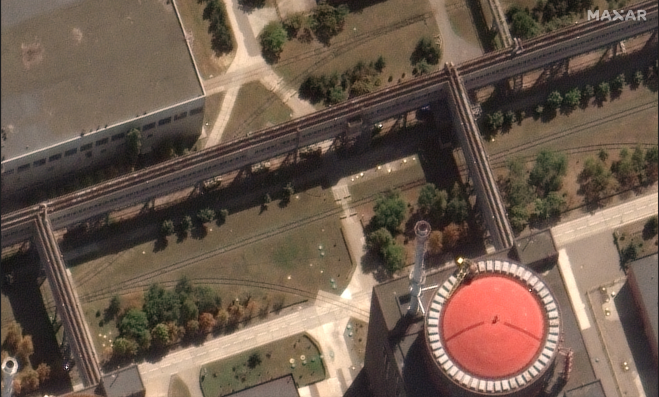 Kateryna Stepanenko, Grace Mappes, Angela Howard, Layne Philipson, and Frederick W. Kagan August 29, 10:15 pm ET Click here to see ISW's interactive map of the Russian invasion of Ukraine. This map is updated daily alongside the static maps present in this report. Ukrainian military officials announced the start of the Ukrainian counteroffensive in Kherson Oblast on August 29. Ukrainian officials reported that Ukrainian forces have broken through the first line of defenses in unspecified areas of Kherson Oblast and are seeking to take advantage of the disruption of Russian ground lines of communication caused by Ukrainian HIMARS strikes over many weeks.[1] Ukrainian officials did not confirm liberating any settlements, but some Russian milbloggers and unnamed sources speaking with Western outlets stated that Ukrainian forces liberated several settlements west and northwest of Kherson City, near the Ukrainian bridgehead over the Inhulets River, and south of the Kherson-Dnipropetrovsk Oblast border.[2] The Russ...
 -
ISW Blog - 02:02 Aug 29, 2022
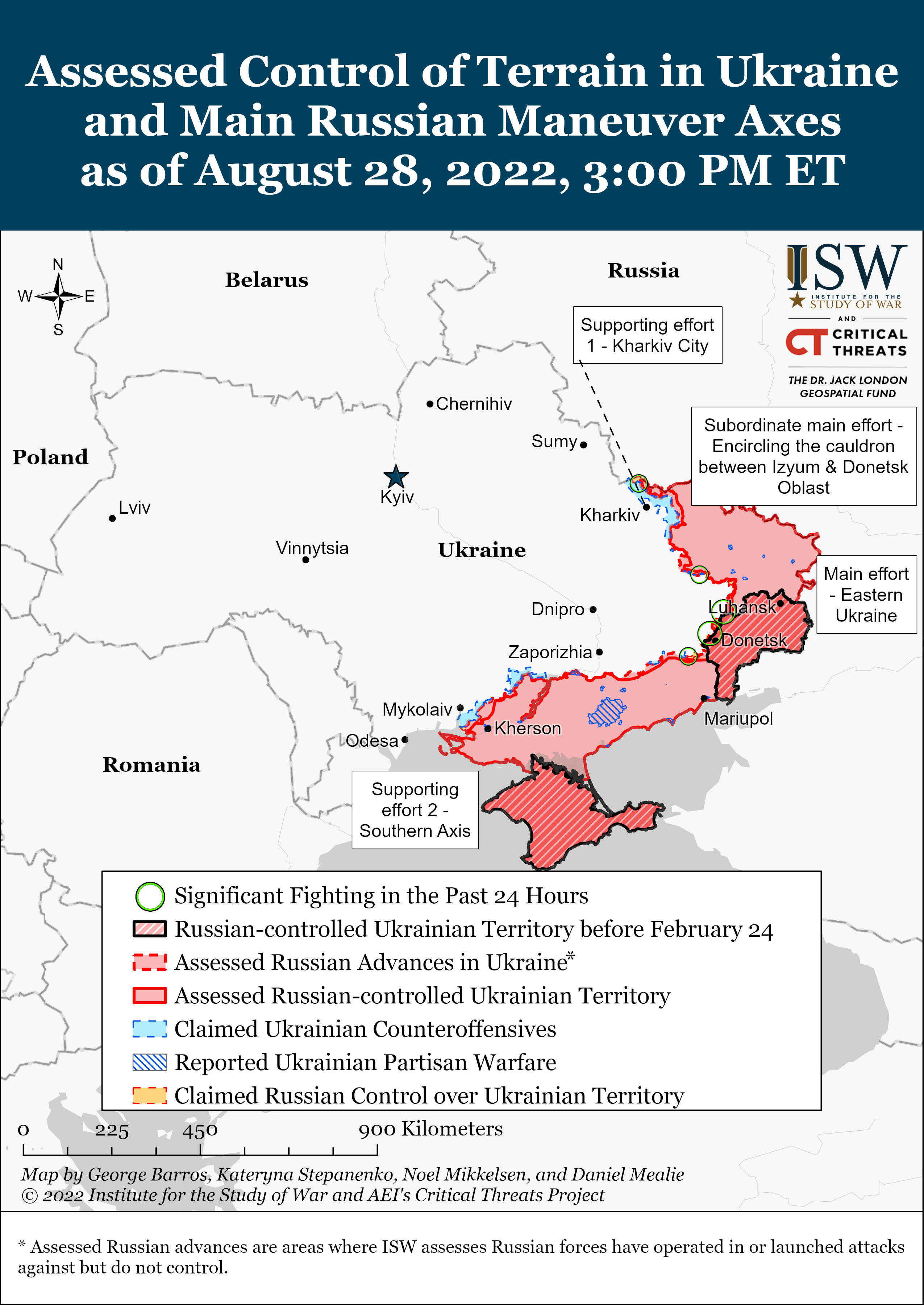 Russian Offensive Campaign Assessment, August 28 Kateryna Stepanenko, Layne Philipson, Angela Howard, and Frederick W. Kagan August 28, 8:30 ET Click here to see ISW's interactive map of the Russian invasion of Ukraine. This map is updated daily alongside the static maps present in this report. Russian President Vladimir Putin signed two decrees on August 27 in a reported effort to assist stateless peoples and residents of Donbas and Ukraine live and work in the Russian Federation. The first decree allows Donbas residents, Ukrainians, and stateless peoples to live and work in Russia indefinitely.[1] The decree also allows Ukrainian and Donbas residents to work in Russia without a permit so long as they have acquired an identification card within 30 days of the August 27 decree.[2] The order also requires that all Donbas and Ukrainian residents arriving to Russia undergo mandatory fingerprint registration and a medical examination for the use of drugs, psychotropic substances, infectious diseases, and HIV.[3...
 -
ISW Blog - 00:24 Aug 28, 2022
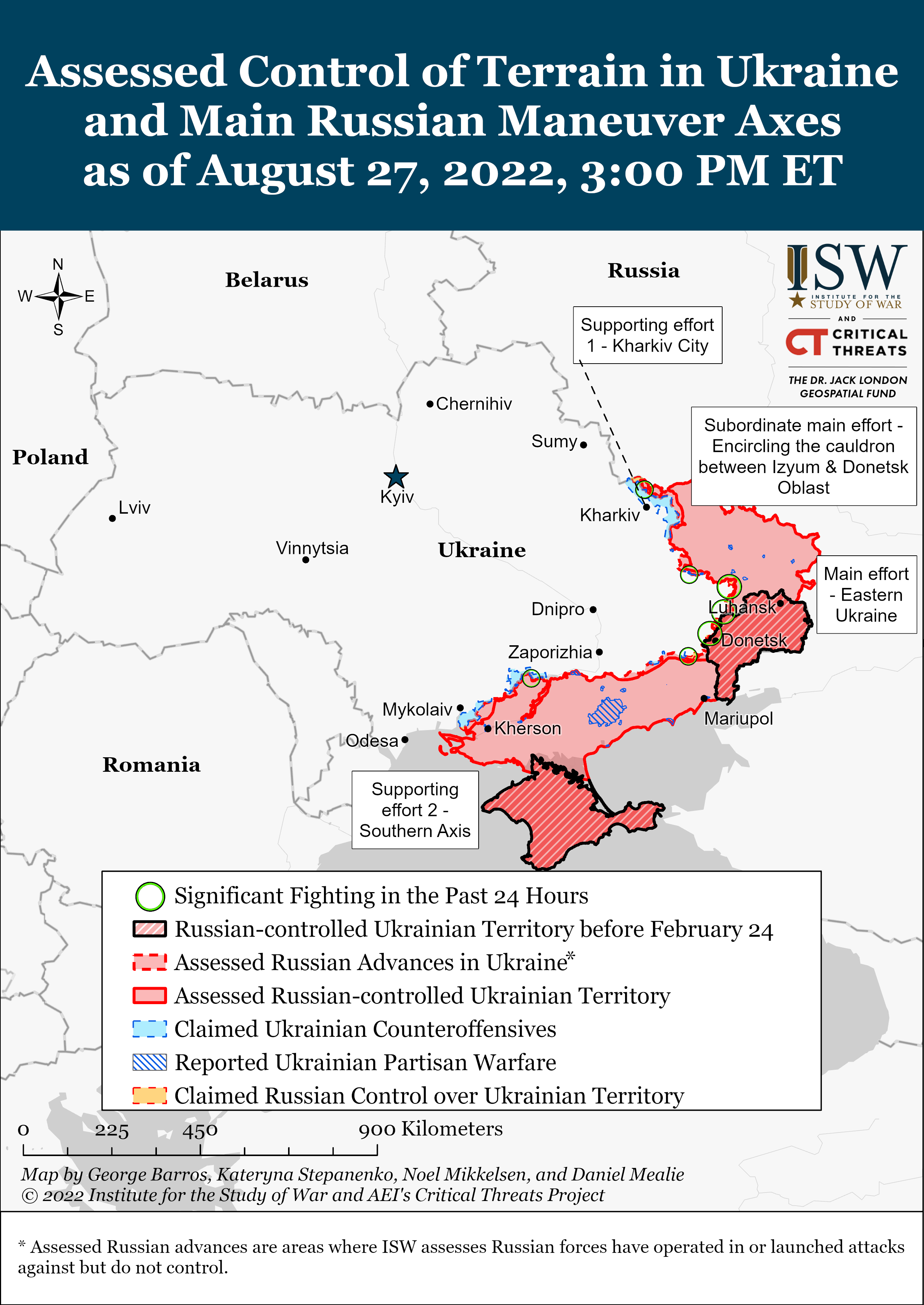 Karolina Hird, Grace Mappes, George Barros, and Frederick W. Kagan August 27, 7:30ET Click here to see ISW's interactive map of the Russian invasion of Ukraine. This map is updated daily alongside the static maps present in this report. The volunteer battalions constituting Russia’s 3rd Army Corps will likely deploy to Ukraine in ad hoc combined arms units to renew offensive operations, possibly on the Donetsk City axis and the Southern Axis. The volunteer battalions Russia has been forming have been divided into two general groups, as ISW has previously reported. Some battalions are deploying to the front lines as soon as they have completed their abbreviated initial training. Others have been coalescing into a new 3rd Army Corps.[1] An analysis by Janes Intelligence Group of new images from combat training for elements of the 3rd Army Corps at the Mulino Training Ground in Nizhny Novogorod found 3rd Army Corps troops training with more modern Russian equipment such as BMP-3 infantry fighting vehicles, T-80B...
 -
ISW Blog - 00:14 Aug 27, 2022
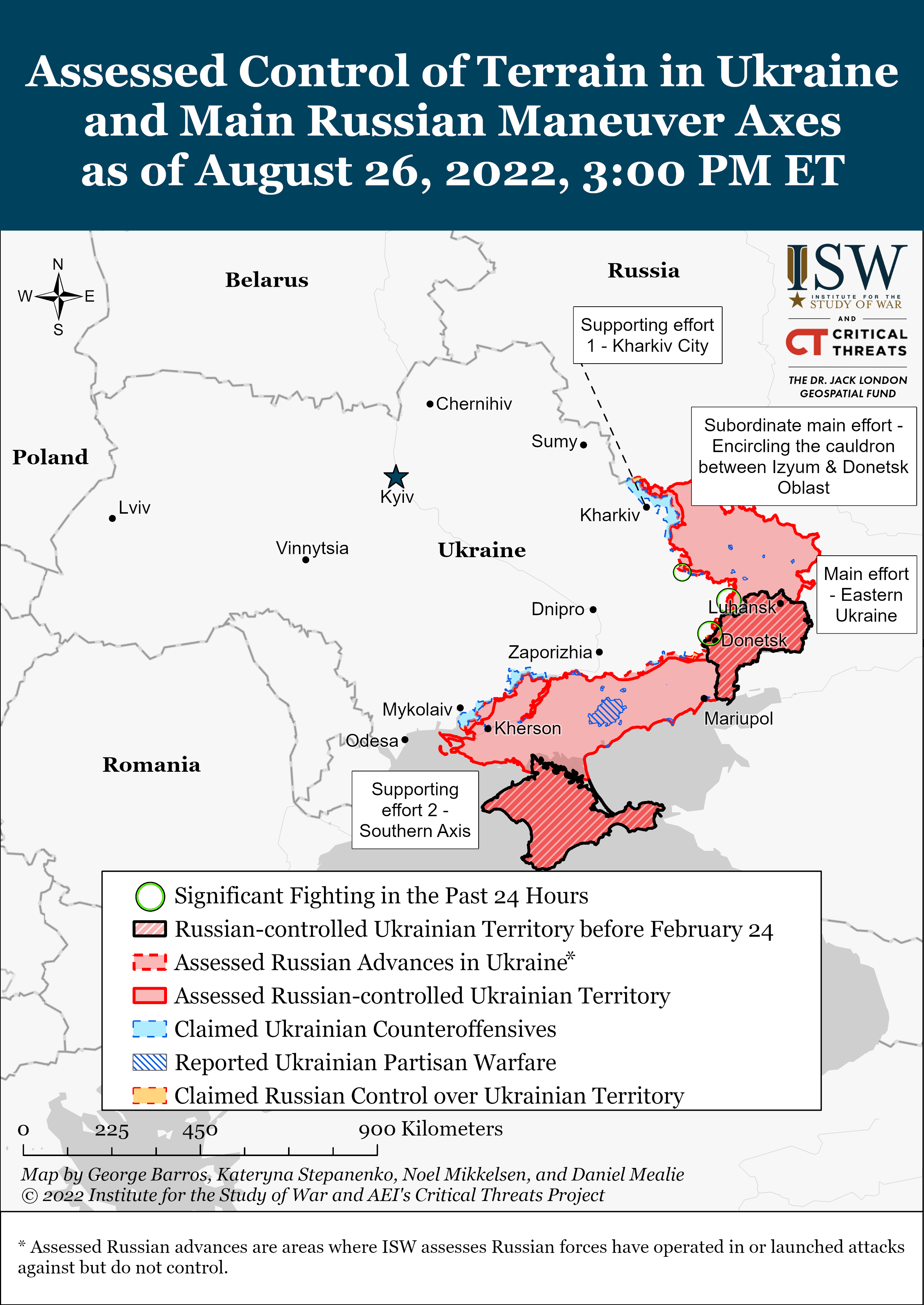 Karolina Hird, Grace Mappes, Angela Howard, George Barros, and Mason Clark August 26, 6:45pm ET Click here to see ISW's interactive map of the Russian invasion of Ukraine. This map is updated daily alongside the static maps present in this report. Russian forces did not make any claimed or assessed territorial gains in Ukraine on August 26, 2022, for the first time since August 18, 2022.[1] However, Russian forces still conducted limited and unsuccessful ground attacks on the Eastern Axis on August 26. The International Atomic Energy Agency (IAEA) stated that unspecified actors (but almost certainly Russian forces) reconnected part of the Zaporizhzhia Nuclear Power Plant (ZNPP) to the Ukrainian power grid on August 26.[2] Ukrainian nuclear operating enterprise Energoatom stated that unspecified actors reconnected one of the power units to the ZNPP and are working to add capacity to the ZNPP’s operations.[3] Russian forces remain in full control of the plant, though it is unclear why they would have reconnect...
 -
ISW Blog - 00:26 Aug 26, 2022
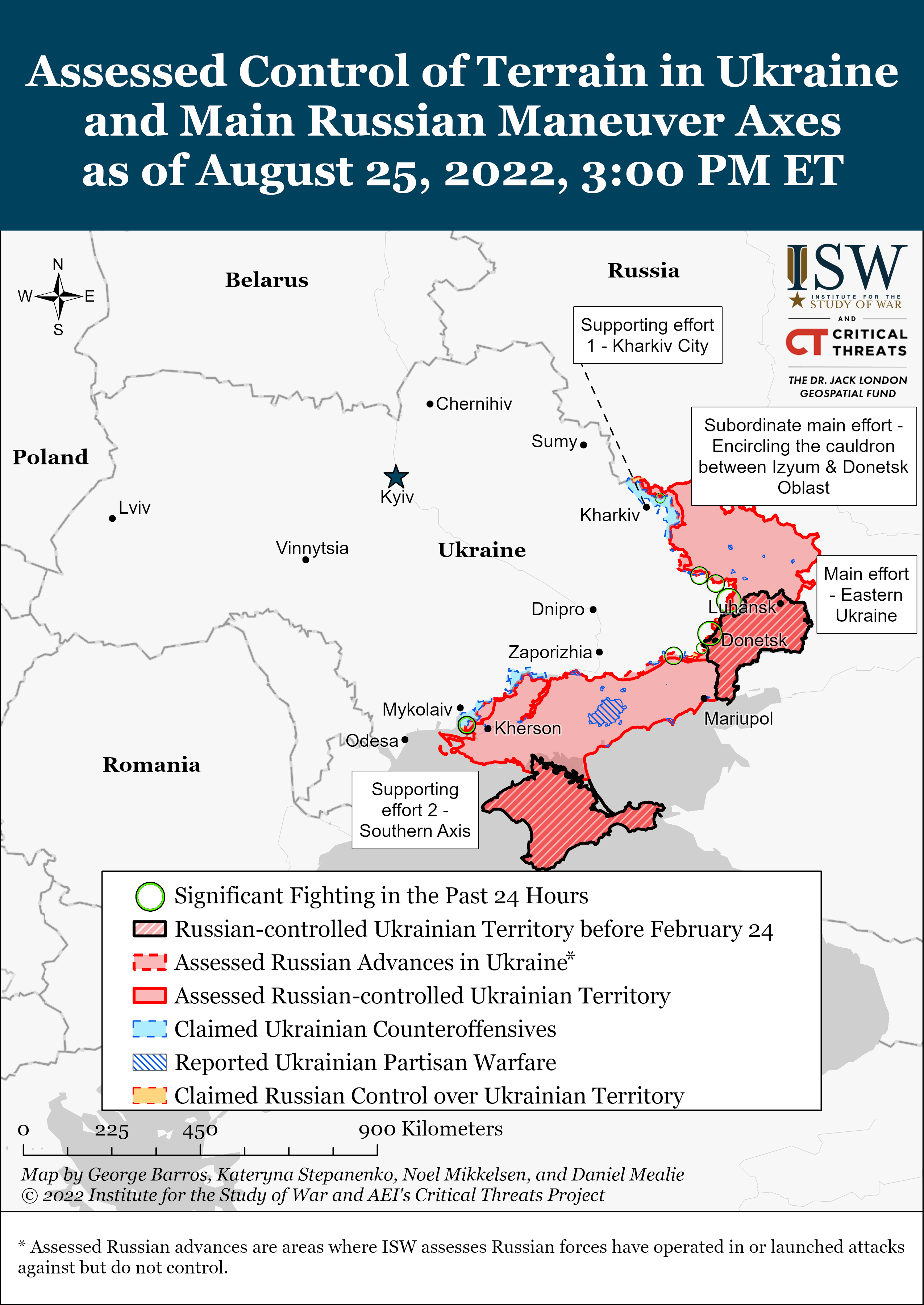 Karolina Hird, Layne Philipson, George Barros, and Frederick W. Kagan August 25, 6:30 pm ET Click here to see ISW's interactive map of the Russian invasion of Ukraine. This map is updated daily alongside the static maps present in this report. Russian President Vladimir Putin’s August 25 decree to increase the size of the Russian military starting in January 2023 is unlikely to generate significant combat power in the near future and indicates that Putin is unlikely to order a mass mobilization soon. The decree increases the nominal end strength of the Russian Armed Forces by 137,000 military personnel, from 1,013,628 to 1,150,628, starting on January 1, 2023.[1] The Russian military likely seeks to recover losses from its invasion of Ukraine and generate forces to sustain its operation in Ukraine. The announcement of a relatively modest (yet likely still unattainable) increased end strength target strongly suggests that Putin remains determined to avoid full mobilization. The Kremlin is unlikely to generate...
 -
ISW Blog - 22:51 Aug 24, 2022
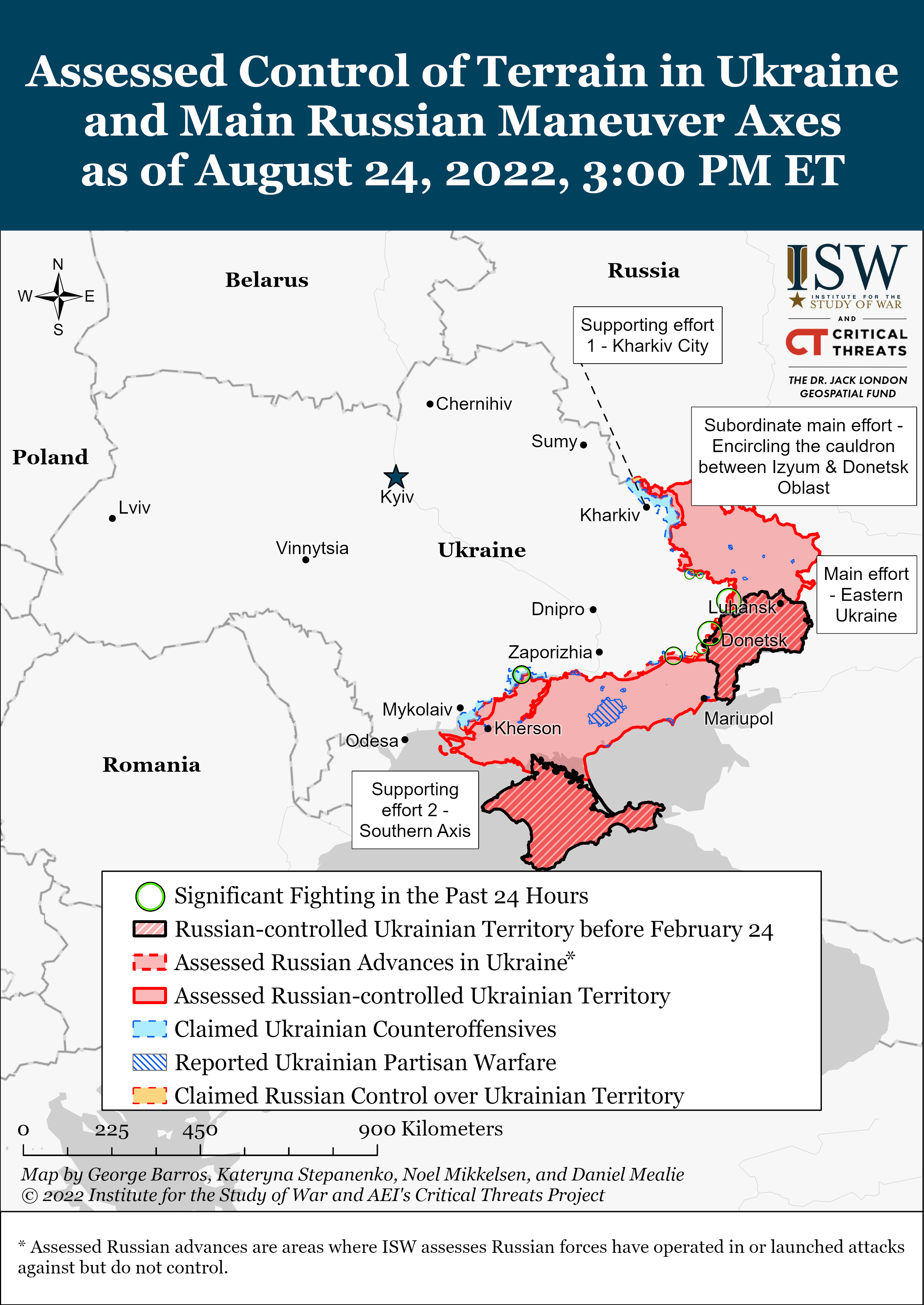 Karolina Hird, Kateryna Stepanenko, George Barros, and Frederick W. Kagan August 24, 6:30 pm ET Click here to see ISW's interactive map of the Russian invasion of Ukraine. This map is updated daily alongside the static maps present in this report. Russian Defense Minister Sergey Shoigu stated on August 24 that Russian forces are slowing down the overall pace of their offensive operations in Ukraine while reaffirming that Russia’s objectives in the war have not changed. At a meeting with defense ministers from member states of the Shanghai Cooperation Organization (SCO) Shoigu stated that Russian troops will be slowing down the pace of offensive operations in Ukraine in a conscious effort to minimize civilian casualties.[1] Shoigu also reiterated that operations in Ukraine are going according to plan and that Russian forces will accomplish all their objectives, supporting ISW’s assessment that Russia’s maximalist strategic war aims in Ukraine have not changed.[2] The Russian MoD has previously issued similar s...
 -
ISW Blog - 01:50 Aug 24, 2022
 Karolina Hird, Kateryna Stepanenko, Grace Mappes, George Barros, and Frederick W. Kagan August 23, 8:45 pm ET Click here to see ISW's interactive map of the Russian invasion of Ukraine. This map is updated daily alongside the static maps present in this report. Russian government sources confirmed that Russia is bringing Ukrainian children to Russia and having Russian families adopt them. Russian federal subject (region) Krasnodar Krai’s Family and Childhood Administration posted about a program under which Russian authorities transferred over 1,000 children from Mariupol to Tyumen, Irkutsk, Kemerov, and Altay Krai where Russian families have adopted them.[1] The Administration stated that over 300 children are still waiting to “meet their new families” and that citizens who decide to adopt these children will be provided with a one-time bonus by the state.[2] Ukraine’s Main Intelligence Directorate (GUR) additionally reported that Russian officials transferred 30 Ukrainian children from Khartsyzk, Ilovays...
 -
ISW Blog - 00:38 Aug 23, 2022
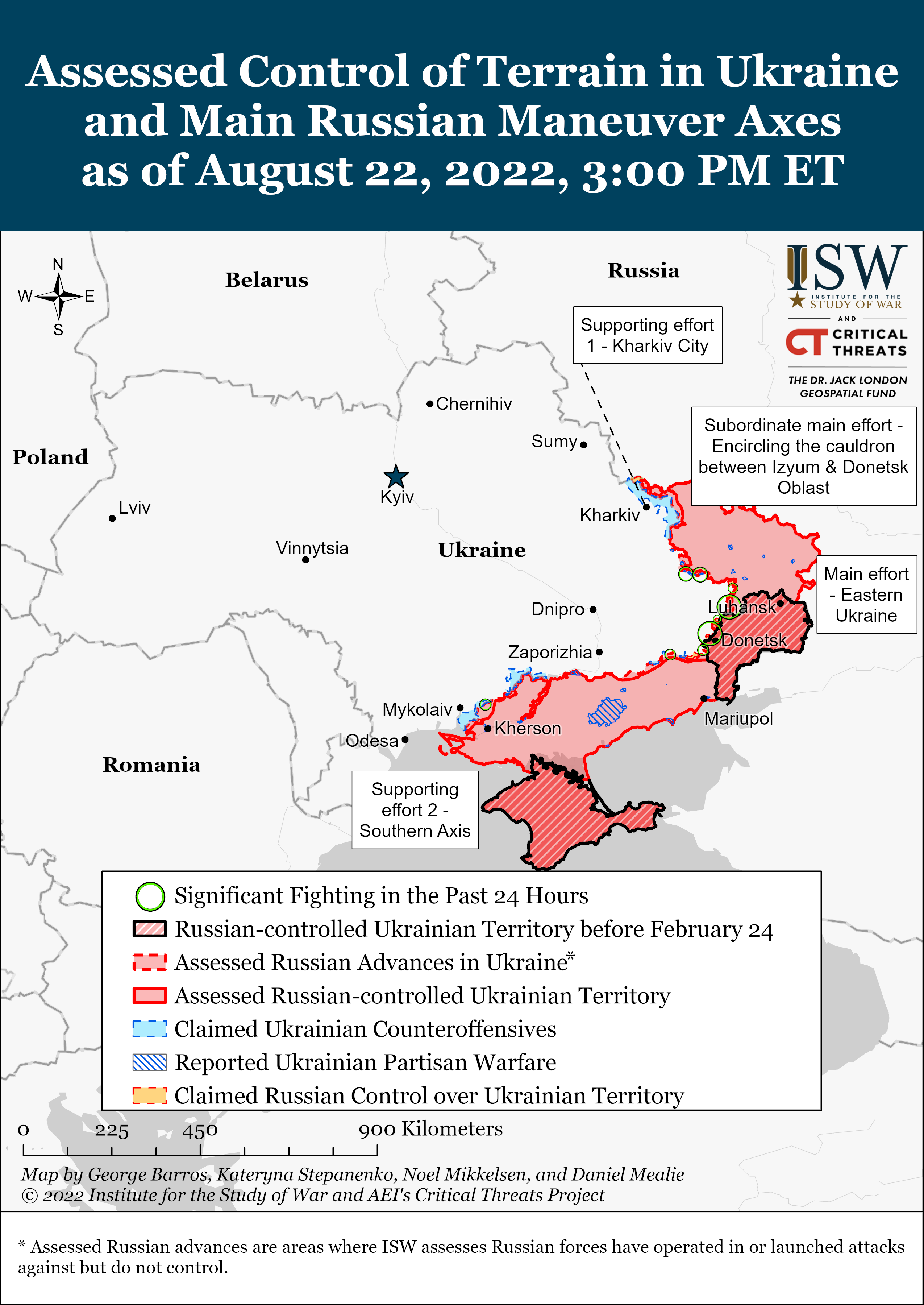 Kateryna Stepanenko, Karolina Hird, Grace Mappes, Layne Philipson, George Barros, and Frederick W. Kagan August 22, 6:15 pm ET Click here to see ISW's interactive map of the Russian invasion of Ukraine. This map is updated daily alongside the static maps present in this report. Russian occupation officials in Zaporizhia Oblast have obliquely declared the region’s independence from Ukraine by falsely identifying Ukrainian citizens entering the occupied region as temporary asylum seekers. Head of the Zaporizhia Oblast occupation administration Yevheny Balitsky signed an order that designates Ukrainian citizens arriving in occupied Zaporizhia Oblast as temporary asylum seekers based on Russian law.[1] The order requires the registration of Ukrainian and Russian citizens based on their place of residence or place of arrival in the Russian-occupied parts of Zaporizhia Oblast and requires the distribution of temporary identification forms for all “stateless persons.” Ukrainians and Russians may register if they ...
 -
ISW Blog - 01:57 Aug 22, 2022
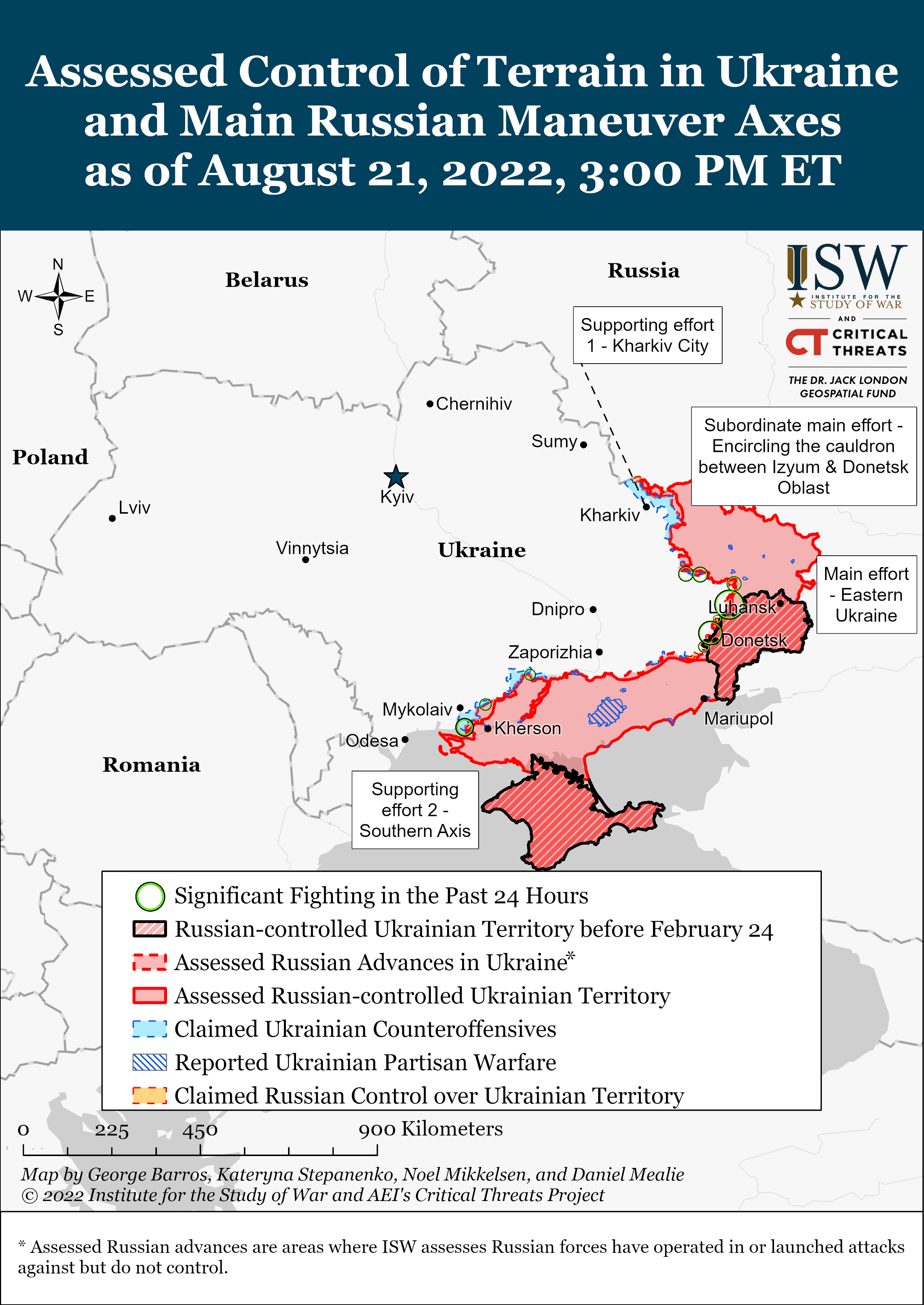 Kateryna Stepanenko, Grace Mappes, Layne Philipson, and Frederick W. Kagan August 21, 9:30 pm ET Click here to see ISW's interactive map of the Russian invasion of Ukraine. This map is updated daily alongside the static maps present in this report. Russian forces’ momentum from territorial gains around Bakhmut and Avdiivka in late July is likely exhausted, and Russian attacks in eastern Ukraine are likely culminating although very small Russian advances will likely continue. Russian forces seized Novoluhanske and the Vuhlehirska Thermal Power Plant (TPP) southeast of Bakhmut on July 25 and 26, respectively, consolidating Russian control around difficult water features after many weeks of fighting. Russian sources celebrated these gains as a significant military victory without noting that Ukrainian military Ukrainian forces successfully broke contact and withdrew from the area.[1] Russian forces also celebrated the capture of Ukrainian fortifications around the Butivka Coal Mine ventilation shaft southwest of...
 -
ISW Blog - 02:21 Aug 21, 2022
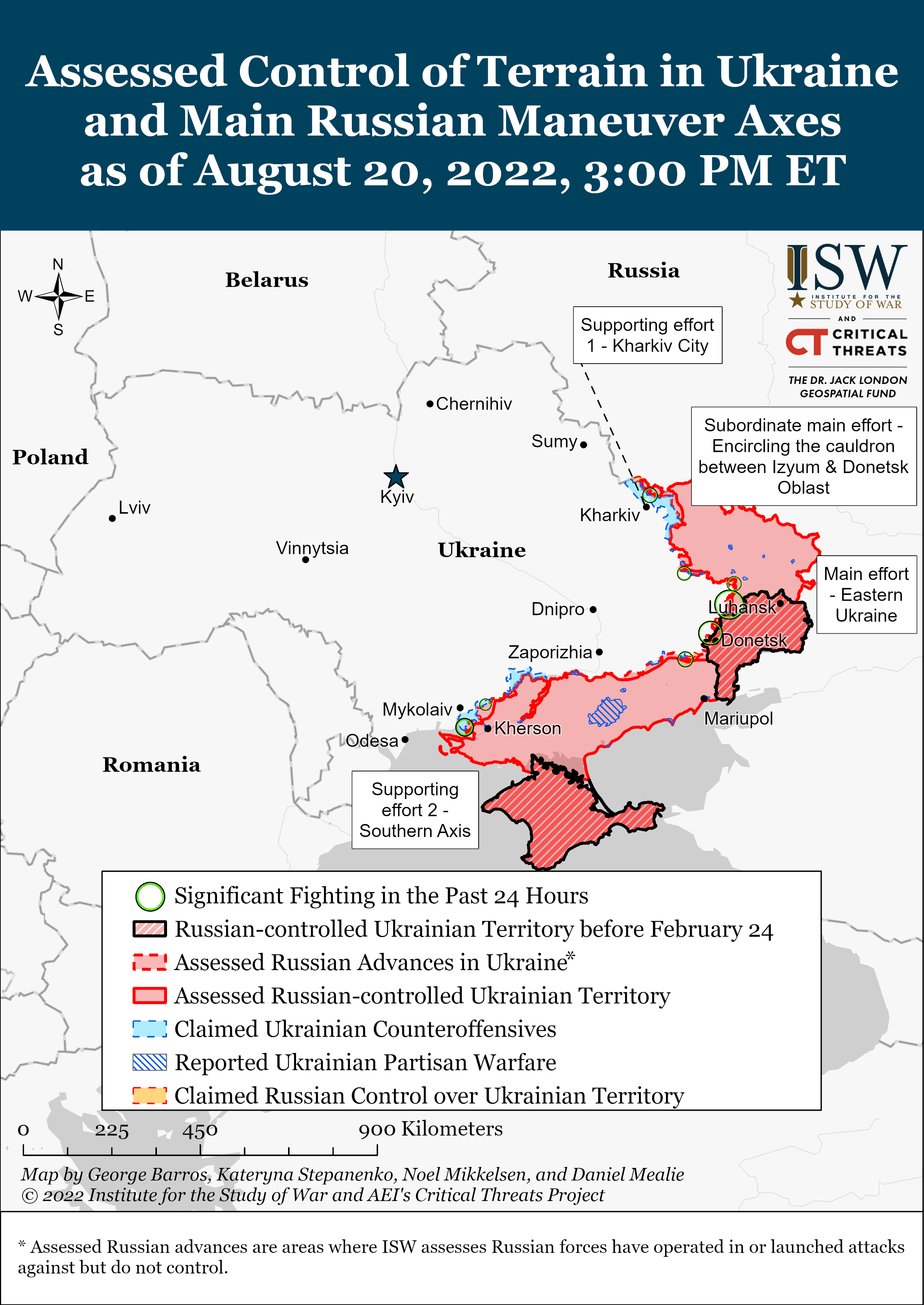 Kateryna Stepanenko, Grace Mappes, and Frederick W. Kagan August 20, 9:30 pm ET Click here to see ISW's interactive map of the Russian invasion of Ukraine. This map is updated daily alongside the static maps present in this report. Russian occupation officials in Crimea reported another drone attack on the Russian Black Sea Fleet Headquarters in Sevastopol on August 20. Russian-appointed Governor of Sevastopol Mikhail Razvozhaev claimed that Russian forces were unable to shoot down a drone, resulting in the drone hitting the roof of the Black Sea Fleet headquarters.[1] Razvozhaev then retracted his initial statement and claimed that a fleet air defense post shot down the drone, which landed on the roof and caught fire.[2] Social media footage showed a loud explosion and a cloud of smoke around the headquarters, and the drone likely detonated rather than being shot down. Some OSINT accounts have identified the drone as a commercially-available “Skyeye 5000mm Pro UAV.”[3] Ukrainian officials did not claim re...
 -
ISW Blog - 00:51 Aug 20, 2022
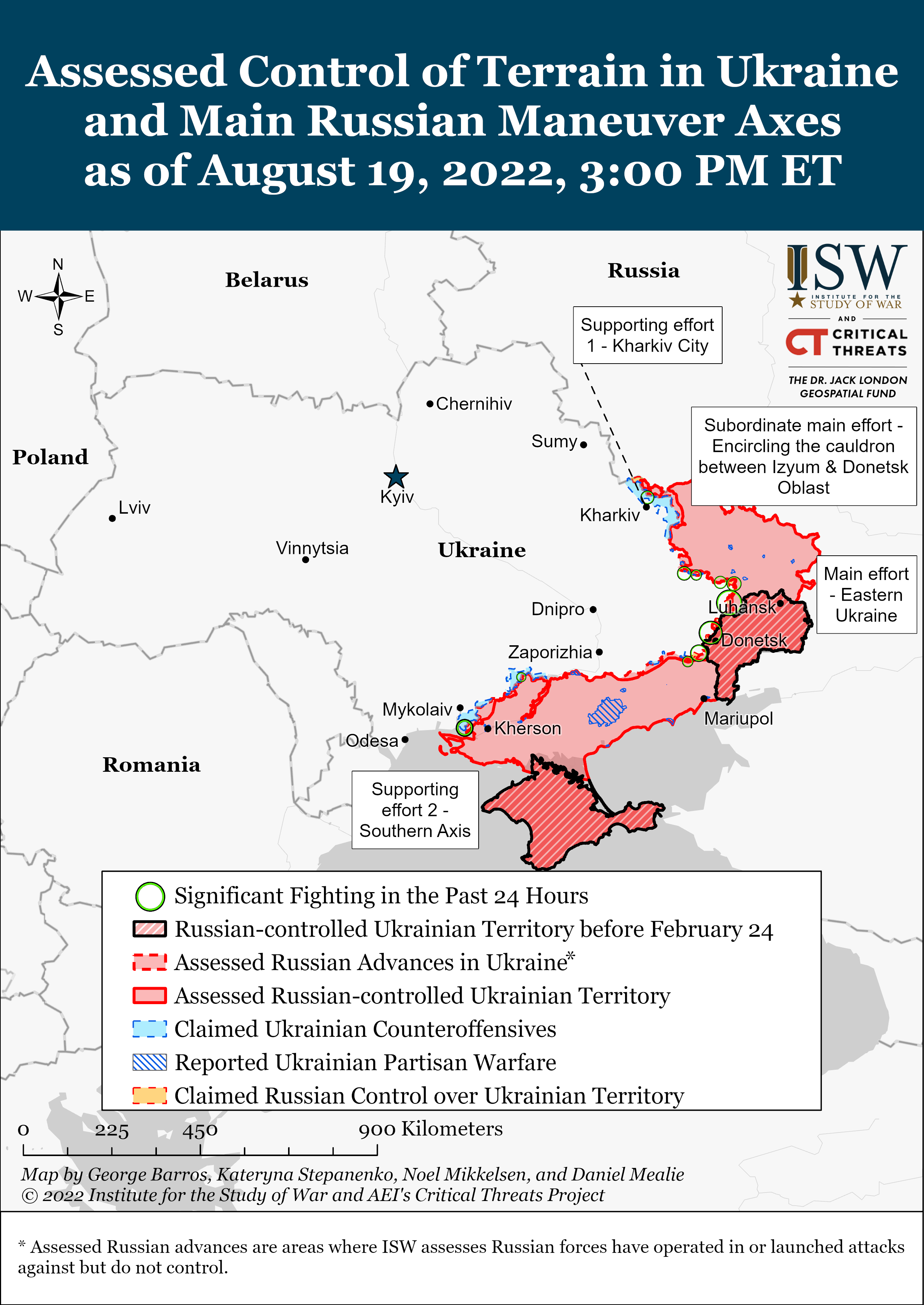 Karolina Hird, Grace Mappes, Layne Philipson, George Barros, and Frederick W. Kagan August 19, 7:30 pm ET Click here to see ISW's interactive map of the Russian invasion of Ukraine. This map is updated daily alongside the static maps present in this report. Recent Ukrainian strikes on Russian military and transportation infrastructure in Crimea and Kherson Oblast are likely reducing Russian confidence in the security of Russian rear areas. Reports from August 18 about Ukrainian strikes are affecting the Russian information space despite the fact that these reports were likely overblown. Available open-source evidence indicates that Ukrainian forces did not conduct a successful kinetic attack against either the Stary Oskol Air Base in Belgorod or Belbek Air Base in Crimea on August 18. Geolocated footage shows that a fire started at a field just south of the Stary Oskol Airfield (rather than at the airfield itself), and satellite imagery shows Russian forces transporting ammunition and military equipment to a...