Indus | Pakistan
"Indus" in Pakistan feed
-
The Nation - National - 10:53 Feb 09, 2026
The capital city, Islamabad, witnessed the opening of Indus AI Week 2026, a landmark event signaling Pakistan’s growing focus on artificial intelligence and emerging technologies. -
The Nation - National - 19:00 Jan 16, 2026
ISLAMABAD - Federal Minister for Information Technology and Telecommunication, Shaza Fatima Khawaja on Friday announced the launch of Indus AI Week 2026, a flagship national initiative on artificial intelligence, scheduled to take place from 9 to 15 February 2026. -
Dawn - 10:46 Sep 02, 2025
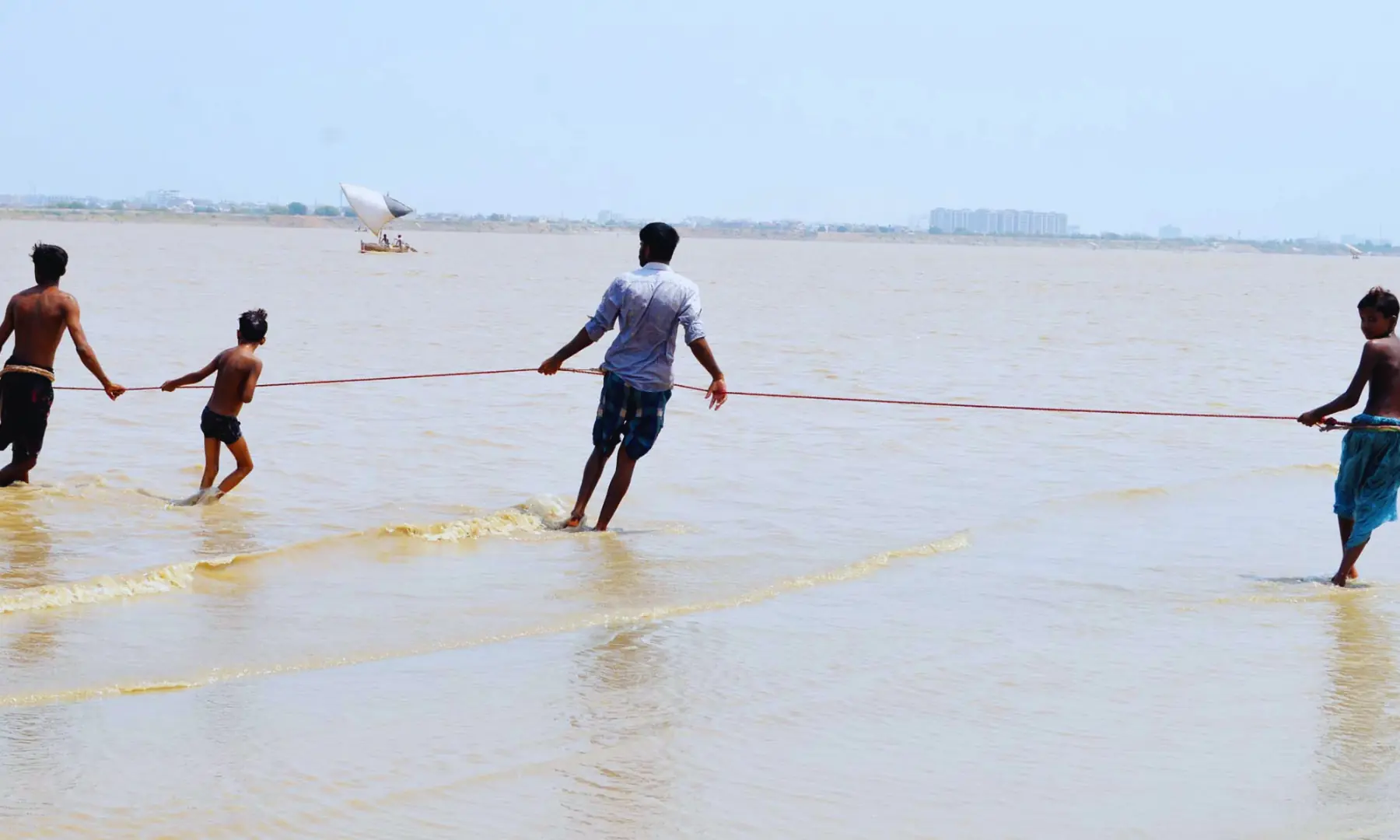 Subhan Ali, a young fisherman, couldn’t catch a single fish from the Indus river on Monday. For hours, he waited at the riverbank that touches the Hussainabad neighbourhood in Latifabad — a town situated in the suburbs of Hyderabad — but his makeshift fishing rod came out empty after every attempt. “We call it chambi,” he explained to Dawn.com, referring to the makeshift fishing rod — a wooden frame glued together from multiple pieces of wood and a net tied at one end — as we caught up with him at the downstream Hyderabad-Kotri railway bridge on the left bank of the Indus. Ali had tied a piece of foam around his waist with a rope. “This [foam] helps me float in the river as long as I am in there,” he remarked. A group of young fishermen holding one end of the net while their colleagues venture into the Indus river. Most days, he swims in the river on both sides as well as in the rivercourse, wherefrom the main current of the Indus flows. While entering the river, Ali holds the chambi tight. “As soon as a fish...
 -
Dawn - 06:15 Aug 18, 2025
SAHIWAL / NAROWAL / OKARA / DERA GHAZI KHAN: Villages near the river banks of the Sutlej, Ravi and Indus are at risk of flooding due to the increasing water levels, whereas local administrations have started taking precautionary measures in adjoining areas. The Baein and Auj drains at the river Ravi have started overflowing, and hundreds of acres of land have been submerged. Land erosion is being reported near Chak Jamil, Fatehpur, Shahpur and Chanjhora villages due to the floodwater. Water level in Ravi has risen from 12,000 cusecs to 51,400 cusecs. Meanwhile, Rescue 1122 rescued 68 people trapped in the floodwater due to flooding in the rain drain flowing into the Shakargarh tehsil. Of these, eight citizens were trapped near village Dinpur and 60 were rescued near village Sikmal. The local administration has setup 15 flood relief camps on the banks of River and its rainwater drains. Narowal Deputy Commissioner Syed Hassan Raza said that the situation on the banks of Ravi and its rain drains was under contro... -
Dawn - 12:28 Aug 05, 2025
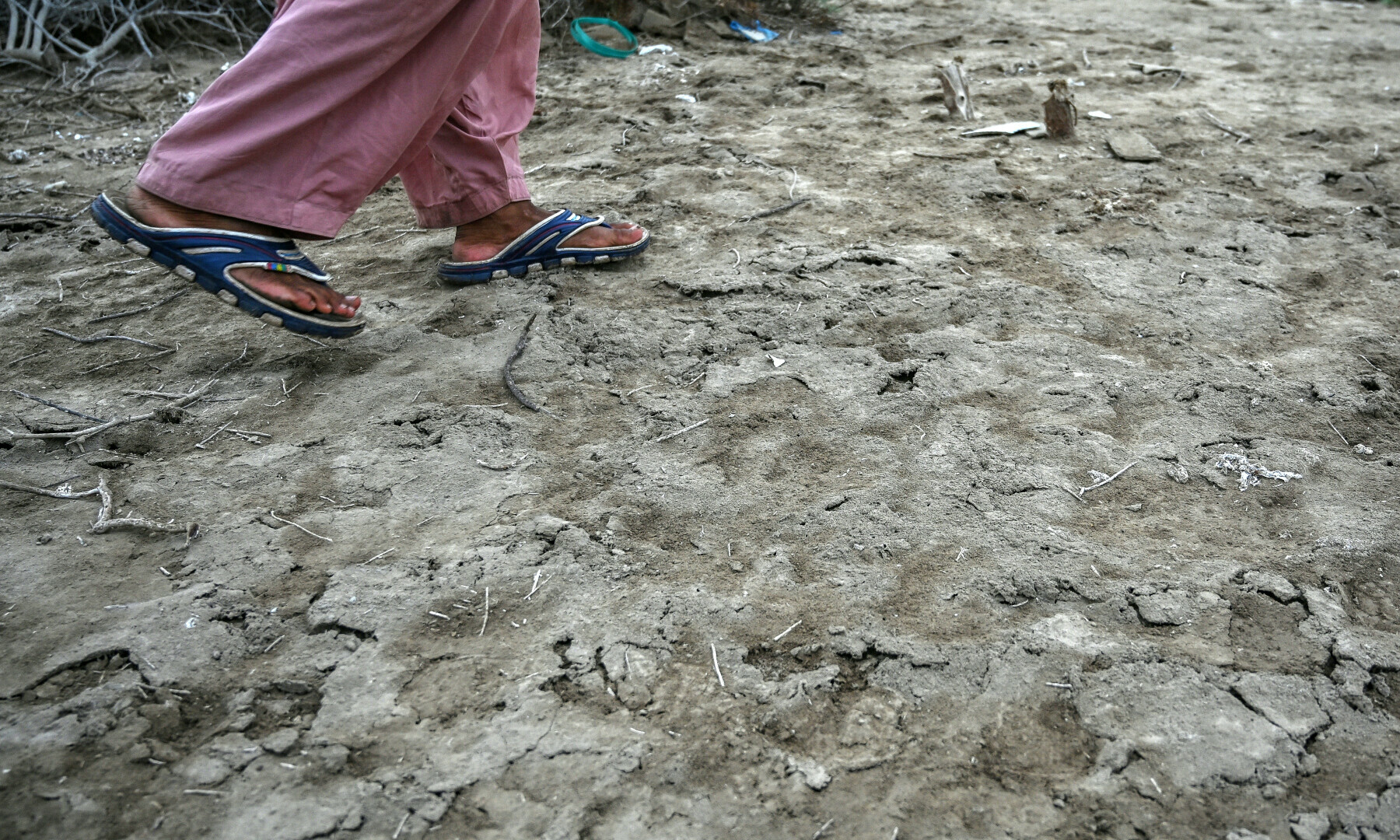 Salt crusts crackle underfoot as Habibullah Khatti walks to his mother’s grave to say a final goodbye before he abandons his parched island village on the Indus delta. Seawater intrusion into the delta, where the Indus River meets the Arabian Sea in the south of the country, has triggered the collapse of farming and fishing communities. “The saline water has surrounded us from all four sides,” Khatti told AFP from Abdullah Mirbahar village in the town of Kharo Chan, around 15 kilometres from where the river empties into the sea. As fish stocks fell, the 54-year-old turned to tailoring until that too became impossible with only four of the 150 households remaining. “In the evening, an eerie silence takes over the area,” he said, as stray dogs wandered through the deserted wooden and bamboo houses. Habibullah Khatti, a local resident, walks over the salt crusts deposited in Abdullah Mirbahar village in Kharo Chan town, in the Indus delta on June 25. — AFP Kharo Chan once comprised around 40 villages, but most h...
 -
Dawn - 14:45 Jun 11, 2025
 Pakistan has long been struggling with the gradual disappearance of its rare wildlife species due to a lethal mix of environmental and human-induced factors, including habitat destruction, dwindling water resources, pollution and poaching. Among these vanishing species is the endangered Indus fishing cat, found mostly in the Indus River Delta and surrounding buffer areas, where its numbers have dropped dramatically over recent decades. Habitat loss, food scarcity, hunting and growing human populations have significantly impacted this rare feline, which plays a vital role in maintaining the balance of aquatic ecosystems, according to experts. “The past two decades have appeared to be disastrous for this environment-friendly animal, mainly because of the destruction of wetlands and killings by local people,” Saeedul Islam, a senior wildlife expert, told Anadolu. Although official surveys have yet to determine precise figures, Islam explained that conservative estimates suggest the cat’s population in the countr...
 -
Dawn - 11:53 May 16, 2025
India is considering plans to dramatically increase the water it draws from a major river that feeds Pakistani farms downstream, as part of what it claims to be retaliatory action for a deadly April attack on tourists that New Delhi blames on Islamabad, according to four people familiar with the matter. Delhi suspended its participation in the Indus Waters Treaty (IWT) of 1960, which governs the usage of the Indus river system, shortly after 26 civilians in India-held Kashmir were killed in what India called an act of terror. Pakistan has denied involvement in the incident, but accord remains “in abeyance” by India despite the two nuclear-armed neighbours agreeing a ceasefire last week following the worst fighting between them in decades. After the April 22 attack, Indian Prime Minister Narendra Modi ordered officials to expedite planning and execution of projects on the Chenab, Jhelum and Indus rivers, three bodies of water in the Indus system that are designated primarily for Pakistan’s use, six people told...