Brazil | News
-
CryptoSlate - 13:10 Mar 11, 2026
Kalshi's first move outside the United States is not London, not Singapore, not any of the financial centers that have spent years building crypto-friendly regulatory frameworks. It is Brazil, through XP International and its brokerage arm, Clear, offering prediction markets to Brazilian investors as a “new asset class” anchored at launch to economic events such […] The post Kalshi’s Brazil prediction market launch lands in a country already fighting a betting addiction crisis appeared first on CryptoSlate. -
CryptoSlate - 10:56 Feb 24, 2026
On Feb. 20, Brazil's foreign trade council published a technical resolution reducing import duties to zero for a narrow class of hardware: SHA256 Bitcoin miners exceeding 200 terahashes per second with energy efficiency below 20 joules per terahash. Three days later, French state-owned energy giant Engie told Reuters it was considering installing Bitcoin miners at […] The post Brazil cuts Bitcoin miner import duty to zero and companies may plug them into stranded solar next appeared first on CryptoSlate. -
Dawn - 11:35 Feb 21, 2026
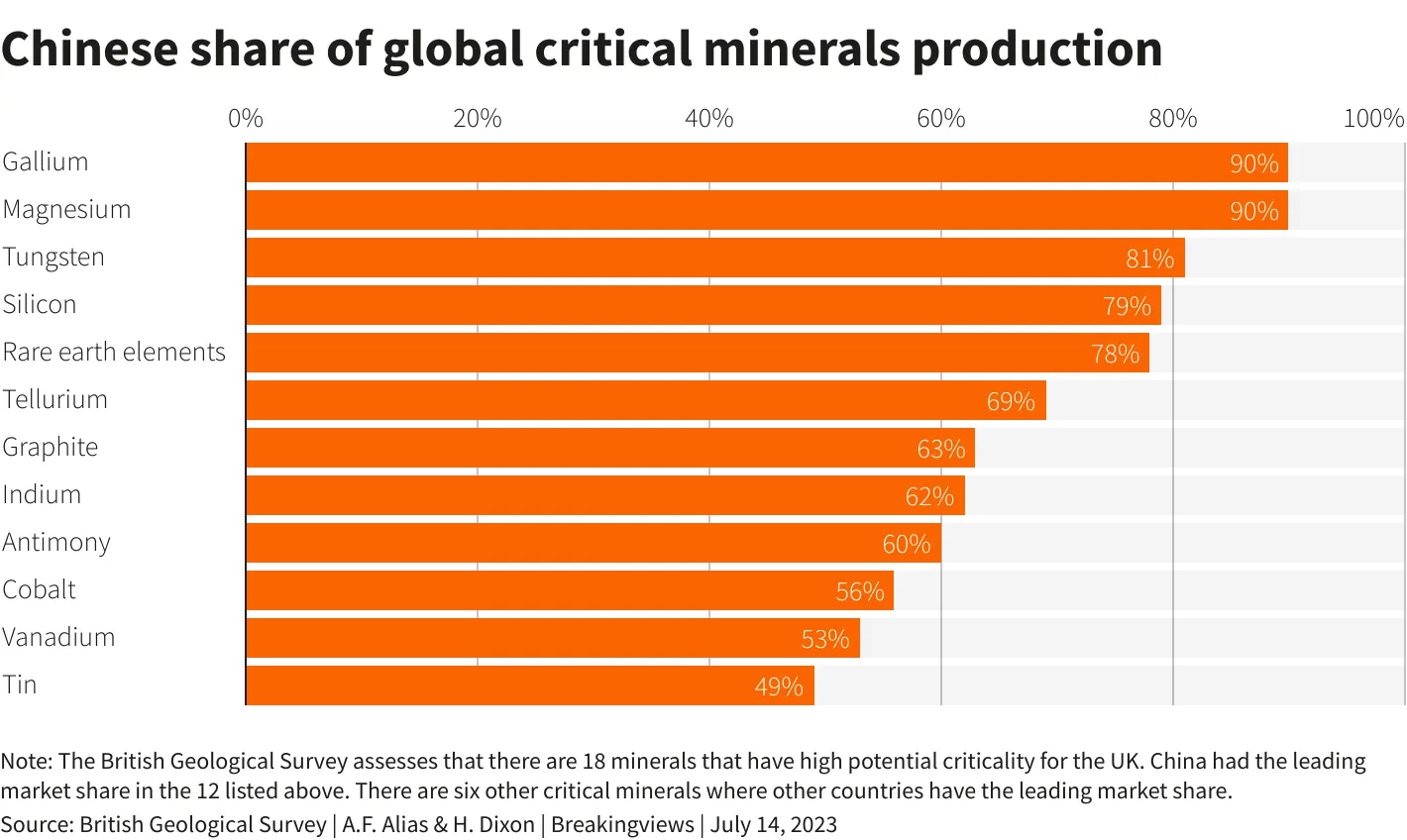 India and Brazil agreed to boost cooperation on critical minerals and rare earths on Saturday, Prime Minister Narendra Modi said after talks in New Delhi with Brazilian President Luiz Inacio Lula da Silva. “The agreement on critical minerals and rare earths [is] a major step towards building resilient supply chains,” Modi said. Brazil has the world’s second-largest reserves of critical minerals, which are used in everything from electric vehicles, solar panels and smartphones to jet engines and guided missiles. India, seeking to cut its dependence on top exporter China, has been expanding domestic production and recycling while scouting for new suppliers. “Increasing investments and cooperation in matters of renewable energies and critical minerals is at the core of the pioneering agreement that we have signed today,” Lula said. The details of the deal were not immediately available. Nine other agreements and memoranda of understanding were finalised on Saturday, the foreign ministry’s spokesman said, touchin...
 -
Cryptonews.com - 20:58 Jan 30, 2026
Nubank has received conditional approval from the OCC to organize a U.S. national bank, with 12 months to fully capitalize and 18 months to launch. If finalized, Nubank, N.A. could offer deposits, cards, lending and digital-asset custody to U.S. customers under one federal charter, directly via app. The post Brazil’s Nubank Wins OCC Conditional Approval for U.S. National Bank – Crypto Custody Soon? appeared first on Cryptonews. -
Cointelegraph.com - 20:42 Dec 23, 2025
 The project recently received approval to raise private, tax-deductible funding under Brazil’s cultural incentive laws, with a live performance planned in the federal capital. An experimental orchestral project in Brazil aims to convert Bitcoin price data into live music, after receiving approval to raise funds through one of the country’s tax-incentive programs for cultural initiatives. According to Brazil's Federal Register, the authorization allows the project to seek up to 1.09 million reais ($197,000) from private companies and individual donors for an instrumental concert that uses financial data to generate music, drawing on concepts from art, mathematics, economics and physics. The publication does not specify whether any blockchain or onchain infrastructure will be used in the performance. The performance will take place at the country's federal capital, Brasília. Read more
 -
Cointelegraph.com - 08:17 Dec 21, 2025
 Brazil’s crypto market showed signs of maturity in 2025, with higher transaction volumes, larger per-user investments and growing demand for low-risk products. Crypto activity in Brazil expanded sharply in 2025, with total transaction volume climbing 43% year over year as average investment per user crossed the $1,000 mark, according to a new report from crypto platform Mercado Bitcoin. The report, titled “Raio-X do Investidor em Ativos Digitais 2025,” claimed that the Brazilian crypto market is no longer driven purely by speculation but increasingly shaped by structured investing and portfolio planning. The data was based on activity across Mercado Bitcoin’s platform, the largest digital asset exchange in Latin America. Per the report, the average amount invested per person reached roughly 5,700 Brazilian reais, equivalent to more than $1,000. At the same time, 18% of investors allocated funds across more than one crypto asset, indicating a gradual shift toward diversification rather than single-asset bets. ...
 -
Cryptonews.com - 15:21 Dec 18, 2025
Bitpanda Technology Solutions, the digital asset infrastructure arm of European crypto platform Bitpanda, has entered into a partnership with Banco BS2. The post Brazil’s Banco BS2 Taps Bitpanda Tech for Institutional Crypto Infrastructure appeared first on Cryptonews. -
Cointelegraph.com - 17:10 Dec 16, 2025
 The Solana-linked product expands Valour’s Brazil footprint as demand for regulated crypto exposure grows among regional investors. Valour, a subsidiary of publicly listed digital asset company DeFi Technologies, has received approval to launch a Solana exchange-traded product (ETP) in Brazil, offering local investors regulated exposure to one of the largest cryptocurrencies by market capitalization as institutional interest in the region continues to grow. The product, Valour Solana (VSOL), is scheduled to begin trading on Wednesday following approval from Brazil’s main stock exchange, Brasil, Bolsa, Balcão (B3 S.A.), DeFi Technologies announced Tuesday. The Solana (SOL) product will join Valour’s expanding lineup of Brazil-listed ETPs, which already provide exposure to Bitcoin (BTC), Ether (ETH), XRP (XRP) and Sui (SUI). Read more
 -
Cryptonews.com - 11:45 Dec 13, 2025
Itaú Asset Management joins major Wall Street firms in advising small Bitcoin allocations, citing uncorrelated returns as BTC tests $90,000 support following sharp correction from October highs. The post Bitcoin Price Prediction: Brazil’s Largest Private Bank Itaú Supports Bitcoin Exposure — Can 3% allocation Push BTC Higher? appeared first on Cryptonews. -
Cointelegraph.com - 07:30 Dec 13, 2025
 Brazil’s largest private bank says Bitcoin can improve portfolio diversification and hedge currency risk despite a volatile year for the asset. Itaú Asset Management, the investment arm of Brazil's largest private bank, Itaú Unibanco, has recommended that investors hold 1% to 3% of their portfolios in Bitcoin next year. In a new research note, Itaú Asset’s Renato Eid said that the global backdrop of geopolitical tension, shifting monetary policy and persistent currency risks strengthens the case for adding Bitcoin (BTC) as a complementary asset. He called Bitcoin “an asset distinct from fixed income, traditional stocks, or domestic markets, with its own dynamics, return potential, and — due to its global and decentralized nature — a currency hedging function.” Read more
 -
Dawn - 11:16 Nov 26, 2025
Brazil’s Supreme Court on Tuesday ordered far-right former president Jair Bolsonaro to begin serving a 27-year sentence for plotting a failed coup, after he exhausted all appeals. The brash former army captain, who fired up Brazil’s right and reshaped the country’s politics, is ending a divisive career jailed in a small room at police headquarters equipped with a TV, mini-fridge, and air-conditioning. Bolsonaro, 70, was convicted in September over a scheme to stop Luiz Inacio Lula da Silva from taking office as president after the 2022 elections, a plan that included a plot to kill the veteran leftist. Prosecutors said the scheme failed only due to a lack of support from military top brass. The Supreme Court rejected an appeal to his sentence earlier this month and ruled the judgment final. The court also ordered a military tribunal to decide whether Bolsonaro should be stripped of his captain’s rank. Bolsonaro had been under house arrest until Saturday, when he was detained at police headquarters in Brasilia... -
Cointelegraph.com - 17:06 Nov 21, 2025
 The rollout lets users convert crypto to local currency and pay merchants via QR codes, tapping Latin America’s biggest crypto market. KuCoin Pay has integrated with Pix, Brazil’s central bank-run instant payments network, allowing users to convert and spend cryptocurrencies at any merchant that accepts Pix QR codes. The launch taps into one of the world’s largest crypto user bases, with roughly 26 million Brazilians, about 12% of the population, now using digital assets, according to a Friday announcement from the exchange. The integration supports instant crypto-to-Brazilian currency conversions (Brazil’s currency is the real), enabling users to transfer funds from KuCoin accounts to any Brazilian bank or pay merchants directly through Pix. It also features multi-functional wallet tools for managing both cryptocurrencies and fiat currencies within the KuCoin app. Read more
 -
Cointelegraph.com - 22:56 Nov 19, 2025
 Coinbase is rolling out its DEX trading platform to Brazil about six weeks after it launched in the US, offering Brazilians over 10,000 tokens to trade without leaving Coinbase’s app. Coinbase is expanding its decentralized exchange trading platform, called “DeFi Mullet,” to Brazil, providing them with access to tens of thousands of tokens without needing to leave the Coinbase app. Powered by Coinbase’s Ethereum layer 2 Base, DeFi Mullet first launched in the US on Oct. 8 and is designed to abstract away the complexities of using decentralized finance protocols. “Using our DEX integration, users can trade on popular DEXs, like Aerodrome and Uniswap, without leaving the familiar ease of the Coinbase interface,” Coinbase said on Wednesday. Read more
 -
Cointelegraph.com - 14:26 Nov 18, 2025
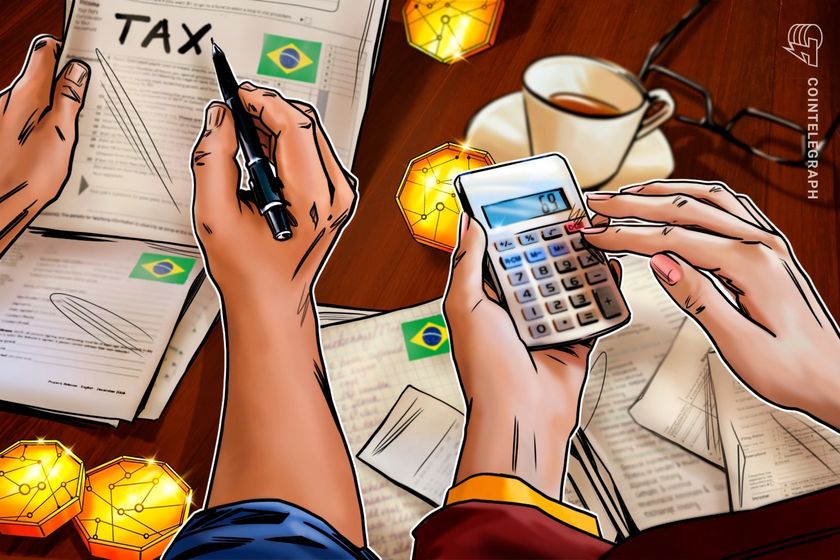 Brazil is reportedly considering imposing a tax on the use of cryptocurrency for international payments, as it aligns its rules with a global standard for sharing tax data. Brazil is reportedly weighing a tax on the use of cryptocurrencies for international payments as it moves to adopt a global crypto tax reporting data exchange framework. A Tuesday Reuters report, citing “officials with direct knowledge of the discussions,” claims that the Brazilian government aims to tax cryptocurrency use for international payments. During the confidential talks, representatives of the country’s finance ministry reportedly expressed interest in expanding the Imposto sobre Operações Financeiras (IOF) tax to include some digital asset-based cross-border transactions. Read more
 -
The Nation - National - 19:00 Nov 11, 2025
LAHORE - Punjab Chief Minister Maryam Nawaz Sharif, together with former New Zealand Prime Minister Dame Jacinda Ardern, inaugurated the Pakistan Pavilion at the COP30 climate conference being held in Belem, Brazil, according to a handout issued by the Punjab information department. -
The Nation - National - 19:00 Nov 06, 2025
LAHORE - Punjab Chief Minister Maryam Nawaz Sharif on Thursday departed for Belém, Brazil, to participate in the 30th United Nations Climate Change Conference (COP30). -
Cointelegraph.com - 20:19 Nov 03, 2025
 Banco Inter and Chainlink test cross-border trade finance using Brazil’s Drex and Hong Kong’s Ensemble networks in landmark blockchain pilot. Brazilian digital bank Banco Inter has completed a blockchain-based international trade finance pilot with Chainlink, the Central Bank of Brazil and the Hong Kong Monetary Authority (HKMA), showcasing how distributed ledger technology can simplify cross-border settlement. The experiment took place under Phase 2 of Brazil’s Drex central bank digital currency (CBDC) project and simulated the settlement of export transactions between Brazil’s Drex network and Hong Kong’s Ensemble platform, a blockchain system developed under the HKMA’s Project Ensemble initiative. Chainlink provided the interoperability infrastructure connecting the two networks, according to Banco Inter. Read more
 -
The Express Tribune - 10:11 Oct 18, 2025
Police say 15 of 30 passengers died in Brazil bus crash; driver tested negative for alcohol use -
Cryptonews.com - 20:47 Oct 16, 2025
Bitpanda has expanded into Brazil through Onda Finance, its first Latin America partnership. Onda has used Bitpanda’s API-first infrastructure for trading, custody and liquidity, with stablecoin-led rollout, optional staking and savings, and BYOL compliance aligned to local rules. The post Bitpanda Expands to Latin America Through Partnership with Brazil’s Ondo Finance appeared first on Cryptonews. -
Cointelegraph.com - 13:35 Oct 03, 2025
 Bitcoin surges despite US government shutdowns delay altcoin ETFs; Brazil rolls out a welcome mat for crypto miners. Bitcoin (BTC) surged into October, defying a US government shutdown that has left altcoin exchange-traded fund (ETF) applications in limbo. But while markets welcomed the arrival of “Uptober,” the headlines elsewhere were dominated by regulatory battles and policy experiments. Two defendants pleaded guilty in what UK police called the world’s largest crypto seizure, a case that has left courts wrestling with whether victims should be repaid at today’s Bitcoin value or at what they lost years ago. Read more