Brazil | News
-
Cointelegraph.com - 10:09 Jul 28, 2026
 The IMF said Brazil’s stablecoin market has expanded rapidly since 2017, with cross-border crypto flows growing faster than traditional capital flows. The International Monetary Fund said Brazil’s crypto asset market, particularly US dollar-pegged stablecoins, has expanded rapidly since 2017 and requires closer oversight as cross-border crypto flows grow faster than traditional capital flows. In its Financial System Stability Assessment released Thursday, the IMF said stablecoins have played a key role in the significant growth of Brazil’s crypto asset market. The report said cross-border crypto flows have “been steadily increasing” and that stablecoin purchases are two to three times more sensitive to global shocks than traditional portfolio investment or foreign direct investment flows. The IMF said Banco Central do Brasil (BCB) has already taken steps to regulate crypto asset service providers, but gaps remain in areas such as customer asset protection, stablecoin issuance rules and anti-money laundering (...
 -
CryptoSlate - 14:30 Jul 26, 2026
Ten dairy cows in Paraná, Brazil, carried encrypted identities that Cowmed collars had built from each animal's health, behavior, and location data into B3 this week. Those identities turned the cows into collateral for nearly $20,000 in credit, and the record behind them aims to shrink the haircut lenders apply and stop lenders from pledging […] The post How 10 cows in Brazil unlocked a tokenized path to bridge an $8 trillion global finance gap appeared first on CryptoSlate. -
Haaretz - 14:05 Jul 24, 2026
In the beginning, what was the first snake really like? Newly discovered ancient serpent in Brazil expands the possibilities to the chthonic realm -
Cointelegraph.com - 10:29 Jul 24, 2026
 Ten tokenized dairy cows backed a $19,600 loan registered on Brazil’s B3, in one of Brazil’s first uses of tokenized livestock as loan collateral. Brazil’s B3 stock exchange has reportedly found a new use for dairy cows by backing a loan with tokenized cattle. The transaction involved a loan of 100,000 Brazilian reais ($19,600) secured by 10 dairy cows from Fazenda Engenho Velho in the southern Brazilian state of Paraná, valued at about 120,000 Brazilian reais ($23,500). The deal was structured by Brazilian investment fund Target FIDC, according to CNN Brasil. Each cow received a unique digital token linked to an encrypted digital identity, while AI-powered smart collars from agriculture tech company Cowmed monitor each animal’s health, reducing the need for physical inspections. Read more
 -
Dawn - 08:10 Jul 06, 2026
Brazilian star footballer Neymar Jr. suggested he may have played his final match for Brazil after scoring in their defeat by Norway in the World Cup round of 16 on Sunday. The forward converted a stoppage-time penalty in Brazil’s 2-1 loss, a result that eliminated the five-times champions and extended their wait for a sixth World Cup title. Speaking briefly after the match to Bruno Formiga, a pundit for Brazilian channel GE TV, Neymar indicated that his tenure with Brazil had come to an end. “I tried, I tried… Now it’s over! I started here, I finished here,” Neymar said, referring to the stadium in New Jersey, where he made his Brazil debut in a friendly against the United States in 2010. The 34-year-old was moved to tears after the match. It was the national team’s worst World Cup performance since 1990. Brazil are now heading towards their longest spell without a World Cup title since they first won the tournament. By 2030, they will have gone 28 years without lifting the trophy. If Neymar Jr. confirms his... -
Dawn - 02:02 Jul 06, 2026
Erling Haaland scored two late goals to send Norway through to a first World Cup quarter-final with a stunning 2-1 win over Brazil that condemned the five-time champions to their earliest exit since 1990. Norway goalkeeper Orlan Nyland produced a sensational display and saved a first-half penalty from Bruno Guimaraes before Haaland struck twice in the last 11 minutes to stun Brazil at MetLife Stadium. Neymar pulled a goal back deep into stoppage time with Brazil’s second spot-kick of the match. Haaland’s brace took him level with Lionel Messi on seven goals for the tournament as Norway booked a showdown against either co-hosts Mexico or England in Miami on July 11. For Brazil, who hired Carlo Ancelotti in a bid to end a 24-year World Cup drought, it is the sixth straight tournament where they have been knocked out by European opposition. The last time Brazil failed to reach at least the quarter-finals came 36 years ago, when they lost 1-0 to arch-rivals Argentina in last 16. Gabriel Martinelli was rewarded fo... -
Dawn - 22:21 Jul 05, 2026
Erling Haaland scored two late goals to send Norway through to a first World Cup quarter-final with a stunning 2-1 win over Brazil that condemned the five-time champions to their earliest exit since 1990. Norway goalkeeper Orlan Nyland produced a sensational display and saved a first-half penalty from Bruno Guimaraes before Haaland struck twice in the last 11 minutes to stun Brazil at MetLife Stadium. Neymar pulled a goal back deep into stoppage time with Brazil’s second spot-kick of the match. Haaland’s brace took him level with Lionel Messi on seven goals for the tournament as Norway booked a showdown against either co-hosts Mexico or England in Miami on July 11. For Brazil, who hired Carlo Ancelotti in a bid to end a 24-year World Cup drought, it is the sixth straight tournament where they have been knocked out by European opposition. The last time Brazil failed to reach at least the quarter-finals came 36 years ago, when they lost 1-0 to arch-rivals Argentina in last 16. Gabriel Martinelli was rewarded fo... -
Dawn - 19:30 Jun 30, 2026
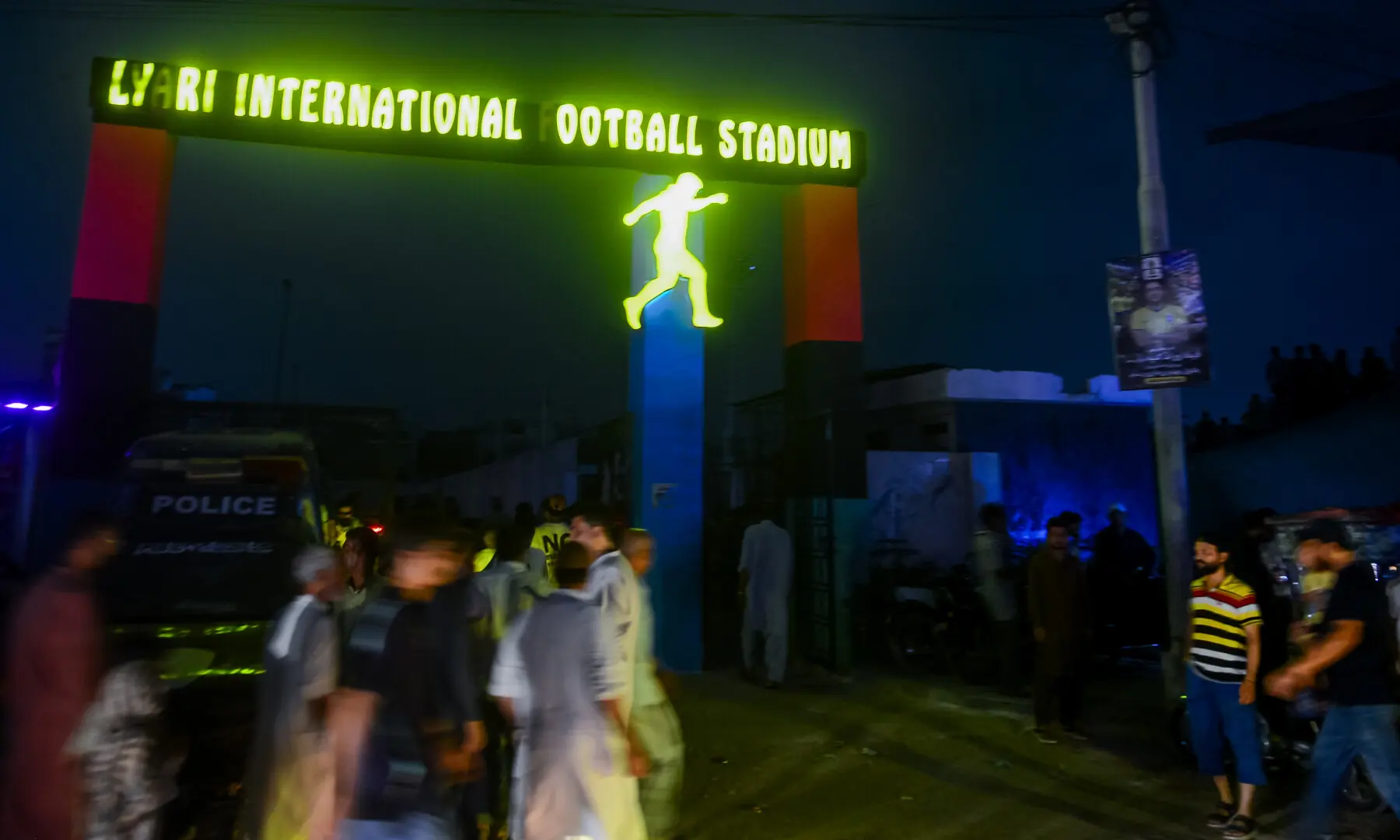 As Brazil and Japan clashed in a thrilling FIFA knockout game on Monday, fans in Karachi’s Lyari neighbourhood held their breath to see which team would advance to the last 16. Football fanatics of all ages gathered at Lyari International Football Stadium for a jam-packed screening of the match played in Houston. Karachi Mayor Murtaza Wahab also joined them at the stadium, which has been hosting screenings of FIFA World Cup 2026 matches. Brazil — which is widely favoured in Lyari, earning the area the nickname “Mini Brazil” — emerged victorious, leaving the stadium filled with joy as spectators celebrated. Dawn takes a look at the scenes that played out during the tense match, where a 96th-minute goal by substitute Gabriel Martinelli helped Brazil secure its place in the last 16. People stand outside Lyari International Football Stadium in Karachi ahead of a FIFA World Cup match between Brazil and Japan, on June 29, 2026. — Tahir Jamal For most of the match, the LED screen was the sole source of light as the ...
 -
Dawn - 19:12 Jun 30, 2026
Erling Haaland scored a late winner as Norway set up a last-16 showdown with Brazil at the World Cup after taming the Ivory Coast 2-1 in Texas on Tuesday. The Manchester City striker prodded in from close range, the ball dribbling in on 86 minutes for his fifth goal of the tournament. It was the first time that Norway had won a knockout game in the history of the competition. After an even first half that was slow to get going, Antonio Nusa fired Norway into the lead six minutes before the break with one of the goals of the tournament. Manchester United’s Amad Diallo was sent on for the Ivory Coast after an hour and was immediately in the thick of it, stopping a certain second Norway goal and then grabbing a terrific equaliser on 74 minutes. With extra time looming, predator supreme Haaland got on the end of a cross by Patrick Berg to make some Norwegian history. They face five-time champions Brazil on Sunday in New Jersey with the quarter-finals at stake. A match between two physical teams was tepid to begin... -
Dawn - 19:25 Jun 29, 2026
Substitute Gabriel Martinelli scored deep in injury time as Brazil beat a stubborn Japan 2-1 on Monday to roll into the World Cup last 16. Arsenal winger Martinelli struck in the 95th minute in Houston to break Japanese hearts in the most dramatic fashion. The five-time champions will face either the Ivory Coast or Norway in New Jersey on Sunday after edging a captivating knockout encounter. Japan midfielder Kaishu Sano scored a classy solo goal after 29 minutes following a Brazil mistake to stun the huge numbers of fans decked out in yellow. Carlo Ancelotti’s men hit back 11 minutes after half-time with a header from veteran Casemiro as Brazil dominated the second period. Then up popped Martinelli right at the death to settle it and send the Brazil fans wild. History was against Japan: they had never won a knockout game at the World Cup while Brazil were record five-time champions. But this is not a vintage Brazil side, even with Ancelotti at the helm, while Japan have been talked of as dark horses. With the... -
Dawn - 05:47 Jun 14, 2026
Five-time winners Brazil needed a superb Vinicius Junior equaliser to draw 1-1 with Morocco in their opening game at the World Cup on Saturday as Scotland marked their return to the tournament after a 28-year absence with a nervy 1-0 victory over Haiti. On the first day to feature four matches at the 48-team tournament, Qatar won the first World Cup point in their history when Miro Muheim’s own goal earned the 2022 tournament hosts a 1-1 draw with Switzerland. The meeting of Brazil and 2022 semi-finalists Morocco at the MetLife Stadium just outside New York City was a clash of the teams ranked sixth and seventh in the world respectively. Ismael Saibari ran through to give Morocco a 21st-minute lead with a clever scoop in the Group C opener, but Vinicius produced a moment of magic to ensure Brazil came away with a point, cutting in from the left and unleashing a thunderous shot to level on 32 minutes. Brazil are chasing a record sixth World Cup title, 24 years after last lifting the trophy, but Saturday’s perf... -
CryptoSlate - 06:05 May 25, 2026
B3 registered the first guaranteed OTC flexible option tied to Hashdex's crypto-index ETF, HASH11, in a trade between Inter and XP. B3's clearinghouse served as the central counterparty in the trade, placing a crypto ETF-linked exposure inside the same back-office machinery that handles counterparty risk, margining, clearing, and settlement. That is the infrastructure layer that […] The post Brazil just moved a crypto ETF into market plumbing Wall Street still wants opened appeared first on CryptoSlate. -
Cointelegraph.com - 10:07 May 01, 2026
 Brazil’s central bank barred virtual assets from settlement inside regulated eFX payment rails as it tightens oversight of crypto-linked flows. Brazil’s central bank, Banco Central do Brasil (BCB), has barred the use of virtual assets in certain regulated international payment and transfer services, tightening rules for cross-border payment providers operating under the country’s eFX framework. On Thursday, BCB published Resolution BCB No. 561, amending existing rules for eFX, a regulated category covering international payments and transfers. The resolution states that payments or receipts between an eFX provider and its foreign counterparty must be carried out exclusively through a foreign exchange transaction or movement in a non-resident Brazilian real account, with the use of virtual assets prohibited. The restriction also applies under transitional rules for eFX providers that are not yet listed among approved provider categories. Those firms may continue providing eFX only if they apply for authorizati...
 -
Cointelegraph.com - 10:51 Apr 25, 2026
 Brazil has blocked 27 prediction market platforms, including Kalshi and Polymarket, as new rules classify many contracts as gambling. Brazilian authorities have moved to shut down 27 prediction market platforms, including Kalshi and Polymarket. The decision, announced Friday, follows a directive from the Ministry of Finance and enforcement by the National Telecommunications Agency (Anatel), according to state-owned news outlet Agência Brasil. Authorities claimed that such services fall outside Brazil’s current legal framework and therefore operate illegally. “We have been monitoring the evolution of this sector in Brazil, which suffered a period of anarchy because there were no rules, no oversight, from 2018 to 2022,” Finance Ministry executive secretary Dario Durigan reportedly said during a press conference at the Palácio do Planalto. Read more
 -
ukrinform.net - 20:15 Apr 16, 2026
Brazil has never supported Russia in its war against Ukraine and has not recognized Moscow's right to occupy Ukrainian territories, Brazilian President Lula da Silva said. -
Cointelegraph.com - 17:29 Mar 26, 2026
 Aimed at fighting organized crime groups, the new law allows confiscated assets including crypto to be used for ”police re-equipment, training, and special operations.” Brazil’s public security agencies have a new weapon for fighting organized crime after national legislators approved a measure allowing them to use confiscated cryptocurrency in their efforts. On Wednesday, Brazil’s legislative branch published Law No. 15.358, establishing a legal framework for combating organized crime. The law allows authorities to prohibit transactions on crypto exchanges by treating digital assets as instruments in a crime, and confiscate crypto to be used to fund public security. “For the purposes of forfeiture of assets, any asset that has been used to commit a crime shall be considered an instrument of the crime, even if it was not intended exclusively for that purpose,” said a translation of the law, which included: Read more
 -
CryptoSlate - 13:10 Mar 11, 2026
Kalshi's first move outside the United States is not London, not Singapore, not any of the financial centers that have spent years building crypto-friendly regulatory frameworks. It is Brazil, through XP International and its brokerage arm, Clear, offering prediction markets to Brazilian investors as a “new asset class” anchored at launch to economic events such […] The post Kalshi’s Brazil prediction market launch lands in a country already fighting a betting addiction crisis appeared first on CryptoSlate. -
CryptoSlate - 10:56 Feb 24, 2026
On Feb. 20, Brazil's foreign trade council published a technical resolution reducing import duties to zero for a narrow class of hardware: SHA256 Bitcoin miners exceeding 200 terahashes per second with energy efficiency below 20 joules per terahash. Three days later, French state-owned energy giant Engie told Reuters it was considering installing Bitcoin miners at […] The post Brazil cuts Bitcoin miner import duty to zero and companies may plug them into stranded solar next appeared first on CryptoSlate. -
Dawn - 11:35 Feb 21, 2026
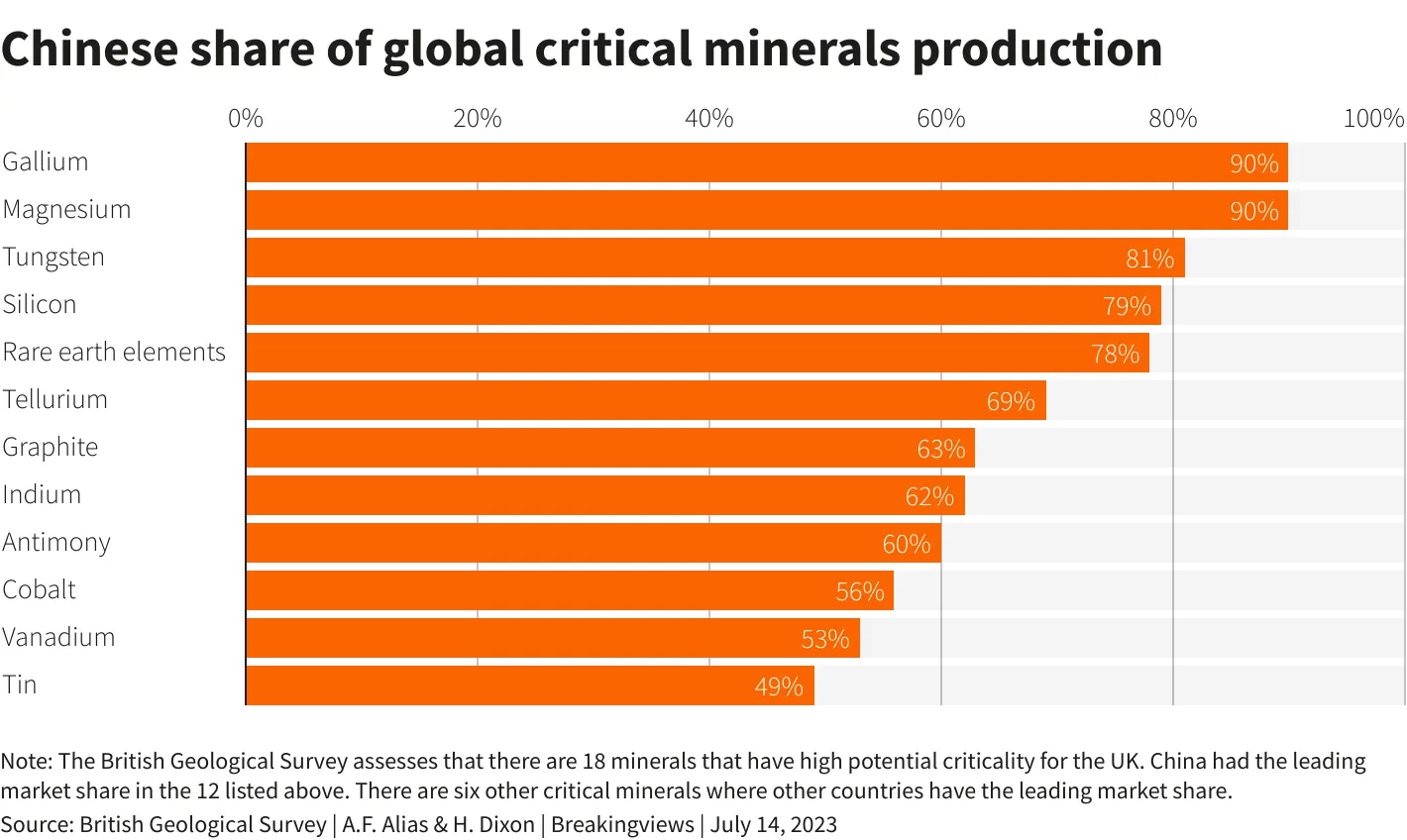 India and Brazil agreed to boost cooperation on critical minerals and rare earths on Saturday, Prime Minister Narendra Modi said after talks in New Delhi with Brazilian President Luiz Inacio Lula da Silva. “The agreement on critical minerals and rare earths [is] a major step towards building resilient supply chains,” Modi said. Brazil has the world’s second-largest reserves of critical minerals, which are used in everything from electric vehicles, solar panels and smartphones to jet engines and guided missiles. India, seeking to cut its dependence on top exporter China, has been expanding domestic production and recycling while scouting for new suppliers. “Increasing investments and cooperation in matters of renewable energies and critical minerals is at the core of the pioneering agreement that we have signed today,” Lula said. The details of the deal were not immediately available. Nine other agreements and memoranda of understanding were finalised on Saturday, the foreign ministry’s spokesman said, touchin...
 -
Cryptonews.com - 20:58 Jan 30, 2026
Nubank has received conditional approval from the OCC to organize a U.S. national bank, with 12 months to fully capitalize and 18 months to launch. If finalized, Nubank, N.A. could offer deposits, cards, lending and digital-asset custody to U.S. customers under one federal charter, directly via app. The post Brazil’s Nubank Wins OCC Conditional Approval for U.S. National Bank – Crypto Custody Soon? appeared first on Cryptonews.