Canada | News
-
NU.nl - 01:48 Jun 19, 2026
Canada is ondanks de klinkende 6-0-zege op Qatar op het WK voetbal niet helemaal in een feeststemming. De ploeg van bondscoach Jesse Marsch is aangeslagen door de ernstige blessure van Ismaël Koné. -
AD.nl - 00:24 Jun 19, 2026
Canada heeft in de nacht van donderdag op vrijdag de eerste zege ooit geboekt op een WK. Dat deed het gastland ook nog eens met 6-0 tegen Qatar, dat een uur met negen man speelde. De tweede rode kaart werd gegeven na de beenbreuk van Ismaël Koné, de 24-jarige middenvelder van Canada. -
AD.nl - 18:16 Jun 18, 2026
Canada heeft het inreisverbod van Ivoorkust-international Elye Wahi opgeheven. De 23-jarige aanvaller mocht in eerste instantie niet afreizen naar het tweede groepsduel van Ivoorkust tegen Duitsland, omdat hij verdacht werd van betrokkenheid bij matchfixing. -
NU.nl - 16:58 Jun 18, 2026
De Ivoriaanse WK-speler Elye Wahi is toch welkom in Canada. De aanvaller mocht aanvankelijk het land niet in, omdat hij volgens verschillende media betrokken is bij een grote matchfixingszaak. -
Dawn - 19:50 Jun 17, 2026
Ghana midfielder Thomas Partey, who is facing trial on rape charges in Britain, lost a court challenge on Tuesday that would have allowed him to enter Canada for his side’s World Cup opener in Toronto. Ottawa denied the Villarreal player a visa over the British charges, blocking him from playing for Ghana against Panama on Wednesday. Accra filed a request for an injunction in federal court on Tuesday seeking to set aside Ottawa’s decision. But broadcaster CBC said Judge Roger Lafreniere had dismissed the challenge. Shortly before the decision was handed down, Ghana’s veteran coach Carlos Queiroz told reporters in Toronto that his side would be ready, regardless of the court outcome. “My business is to play with the cards that I have in front of me,” Queiroz said. “When the decision comes, we are ready.” Panama head coach Thomas Christiansen, also asked about Partey’s possible exclusion, said he believed Ghana would pose strong competition even if the former Arsenal player was not on the pitch. “They have a lo... -
Midi Madagasikara - 03:00 Jun 17, 2026
Docteure en droit de l’Université Laval, au Québec, la juriste a participé à deux reprises à ce forum international, dont l’objectif est de faire découvrir les nouvelles tendances mondiales en Fintech ainsi que les nouvelles applications de la technologie au service de l’industrie financière. Quatrième édition La Conférence canadienne sur la Fintech s’est tenue récemment […] L’article Lauriane Rakotomandimby : Deuxième intervention à la Conférence sur la Fintech au Canada est apparu en premier sur Midi Madagasikara. -
AD.nl - 20:40 Jun 16, 2026
Het WK voetbal in Canada, Mexico en de Verenigde Staten is begonnen. Via dit liveblog houden we je op de hoogte van al het laatste nieuws! -
AD.nl - 23:40 Jun 12, 2026
Cyle Larin was de grote man bij Canada in het eerste duel op het WK met Bosnië en Herzegovina. De oud-aanvaller van Feyenoord mocht invallen in Toronto en bezorgde zijn ploeg het eerste punt ooit op een WK (1-1). De 31-jarige spits geeft daarbij bondscoach Jesse March stof tot nadenken. -
NU.nl - 22:58 Jun 12, 2026
Voormalig Feyenoord-spits Cyle Larin bezorgde Canada vrijdag een gelijkspel in het WK-duel met Bosnië en Herzegovina. Met zijn eerste balcontact zorgde hij voor de 1-1, waardoor de Canadezen hun eerste punt ooit pakten op een WK. -
Dawn - 21:36 Jun 12, 2026
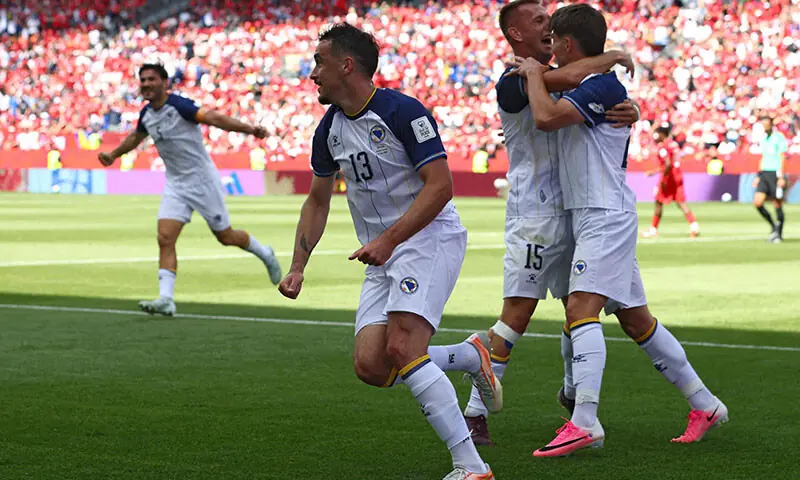 Co-hosts Canada grabbed a second-half equaliser to draw 1-1 with Bosnia and Herzegovina on Friday in the first World Cup finals game ever played on Canadian soil. Cyle Larin got Canada’s goal after Jovo Lukic put Bosnia ahead with a header in the 21st minute in Toronto. The result gave Canada its first point in World Cup history. Canadian sides had a perfect record of futility at two previous tournament appearances in 1986 and 2022, with six losses. Lukic’s goal from a corner sent the small but enthusiastic Bosnian contingent at the Toronto Stadium into a frenzy. Canada had the majority of play in the first half but failed to generate any real chances. Bosnia and Herzegovina’s players celebrate the opening goal during the 2026 World Cup Group B football match between Canada and Bosnia and Herzegovina at the Toronto Stadium in Toronto, Canada on June 12, 2026. — AFP The stadium erupted in the 17th minute when forward Jonathan David had a clear shot on goal, but it was easily handled by Bosnian keeper Nikola Va...
 -
NU.nl - 20:57 Jun 12, 2026
Canada heeft vrijdag voor eigen publiek een historisch punt gepakt in de eerste WK-wedstrijd tegen Bosnië en Herzegovina. Voormalig Feyenoord-spits Cyle Larin zorgde met de late 1-1 voor een uitbarsting van vreugde op de tribunes in Toronto. -
AD.nl - 20:57 Jun 12, 2026
Oud-Feyenoorder Cyle Larin heeft gastland Canada het allereerste WK-punt ooit bezorgd. De spits schoot in de slotfase raak tegen Bosnië en Herzegovina, dat de zege lang binnen leek te hebben: 1-1. -
NU.nl - 17:58 Jun 12, 2026
De Ghanese middenvelder Thomas Partey is de toegang tot Canada geweigerd en kan daarom niet meedoen tegen Panama. De Canadese autoriteiten hebben geen toelichting gegeven op de afwijzing. Partey wordt momenteel vervolgd in een verkrachtingszaak. -
Adevarul Romania - 18:34 Jun 06, 2026
O rețea formată din zeci de români suspectați de implicare în activități de „turism infracțional” a fost destructurată de polițiștii din Canada, în cadrul unei ample operațiuni coordonate de Serviciul Regional de Poliție Durham (DRPS). -
Cointelegraph.com - 17:26 Jun 02, 2026
 The Move-based blockchain network said it gained access to licensed payment infrastructure as it shifts toward stablecoin settlement and remittances. Movement, the Move-based blockchain network that has expanded into stablecoin payments and financial infrastructure, said it has gained access to licensed payment rails across the US, Canada and the EU, a move aimed at strengthening its cross-border payment offerings in emerging markets. In a Tuesday announcement, Movement said it plans to use the payment infrastructure to connect traditional banking systems with stablecoin settlement networks, targeting cross-border transfers and treasury services in regions where payment costs remain high and financial access is limited. Movement did not identify the partners or regulated entities that would enable its payment rail access. Still, the company said the infrastructure will enhance its ability to move funds between traditional payment networks and blockchain systems, with a focus on stablecoin-based settlement rat...
 -
Cointelegraph.com - 06:55 Jun 02, 2026
 Robinhood will enter Canada after its WonderFi acquisition brought local crypto exchanges Bitbuy and Coinsquare under its control. Stock and crypto trading platform Robinhood has entered the Canadian market after closing a $180 million stock acquisition of local crypto technology company WonderFi, gaining the company’s licenses and regulatory approvals in the country. Robinhood said on Monday that the acquisition marks the platform's entry into Canada and will see crypto exchanges Bitbuy and Coinsquare come under the company’s banner. Bitbuy and Coinsquare are among Canada's largest crypto exchanges. WonderFi disclosed in March that the platforms generated combined revenue of $49.8 million in 2025. Read more
 -
JPost.com - Antisemitism - 03:26 Jun 02, 2026
"The crisis of antisemitism in Canada today is specific, it's severe, and it demands a targeted response," said Canadian Prime Minister Mark Carney.
-
ukrinform.net - 20:43 May 29, 2026
A new project to manufacture Ukrainian unmanned aerial vehicles in Canada is being launched with the aim of strengthening defense-industrial cooperation. -
ukrinform.net - 00:30 May 27, 2026
The science fiction film U Are the Universe by Ukrainian director Pavlo Ostrikov will be screened at the PUFF (Saskatoon Underground Film Festival) in Canada. -
NU.nl - 21:39 May 24, 2026
Max Verstappen heeft zondag bij de Grand Prix van Canada zijn eerste podiumplek van het seizoen veroverd. De Red Bull-coureur finishte in een enerverende race als derde. Kimi Antonelli won de Grand Prix en profiteerde zo optimaal van een uitvalbeurt van George Russell.