News
-
Defense News - 09:32 Apr 09, 2026
The delay for the MGCS project is due to Germany deciding to start a program for new Leopard 3 tanks, according to Vautrin. -
Focus.ua - 09:31 Apr 09, 2026
35-летний Декарлос Браун-младший, обвиняемый в убийстве украинской беженки Ирины Заруцкой 22 августа 2025 года в поезде в городе Шарлотт, признан психически неспособным для участия в судебном процессе. -
CoinDesk - 09:28 Apr 09, 2026
On Feb. 6, staff mistakenly entered "BTC" instead of "KRW" in a promotion, crediting roughly 620,000 bitcoin worth over $40 billion. -
Decrypt - 09:27 Apr 09, 2026
The new fund launched amid a second straight day of outflows for Bitcoin ETFs, undercutting competitors with a 0.14% expense ratio. -
Focus.ua - 09:25 Apr 09, 2026
Президент Украины Владимир Зеленский предупредил, что любые уступки по Донбассу не остановят Россию, а лишь откроют ей путь к новым наступлениям. По его словам, после этого под угрозой могут оказаться Харьков и Днепр — одни из ключевых городов страны. -
Focus.ua - 09:25 Apr 09, 2026
Презентован новый Volkswagen Taigun 2026. Компактный бюджетный кроссовер изменился внешне и получил новое оборудование. -
Cointelegraph.com - 09:21 Apr 09, 2026
 Morgan Stanley’s Bitcoin ETF drew $30.6 million in first-day inflows, ranking second behind BlackRock’s IBIT as US spot Bitcoin ETFs clocked net outflows on Wednesday. The Morgan Stanley Bitcoin Trust (MSBT), the first spot Bitcoin exchange-traded fund (ETF) offered by a US bank, recorded $30.6 million in inflows on its trading debut, giving the Wall Street bank a respectable entry into the spot Bitcoin ETF market. MSBT started trading on the NYSE Arca on Wednesday, generating $34 million in trading volume, slightly above the expectations of Bloomberg ETF analyst Eric Balchunas, who predicted first-day volume would reach $30 million. As of April 8, MSBT held 444.4 Bitcoin (BTC), worth around $31.7 million, accounting for 0.03% of the estimated 1.29 million BTC collectively held by US spot BTC ETFs. Read more
 -
Focus.ua - 09:16 Apr 09, 2026
Астрономов удивил тот факт, что активное ядро галактики может так резко изменить свою яркость за короткий промежуток времени. Пока что астрономы не могут объяснить, что именно происходит. -
Haaretz - 09:06 Apr 09, 2026
Trump administration sources told the Wall Street Journal that the United States is weighing closing a military base in one of several European countries, potentially in Spain or Germany -
Cryptonews.com - 09:03 Apr 09, 2026
Ethereum Foundation is moving $11 million of ETH, and the timing, against a backdrop of extreme fear, is raising bearish price prediction. The post Ethereum Price Prediction: ETH Foundation Selling More For Funding – Something Big Coming? appeared first on Cryptonews. -
Cointelegraph.com - 09:01 Apr 09, 2026
 Dubai’s regulator issued new guidance placing token launches into three buckets, tightening disclosure and governance standards for stablecoins, RWAs and other digital assets. Dubai’s Virtual Assets Regulatory Authority (VARA) published detailed guidance on Thursday that clarifies how token issuers should structure, disclose and distribute virtual assets in the emirate, sharpening rules for stablecoins and real-world asset (RWA) tokens. The document, which interprets VARA’s existing Virtual Asset Issuance Rulebook rather than creating new law, sets out three distinct issuance pathways and spells out who is responsible for what in each. Rather than treating all tokens as if they pose the same risks, the framework draws clear lines between Category 1 issuances (including fiat-referenced virtual assets and asset-referenced virtual assets), Category 2 issuances that must be distributed via a VARA-licensed intermediary, and exempt virtual assets with limited functionality. Read more
 -
FD - 09:00 Apr 09, 2026
Voor de inwoners van Zuid-Afrika kan een definitieve oplossing van de Hormuz-crisis niet snel genoeg komen. Het land is sterk afhankelijk van brandstof uit het buitenland. -
FD - 09:00 Apr 09, 2026
Defensie-expert Jack Watling klaagt dat Europese regeringen incidentenpolitiek voeren op veiligheidsgebied. Ze negeren de samenhang tussen energie, grondstoffen en defensie. -
Focus.ua - 08:55 Apr 09, 2026
Российские войска ночью атаковали Запорожскую область, ударив по отделению "Новой почты". Враг использовал ударный дрон "Герань-2". -
CryptoSlate - 08:54 Apr 09, 2026
For most of the past two years, debate about stablecoins in payments has focused on the checkout screen: will consumers ever tap a wallet instead of a card? Visa, Stripe, and Mastercard have answered with their capital. Visa now settles in USDC, Stripe bought Bridge, and Mastercard is acquiring BVNK. Each move reflects the same […] The post Crypto projected to move $719 trillion through global payments appeared first on CryptoSlate. -
Focus.ua - 08:52 Apr 09, 2026
Исследователи обнаружили, что самые толстые и тяжелые попугаи в мире только что установили рекорд по количеству птенцов в сезоне размножения — никто не ожидал такого. -
Dawn - 08:50 Apr 09, 2026
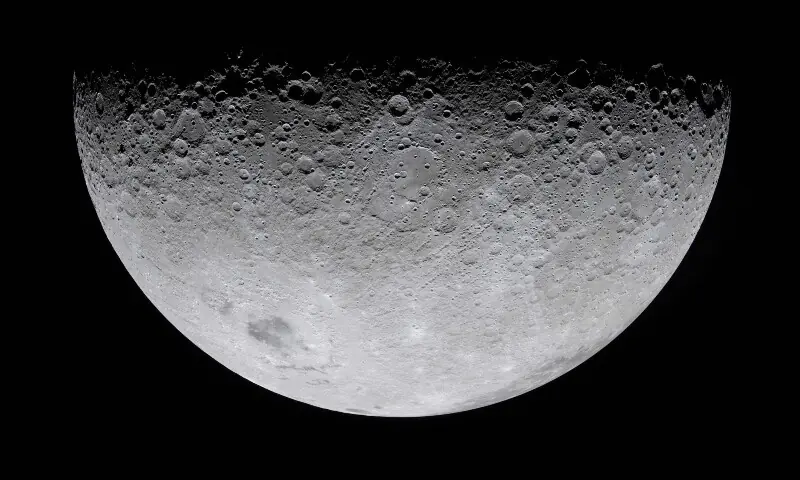 Four astronauts travelling back to Earth from the far side of the moon on Nasa’s Artemis II mission spoke of their emotions as they wrapped up the unprecedented flight and prepared to re-enter the atmosphere in a “fireball”, during their first press conference from space on Wednesday. The Artemis II crew, flying in their Orion capsule since launching from Florida last week, are due to splash down off the Southern California coast on Friday evening after reaching the moon earlier this week. They cruised along a path that took them past the shadowed, lunar far side to become the farthest-flying humans in history. On the trip back home, they will reach speeds of up to 38,365 kph as they enter Earth’s atmosphere, a high-risk phase of the mission that will put Orion’s heatshield to the test as it gets battered by intense atmospheric friction. “I’ve actually been thinking about entry since April 3, 2023 when we got assigned to this mission,” said Artemis II mission pilot Victor Glover, when asked how he was feeling...
 -
The Nation - National - 08:49 Apr 09, 2026
Punjab Chief Minister Maryam Nawaz Sharif on Thursday inaugurated the Punjab Police Pakistan App, aimed at enabling citizens to report lost documents from their homes. -
Haaretz - 08:49 Apr 09, 2026
The chart suggested ships travel further north through waters closer to Iran's mainland near Larak Island, a route that some ships were observed taking before Tehran's and Washington's cease-fire. It remains unclear if the Revolutionary Guard cleared any mining on the route