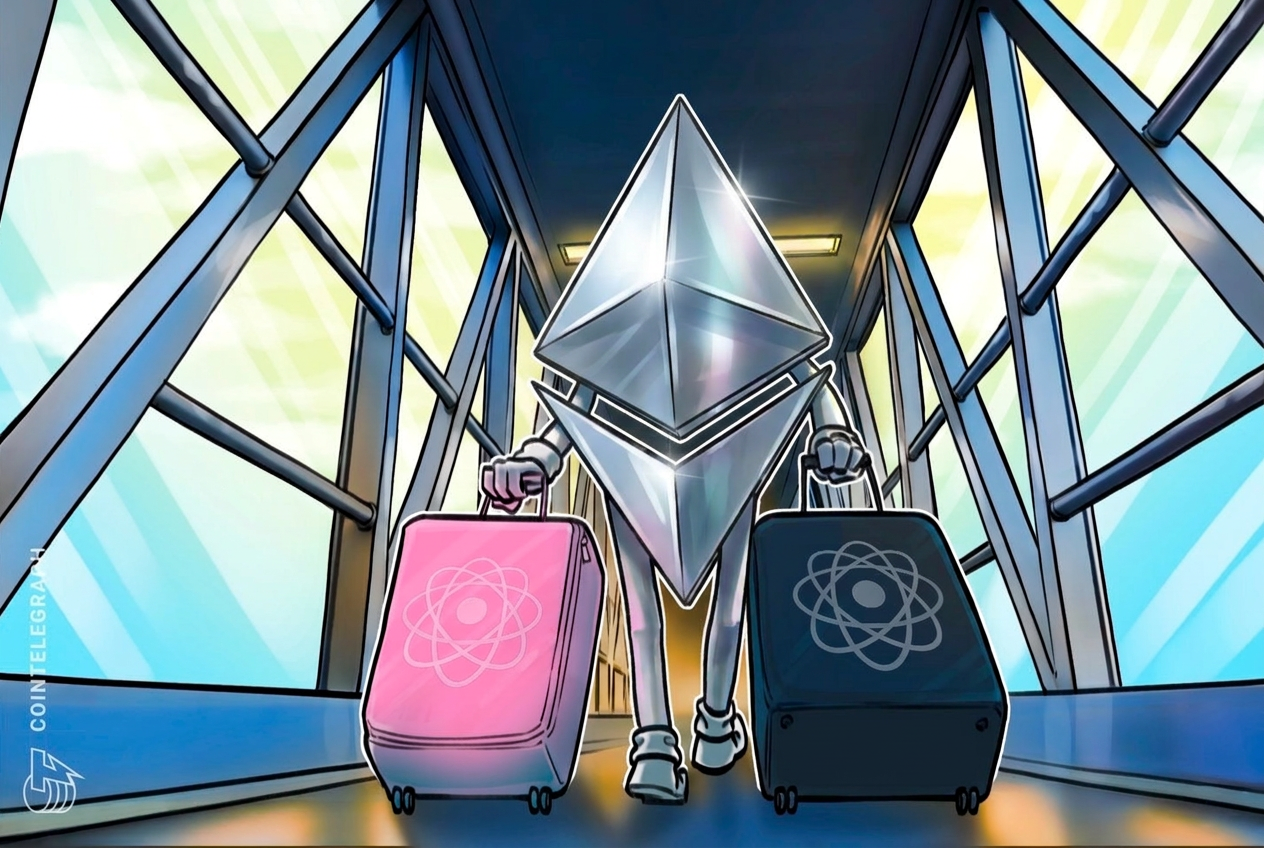
Ethereum researcher Justin Drake said it is their “hope” that Ethereum will achieve its post-quantum and post-AI transition by December 2028. Ethereum Foundation researcher Justin Drake is targeting December 2028 to complete Ethereum’s post-quantum and post-AI transition, a year earlier than the foundation’s previously announced quantum-resistance deadline. Speaking at Devcon 8 in Mumbai on Tuesday, Drake outlined the accelerated timeline. “Our hope is that by December 2028 we’ll be able to wrap up the full post-quantum and post-AI transition,” Drake said, adding that developers have 24 months to deliver three additional network upgrades. The Ethereum Foundation’s September roadmap established December 2029 as its deadline for achieving quantum resistance across Ethereum’s execution, conse…
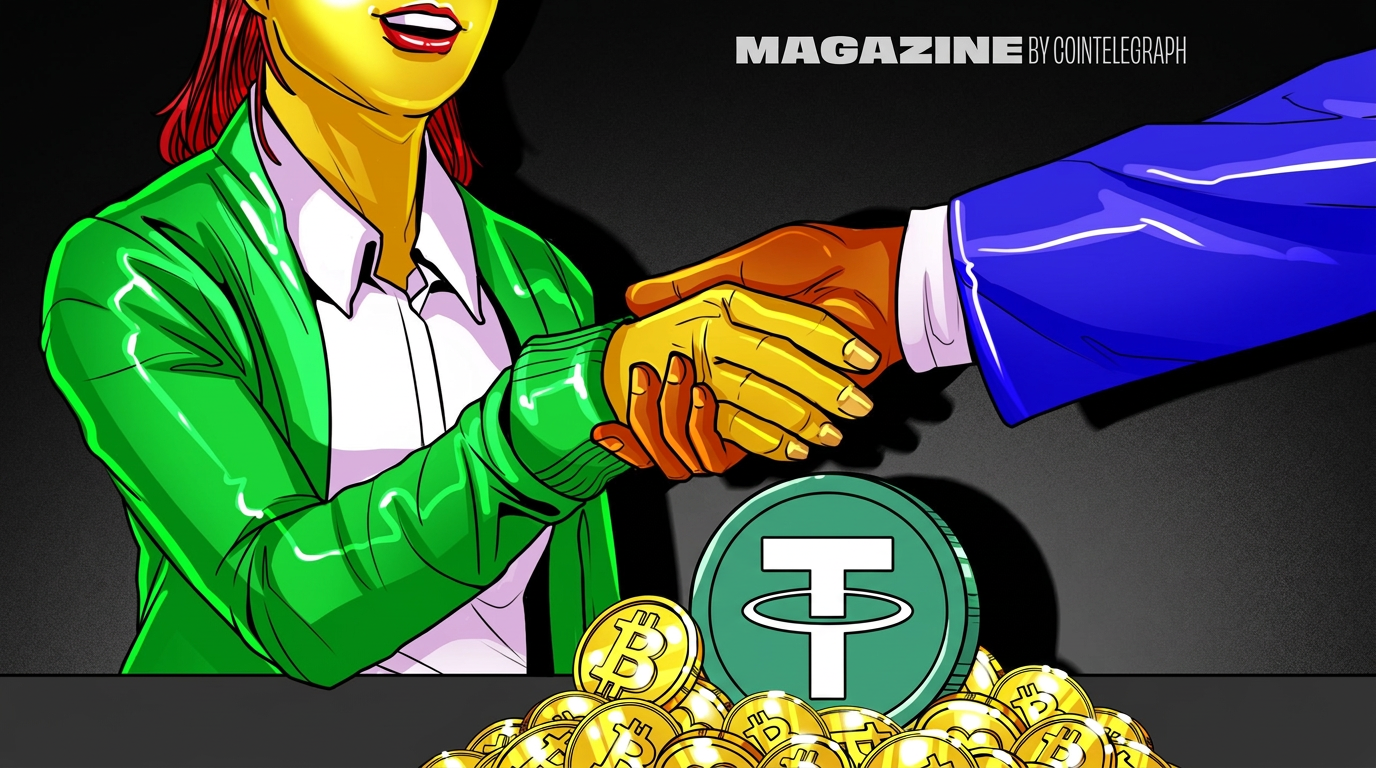
USDT is coming home to Bitcoin, offering privacy and Lightning-fast payments. But can Bitcoin’s revamped version of Tether compete with stablecoins on ETH and TRON? Utexo is preparing to bring Tether’s dollar-backed stablecoin back to Bitcoin after a three-year hiatus. The Dubai-based blockchain startup says it will achieve the integration through RGB, a protocol that keeps asset transaction data off-chain. The public launch is scheduled for Nov. 28, with Lightning Network support planned for Q1 2027, promising private transfers and fast payments via Bitcoin’s payment network.
ChainSecurity said it identified 13 real-world examples of smart contracts potentially affected by Glamsterdam’s gas changes and is coordinating responsible disclosure with affected projects. Ethereum developers have postponed the Glamsterdam hard fork on the Hoodi testnet after researchers identified gas-related security risks that could affect how existing smart contracts handle failed transactions. The Ethereum Foundation (EF) said that the upgrade, originally scheduled for Oct. 26, would be delayed to allow developers to investigate how some proposals interact with smart contracts deployed on Ethereum. On Oct. 13, Blockchain security firm ChainSecurity warned that two proposals included in Glamsterdam, EIP-8037 and EIP-8038, could weaken safeguards against a type of attack called insu…
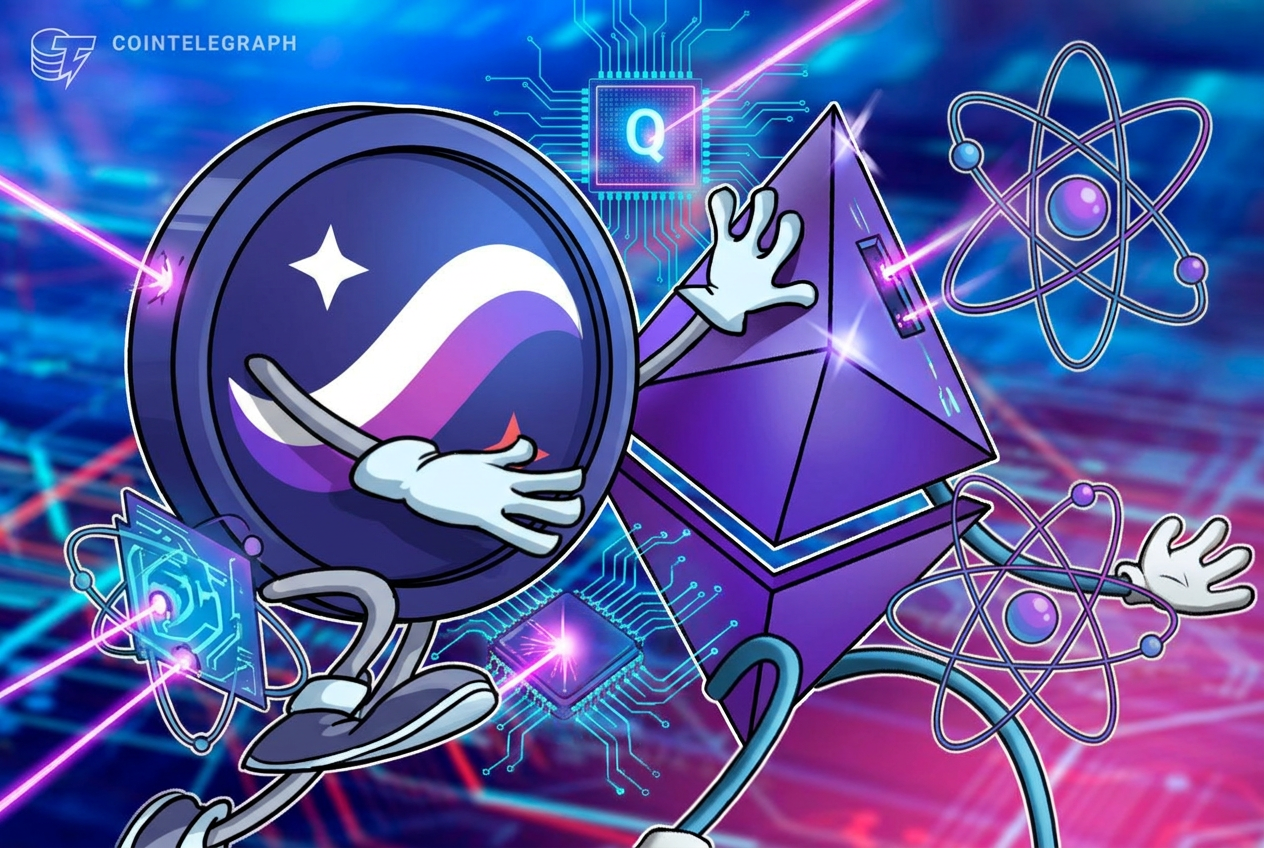
StarkWare plans to release a draft whitepaper in November as it explores an independent, quantum-resistant blockchain. Starknet’s community has voted to support research into becoming an independent, post-quantum layer-1 blockchain. The network’s potential departure from Ethereum gained overwhelming support. The governance vote that ran for seven days closed on Thursday. The poll drew about 3,200 votes, with 93.52% of voting power in favor of the transition. The non-binding poll recorded the highest participation in Starknet’s governance history, according to StarkWare, which said it abstained from voting to leave the decision to the community.
JPMorgan is reportedly expanding its JPM Coin deposit token to Ethereum, allowing institutional clients to make payments and settle tokenized asset transactions. JPMorgan Chase, the world’s biggest bank by market capitalization, is expanding its JPM Coin deposit token to Ethereum, Bloomberg reported on Monday. JPM Coin represents US dollar deposits held at JPMorgan and lets eligible clients transfer funds within seconds, around the clock. Emma Landriault, global head of Kinexys Labs, said crypto companies could use the token for blockchain payments, while financial institutions could use it to settle trades and post collateral.
Starknet is asking STRK holders whether to explore becoming an independent layer-1 blockchain to reduce its dependence on Ethereum’s quantum-security upgrade timeline. Ethereum layer-2 network Starknet has opened a non-binding vote asking STRK holders whether it should explore becoming an independent, post-quantum layer-1 blockchain. On Thursday, Starknet opened a seven-day poll, which offers three options: support further research, oppose it, or remain neutral pending more information. Voting closes on Oct. 22, with results published afterwards. A “Yes” vote would signal support for further research, not authorize a transition. Further proposals and governance votes would be required, and no timetable for becoming an L1 has been announced.
New .eth registrations would pause for hours during the transition, while existing domain holders could renew their names without migrating. Ethereum Name Service (ENS) is seeking approval from its decentralized autonomous organization (DAO) to activate an upgraded naming protocol on the Ethereum mainnet. ENS founder Nick Johnson submitted an executable draft proposal to activate ENSv2, the next version of the protocol. If approved, the upgrade would freeze new registrations on the original ENS registrar while allowing existing domain holders to continue renewing their names. The upgrade introduces a redesigned registry architecture with more flexible domain management and permissions. After the activation, ENS Labs plans to transfer its remaining administrative control over the upgraded…
Sepolia marks one of the final major rehearsals before the final activation of Glamsterdam, aimed at bringing more efficiency and scalability to the Ethereum mainnet. Ethereum’s Glamsterdam upgrade has gone live on the Sepolia testnet, in one of the final major rehearsals before its mainnet activation. Glamsterdam went live on Sepolia on Tuesday at 1:53 pm UTC, Ethereum community contributor Pooja Ranjan announced in an X post. The upgrade aims to advance Ethereum’s layer-1 scaling roadmap with enshrined proposer-builder separation, block-level access lists and changes to gas pricing that better reflect the cost of execution, the Ethereum Foundation announced in a Sept. 28 blog post.
An EEZ contributor shared a 0.001 ETH cross-chain test as the project develops a framework to connect Ethereum mainnet and its rollups. The Ethereum Economic Zone (EEZ) has tested an atomic transaction between Ethereum mainnet and a layer-2 network, according to a project contributor. On Tuesday, EEZ contributor Eduardo Antuña Díez shared the transaction and called it the “first atomic cross-chain” L1-to-L2 transaction. The transaction’s logs record a cross-chain call carrying 0.001 Ether (ETH) and a state update for a rollup. In an atomic transaction, linked actions across networks either all succeed or are all reversed if any part fails.
Once among Ethereum’s largest layer-2 networks by total value locked, Blast is urging users to move their assets to mainnet ahead of the shutdown. Ethereum layer-2 network Blast is shutting down after its operating costs exceeded the revenue generated by the chain. In a Friday post on X, Blast said it sees no “credible path” to making the network economically sustainable and asked users to withdraw their assets to Ethereum mainnet. “We launched Blast with the goal of building a self-sustaining chain for users and developers,” the team said. “Unfortunately, the economics of operating the chain no longer make sense.”
Ethereum’s zkAPI is now live on mainnet, turning an earlier zero-knowledge API payment proposal into a working implementation for private, prepaid access. The Ethereum Foundation announced on Thursday that zkAPI, a system built with the Open Anonymity Project to let users pay for AI and other API services without revealing their billing identities, has gone live on Ethereum mainnet. Users deposit funds into an Ethereum vault, then use zero-knowledge proofs to prove they have enough credit to pay for API requests without revealing which deposits are theirs, according to a post from Vittorio Rivabella, AI coordinator at the Ethereum Foundation’s dAI team. One of the immediate use cases of the system is paying for the use of AI without linking the payment to a user. zkAPI issues short-lived A…
MetaMask said it is investigating the threat internally and said it has found no immediate threat to its wallets. MetaMask has announced it is responding to a security incident affecting part of its infrastructure and is exiting affected staking validators as a precaution. In an update on Wednesday, MetaMask said it was addressing the ongoing threat internally and was working with external partners and security advisors. It did not share what the security issue was but said it has not identified any immediate threat to MetaMask wallets. Source: MetaMask
Glamsterdam will bring proposer-builder separation, block-level access lists and new gas pricing, while its mainnet date remains unset. Ethereum developers have scheduled the network’s next major upgrade, Glamsterdam, to activate on the Sepolia testnet on Oct. 6. Sepolia node operators must update both their execution-layer and consensus-layer clients before the activation, the Ethereum Foundation said Monday. One of Glamsterdam’s changes is enshrined proposer-builder separation. It will move the handoff between specialized block builders and validators into Ethereum’s protocol, reducing reliance on outside middleware.
Ethereum’s Vitalik Buterin said PeerDAS marked the start of Ethereum’s transition “from being just a blockchain to being something much more powerful.” Ethereum co-founder Vitalik Buterin said Ethereum’s Hegotá upgrade could be the network’s last “normal” fork before development shifts toward technologies that include recursive STARKs, automated formal verification, optimized consensus and quantum-safe cryptography. On Sunday, Buterin said Hegotá, which is planned for 2027, is likely to be the final upgrade whose features and technology would still be recognizable to someone familiar with Ethereum in 2015. He said PeerDAS, which allows nodes to verify data availability by sampling portions of data rather than downloading everything, marked the beginning of Ethereum’s transition “from bei…
Trueo said Base was the right choice when it launched, as Ethereum gas fees were higher, but said mainnet now offers greater integration potential. Prediction market platform Trueo plans to migrate from Base to Ethereum, citing broader integration opportunities and plans to build the next iteration of its oracle system. The project, which launched on Base in March 2025, said its priority after the migration will be attracting liquidity and launching the next generation of its oracle, the system used to verify real-world outcomes that are used to resolve prediction markets. Trueo said it chose to move from Base to Ethereum because it offered higher integration potential and product upside, while on Base, integrations are limited to the immediate ecosystem.
The non-profit signaled support for reducing Ethereum block times, citing increasing institutional activity moving onto the smart-contract network. Ethereum Institutional signaled support for Ethlabs’ motion to reduce block times and create a faster Ethereum to address increasing competition from other networks. “Make Ethereum faster,” wrote the non-profit organization in a Friday X post, arguing that reducing block times is needed as “more institutional activity moves onchain.” On Thursday, Ethlabs published an article quoting 20 decentralized finance (DeFi) founders showing broad support for EIP-8198, also known as “Quick Slots,” which seeks to initially reduce Ethereum block times to 10 seconds from 12 seconds.
Ethereum and Base are pursuing different account abstraction designs after talks failed, according to Ethlabs researcher Derek Chiang. Ethereum and Base are set to implement different account abstraction standards after efforts to agree on a shared account abstraction standard broke down last week. Interoperability standards became secondary to each chain’s core goals, leading both to go their separate ways and “putting the burden on wallets,” Derek Chiang, founding member and researcher at Ethlabs, as well as a co-author of Ethereum’s EIP-8141 proposal, said in a Monday X post. The divergence could require wallet developers to support separate transaction formats to provide a consistent experience across networks. Account abstraction allows programmable rules for authorizing transactions…
Harmony proposed sunsetting its layer-1 blockchain and migrating ONE to Ethereum, weeks after an exploit led to plans to discard 109,000 transactions. Ethereum-compatible layer-1 network Harmony proposed sunsetting its blockchain and migrating its native ONE token to Ethereum, seven years after launching its mainnet. On Sunday, Harmony proposed taking a final network snapshot, issuing ERC-20 ONE tokens on Ethereum and migrating exchange listings. Validators would be offered options to stop their nodes, continue as governors, or join its new AI-video initiative. Harmony described the proposal as non-binding and did not specify when the final block would be produced or whether the shutdown would be submitted to the network’s validator-led governance process.
Bitmine has bought Ether for 65 consecutive weeks, maintaining its accumulation strategy through a prolonged crypto downturn and $5.1 billion in paper losses. Bitmine Immersion Technologies extended its Ether buying streak to 65 consecutive weeks, adding 53,501 ETH last week as a broader crypto market recovery lifted the value of its burgeoning digital asset portfolio despite sizable unrealized losses. The latest purchase brought Bitmine’s holdings to more than 5.9 million ETH, valued at roughly $14.8 billion based on an Ether price of $2,511 as of Sunday. The company now owns 4.9% of Ethereum’s 120.7 million circulating supply, putting it within striking distance of its stated goal of owning 5%. Bitmine’s chairman, Tom Lee, said Ether, Bitcoin (BTC) and Solana (SOL) have been the three be…
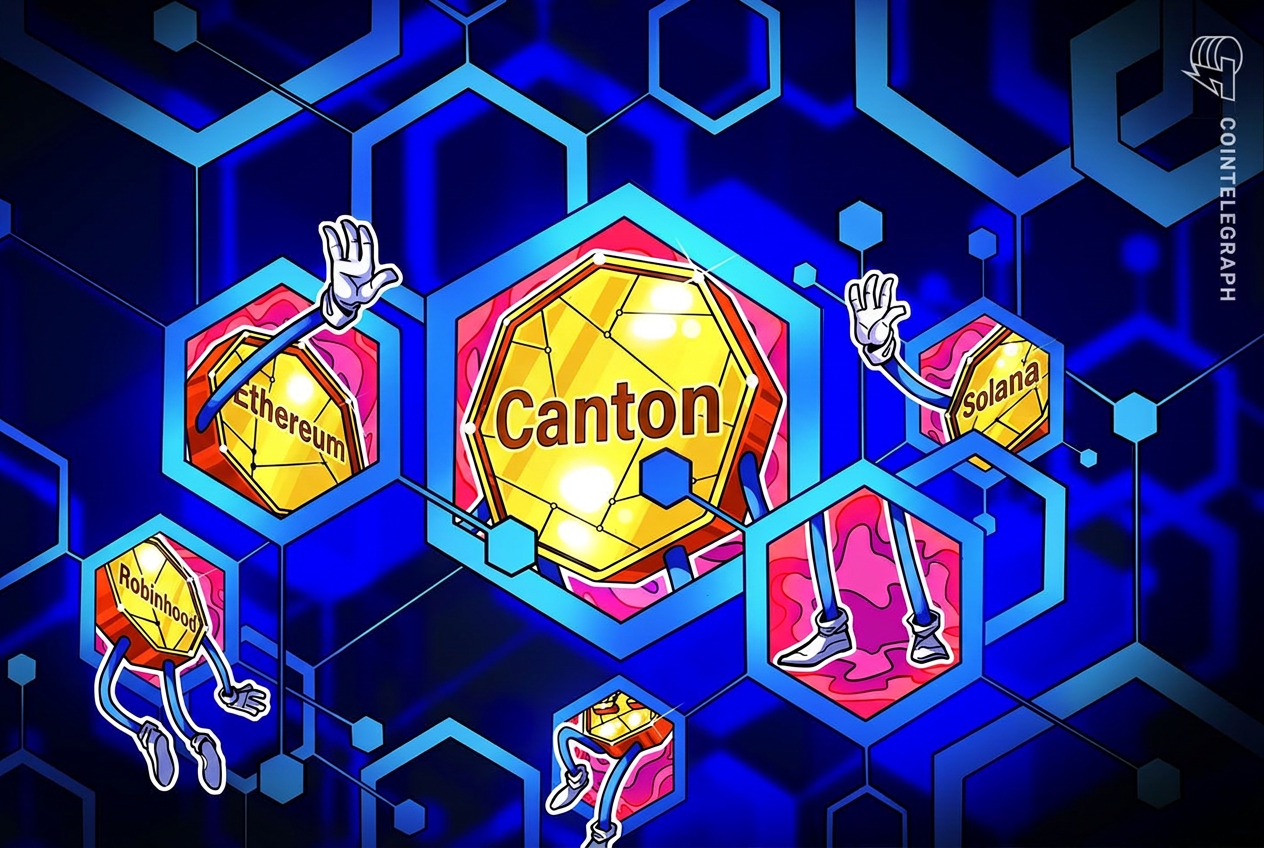
The non-custodial cross-chain swap engine connects Canton’s institutional tokenized-asset markets with liquidity and trading activity across major public blockchains. Interstice Digital has launched a cross-chain swap engine with FalconX connecting the Canton Network with Ethereum, Solana and Robinhood Chain. According to Tuesday’s announcement, the non-custodial engine allows assets to be swapped across the four networks without Interstice taking custody or executing transactions on users’ behalf. FalconX, a digital asset prime brokerage serving institutional investors, provides liquidity for the engine, which is designed to connect Canton’s institutional markets with assets and trading activity on public blockchains, giving users a route between tokenized assets on Canton and liquidity…