Iran | News
-
Adevarul Romania - 13:13 Jul 08, 2026
Aproximativ 6.000 de navigatori rămân blocați la bordul navelor aflate în Golful Persic, în contextul reluării ostilităților dintre Statele Unite și Iran, a anunțat miercuri Organizația Maritimă Internațională (OMI). -
AD.nl - 13:11 Jul 08, 2026
Luchtvaartmaatschappijen moeten het luchtruim boven Iran, Irak en Libanon langer blijven mijden door de aanhoudende onrust in het Midden-Oosten. Dat meldt de Europese luchtvaartautoriteit EASA. De waarschuwing wordt nu verlengd tot 31 augustus. Volg alle ontwikkelingen in het Midden-Oosten in ons liveblog. -
CryptoSlate - 11:35 Jul 08, 2026
The US Treasury's Office of Foreign Assets Control revoked General License X on July 7, cutting off the authorization that had allowed Iranian crude oil, petrochemical, and petroleum-product transactions through Aug. 21. Its replacement, General License X1, permits only wind-down transactions through 12:01 a.m. ET on July 17. Brent crude settled at $74.16 and WTI […] The post Bitcoin looks calm but a July 17 oil deadline looms as Iran shock sends crude up 5% appeared first on CryptoSlate. -
Dawn - 11:27 Jul 08, 2026
The Pakistan Stock Exchange’s (PSX) benchmark KSE-100 index tumbled by over 4,600 points on Wednesday as US President Donald Trump said the ceasefire with Iran was “over”. The KSE-100 index dropped by 4,626.19 points, or 2.48 per cent, to close at 181,629.36 points from the previous close of 186,255.55. The market saw a sharp decline after 1:30pm, reaching an intraday low of 179,504.34, down by 6,751.21 points compared to the previous close. The decline followed Trump’s statement that the Pakistan-mediated memorandum of understanding to end the war with Iran was “over”. Awais Ashraf, director of research at AKD Securities, noted that investor sentiment weakened following Trump’s comments, reigniting concerns over potential disruptions to oil supplies from the Middle East. He added that the market opened on a negative note amid heightened geopolitical uncertainty after US airstrikes on Iran in response to attacks on vessels transiting through the Strait of Hormuz. Iran then said it hit dozens of US military fa... -
AD.nl - 10:40 Jul 08, 2026
LIVE Midden-Oosten | Koeweit meldt schade na aanval, luchtvaartkoepel: ‘Mijdt Irak, Iran en Libanon’
Luchtvaartmaatschappijen moeten het luchtruim boven Iran, Irak en Libanon langer blijven mijden door de aanhoudende onrust in het Midden-Oosten. Dat meldt de Europese luchtvaartautoriteit EASA. Volg alle ontwikkelingen in het Midden-Oosten in ons liveblog. -
CoinDesk - 10:37 Jul 08, 2026
Bitcoin fell, altcoins slid after Trump said the ceasefire with Iran is "over" as U.S. and Iran traded airstrikes. -
Haaretz - 10:05 Jul 08, 2026
Hours after fresh U.S.-Iran strikes, Trump said he believed the interim agreement was "over" and called Iranian leaders "sick people," after indirect talks last week ended without progress and exchanges of fire resumed overnight into Wednesday -
AD.nl - 08:28 Jul 08, 2026
De Amerikaanse president heeft woensdagochtend fel uitgehaald naar Iran. De voorlopige overeenkomst met het land, waaronder het staakt-het-vuren, is volgens hem ‘voorbij’. -
The Express Tribune - 07:39 Jul 08, 2026
Trump says MoU signed with Iran to end conflict is 'over', adding he doesn't want to engage with Tehran -
Dawn - 06:11 Jul 08, 2026
Oil prices gained more than 2 per cent on Wednesday after the US military launched airstrikes against Iran and reimposed crude sales sanctions, raising fears their fragile truce was unravelling and Middle East supplies could be disrupted again. Brent crude futures gained $1.92, or 2.6pc, at $76.08 a barrel at 0400 GMT. US West Texas Intermediate crude climbed $1.82, or 2.6pc, to $72.26 a barrel. Both benchmarks rose about 3pc on Tuesday after the US revoked the general licence authorising the sale of Iranian crude following the Iranian attacks. “While the revocation doesn’t fundamentally change oil market dynamics, it’s important from a sentiment perspective. It heightens the risk of a breakdown in the temporary deal between the US and Iran,” ING commodity strategists said on Wednesday. The US airstrikes were in response to Iranian attacks on three commercial vessels that were transiting the Strait of Hormuz, US Central Command said on Tuesday. “The current conflagration is a reminder to the market of how fra... -
NU.nl - 05:22 Jul 08, 2026
De olieprijzen zijn woensdag verder gestegen na de Amerikaanse luchtaanvallen op Iran. Ook hebben de Verenigde Staten een vergunning ingetrokken die het Iran tijdelijk mogelijk maakte om olie te exporteren. -
FD - 05:02 Jul 08, 2026
De Verenigde Staten bombardeerden meer dan 80 locaties nadat Iran schepen in de Straat van Hormuz had aangevallen. De aanval is een nieuw gevaar voor het staakt-het-vuren. -
AD.nl - 04:40 Jul 08, 2026
Het Amerikaanse leger heeft dinsdagavond een reeks ‘krachtige’ luchtaanvallen op Iran uitgevoerd. De Amerikanen zeiden dit te hebben gedaan om Iran te ‘straffen’ voor het beschieten van olietankers in de Straat van Hormuz. Volg alle ontwikkelingen in het Midden-Oosten in ons liveblog. -
CoinDesk - 04:30 Jul 08, 2026
Major cryptocurrencies are trading in the red as renewed U.S.-Iran airstrikes push oil higher. -
AD.nl - 23:40 Jul 07, 2026
Het Amerikaanse leger heeft een reeks ‘krachtige’ luchtaanvallen op Iran uitgevoerd, meldt het Amerikaanse centrale commando CENTCOM op X. Ook heeft de VS een vergunning ingetrokken die het Iran tijdelijk mogelijk maakte om olie te exporteren. Iran heeft aangekondigd snel te zullen reageren. Volg alle ontwikkelingen in het Midden-Oosten in ons liveblog. -
NU.nl - 21:53 Jul 07, 2026
Het Amerikaanse leger heeft nieuwe aanvallen uitgevoerd op Iran. Dat meldt het Centrale Commando (CENTCOM) op X. De aanvallen zouden als vergelding zijn voor de eerdere aanvallen op drie olietankers in de Straat van Hormuz. -
CryptoSlate - 13:20 Jul 07, 2026
Bitcoin cleared $60,000 again the week the Bureau of Labor Statistics reported June payrolls grew by just 57,000, unemployment climbed to 4.2%, and labor-force participation slipped to 61.5%. The dollar index dropped 0.56% to 100.83, September Fed-hike odds fell to 54% from 67%, and Bitcoin is trying to breach $64,000 as of June 6. Stephen […] The post Bitcoin’s $70K path now runs through pump prices as Iran shock fades appeared first on CryptoSlate. -
The Nation - National - 20:09 Jul 05, 2026
ISLAMABAD - Iranian Ambassador to Pakistan, Dr Reza Amiri Moghadam, yesterday expressed profound gratitude to the government and people of Pakistan for sending what he described as the highest-level and largest foreign delegation to participate in the ceremony held in Iran to pay homage to the martyred Supreme Leader of Iran, Shahid. -
Dawn - 13:49 Jul 04, 2026
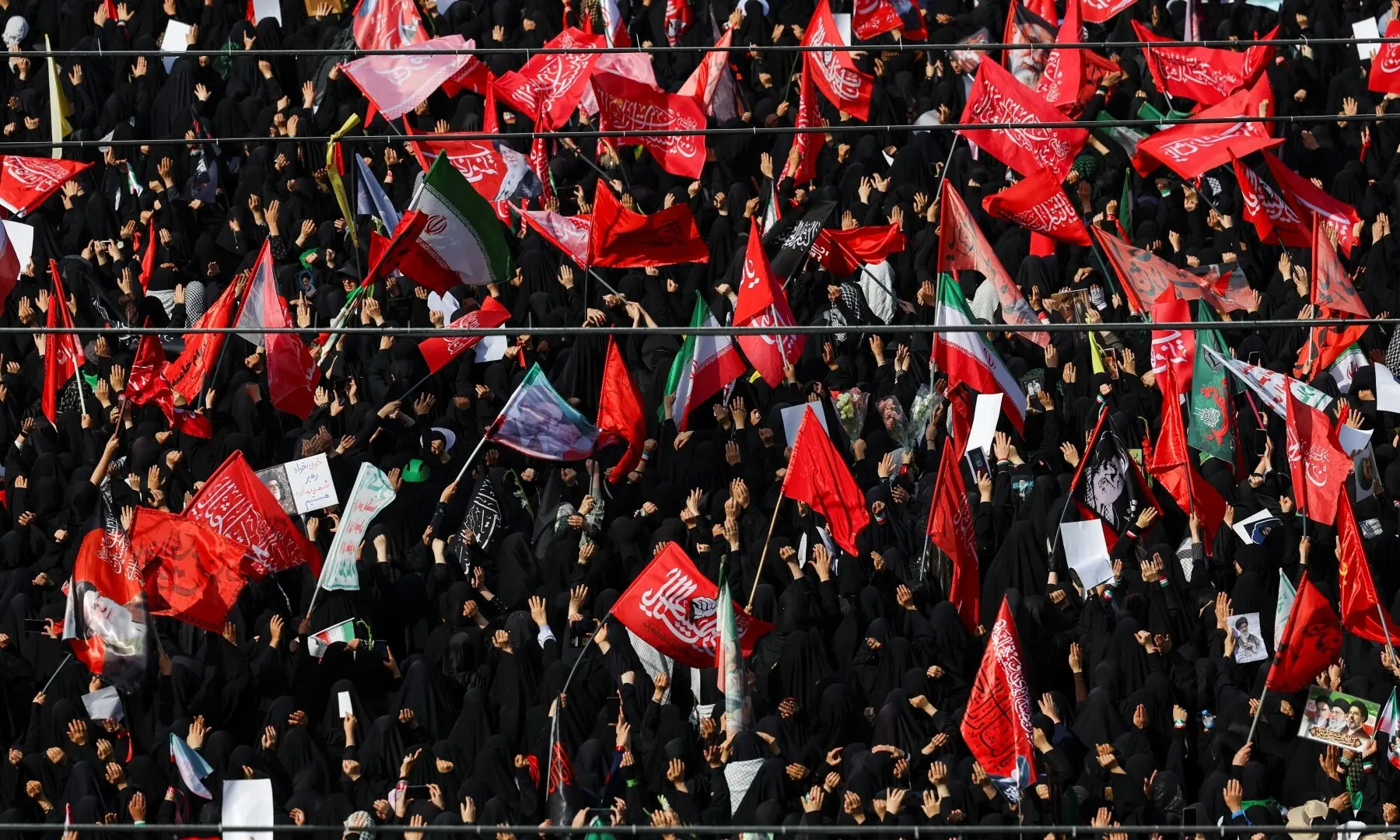 Vast crowds of Iranians massed in Tehran on Saturday to begin almost a week of funeral ceremonies for supreme leader Ayatollah Ali Khamenei — who was assassinated in a US-Israeli strike on the first day of the Middle East conflict — an event intended to send a message of defiance to the West after the US-Iran war. Clad in black and waving blood-red flags seen as a call for vengeance and justice, mourners thronged the Grand Mosalla religious complex in Tehran, AFP correspondents said. Authorities believe the ceremonies will mobilise more than 10 million people in the capital alone for tributes to the man who ran the country for three-and-a-half decades. Six days of funeral ceremonies are planned to commemorate Khamenei, who ruled the Islamic republic as its number one from 1989 until his assassination aged 86 on the first day of the US-Israeli war on Iran on February 28. AFP photographs showed the coffins of Khamenei and four other family members at the front on a dais. There was still no sign of Khamenei’s so...
 -
Decrypt - 14:36 Jul 03, 2026
Israeli prosecutors charged a 21-year-old American man with spying for Iran while studying at a seminary in Jerusalem.