The exchange cited legal and regulatory compliance in its reason for cutting off services to users based in the two countries, currently the targets of international sanctions. Cryptocurrency exchange KuCoin announced that it would immediately suspend services for its users in Russia and Belarus, citing legal and regulatory compliance concerns. In a Thursday notice, KuCoin said it had suspended access to all products and services for users based in Russia and Belarus. According to the exchange, it would offer an “orderly exit process” to allow users to withdraw assets. “Compliance is at the core of our operations and guides our decisions on where and how we offer our services,” said the exchange in a Thursday X post regarding the service suspension.
Russia plans to ban direct P2P crypto trades from July 1, 2027, while separate rules already prohibit transfers from digital accounts to self-custody wallets. Russia will ban direct peer-to-peer (P2P) cryptocurrency transactions between individuals starting next year, requiring individuals to use authorized intermediaries for such trades. The restriction will end individuals’ ability to exchange crypto assets directly without intermediaries, the Bank of Russia, the country’s central bank, explained in guidance updated Monday. The regulator confirmed that such transactions will remain permitted only until July 1, 2027. The regulator also clarified that individuals are not allowed to transfer crypto assets from their digital accounts to their own non-custodial, or self-custodial, wallets.
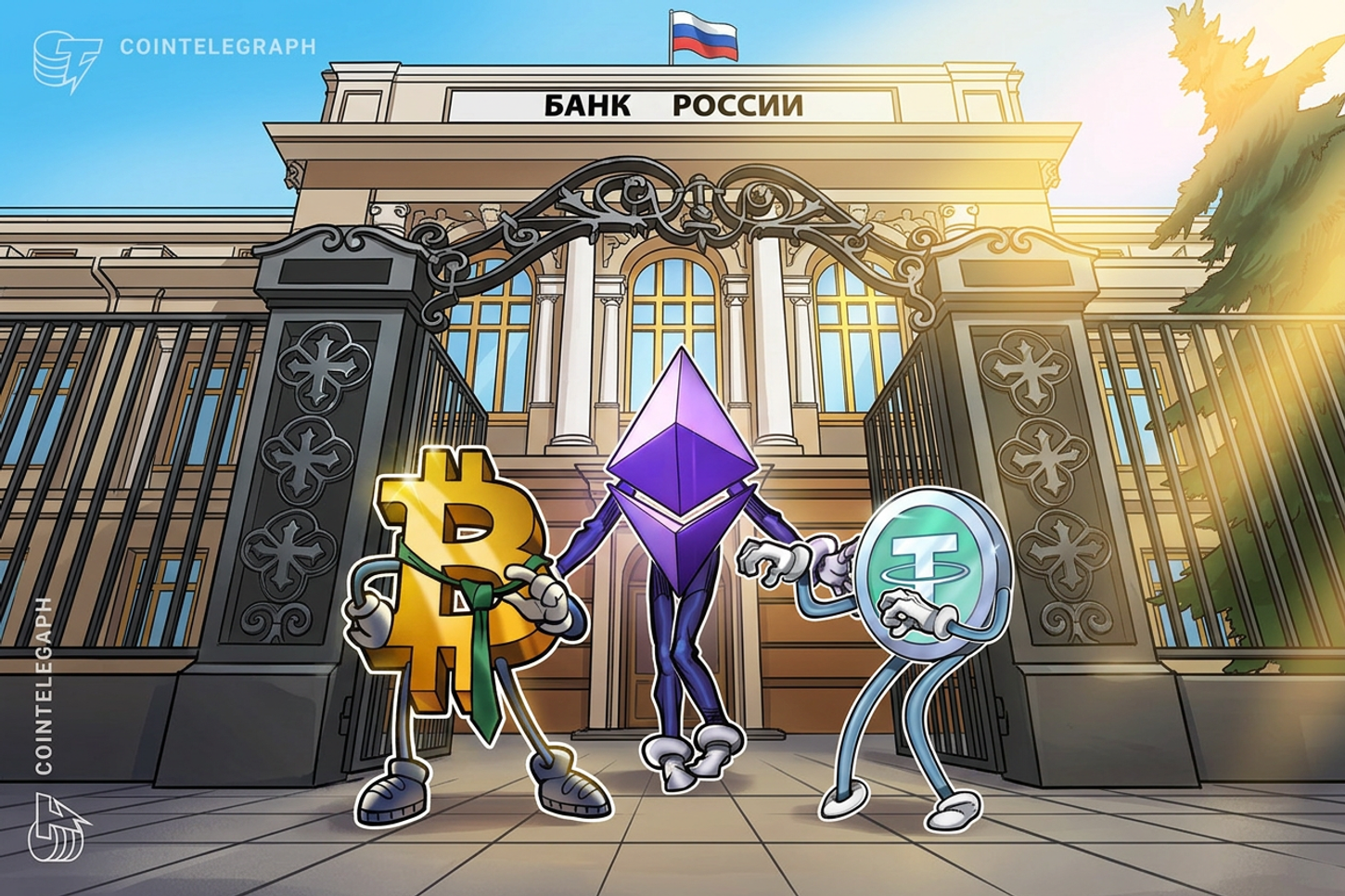
Russia’s largest bank, Sberbank, has secured crypto exchange authorization as it prepares to offer Bitcoin, Ether and Tether USDt trading. Sberbank, Russia’s largest lender, has secured the central bank’s approval to trade cryptocurrencies, including Bitcoin, ahead of a planned December launch. The Bank of Russia’s updated register, dated Tuesday, lists 10 authorized crypto exchange operators and six digital custodians, up from four and five, respectively, a week earlier. The lists include major lenders Sberbank and VTB alongside nonbank companies such as T-Invest Lab and Atomyze. Sberbank previously said it plans to launch crypto products supporting Bitcoin (BTC), Ether (ETH) and Tether’s USDt (USDT) on Dec. 1, 2026, through its existing SberBank Online, SberInvestments and SberBusiness p…
Russia registered its first crypto exchanges and custodians, including its largest bank, Sberbank, which plans to launch crypto products on Dec. 1. Russia has registered its first cryptocurrency exchange operators and digital custodians under new crypto regulations that took effect on Sept. 1. The Bank of Russia on Tuesday published its first registers of authorized crypto operators, listing four exchange operators and five custodians. Russia’s largest bank, Sberbank, was added to the custodian list, alongside Atomyze, Voltari and Cloud Infrastructure. T-Invest Lab, Zefir and Sistema-Crypto are on the crypto exchange operator list. VTB Bank appears on both lists.
The digital ruble’s early uptake comes as BRICS nations explore linking their digital currencies for cross-border trade and payments. Early adoption of Russia’s central bank digital currency, the digital ruble, has vastly exceeded forecasts, with more than 220,000 accounts opened in its first month, offering an early test of whether CBDCs can move beyond pilot programs and gain real-world adoption. As Reuters reported Tuesday, Russian central bank Deputy Governor Zulfiya Kakhrumanova said the figure far exceeded the roughly 60,000 accounts officials had expected following the CBDC’s Sept. 1 launch. The rollout comes as BRICS, the bloc of major emerging economies that includes Russia, China and India, explores ways to link members’ CBDCs for cross-border payments. As Reuters reported, Russi…
Garantex was previously sanctioned by the US, the EU and other jurisdictions for helping Russian entities evade financial restrictions. The Japanese government has added Russian cryptocurrency exchange Garantex to its expanded list of sanctions against Russia, citing the continuing war in Ukraine. Officials added 33 organizations and nine individuals linked to Russia to its asset-freeze list that restricts payments and capital transactions with the targeted parties, according to a joint statement issued on Friday by Japan’s Ministry of Foreign Affairs, Ministry of Finance and Ministry of Economy, Trade and Industry. Garantex was previously sanctioned by the US, the EU and other jurisdictions for helping Russian entities evade financial restrictions.
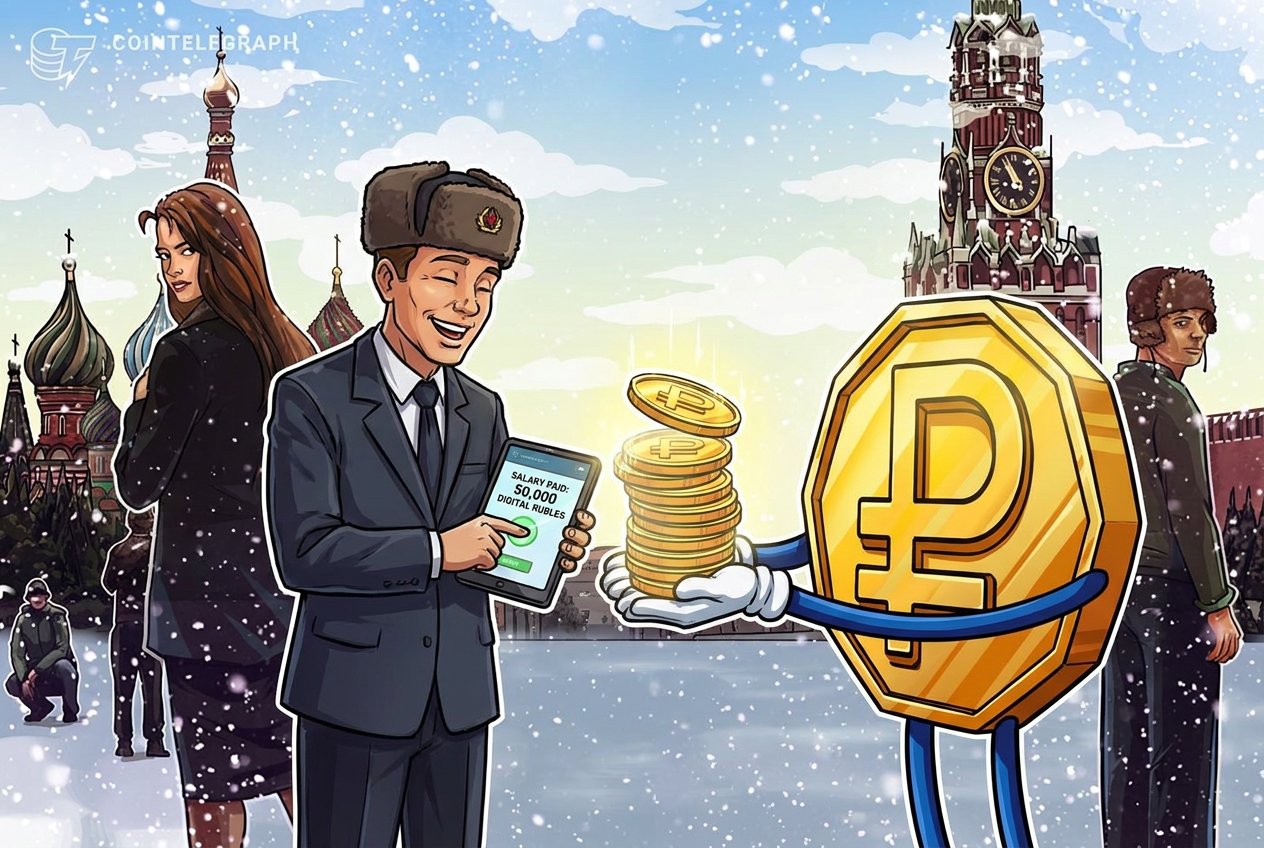
Work on the introduction of the digital ruble to the budget process is being carried out by the Bank of Russia together with the Ministry of Finance. Russia’s Ministry of Finance said on Friday that some of its employees had received their wages in digital rubles for the first time. Being paid in the central bank’s digital currency is available for citizens of Russia on a voluntary basis, and began on Thursday, Oct. 1, according to a Ministry of Finance press release. The ministry did not disclose how many participants were paid in digital currency or the total payroll amount.
Russia’s largest bank, Sber, plans to accept USDT and Ether alongside Bitcoin as loan collateral as the country introduces regulated crypto trading under a new law. Russia’s largest bank, Sber, plans to expand its crypto-backed lending to accept Tether’s USDt stablecoin and Ether as collateral alongside Bitcoin, according to a senior executive. Sber will adapt its existing products and gradually expand its offerings as Russia’s new crypto law takes effect, Deputy Chairman Anatoly Popov said, according to a Friday TASS report. The bank plans to add the assets as collateral after the Bank of Russia permits them for public trading, he said. The plans come as Russia rolls out a regulated crypto market under a law signed by president Vladimir Putin on Aug. 4, with core provisions taking effect…
Russia’s central bank proposed allowing Bitcoin, Ether and USDT to trade on regulated exchanges, following a law signed by President Vladimir Putin last week. Russia’s central bank has compiled a proposed list of crypto assets that could be admitted to public trading on exchanges under new rules approved last week. The list includes Bitcoin, Ether and Tether’s stablecoin USDT, the Bank of Russia said Tuesday, adding that the assets meet criteria including market capitalization, average daily trading volume and at least five years of price history on overseas markets. The proposal follows a new law, signed by President Vladimir Putin on Aug. 4, that gives the Bank of Russia authority to determine which digital currencies can be admitted to organized trading and set related rules.
Russia has shut down nine unregistered crypto exchanges in Moscow, with the FSB alleging they helped move scam proceeds abroad through Ukrainian call centers. Russia’s Federal Security Service (FSB) has raided nine unregistered crypto exchange services in Moscow over alleged money laundering involving fraud proceeds that authorities linked to Ukraine-based scam call centers. The agency said it detained more than 20 employees at the Moscow International Business Center (Moscow City) as part of an operation targeting channels allegedly used to move illicit funds abroad through crypto assets, according to an official statement on Friday. The FSB said the exchanges converted money stolen from Russian victims of phone scams into cryptocurrency and transferred it to accounts belonging to what it…
Russia has added Moscow, the Moscow Region and parts of Kursk Region to its cryptocurrency mining ban list, citing power supply concerns behind the restrictions. Russia has expanded its cryptocurrency mining restrictions to Moscow, with the ban set to take effect on Aug. 15, 2026, and remain in place through Dec. 31, 2032. Russia’s Resolution No. 936, signed by Prime Minister Mikhail Mishustin on July 25, 2026, amends an earlier mining restriction order issued in December 2024, according to records published on Pravo.ru. The updated rules add Moscow, the Moscow Region and several territories in Russia’s Kursk Region to the list of restricted areas. The measure expands existing restrictions on cryptocurrency mining in areas facing electricity supply concerns. The ban also covers eight munic…
The Telegram founder said Russia designated him a terrorist after he refused government demands for mass surveillance and censorship on the messaging platform. Telegram founder Pavel Durov said Russian authorities designated him a “terrorist” after he refused government demands for mass surveillance and censorship on the messaging platform, responding publicly a day after Russia announced charges against him. In a Telegram post on Thursday, Durov also said Russia had barred him from “publishing information on the Internet,” adding that authorities had “got confused about who can ban whom from the Internet.” Source: Telegram, Pavel Durov
Russian authorities charged BitRiver founder Igor Runets with alleged fraud tied to a $8 million crypto mining equipment deal involving Russian billionaire Oleg Deripaska. Russian authorities have charged BitRiver founder Igor Runets with alleged fraud involving about 1 billion rubles ($12.5 million), expanding the criminal case against the executive of one of Russia’s largest crypto mining-linked companies. Runets was officially charged with large-scale fraud over an alleged failure to deliver crypto mining equipment under an $8 million contract, local news agency Pravo reported on Wednesday. Investigators allege that Fox, a company controlled by Runets, signed the contract in 2023 to supply the equipment to a company within an industrial group founded by businessman Oleg Deripaska. Autho…
Russia’s FSB says Telegram founder Pavel Durov faces a terrorism-related charge and an international arrest warrant, while a separate French case remains open. [Update, 11:13 am UTC: Adds wanted list clarification in third paragraph.] Russian authorities have placed Telegram founder Pavel Durov on an international wanted list as they escalate a criminal case accusing him of facilitating terrorist activity. Russia’s Federal Security Service (FSB) said on Wednesday that it had charged Durov with facilitating terrorist activity and issued an international warrant for his arrest, local news agency Interfax reported.
Russia’s biggest bank plans to create cryptocurrency trading infrastructure by Dec. 1 as the country is set to establish rules for market participants while allowing crypto assets to be used in foreign trade operations. Sberbank, Russia’s biggest bank, plans to build cryptocurrency trading infrastructure including a digital depository no later than Dec. 1 as the country brings crypto trading, custody and settlement into its regulated financial system. That digital depository, Interfax reported, will record ownership of cryptocurrency and process most transactions outside of the main blockchain. Sberbank will operate active wallets for client-initiated deposits, withdrawals and transfers. “One of the key elements of the new infrastructure will be a digital depository, which will maintain re…
Russia’s State Duma is set to consider the crypto regulation bill in second and third readings, with rules for investors and cross-border payments included. Russia’s parliament, the State Duma, is preparing to hold final readings on a bill to regulate the cryptocurrency market. The draft bill No. 1194918-8, titled “On Digital Currency and Digital Rights,” will undergo second and third readings on Tuesday, according to Anatoly Aksakov, chairman of the State Duma Committee on Financial Markets, as reported by RBC. The bill would introduce limits for non-qualified investors, including a 300,000 ruble ($3,800) annual limit on crypto purchases through a single intermediary and a 100,000 ruble limit for transfers abroad. Qualified investors would face higher limits of 3 million rubles for purcha…
EU authorities already preemptively sanctioned Russia’s digital ruble in 2025 as part of measures in response to the country’s war against Ukraine. Russia’s central bank governor, Elvira Nabiullina, confirmed that the country was prepared to roll out its central bank digital currency (CBDC) in two months, following the timeline it laid out last year. According to a Thursday report from Russian state media outlet RIA Novosti, Nabiullina said that “everyone is ready” for a Sept. 1 digital ruble launch. The CBDC will launch as a complement to Russia’s fiat currency, the ruble, and will initially be accepted by financial and credit institutions. “We want the digital ruble to be in demand by people and businesses, to be convenient, and, of course, we're constantly discussing … what functionali…
The proposed measures would ban transactions on 11 crypto platforms and expand sanctions targeting networks accused of helping Russia evade restrictions. The European Union proposed banning transactions on 11 crypto platforms as part of its 21st sanctions package against Russia. Kaja Kallas, vice president of the European Commission and the EU’s high representative for foreign affairs and security policy, outlined measures targeting banks, weapons manufacturers, oil traders, refineries and other entities outside the bloc. “We will also tighten our ban for crypto-asset services to certain third countries, add new designations, and ban transactions on 11 crypto platforms,” Kallas said in a post on X.
Political activist Bill Browder, the teenager’s father, said his son was “the first high school student in the world to be sanctioned by an authoritarian regime” over a report on the ruble-pegged stablecoin A7A5. Alexander Browder, the son of American-British political activist Bill Browder, said that he has been targeted by Russia over allegations that officials used the ruble-pegged A7A5 stablecoin to evade sanctions amid the country's war on Ukraine. In a Wednesday X post, Browder said his work through the website Global Cryptocurrency Laundering Database had resulted in him being “sanctioned by an authoritarian regime for uncovering corruption.” Specifically, he alleged in a March report that A7A5 was backed by deposits from Russian financial institution Promsvyazban and was used to ci…
Formerly Huobi Global, the exchange is the latest entity to be named as part of a crackdown on companies “exploited by Russia to circumvent UK sanctions.” The UK government has added cryptocurrency exchange HTX to its list of sanctioned entities over its support of Russia. On Tuesday, UK authorities said that there were “reasonable grounds to suspect” HTX, formerly Huobi Global, has been supporting Russia’s government through financial services and funds facilitated by the A7 Limited Liability Company and Garantex, other sanctioned entities. The crypto exchange, headquartered in Panama, was the latest to be named as part of a crackdown on entities “exploited by Russia to circumvent UK sanctions.” “If the Kremlin thinks it can evade our sanctions by hiding behind crypto networks and shadow…