Artemis | Pakistan
"Artemis" in Pakistan feed
-
Dawn - 11:18 Apr 11, 2026
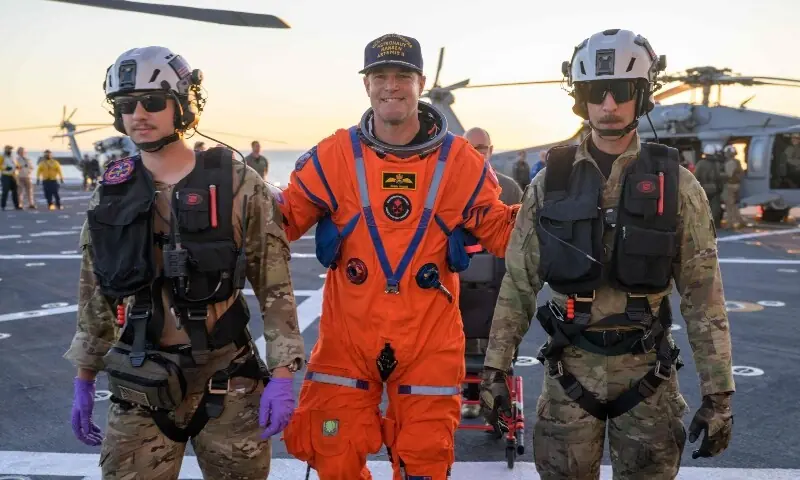 The Artemis II capsule and its four-member crew streaked through Earth’s atmosphere and safely splashed down in the Pacific Ocean on Friday after nearly 10 days in space, capping the first voyage by humans to the vicinity of the moon in over half a century. Nasa’s gumdrop-shaped Orion capsule, dubbed Integrity, parachuted gently into calm seas off the Southern California coast shortly after 5:07pm Pacific Time (12:07am GMT on Saturday), concluding a mission that four days prior took the astronauts 252,756 miles away from Earth, deeper into space than anyone had flown before. The Artemis II flight, travelling a total of 694,392 miles (1,117,515km) in two Earth orbits and a climactic lunar flyby some 4,000 miles from its surface, was the debut crewed test flight in a series of Artemis missions that aim to return astronauts to the lunar surface starting in 2028. ‘Perfect bull’s splashdown The splashdown under partly cloudy skies was carried by live video feed in a Nasa webcast. “A perfect bull’s eye splashdown f...
 -
Dawn - 09:04 Apr 10, 2026
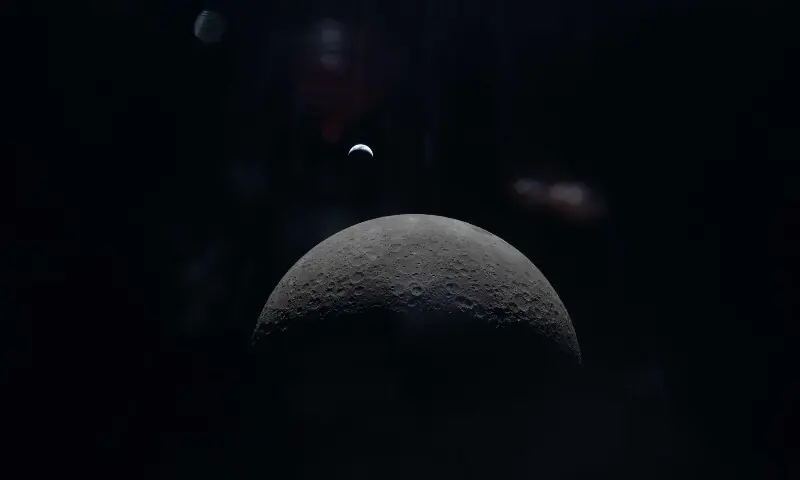 The four Artemis II astronauts, returning from the world’s first crewed moon voyage in over half a century, hurtled back toward Earth on Friday aboard their gumdrop-shaped Orion spacecraft, headed for a splashdown in the Pacific Ocean off Southern California. The finale to NASA’s celebrated 10-day mission was expected to begin with separation of Orion’s crew capsule from its service module, followed by a fiery re-entry through Earth’s atmosphere and a six-minute radio blackout before the capsule parachutes into the sea. If all goes well, US astronauts Reid Wiseman, Victor Glover and Christina Koch, along with Canadian astronaut Jeremy Hansen, will end up bobbing safely in the ocean aboard their Orion capsule, dubbed Integrity, shortly after 8 pm ET (0000 GMT) off the coast of San Diego. The quartet blasted off from Cape Canaveral, Florida, on April 1, lofted into an initial Earth orbit by NASA’s giant Space Launch System rocket before sailing on around the far side of the moon, venturing deeper into space tha...
 -
Dawn - 06:41 Apr 07, 2026
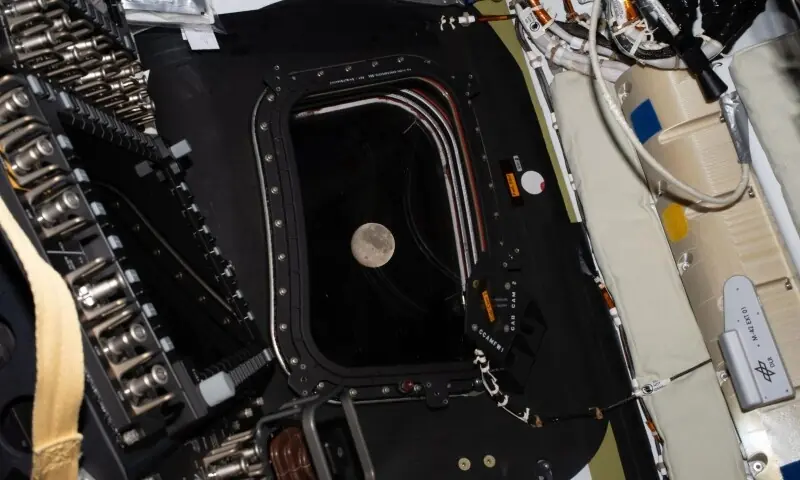 The four astronauts of Nasa’s Artemis II mission flew deeper into space on Monday than any humans before them, as they cruised through a rare flyby of the shadowed far side of the moon that revealed a lunar surface under cosmic bombardment. The six-hour survey of the normally hidden hemisphere of Earth’s only natural satellite was highlighted by the astronauts’ direct visual observations of “impact flashes” from meteors pelting the darkened and heavily cratered lunar surface. About two dozen scientists packed a conference room adjacent to mission control at Nasa’s Johnson Space Centre in Houston to record the lunar phenomena witnessed by the Artemis crew in real time as their Orion spacecraft, about the size of an SUV, sailed around the moon roughly a quarter million miles (402,000km) from Earth. The six-hour flyby, which swooped to within 4,070 miles of the lunar surface, came six days into a spaceflight marking the world’s first voyage of astronauts to the vicinity of the moon since Nasa’s Cold War-era Apol...
 -
Dawn - 11:54 Apr 06, 2026
The four astronauts of Nasa’s Artemis II mission entered the moon’s gravitational sphere of influence early Monday morning as they cruised along a path that will soon take them over the shadowed, lunar far side to become the farthest-flying humans in history. The Artemis II crew, flying in their Orion capsule since launching from Florida last week, are due to awake around 10:50am ET (7:50pm PKT) on Monday for their sixth flight day. By 7:05pm ET (4:05am PKT), they will reach the mission’s maximum distance from Earth of roughly 252,757 miles, 4,102 miles beyond the record held by the Apollo 13 crew for 56 years. As Nasa astronauts Reid Wiseman, Victor Glover and Christina Koch and Canadian astronaut Jeremy Hansen approach the distance record, they will be sailing around the moon’s far side, witnessing it from roughly 4,000 miles above its darkened surface as it eclipses a basketball-sized Earth in the distant background. The milestone is a climactic point in the nearly 10-day Artemis II mission, the first crew... -
Dawn - 09:23 Apr 05, 2026
The Artemis astronauts have taken in sights of the Moon never before seen by human eyes, crew members reported on Sunday as their spacecraft crossed the two-thirds mark on their journey to a long-anticipated lunar flyby. As the astronauts went to bed in the early hours of Sunday, closing out the fourth day of their 10-day mission, they were nearly 200,000 miles (321,869 kilometres) from Earth and 82,000 miles from the Moon, according to Nasa’s online dashboard. The US space agency published on Sunday an image taken by the Artemis crew, showing a distant Moon with the Orientale basin visible. “This mission marks the first time the entire basin has been seen with human eyes,” Nasa said. The massive crater, which resembles a bullseye, had been photographed before by orbiting cameras. Speaking to Canadian children live from space, astronaut Christina Koch said the crew was most excited to see the basin — sometimes known as the Moon’s “Grand Canyon”. “It’s very distinctive and no human eyes previously had seen thi... -
Dawn - 12:21 Apr 04, 2026
Artemis 2 astronaut Jeremy Hansen felt like he was “falling out of the sky” as his spacecraft followed its complex flight path to the Moon, the Canadian said in a Saturday video call. The four Artemis astronauts have passed the halfway point between Earth and the Moon on Saturday morning — more than 150,000 miles (241,000 kilometres) from home — as they zipped toward the first crewed lunar flyby in more than half a century. Hansen, a 50-year-old former fighter pilot on his maiden voyage into space, said he saw “some extraordinary things” during the first hours aboard the Orion. “By the time we had a bit of a nap and got up, the Earth was just so far away,” Hansen, flanked by American crewmates Victor Glover and Reid Wiseman, told a question-and-answer session hosted by the Canadian Space Agency (CSA). ‘Like falling out of the sky’ Hansen then described the translunar injection burn — a maneuver that brought Orion within 200 kilometres of Earth before swinging around onto a new course for the Moon. “It just fe... -
Dawn - 10:15 Apr 04, 2026
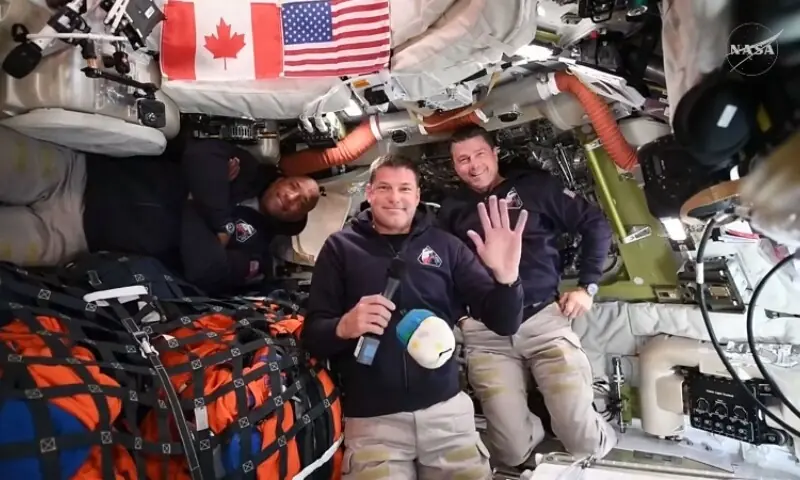 The four Artemis astronauts have passed the halfway point between Earth and the Moon on the way to their planned lunar flyby, Nasa said on Friday evening. “You are now closer to the moon than you are to us on Earth,” mission control told the astronauts at around 11pm (4am GMT), according to the space agency’s official live broadcast. his screengrab from a NASA live broadcast video shows (L-R) NASA astronaut and Artemis II pilot Victor Glover, Canadian Space Agency astronaut Artemis II Mission Specialist Jeremy Hansen and NASA astronaut and Artemis II Commander Reid Wiseman during a press call as they travel to the Moon in the Orion spacecraft, on April 3, 2026. —AFP “We all kind of had a collective, I guess, expression of joy at that… We can see the Moon out of the docking hatch right now, it is a beautiful sight,” said astronaut Christina Koch replied. The milestone was hit around two days, five hours and 24 minutes after liftoff, according to the Nasa official broadcast. The US space agency’s online dashboa...
 -
Dawn - 05:43 Apr 03, 2026
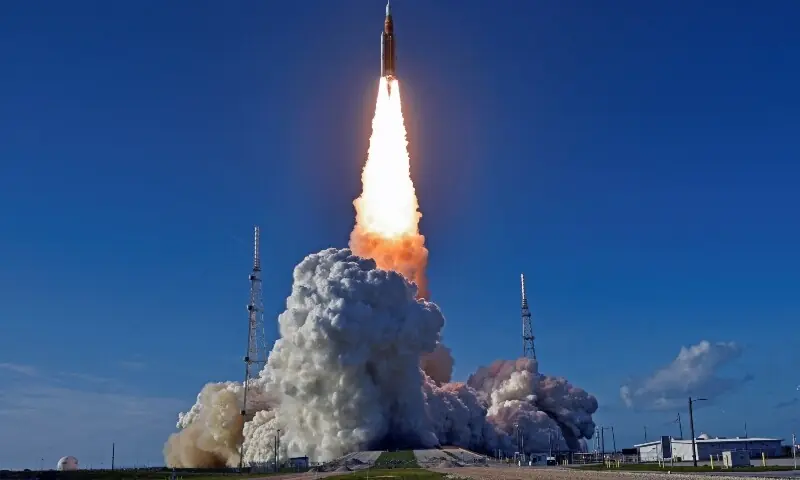 Four Artemis astronauts were zooming towards the Moon on Friday after a major engine firing, a milestone that commits NASA to the first crewed lunar flyby in more than half a century. With enough thrust to accelerate a stationary car to highway driving speed in less than three seconds, the Orion capsule engine blasted the astronauts on their trajectory towards the Moon, which they will now loop as part of the 10-day Artemis 2 mission. In the moments that followed what the US space agency dubbed a “flawless” firing that lasted just under six minutes, astronaut Jeremy Hansen said that “humanity has once again shown what we are capable of.” The astronauts said they were “glued to the window” taking pictures, and later passed a floating microphone back and forth as they took questions from US television networks. They said the spacecraft was a little chilly and they were still making it a home, but the crew was all smiles. NASA’s Artemis II mission to fly by the moon, comprising of the Space Launch System (SLS) r...