Karachi | Pakistan
"Karachi" in Pakistan feed
-
Dawn - 11:13 Apr 23, 2026
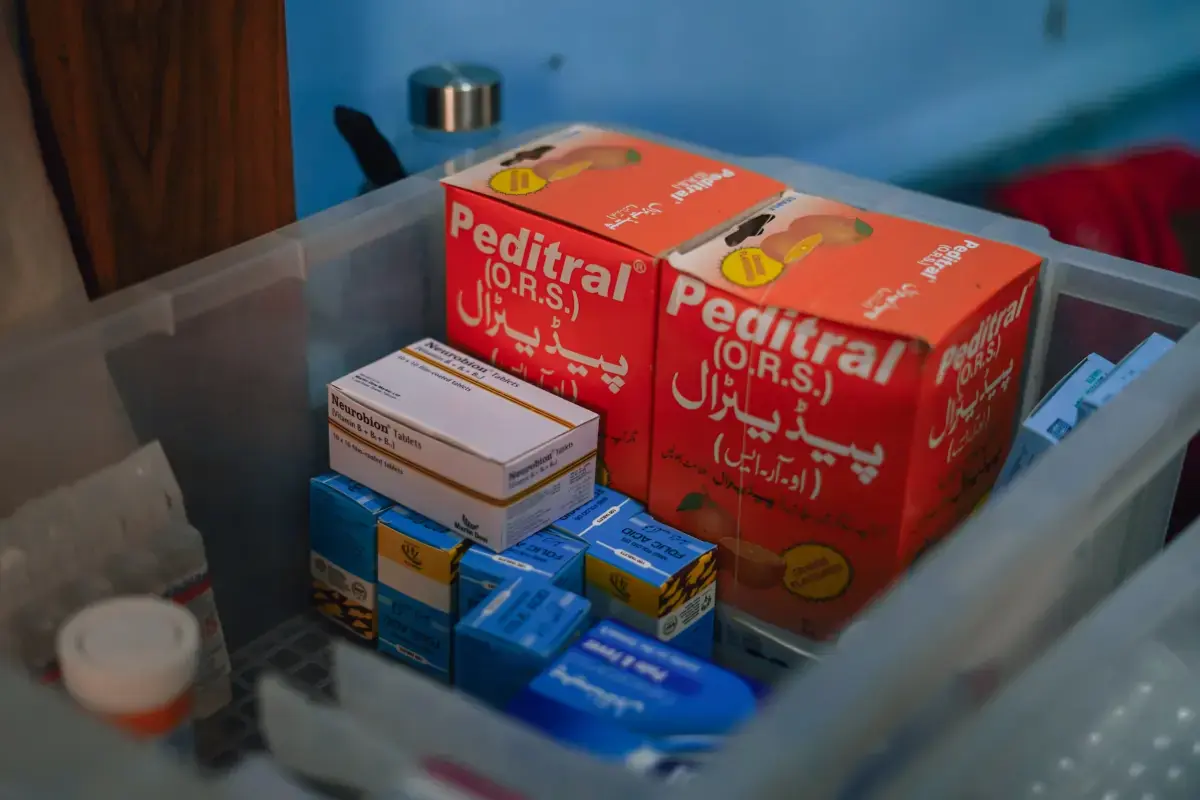 Inside the gynaecology clinic of Karachi’s largest public hospital, the air felt several degrees hotter. It was only 9:30am on a Friday in late February, and the windowless waiting room was already packed with women jostling for a place to sit, calling nurses for help, and scuffling for an ultrasound. Asiya, 21, was pregnant with her third child. The baby was due in May, when the mercury often crosses 38 degrees Celsius, and humidity soars past 70 per cent, making the heat unbearable. As temperatures rose in the room, Asiya felt nauseated and dizzy. “The heat exhausts me,” she said. “My body feels like lead, I’m barely able to stomach food. I am afraid that my child might be born sick.” Asiya lives in Lyari, one of Karachi’s most densely populated neighbourhoods, with narrow alleys and little to no green space. Inside her home, ventilation is poor and cooling scant. Intense summer heat in her neighbourhood is compounded by power outages that last up to 12 hours a day, shutting down fans and other appliances t...
 -
The Nation - National - 11:47 Apr 21, 2026
Two exciting fixtures are lined up today (Tuesday) in Pakistan Super League Season 11, with matches taking place in Lahore and Karachi. -
The Nation - National - 09:10 Apr 21, 2026
A major development has surfaced in the case of two minor sisters from Sadiqabad who were found abandoned in Karachi, as the initial post-mortem report has ruled out any signs of sexual assault. -
Dawn - 04:10 Apr 21, 2026
KARACHI: A judicial magistrate on Monday sent a man to prison on judicial remand in a case pertaining to extending alleged threats to bomb the US consulate general in Karachi. Suspect Sharjeel Akbar was on Sunday arrested and booked in a case registered under Sections 506-B (criminal intimidation) and 504 (intentional insult with intent to provoke breach of the peace) of the Pakistan Penal Code read with Section 25-D (Penalty for causing annoyance) of the Telegraph Act. The FIR was lodged at the Docks police station on the complaint of an inspector of the Foreign Security Cell, who said he was deputed at the US consulate and on April 15, the consulate’s staff informed him that they had received a threatening phone call from a man, who identified himself as Sharjeel Akbar, claiming that he had planted a bomb near the consulate. The complainant stated that he immediately informed his superiors and he, along with bomb disposable unit, searched the area for the explosives but did not find anything near the consul... -
The Nation - National - 17:03 Apr 20, 2026
An 18-year-old daughter of Member of the National Assembly Iqbal Mehsud died after being struck by a stray bullet inside her home in Karachi, police said. -
Dawn - 03:52 Apr 18, 2026
• 159 patients admitted to three city hospitals this year • Majority of them contracted the incurable virus due to ‘unsafe healthcare practices’ • Alarm raised over lack of basic infection control protocols in hospitals KARACHI: Three hospitals in Karachi have recorded a dramatic increase in the number of paediatric human immunodeficiency virus (HIV) cases over the last nine months and their numbers continue to grow, it emerged on Friday. According to sources, 10 HIV positive children were admitted to the Sindh Infectious Diseases Hospital and Research Centre (SIDH&RC) in 2024 and their number rose to over 70 in 2025. This year, 30 children with HIV positive status were admitted to the hospital. At the Indus Hospital, 144 HIV positive patients were reported in 2024, whose number rose to 176 in 2025. In the first quarter of this year, 69 HIV patients have been reported at the facility. “There has been an alarming surge in paediatrics cases registered at our hospital. Since August 2025 till date, 72 children le... -
Dawn - 16:54 Apr 12, 2026
KARACHI: East Deputy Inspector General (DIG) Dr Farrukh Ali on Sunday ordered an inquiry into the reports of an armed robbery by several suspects on a bridge in Karachi’s Shah Faisal Colony after a video purportedly showing the incident was widely shared on social media. In the video, a man is heard saying that 10-12 robbers are looting the commuters on the bridge late at night. The police statement said DIG Ali had directed Korangi and Malir’s senior superintendents of the police to conduct an inquiry into the incident and register a first information report. The statement further quoted DIG Ali as saying, “Shah Faisal Bridge is an important public thoroughfare”, and added that the official ordered the immediate additional deployment and patrolling of police at the spot to prevent such incidents in the future. “Protecting the life and property of the citizens and taking action against elements involved in breaching peace without any … is the police’s priority,” he was quoted as saying. On the other hand, Mal... -
Dawn - 16:59 Apr 11, 2026
ISLAMABAD: The National Price Monitoring Committee (NPMC) on Saturday reviewed the prices of essential commodities, transport fares and directed the Sindh government to take corrective measures regarding rising fares in Karachi, according to an official statement. On April 5, Sindh Chief Minister Murad Ali Shah had announced that the government had secured a province-wide fare freeze after successful negotiations with transporters, even as fuel prices rose amid a global crunch caused by the now-paused US-Israeli war on Iran. However, citizens using public transport in Karachi continue to pay inflated fares while the government announced a reduction in fuel prices on Friday after falling oil prices in the international market. A meeting, chaired by Planning Minister Ahsan Iqbal, examined the trend in food prices across the country on Saturday, where officials from the Pakistan Bureau of Statistics (PBS) briefed the NPMC on prevailing price trends and market conditions. According to the official statement issue... -
Dawn - 03:31 Apr 10, 2026
• First one was reported last month • A resident of East district dies from dengue, says health dept KARACHI: As authorities struggle to contain the mpox outbreak in Khairpur, a public health crisis seems to have emerged in Karachi, which saw its second suspected case of local transmission of mpox and the first death from dengue on Thursday. According to the health department, the dengue victim was a resident of city’s East district, while the mpox patient, a resident of Buffer Zone, is currently under treatment at the Sindh Infectious Diseases Hospital and Research Centre (SIDH&RC). “He is a 20-year-old student. He is stable and has no travel history,” SIDH&RC Medical Superintendent Dr Abdul Wahid Rajput told Dawn. Sources said it’s the second case of mpox in Karachi, indicating local transmission of the viral disease. The first one was reported last month at the SIDH&RC. The patient was discharged after complete recovery. Health department officials shared that a team led by focal person Dr Shankar has been... -
Dawn - 19:32 Apr 05, 2026
The Board of Secondary Education Karachi (BSEK) on Sunday announced that Secondary School Certificate (SSC) exams in Karachi were being rescheduled and would now commence on April 10. The BSEK had earlier announced that SSC annual examinations would be held from April 7 to May 2 in the Karachi Division. A press release issued by the BSEK on Sunday said citing the board’s controller of examinations that the board was currently transitioning from a manual to a digital system. “Therefore, the software application was overloaded and faced temporary disruption. The IT team is working to resolve the issue,” the press release said. In view of the situation, the SSC examinations were being rescheduled to begin on April 10, 2026 to ensure that they were conducted in an “organised … and transparent manner,” the press release said. It further said that a revised examination schedule would be issued soon, while students were to sit their exams at centres already allotted to them. -
Dawn - 07:51 Apr 05, 2026
The Federal Investigation Agency said on Sunday it has arrested an official of the National Database and Registration Authority (Nadra) for his alleged “involvement” in issuing fake identity cards to Afghan nationals in Karachi. As per a statement by an FIA spokesperson, the agency’s officials conducted a raid in the Metroville SITE area, where two Afghan nationals were arrested and found to be possessing “illegal Pakistani identity documents”. The statement added that upon further investigation, it surfaced that a Nadra official, identified as Furqan Ahmed Khan Durrani, was “involved” in approving Computerised National Identity Cards (CNICs) issued to the two Afghan nationals. Durrani was arrested in a subsequent raid carried out in Karachi’s Nursery area. The FIA statement said that action has been taken against the suspects under the Foreigners Act, 1946 and Prevention of Corruption Act, 1947. It added that FIA has obtained a three-day physical remand of the “arrested suspects” and further investigation wa... -
The Nation - National - 05:42 Apr 05, 2026
Residents in Karachi reacted angrily after a government-announced reduction in petrol prices was not implemented at some fuel stations, leading to a violent incident in the city’s Surjani Town area. -
Dawn - 00:54 Apr 04, 2026
• City breaks 41-year-old rain record with 38.7mm downpour in 24 hours • Mercury drops to ‘lowest ever’ night-time temperature in April • Met official warns of two more rain spells KARACHI: Several cities in the province set new records for heavy rains and lowest night and daytime temperatures for the month of April, the Met Office said on Friday. According to the Met department’s data, Karachi saw 38.7 millimetres of rain within 24 hours on Friday — the heaviest rain ever recorded in the month of April in the city. Previously, the highest rainfall for April in a 24-hour period in Karachi was 37mm, which was recorded on April 2, 1985. In the rural parts of the province, light to moderate showers were observed with Dadu seeing 23mm rain in 24-hours, breaking its earlier record of 22mm set on April 14, 2017. The cities which set records in the lowest daytime temperature were: Badin, Dadu, Hyderabad, Jacobabad, Larkana, Mirpurkhas, Padidan, Sakrand, Shaheed Benazirabad and Tandojam. Karachi, however, set a recor... -
Dawn - 06:50 Apr 03, 2026
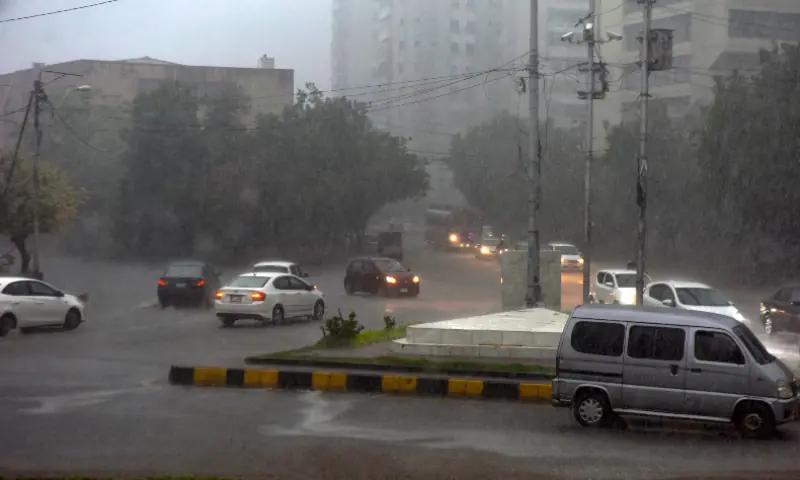 The Met Office said on Friday that there is no chance of rain in Karachi today, following torrential rain in the city a day earlier caused by a strong westerly system. “There are no chances of rain today in Karachi,” said Pakistan Meteorological Department (PMD) Spokesperson Nazir Zaighum. Rain-related fatalities rose to six overnight after one more person died from electrocution in the Gulistan-i-Jauhar area of the city, said rescue services. At least five people were killed on Thursday as heavy rain lashed the metropolis, while the city administration declared an emergency. According to police and rescue officials, the deaths occurred in separate incidents: four people died due to electrocution while a fifth was killed due to a wall collapse amid the heavy rainfall. Vehicles travel along a road in Karachi amid heavy rain on April 2. — White Star According to the Pakistan Meteorological Department (PMD), the minimum temperature in Karachi on Friday was recorded at 16 degrees Celsius, with the maximum tempera...
 -
The Nation - National - 13:50 Apr 02, 2026
Nawabzada Jamil Akbar Bugti, son of former Balochistan Governor Nawab Akbar Khan Bugti, died in Karachi on Thursday due to a heart attack. -
The Nation - National - 11:45 Apr 02, 2026
The ongoing campaign against fancy and unapproved number plates in Karachi has been temporarily suspended due to adverse weather conditions, traffic authorities said on Thursday. -
Dawn - 08:09 Mar 31, 2026
The Pakistan Meteorological Department (PMD) has forecast chances of rain and thunderstorms in Karachi on Thursday, as well as other areas of Sindh from April 2-4, as a result of a new westerly wave from Balochistan. A westerly wave is likely to approach the southwestern parts of Balochistan on April 1 and likely to persist till April 4, the Met Office said in its daily weather outlook issued on Tuesday. In its three-day weather forecast, it said that Tuesday and Wednesday would both bring partly cloudy weather in the Karachi division. The maximum temperature on Tuesday is expected to be between 29 and 31 degrees Celsius, with a minimum temperature of 22.7°C. The humidity is forecast to reach 54 per cent in the daytime, remaining around 40-50pc in the evening. A west/southwesterly wind is expected to prevail. Wednesday’s temperatures will reach highs of 30-32°C and lows of 22-24°C, according to the forecast. While the evening humidity is similar to Tuesday, a higher daytime humidity of 65-75pc is predicted, a... -
The Nation - National - 07:42 Mar 29, 2026
A vessel carrying a major fuel consignment for Pakistan State Oil (PSO) has arrived in Karachi, bringing relief amid supply concerns. -
Dawn - 04:25 Mar 29, 2026
• 42-year-old rickshaw driver was sole breadwinner and father of three • Experts urge govt to relocate all dogs from streets to shelters with animal rights activists’ support • Absence of life-saving RIG at most hospitals termed unacceptable KARACHI: As the city lost another life to rabies on Saturday, raising the tally to seven this year, medical experts expressed their utter disappointment over the persistent government failure in addressing the public health crisis triggered by a massive increase in dog population across Karachi, while calling for humane dog culling as the last resort to provide immediate relief to hapless citizens. The latest victim, a 42-year-old rickshaw driver and resident of a Garden locality, was the sole breadwinner and father of three. Family sources said that the patient was “treated” at a major government tertiary care hospital in Saddar for serious dog bite injuries over a month ago. Two weeks back, they said, he developed fever, restlessness and pain at the wound site, forcing ... -
Dawn - 08:57 Mar 28, 2026
The Pakistan Meteorological Department (PMD) has forecast cloudy weather with chances of light rain in Karachi on Saturday evening and Sunday, as well as rain in other parts of Sindh on March 29 and 30, as a westerly wave continues to affect most areas of the country. The PMD had previously forecast chances of rain and thunderstorms in Karachi and across Sindh on Saturday, warning that windstorms or hailstorms and lightning could damage weak structures such as electric poles, billboards and solar panels during the forecast period. In its three-day weather outlook, the PMD said that the weather in the Karachi division was expected to be partly cloudy and windy, with chances of “isolated light rain/drizzle” later in the evening or night. Temperatures are expected to reach 31-33 degrees Celsius, while the minimum temperature is 25°C. The humidity will drop from 76 per cent in the daytime to between 50 and 60pc in the evening. Sunday is expected to be largely similar in temperature and the PMD predicts another cl...