Middle East | Pakistan
"Middle East" in Pakistan feed
-
The Nation - National - 05:33 Sep 25, 2026
Prime Minister Shehbaz Sharif met his Lebanese counterpart Nawaf Salam on Thursday on the sidelines of the 81st session of the United Nations General Assembly, with the two leaders discussing bilateral ties and developments in the Middle East. -
The Nation - National - 07:11 Sep 15, 2026
Deputy Prime Minister and Foreign Minister Senator Ishaq Dar held a conversation with International Atomic Energy Agency (IAEA) Director General Rafael Grossi, discussing the evolving regional situation and efforts to ease tensions in the Middle East. -
The Nation - National - 09:55 Jul 29, 2026
ISLAMABAD: Deputy Prime Minister and Foreign Minister Ishaq Dar on Wednesday held talks with Kuwait's Foreign Minister Sheikh Jarrah Jaber Al-Ahmad Al-Sabah, focusing on strengthening bilateral relations and reviewing the rapidly evolving situation in the Middle East. -
Dawn - 09:41 Jul 29, 2026
The situation in the Middle East came under discussion as Deputy Prime Minister Ishaq Dar on Wednesday met Kuwait’s Foreign Minister Sheikh Jarrah Jaber Al-Ahmad Al-Sabah, who is on an official visit to the country. According to the Foreign Office (FO), the two held a “warm and productive” tête-à-tête at the Ministry of Foreign Affairs. “The two leaders reviewed the full spectrum of Pakistan–Kuwait bilateral relations and reaffirmed their shared commitment to further strengthening the longstanding brotherly partnership,” it said. “They also held in-depth discussions on regional and international developments, with particular focus on the evolving situation in the Middle East,” it added. Later, the two leaders co-chaired delegation-level talks, the FO posted on X, adding that both sides reviewed the entire spectrum of Pakistan-Kuwait bilateral relations and discussed ways to further strengthen cooperation in trade, investment, energy, labour, agriculture, information technology, health, mining and minerals, de... -
Dawn - 14:03 Jul 26, 2026
Iran said on Sunday it has halted retaliatory attacks against US allies in the Middle East after Washington stopped its strikes on the country for the past two nights. The Iranian declaration came after Washington paused a war nearing its fifth month and reports emerged that concerns over dwindling munitions were restraining plans for further escalation. “These attacks continued until two nights ago, but over the past two nights the Americans have stopped their attacks,” said army spokesman Mohammad Akraminia. “Since… our strategy has essentially been retaliatory, we have also halted our retaliatory operations.” Fighting over the strategic Strait of Hormuz derailed diplomatic efforts between Washington and Tehran, but the conflict then expanded beyond the vital energy corridor to include attacks on US bases, regional shipping and Gulf allies. But the recent lull has revived hopes of a return to negotiations after nearly two weeks of consecutive nightly US bombardments, although US media reported the pause cou... -
Dawn - 05:30 Jul 25, 2026
Houthi rebels claimed a missile strike on Saudi Arabia on Saturday, hours after vowing to retaliate against the kingdom for attacks as the Middle East conflict expanded. Riyadh struck Houthi military targets in Hodeida on Friday, with rebel media reporting two wounded after the Yemeni group announced a maritime blockade of the top oil producer and hit its ships. The flare-up marks a new front of the war that has engulfed the region following US-Israeli strikes on Tehran in February, and comes on top of Iran’s parallel blockade of the Strait of Hormuz, Riyadh’s only other maritime route. The rebels had accused Saudi Arabia of a “dangerous escalation” and said its actions “will not go unanswered”. The Houthis’ Ansarollah media said on Telegram early on Saturday that a “Yemeni missile strike” had sparked fires in the southern Saudi city of Jizan on the Red Sea. Saudi Arabia did not immediately comment on the claim. But Riyadh’s civil defence agency had issued brief warnings to residents in Jizan and Yanbu early ... -
Dawn - 15:55 Jul 23, 2026
During its war with the United States, Iran has targeted Middle East bases where American troops are stationed, turning assets once seen as a bulwark against Tehran into targets. Below, AFP examines some of the major concentrations of US forces in the region, which fall under the US military’s Central Command (Centcom). Elizabeth Dent, a senior fellow at the Washington Institute for Near East Policy, said Middle East bases housing US troops “can support a wide range of missions from logistics, pre-positioning assets, refuelling, and of course combat operations”. Iran, in justifying its own retaliatory strikes, has accused Gulf states of allowing the US to use the bases to launch attacks, which Dent said was likely, though Tehran’s “perennial argument that all of these bases are inherently offensive is not accurate”. Bahrain The small kingdom hosts the US Navy’s Fifth Fleet and US Naval Forces Central Command headquarters. Bahrain’s deep-water port can accommodate the largest US military vessels, such as aircr... -
Dawn - 05:44 Jul 20, 2026
Brent oil prices rose two per cent to more than $90 per barrel on Monday, as escalating US-Iran hostilities in the Middle East restricted oil shipments through the Strait of Hormuz. Brent crude futures LCOc1 climbed $2.09, or 2.37pc, to $90.19 by 0241 GMT, touching the highest since June 11, extending gains after rising 15.9pc last week, its biggest weekly gain since April. US West Texas Intermediate crude CLc1 was at $84.20 a barrel, up $1.71, or 2.07pc, the loftiest since June 12. Front-month prices gained 15.5pc last week, the largest weekly ascent since early March. The Middle East conflict escalated over the weekend with the US conducting a ninth straight night of attacks against Iran, while US allies Kuwait and Bahrain reported more Iranian strikes. “ICE Brent broke above $90 per barrel this morning with no let-up in the escalation in the Gulf,” said ING analysts in a note on Monday. “The US and Iran continue to exchange strikes, which are proving to be deadly for both sides. If this escalation goes unc... -
Dawn - 12:30 Jul 13, 2026
The Pakistan Stock Exchange (PSX) began the week in the red, with the benchmark index plummeting 2,300 points on Monday amid ongoing hostilities in the Middle East. The KSE-100 index touched an intraday low of 179,448.52 points soon after opening, down 2,793.25 points from the previous close of 182,241.77. It then reversed some of its losses by 2:30pm, reaching an intraday high of 181,148.26 points. However, the index witnessed further selling pressure as it declined to close at 179,927.04 points — down 2,314.73 points (1.27 per cent) from the previous close. Mettis Global, a web-based financial portal, and Topline Securities Ltd said market sentiment remained under pressure after the US and Iran exchanged fresh strikes in an escalating contest over control of the Strait of Hormuz. Oil prices also jumped more than three per cent on Monday due to the renewed fighting. Topline Securities said the US-Iran exchanges “reignited concerns over a broader regional conflict, pushing international crude oil prices highe... -
Dawn - 17:03 Jul 12, 2026
Pakistan expresses 'deep concern' over Middle East escalation, urges all sides to exercise restraint
Pakistan on Sunday expressed its “deep concern” over the ongoing escalation in the Middle East and urged all sides to exercise restraint after the United States and Iran traded fresh strikes, with Gulf countries also coming under attack. In a statement, the Foreign Office (FO) said Pakistan was “following with deep concern the recent incidents that are further escalating the regional tensions”. “Pakistan reiterates its strong support for the sovereignty and territorial integrity of all brotherly countries in the region, and urges all sides to exercise restraint, take immediate steps towards de-escalation, and uphold respective commitments under the Islamabad Memorandum of Understanding (MoU),” the statement read. “On its part, Pakistan remains committed to providing all support towards achieving lasting peace and stability in the region through dialogue and diplomacy,” it affirmed. The FO statement comes in the backdrop of fresh US strikes on Iran after the latter struck a container ship, while Tehran said it... -
Dawn - 09:45 Jul 05, 2026
Hit by the biggest energy supply shock in decades during the Middle East war, import-dependent India is expanding domestic crude exploration, its oil minister says. India, the world’s third-largest importer of oil and the second-largest buyer of liquefied petroleum gas, faced major disruptions due to restrictions on the Strait of Hormuz during the conflict between the United States and Iran. With a temporary US-Iran deal in place to pause hostilities, oil and gas shipments are flowing through the Gulf waterway again, and restrictions and price hikes in India are being rolled back. But Minister of Petroleum and Natural Gas Hardeep Singh Puri said the energy crunch provided fresh impetus for India’s expansion of domestic supplies. “We are currently in the process… to bid out about 250,000 square kilometres (96,500 square miles) of unexplored area,” Puri told AFP. India is a modest producer in global terms. Domestic crude production in 2025-2026 was 25.98 million metric tonnes, according to the oil ministry. Tha... -
Dawn - 17:54 Jun 29, 2026
ISLAMABAD: As part of Pakistan’s efforts to help broker an end to the war in the Middle East, Prime Minister Shehbaz Sharif will pay official visits to Iran and Turkiye from July 3 to 6, sources in the PM Office told Dawn on Monday. The US military said it carried out new strikes on early Sunday on multiple targets in Iran, in response to a fresh Iranian attack on a ship transiting the Strait of Hormuz. Tehran responded by launching strikes against US bases in Bahrain and Kuwait before both sides agreed to halt attacks. Sources said that during his visit, the prime minister will meet the leadership of both Iran and Turkiye and call on Tehran and Washington to exercise restraint, particularly following the signing of the Islamabad Memorandum of Understanding (MoU) as part of the peace process. The strikes underscored the fragility of the Pakistan-brokered interim peace deal aimed at ending a war launched by the United States and Israel on February 28, which disrupted shipping through the Strait of Hormuz and r... -
Dawn - 06:08 Jun 24, 2026
Interior Minister Mohsin Naqvi met with his Iranian counterpart, Eskandar Momeni, and stated that Pakistan would continue its efforts for lasting peace in the Middle East, the interior ministry said on Wednesday. In a statement, the ministry said the two ministers met in Islamabad, and held a detailed discussion on Pak-Iran ties and the latest situation in the region. Momeni was part of a delegation led by Iranian President Masoud Pezeshkian, which visited Pakistan on Tuesday after the US and Iran signed a ‘Islamabad Memorandum of Understanding’ (MoU) to end the Middle East conflict and held high-level talks in Burgenstock, Switzerland. According to the ministry, the Iranian minister thanked Naqvi for the warm welcome accorded to Pezeshkian and the Iranian delegation. Both ministers expressed satisfaction at the de-escalation in the region. Meanwhile, Naqvi congratulated the Iranian minister on the joint statement issued after the US-Iran talks in Switzerland. “This agreement would not have been possible with... -
Dawn - 07:59 Jun 21, 2026
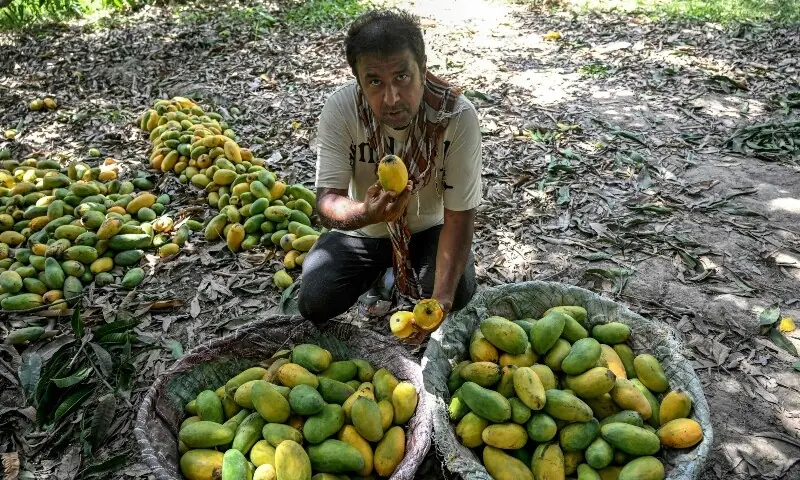 Beneath the scorching sun in the Sindh mango belt, labourers balance on tree branches, working at a swift pace to throw the freshly picked fruit into sacks held ready by farmhands waiting below. Though mango season is well underway, far less of the fruit will be bound for the lucrative export market than usual, with an agriculturally dependent economy caught in the crosshairs of the Middle East crisis that the government has helped mediate. An initial deal between the warring sides announced by Islamabad this week has come too late for this mango season, which began in June in Sindh. Mango traders told AFP they expect export sales to fall at least 30 per cent this year due to dampened demand in key markets, including the Gulf, and soaring shipping costs. Adding to the financial pain, local households struggling with a spike in inflation emanating from the regional crisis are holding off on buying the fruit, depressing domestic sales. This photograph taken on June 4, 2026 shows mango farm owner Ali Palh showin...
 -
The Express Tribune - 18:52 Jun 13, 2026
How Trump tried to use a global crisis to push a regional realignment agenda in Middle East -
Dawn - 09:27 Jun 10, 2026
Saudi Arabia launched its second national carrier Riyadh Air after more than a year of delays on Wednesday, defying the economic turmoil triggered by the Middle East war and strong competition from established Gulf airlines. A London-bound Boeing 787 Dreamliner in Riyadh Air’s white and lavender livery took off at 2:30am local time, putting in motion a flagship project in Saudi Arabia’s push to reduce its economic reliance on oil. Riyadh Air, the country’s second state-owned airline after Jeddah-based Saudia, is meant to help turn the Saudi capital into a global hub to rival Dubai, the world’s busiest for international passengers. “We want to bring glamour, we want to bring refinement, we want to bring grace back,” Riyadh Air CEO Tony Douglas told AFP. The launch, originally planned for 2025, was set back by delivery delays from Boeing, which has suffered a series of manufacturing and safety problems in recent years. It also follows unprecedented attacks from Iran, which has fired thousands of drones and miss... -
Dawn - 14:34 Jun 05, 2026
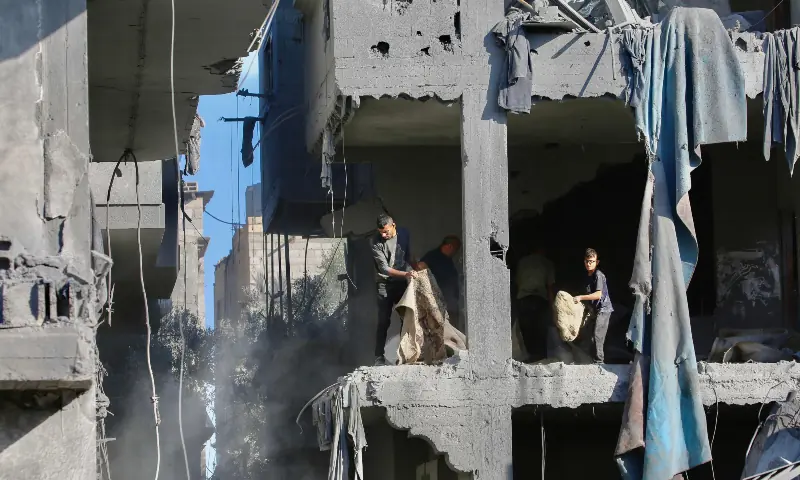 Residents of Gaza, south Lebanon, northern Israel and Kuwait were all under fire this week despite United States-arranged ceasefires supposedly in force in their regions. Israeli airstrikes hit Gaza and Lebanon, with Israeli forces still actively deployed in both places. Hezbollah rockets struck northern Israel, and Iranian attacks hit Kuwait’s international airport. The continued violence prompted US President Donald Trump to comment on Wednesday that ceasefires in the Middle East involved “shooting in a more moderate manner” rather than a total halt in fighting. Three truces his administration has negotiated were meant to have stopped the warfare. But while major fighting has greatly reduced, munitions are still falling and people still dying. This is how the ceasefires — and ongoing fighting — are playing out: What’s happening with the ceasefire in Gaza? The US brokered a ceasefire between Israel and Hamas on October 10, 2025, ending major warfare. The ceasefire deal involved a halt to all fighting, Hamas ...
 -
The Nation - National - 08:40 May 25, 2026
Prime Minister Shehbaz Sharif on Monday called for joint efforts by Pakistan and China to promote peace and stability in the Middle East, while thanking the Chinese leadership for supporting Islamabad’s ceasefire initiatives in the region. -
Dawn - 07:15 May 25, 2026
Over 1.5 million Muslims began filling a vast tent city in Makkah on Monday for the annual Haj pilgrimage carried out against the backdrop of hopes for an end to the war in the Middle East. The white-robed pilgrims on buses or on foot arrived at the sprawling encampment in Mina after performing the tawaf. The start of the Haj came as US President Donald Trump continued to send mixed signals over a possible agreement to extend an uneasy ceasefire with Iran and a deal to reopen the Strait of Hormuz. This year’s rites, drawing Muslim worshippers from across the world, including Iran, follow waves of attacks on targets in Saudi Arabia and its Gulf neighbours. Saudi officials have been keen to keep conflict far from the minds of visitors, many of whom have travelled long distances for one of the world’s largest annual pilgrimages. Despite the uncertainty triggered by the conflict, Saudi officials noted over the weekend that more pilgrims had travelled from abroad to participate in this year’s Haj than in 2025. But... -
Dawn - 12:43 May 23, 2026
Over 1.5 million pilgrims have reached Saudi Arabia from outside the kingdom for the upcoming Haj, according to a Saudi official, exceeding the number of international visitors last year despite the war in the Middle East. The conflict triggered by the US and Israeli strikes on Iran in late February saw Tehran order waves of strikes on targets in Saudi Arabia and across the Gulf, prompting widespread air traffic disruptions and causing travel costs to surge. Major Gulf airlines in the UAE, Qatar and Bahrain have worked to quickly restore much of their operational capacity after weeks of airspace closures and flight cancellations. Despite the complications, pilgrims have continued to flock to Saudi Arabia to participate in this year’s Haj. “The total number of pilgrims arriving from abroad has reached 1,518,153,” Saleh Al-Murabba, the commander of Saudi Arabia’s Haj Passport Forces, told a press conference late Friday. These figures are expected to rise further over the next two days as pilgrims continue to ar...