Strait | Pakistan
"Strait" in Pakistan feed
-
The Express Tribune - 00:37 Sep 13, 2026
British navy-affiliated agency UKMTO says it receives report of projectile hitting vessel in Strait of Hormuz -
Dawn - 05:32 Aug 05, 2026
United States President Donald Trump said a deal to reopen the Strait of Hormuz could come as soon as Wednesday but warned Iran it would get “hit very hard” if negotiations fell through. Transit of the waterway, a key conduit for global oil and gas supplies, has been a sticking point in talks and led to renewed fighting following an April ceasefire. Iran has tightened its grip on Hormuz and wants to control the strait and charge tolls — powers it did not exercise before the war began on February 28. Trump said on Tuesday a deal with Iran to reopen Hormuz could happen “tomorrow or the next day,” telling reporters in California that negotiators “had a very good day”. Earlier, he struck a more threatening tone. “The strait is going to be open very soon, or they’re going to get hit very hard — and then the strait’s going to be open,” Trump said in an interview with Fox News. “All you can do is fight your way out.” US Treasury Secretary Scott Bessent told CNBC earlier “there is a chance we may have a deal” by Wedn... -
Dawn - 03:12 Jul 27, 2026
The battle for Hormuz, the growing possibility of greater Iranian influence on the critical passageway, question marks about the reliability and security of crude supplies from the Middle East, and the subsequent quest to divert oil shipments away from the crucial shipping chokepoint are reshaping global energy flows. Efforts are underway to decouple and desensitise global crude markets to events in the Strait of Hormuz. Several new pipelines projected to carry oil from the Middle East to markets bypassing the strait are on the drawing board. In a note released a couple of weeks ago, analysts at Goldman Sachs estimated that seven new pipelines are currently under discussion in the oil-rich Middle East. Once operational, possibly by the end of 2028, these pipelines could carry roughly 14 million barrels per day (bpd). This is about 60 per cent of the oil that was being shipped through the strait, Goldman estimated. Before the war, roughly 23m bpd were passing through the Strait of Hormuz. Efforts to bypass Hor... -
Dawn - 13:09 Jul 16, 2026
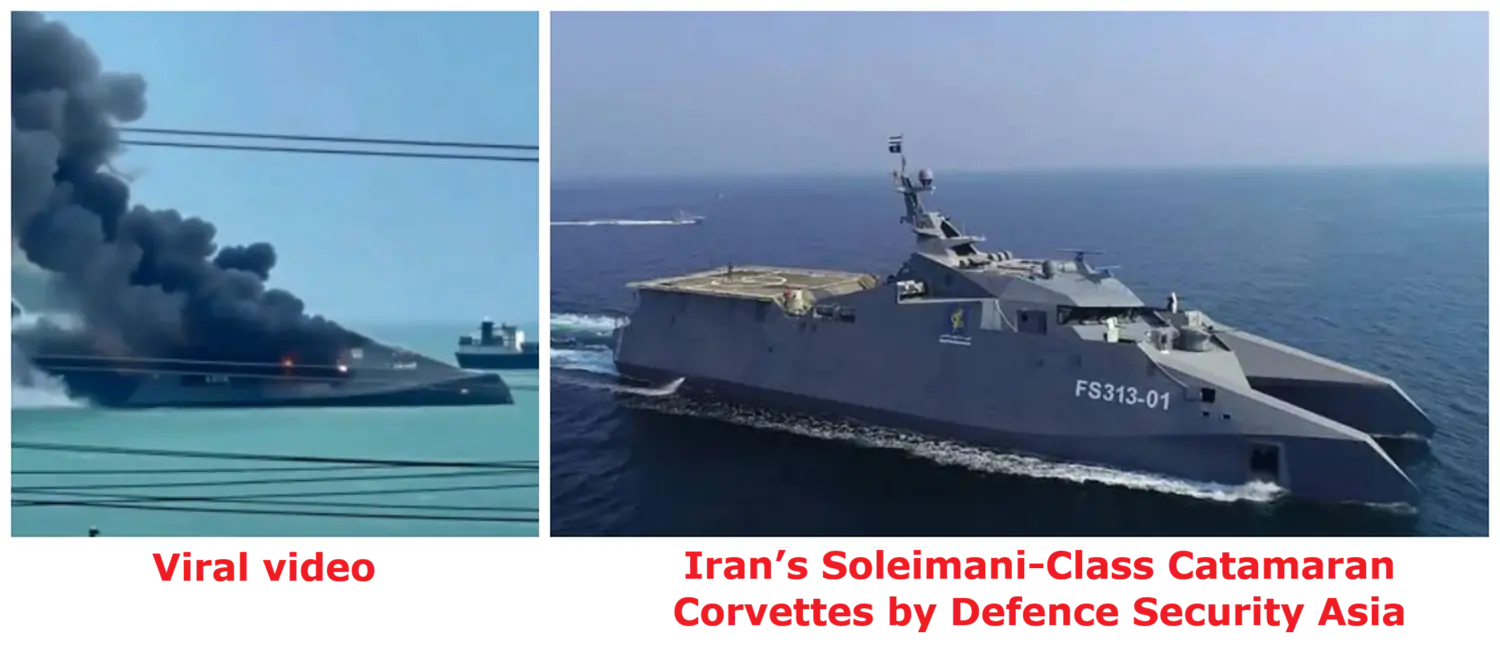 Multiple X users have been sharing a video on the social media platform since July 14, claiming that it shows the Iranian Navy destroying a ship in the Strait of Hormuz amid renewed hostilities in the Middle East. However, the video is old and shows the US Navy destroying an Iranian Soleimani-class corvette vessel in the Persian Gulf. Traffic in the Strait of Hormuz was disrupted once again after Iranian forces shut down the vital maritime route after exchanging heavy missile and drone assaults with US forces, with multiple US facilities in the Gulf states coming under fire on July 12, 2026. The United States military has concluded a fourth consecutive night of strikes against Iran, as Washington and Tehran both stake claims for control of the Strait of Hormuz. On July 14, a pro-Iranian account, based on its display profile and past posts, shared a video on X, showing a ship engulfed in flames in the sea, claiming to have been attacked by the Iranian Navy in the Strait of Hormuz. The post was captioned: “This...
 -
Dawn - 21:12 Jul 12, 2026
The US military launched fresh strikes on Iran after the latter struck a container ship on Sunday, while Tehran said it had again closed the Strait of Hormuz and escalated attacks on US facilities in states across the Gulf. The strikes were the latest in a cycle of attacks and counter-attacks as Iran seeks to assert control over shipping through the strait. However, the latest barrage marked a sharp escalation in pace and range. The attacks extended to the United Arab Emirates (UAE), which had not been targeted since early May, and Qatar, a mediator in ceasefire talks that had not come under attack since April. Iran said it closed the strait after firing a warning shot that struck a vessel travelling on an “unauthorised route”. It warned that any retaliation over the incident would be met with a “severe response”. Iran later said it had disabled a second vessel. India said one of its nationals was missing after an attack on the container ship GFS Galaxy off the coast of Oman earlier on Sunday. Oman said 23 c... -
Dawn - 15:41 Jul 12, 2026
The US military launched fresh strikes on Iran after the latter struck a container ship on Sunday, while Tehran said it had again closed the Strait of Hormuz and escalated attacks on US facilities in states across the Gulf. The strikes were the latest in a cycle of attacks and counter-attacks as Iran seeks to assert control over shipping through the strait. However, the latest barrage marked a sharp escalation in pace and range. The attacks extended to the United Arab Emirates (UAE), which had not been targeted since early May, and Qatar, a mediator in ceasefire talks that had not come under attack since April. Iran said it closed the strait after firing a warning shot that struck a vessel travelling on an “unauthorised route”. It warned that any retaliation over the incident would be met with a “severe response”. Iran later said it had disabled a second vessel. India said one of its nationals was missing after an attack on the container ship GFS Galaxy off the coast of Oman earlier on Sunday. Oman said 23 c... -
Dawn - 06:07 Jul 12, 2026
The US military launched fresh strikes on Iran after the latter struck a container ship on Sunday while Tehran said it had again closed the Strait of Hormuz and escalated attacks on US facilities in states across the Gulf. A series of attacks between the US and Iran over the past several days led President Donald Trump to declare the end of a ceasefire meant to halt the war on Iran that the US and Israel began on February 28, though Trump has left the door open to continued negotiations. Iran said it closed the strait after firing a warning shot that struck a vessel travelling on an unapproved route. It warned that any retaliation over the incident would be met with a “severe response.” The US Central Command, however, claimed commercial vessels continue to transit through the waterway that carried one-fifth of the world’s oil and LNG shipments before the war. The Central Command said US forces hit 140 Iranian military targets on Saturday, out of more than 300 during three nights of strikes “to degrade Ira... -
Dawn - 06:57 Jul 09, 2026
The United States and Iran traded strikes on Thursday for the second day running as Washington and Tehran battled over the strategic Strait of Hormuz. The latest round of attacks, which the US said was carried out in response to Tuesday’s assault on three cargo ships transiting the strait, came hours after US President Donald Trump said he believed an interim ceasefire with Iran to be “over”. US forces said the latest attacks against Iran were aimed at “their ability to threaten the freedom of navigation in the Strait of Hormuz”, citing recent strikes against commerical ships the waterway. “This is in retribution for yesterday’s bombing of ships by Iran. If it happens again, it will get much worse!” Trump wrote on his Truth Social platform. The US strikes rattled several cities along Iran’s southern coast and left some areas without power. The US Central Command said later they had struck approximately 90 military targets. Iran responded with a second day of attacks on Kuwait and Bahrain, both home to US mili... -
Dawn - 05:33 Jul 07, 2026
An “unknown projectile” struck and caused a fire on an oil tanker off the coast of Oman near the Strait of Hormuz on Monday, British maritime security agency United Kingdom Maritime Trade Operations (UKMTO) said. The incident occurred near one of the world’s most important energy shipping routes, despite a ceasefire between the United States and Iran and ongoing efforts to secure a lasting peace agreement. The maritime agency said the incident took place eight nautical miles east of Limah, Oman. “A tanker has reported being hit by an unknown projectile on the port side causing a fire, whilst travelling southbound,” UKMTO said in a post on X. The agency said there were no reports of casualties or environmental damage. “Vessels are advised to transit with caution and report any suspicious activity to UKMTO,” the agency added, saying authorities were investigating. US news outlet Axios reported late on Monday that Iran had “fired at least two missiles at commercial ships”, citing two unnamed US officials. One of... -
Dawn - 16:45 Jun 30, 2026
Govt expects easing inflationary pressure in new fiscal year following reopening of Strait of Hormuz
ISLAMABAD: After inflation rose to a fresh peak of 12pc in June, the government expects inflationary pressures to ease in the new fiscal year following the opening of the Strait of Hormuz as peace efforts gather pace. “With geopolitical tensions expected to ease following the US-Iran ceasefire, Pakistan’s economic outlook for FY2027 is expected to improve further, supported by reform continuity, stronger confidence and a more enabling pro-business environment”, said the Ministry of Finance in its Monthly Economic Update and Outlook (June 2026). It said that the recent easing of geopolitical tensions and ongoing peace efforts in the Middle East had improved global market sentiment. “Consequently, international crude oil prices had eased from their recent highs. This was expected to reduce imported inflationary pressures and help lower domestic fuel and transportation costs,” the ministry noted. While anticipating June inflation, as measured by the consumer price index (CPI), to remain within the range of 11-12... -
Dawn - 19:29 Jun 17, 2026
The United States on Wednesday read out the text of the interim US-Iran agreement to halt the war in Iran and open the Strait of Hormuz, according to a Reuters report. The agreement, read to reporters by a senior US official, outlines in 14 points a high-level understanding that defers many of the most difficult issues, such as how to wind down Iran’s nuclear program, until a final deal is reached. It paves the way for a broader 60-day negotiation period due to begin in Switzerland on Friday. Here is the full document, titled “Islamabad Memorandum of Understanding between the United States of America and the Islamic Republic of Iran”, as it was read out: 1. The United States of America and the Islamic Republic of Iran and their allies in the current war, by signing this MOU (Memorandum of Understanding), declare the immediate and permanent termination of military operations on all fronts, including in Lebanon, and undertake from now on not to initiate any war or any military operation against each other, and ... -
Dawn - 18:49 Jun 17, 2026
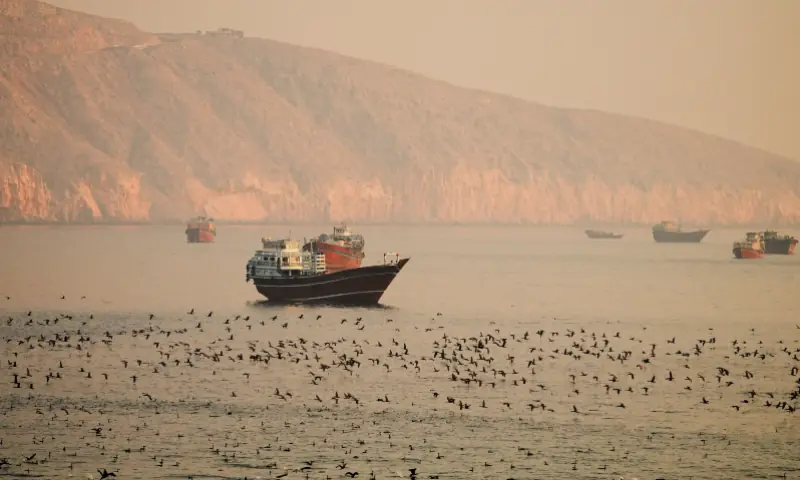 The vital Strait of Hormuz shipping lane is expected to reopen on Friday after nearly four months, following the signing of a US-Iran agreement to end the Middle East war. AFP examines how the reopening could work and why a return to normal is likely to take time. Are ships ready? Once formal approval is given to reopen, stranded ships could theoretically begin to move through the strait almost immediately. Crews that have been idle for months will most likely have “performed regular onboard drills and maintained the ships’ machinery, technical installations and equipment”, Jakob Larsen, head of security at shipowners’ association Bimco, told AFP. However, some ships may require underwater hull cleaning to remove barnacles and other marine growth accumulated during the shutdown. The strait, through which roughly 20 per cent of the world’s crude oil supply normally transits, was effectively closed by Iran after it came under fire from the United States and Israel. About 500 ships and 20,000 seafarers have been...
 -
Dawn - 17:54 May 18, 2026
Iran’s top security body announced on Monday the formation of a new body to manage the Strait of Hormuz, which Tehran has effectively closed and wants to charge ships to traverse. On its official X account, the Supreme National Security Council shared a post for the Persian Gulf Strait Authority (PGSA) saying it would provide “real-time updates on the #Hormuz_Strait operations and latest developments”. The account of the Revolutionary Guards’ navy shared the same post. It was not immediately clear what the new body would do but earlier this month Iranian English-speaking broadcaster Press TV said it constituted a “system to exercise sovereignty over the Strait of Hormuz” and that ships passing through the strait were sent “regulations” from the email info@pgsa.ir. Iran has largely blocked shipping through the vital strait since the outbreak of war with the United States and Israel on February 28. A fragile ceasefire has been in place since April 8. Iran’s grip over the waterway has rattled global markets and ... -
Dawn - 08:31 May 06, 2026
United States President Donald Trump said on Tuesday he would briefly pause an operation to help escort ships through the Strait of Hormuz, citing “great progress” toward a comprehensive agreement with Iran. Hours earlier, US Secretary of State Marco Rubio had outlined the effort that began on Monday to escort stranded tankers out of the Gulf. The strait has been virtually shut since the conflict began, blocking some 20 per cent of world oil supplies and igniting a global energy crisis. “Based on the request of Pakistan and other Countries, the tremendous Military Success that we have had during the Campaign against the Country of Iran and, additionally, the fact that Great Progress has been made toward a Complete and Final Agreement with Representatives of Iran, we have mutually agreed that, while the Blockade will remain in full force and effect, Project Freedom (The Movement of Ships through the Strait of Hormuz) will be paused for a short period of time to see whether or not the Agreement can be finalized... -
Dawn - 13:03 Apr 25, 2026
ISLAMABAD: State-run Pakistan LNG Limited (PLL) has approved a revised bid of $18.4 per million British thermal units (mmBtu) from TotalEnergies for delivery between April 27 and 30, while rejecting all other bids, it emerged on Saturday. TotalEnergies had initially bid $18.88 per mmBtu but later revised its offer downward to $18.4 following negotiations. After internal consultations, the authorities rejected all other bids for the first half of May, anticipating the reopening of the Strait of Hormuz. On Friday, PLL had received four bids at $17.997 to $18.88 per mmBtu for delivery between April 27 and May 8. A total of four bids were received from three bidders, and three were declared the lowest. Vitol Bahrain’s bid of $18.54 per mmBtu was declared the lowest for the May 1–7 delivery window, while OQ Trading was the lowest bidder at $17.997 per mmBtu for the May 8–14 period. However, both bids were rejected. PLL had on Thursday floated urgent tenders for the import of three LNG cargoes for delivery between ... -
Dawn - 17:17 Apr 24, 2026
ISLAMABAD: Police have arrested a citizen for allegedly mocking and likening the Tarnol Railway crossing to the Strait of Hormuz. The Strait of Hormuz, a crucial shipping route, has been virtually paralysed by the Middle East war. The first information report (FIR), a copy of which is available with Dawn, has been registered on the complaint of Sub-inspector Shahid Asghar on the state’s behalf. The FIR was registered under Section 188 (disobedience to order duly promulgated by a public servant), Section 341 (punishment for wrongful restrains) and Section 511 (punishment for attempting to commit offences punishable with imprisonment for life or for a shorter term) of the Pakistan Penal Code (PPC). According to the complaint, a man identified as Khurram was accused of sharing a post on social media, saying, “Tarnol Railway Crossing is no less than the Strait of Hormuz. If it is closed, all our problems will be resolved”. It said that the citizen was taken into custody and his phone was also checked, wherein evi... -
Dawn - 17:03 Apr 18, 2026
New Delhi on Saturday summoned Iran’s ambassador to convey the country’s “deep concern” after two Indian-flagged vessels were shot at near the Strait of Hormuz, India’s foreign ministry said. In a statement, India’s Ministry of External Affairs (MEA) said Iran’s Ambassador to India Dr Mohammad Fathali was summoned “for a meeting with [the] foreign secretary this evening”. During the meeting, the foreign secretary “conveyed India’s deep concern at the shooting incident earlier today involving two Indian-flagged ships in the Strait of Hormuz”, the MEA said. “He noted the importance that India attached to the safety of merchant shipping and mariners and recalled that Iran had earlier facilitated the safe passage of several ships bound for India.” Reiterating his concern at “this serious incident of firing on merchant ships”, the foreign secretary urged the ambassador to convey India’s views to the authorities in Iran and “resume at the earliest the process of facilitating India-bound ships across the strait”. Th... -
Dawn - 14:20 Apr 18, 2026
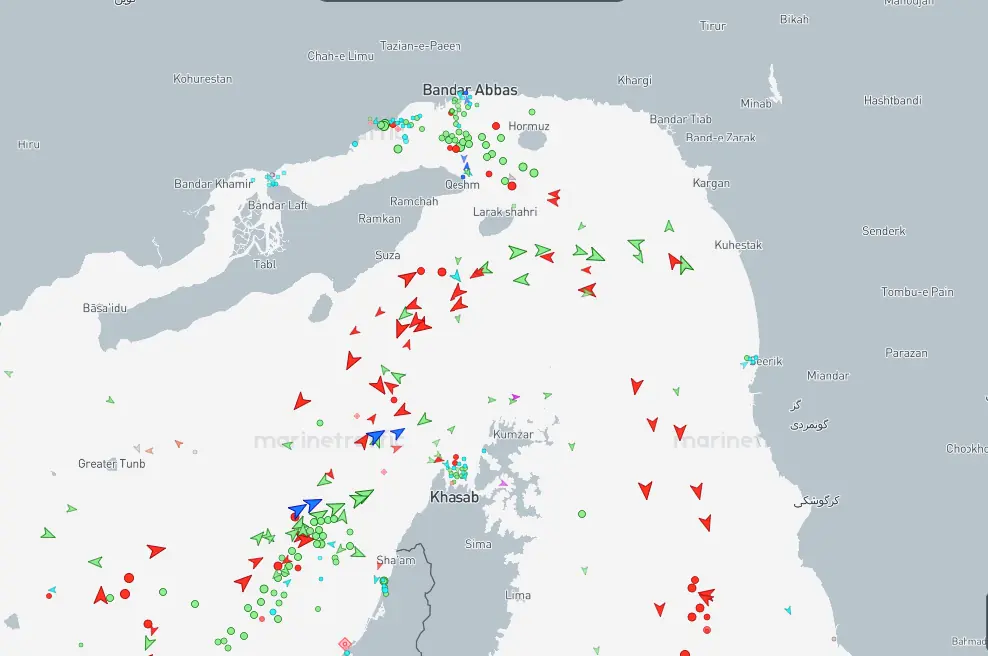 A handful of oil and gas tankers crossed the Strait of Hormuz on Saturday during a brief reopening, tracking data showed, but others retreated and two were reportedly attacked as Iran closed the route again. The toing and froing over the strait cast doubt on US President Donald Trump’s optimism the day before, that a peace deal to end the US-Israeli war with Iran was “very close”. Iran reversed its pledge to reopen the strait to commercial traffic during a ceasefire in the war to protest an ongoing US counter-blockade of the route, a crucial passage for commodity shipments. During the reopening, at least eight oil and gas tankers crossed the strait early on Saturday after the Iranian announcement on Friday afternoon, data from tracking firm Kpler indicated. However, tracking platform MarineTraffic showed several other crude oil tankers approached the strait but then turned back near Iran’s Larak Island, a checkpoint for vessels seeking to exit the Gulf under Iranian forces’ blockade of the passage. Screengrab...
 -
Dawn - 15:45 Apr 17, 2026
Iranian Foreign Minister Abbas Araqchi said on Friday that the Strait of Hormuz, vital for the global trade in oil and other commodities, was open following a ceasefire accord agreed in Lebanon. Araqchi said in a post on X that the Strait was open for all commercial vessels for the “remaining period of ceasefire”. It was not immediately clear whether he was speaking of the 10-day truce agreed by Lebanon and Israel that went into effect at midnight or an earlier two-week truce between Iran and the United States that began on April 8. He said the passage of ships would need to be along the route that Iran’s Ports and Maritime Organisation had announced. US President Donald Trump welcomed Iran’s announcement. “THANK YOU!” he wrote on his Truth Social platform, before going on a posting spree. In a separate post, he said that the US military blockade of ships sailing through the Strait to Iranian ports — announced after talks with Iran last weekend in Islamabad ended without a breakthrough — remained in place. “T...