US-Iran | Pakistan
"US-Iran" in Pakistan feed
-
Dawn - 16:21 Aug 12, 2026
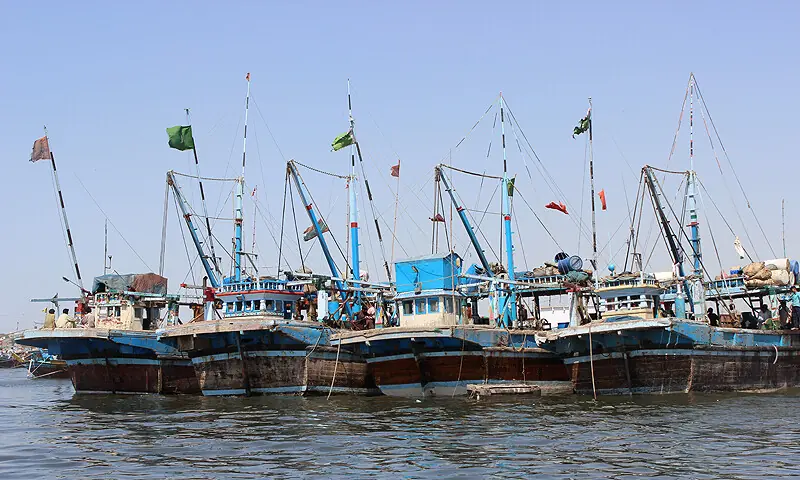 In Iranian waters, a strange trade is taking place — Pakistani fishermen exchange subsidised Iranian fuel for high-value tuna, a barter system now under threat from escalating US-Iran tensions. Shah Zamin Khan is among thousands of Pakistani tuna traders whose lucrative business has been at a near standstill since February, when the US-Israeli war on Iran began. The recent targeting of Iranian seaports by Washington has made matters worse. Iran’s southern ports of Konarak, Pasabandar and Beris, which border Pakistan’s southwestern Balochistan province and serve as key fish trade hubs, are among the sites targeted by US airstrikes in recent weeks. “Our businesses were already affected by the war, but the recent targeting of Iranian seaports has turned the region into a no-go area for us over the past one month,” Khan told Anadolu. An image of fishing boats. — Photo courtesy of Zofeen Ebrahim/File Boat owners, according to Khan, have completely stopped sending their vessels to the Iranian ports for fear of US s...
 -
Dawn - 17:13 Aug 04, 2026
Qatar said mediators were making progress in efforts to end the US-Iran war on Tuesday, driving oil prices lower, although Tehran has denied President Donald Trump’s assertion that talks are already under way. Benchmark Brent crude fell more than four per cent after the comments from Qatar, extending Monday’s steep losses on hopes that an arrangement could soon be reached to restore traffic through the blockaded Strait of Hormuz. But for now, the strait remained virtually shut, with another ship reportedly coming under attack while trying to cross it. Trump said on Monday that talks with Tehran had started and Iran faced a “last chance” to reach a deal. Iranian officials insisted no negotiations with the United States were taking place. Iran says its only talks are with Oman about the strait, and that no major meetings were planned this week. But senior US officials struck an optimistic tone on Tuesday, with Treasury Secretary Scott Bessent and Secretary of State Marco Rubio both pointing to progress in discu... -
Dawn - 02:05 Jul 25, 2026
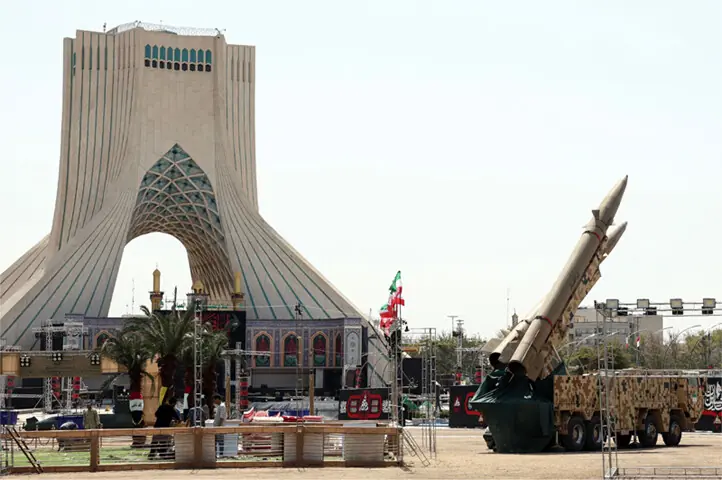 TEHRAN: Iranian-made ‘Zulfiqar’ missiles are displayed at Azadi Square. As the US kept up its missile strikes on Iranian targets, the IRGC vowed to ‘kill a member of the US forces for every Iranian killed’.—AFP • Exploratory talks held during Iranian interior minister’s recent Islamabad visit • Dar meets Araghchi at SCO summit; Qatar calls for implementing Islamabad MoU • Beijing concerned as Red Sea closure would compound Hormuz woes • Trump says Iran getting serious about talks; warns China, Russia against ‘getting involved’ in conflict • Says US will punish Iran for attacks on ships by Houthi rebels • Four die as US continues strikes on Iran ISLAMABAD / DUBAI: Pakistan is said to be exploring a path towards a resumption of stalled US-Iran talks to end their nearly five-month-old war, following a push initiated by China. The development came as US missiles struck targets across Iran on Friday after President Donald Trump vowed “major military punishment” for Tehran and its Houthi allies in Yemen for extendi...
 -
Dawn - 13:57 Jul 16, 2026
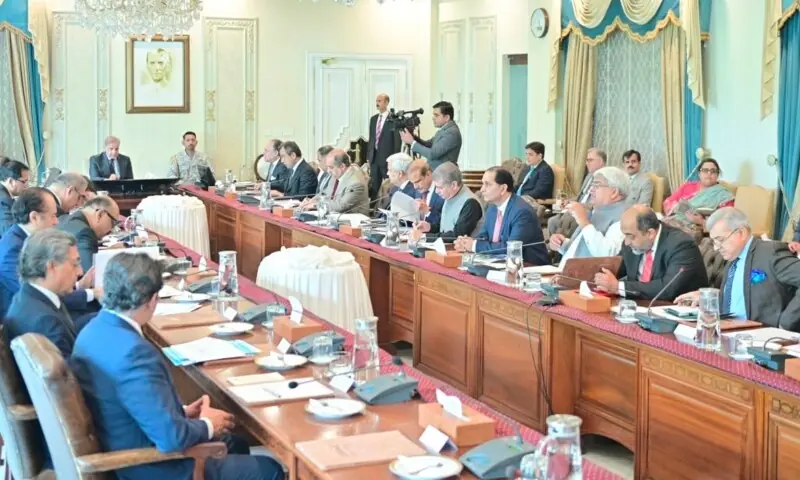 ISLAMABAD: Prime Minister Shehbaz Sharif on Thursday warned that the adverse impact of fresh tensions in the Middle East, triggered by the recent US-Iran attacks, could hit the country’s economy again. The prime minister made these remarks while presiding over a meeting to review the impact of regional tensions on Pakistan’s economy and reports on austerity and cost-saving measures. According to the PM Office, the prime minister observed that uncertainty in the region persists and directed all relevant authorities to remain fully prepared to address any potential challenges. He appreciated the public for their wholehearted support during the previous national austerity and conservation campaign, expressing his sincere gratitude. The prime minister further stated that Pakistan’s economy was currently stable. He directed that a comprehensive contingency plan be prepared to enable timely action. The premier also commended the nation’s active participation in the government’s fuel and energy conservation campaign...
 -
Dawn - 07:49 Jul 13, 2026
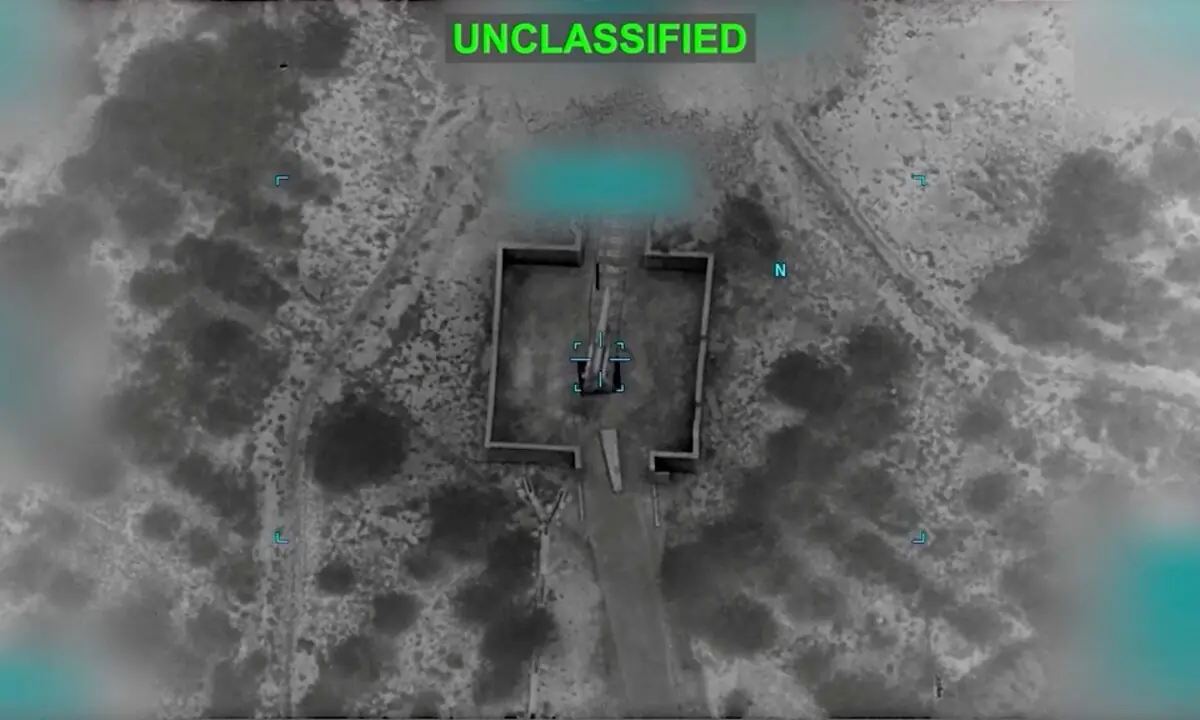 Barely four weeks after the signing of the US-Iran memorandum of understanding (MoU) that brought an uneasy halt to one of the most dangerous confrontations between the two rivals in decades, missiles are once again crossing the Gulf, commercial shipping is retreating from the Strait of Hormuz and oil prices are again inching upwards. Over the past 24 hours, the confrontation has entered its most dangerous phase since hostilities resumed last week, with both sides sharply intensifying military operations. Overnight, the US carried out a fresh wave of precision strikes against military and petrochemical infrastructure across southern Iran, targeting facilities in the oil-producing Khuzestan province as well as sites around Bandar Abbas, Qeshm Island and Bushehr. It employed aircraft, naval assets and — for the first time in the campaign — sea drones to degrade Iran’s air defence, missile and coastal capabilities. Open-source imagery has corroborated damage to the Omidiyeh airbase and to a building within the B...
 -
Dawn - 02:15 Jul 09, 2026
• NA panel seeks cheaper financing for Lyari freight corridor • Voices concern over K-IV delays, funding shortfall ISLAMABAD: The Economic Affairs Division (EAD) on Wednesday warned a parliamentary panel that any renewed US-Iran escalation could adversely affect Pakistan’s economy through higher energy costs, inflation, increased external financing needs and slower economic growth. Against this backdrop, the National Assembly Standing Committee on Economic Affairs Division, led by Mirza Ikhtiar Baig, advised the government to evaluate all possible cost-effective options for the construction of the multi-billion-rupee Lyari Elevated Freight Corridor (LEFC) before entering into stringent loan conditions with the Korean Exim Bank. The committee also expressed concern over delays and cost overruns in the Karachi Greater Water Supply Project (K-IV). The EAD team, comprising parliamentary secretary Zeb Jaffar and federal secretary Humair Karim, informed the committee that Pakistan entered 2026 with improving macroe... -
The Nation - National - 14:54 Jun 28, 2026
Pakistan has urged all parties involved in the Middle East conflict to fully observe the US-Iran ceasefire agreement, stressing that dialogue and diplomacy remain essential for maintaining regional peace. -
Dawn - 08:17 Jun 25, 2026
Deputy Prime Minister and Foreign Minister Ishaq Dar on Thursday said Pakistan was now being recognised as a “peacemaker” on the global stage for its role in mediating between the United States and Iran. Speaking to the media in Lahore, he said that following Pakistan’s role in the US-Iran negotiations, the country was now being recognised as a “peacemaker.” “Pakistan, which was once said to have become diplomatically isolated, is now being discussed across the entire world,” Dar said. “Even those countries that did not know Pakistan before, now know Pakistan,” he said. He added that Pakistan was now viewed as a “middle power” with an active diplomatic role internationally. “We now have to become an economic power. For this, Prime Minister Shehbaz Sharif is working day and night,” he said. Recalling the PML-N’s past economic performance, Dar said Pakistan had witnessed strong macroeconomic indicators during 2013–2017. “This was the same country which, from 2013 to 2017, had its voice heard across the world. A... -
Dawn - 20:18 Jun 24, 2026
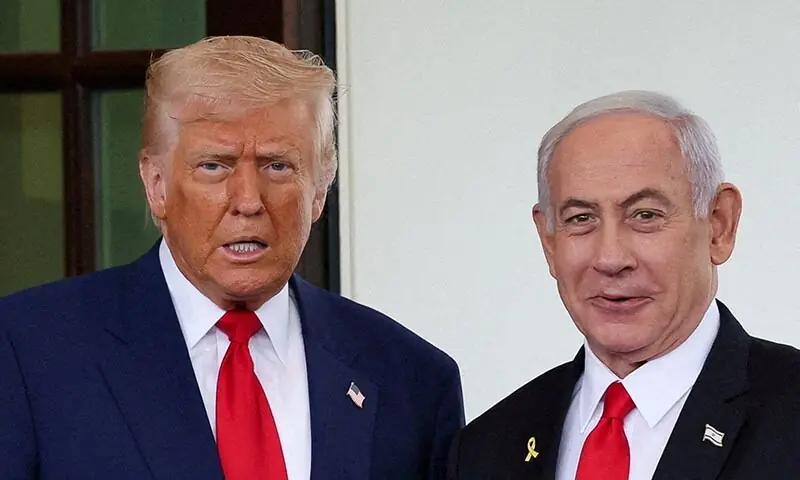 The biggest casualty of the US-Iran deal may not be Israel’s Iran strategy, but the political brand Prime Minister Benjamin Netanyahu spent decades constructing as the Israeli leader who could uniquely bend Washington to his will on Iran, analysts, former US officials and diplomats say. Netanyahu built his political identity on an audacious assertion: that he alone could keep the US and Israel in strategic lockstep on Iran. Cultivating Republican support, he cast himself as the only Israeli leader capable of influencing successive US presidents and insisted that only sustained military pressure could contain Tehran. At the height of his power, he was described by diplomats as the “American whisperer”, the Israeli leader who could pick up the phone and ensure Washington’s strategic calculus aligned with that of Israel. US President Donald Trump welcomes Israeli Prime Minister Benjamin Netanyahu at the entrance of the White House in Washington, DC, the US on April 7, 2025. — Reuters/File No other Israeli prime ...
 -
The Nation - National - 20:30 Jun 23, 2026
ISLAMABAD - Foreign Minister Ishaq Dar said US-Iran talks in Switzerland have entered a second phase focused on nuclear issues, sanctions, and Lebanon, but could have been “derailed” by Israeli attacks on Lebanon. -
Dawn - 08:35 Jun 23, 2026
Deputy Prime Minister and Foreign Minister Ishaq Dar has said that Sunday’s US-Iran talks in Switzerland were nearly “derailed” due to Israel’s continued attacks on Lebanon, it emerged on Tuesday. In an exclusive interview with Al Arabiya, which was recorded before the talks began, DPM Dar said, “The parlays starting in Switzerland could have started a few days earlier, but Israel’s attacks on Lebanon derailed and stopped everything.” At the outset of the interview, DPM Dar recalled Pakistan’s diplomatic efforts since the start of the conflict on February 28, recalling the Pakistan-mediated ceasefire followed by the talks in Islamabad in April. “Those parlays were the first time direct talks between the US and Iran after 47 years, and Pakistan was asked to be the witness,” DPM Dar said. He said that Pakistan’s continued efforts after the Islamabad talks culminated in the signing of the Islamabad Memorandum of Understanding (MoU) on June 18. “You see, during this period, Pakistan has been … very active. Not on... -
Dawn - 07:06 Jun 22, 2026
Oil prices declined on Monday after US-Iran talks concluded in Switzerland with Tehran saying it had secured waivers for oil and petrochemical exports, easing worries about a supply shortage in global markets. Brent crude fell $1.68, or 2.09 per cent, to $78.89 a barrel by 0633 GMT (11:33am PKT). Prices had climbed to $82.30 at the start of trading, fuelled by a bumpy start to the talks with threats from US President Donald Trump to restart the war on Iran and Tehran’s announcement it had again closed the Strait of Hormuz. US West Texas Intermediate crude futures were at $76 a barrel, down 60 cents, ahead of the contract’s expiry later on Monday. The more active August contract fell 69 cents to $75.16 a barrel. There was no settlement in the US market on Friday due to a holiday. “The decline has been driven primarily by improving prospects for a diplomatic breakthrough between the United States and Iran … reviving hopes that sanctions on Iran could eventually be eased,” said Sugandha Sachdeva, founder of SS W... -
Dawn - 15:11 Jun 19, 2026
The Pakistan Stock Exchange (PSX) benchmark KSE-100 index tumbled by over 2,400 points on Friday, breaking its four-day bullish spree. Falling oil prices following the signing of the ‘Islamabad MoU’ between the United States and Iran had fueled optimism, triggering buying interest across multiple sectors. As a result, the KSE-100 index had maintained its recovery for the fourth straight session on Thursday. On Friday, initial positive momentum pushed KSE-100 to an intraday high of 182,185.87 points at 10:14am. However, the market declined almost steadily after 10:30am until it regained some points later. The KSE-100 index declined by 2,858.75 points (1.58 per cent) to stand at 178,539.46 at 12:03pm. After hitting an intraday low of 177,836.16 at 2:34pm, it reversed some of its losses but closed at 178,922.75, down by 2,475.46 (1.36pc) from the previous close of 181,398.21. The downward trend followed the postponement of the planned US-Iran talks in Geneva, which were seen as a key step in the peace framework ... -
Dawn - 17:16 Jun 15, 2026
Prime Minister Shehbaz Sharif said on Monday that while the signing ceremony of an agreement reached between the US and Iran — aimed at ending a war that began three months ago — would be held in Geneva, it would be hosted by Pakistan. “The official [signing] ceremony of this historic agreement will be held on Friday, June 19, in Geneva, and by the grace of God, it will be hosted by Pakistan,” he said while addressing a National Assembly session after he announced the agreement past midnight on Monday. Under the agreement, the US and Iran have agreed on a framework to end the war, halt the US blockade of Iran and reopen the Strait of Hormuz. The war began in late February, with the US and Israel launching strikes on Iran. Throughout the conflict, Pakistan has remained actively involved in mediating for peace and also hosted the first round of talks between the two sides in Islamabad in April. The historic direct US-Iran talks had ended without an agreement, but also without a breakdown. This was after Pakista... -
Dawn - 14:18 Jun 14, 2026
For a few hours on Saturday, it appeared that the long diplomatic effort led by Pakistan to end the US-Iran war was approaching its culmination. President Donald Trump spoke of signing an agreement on Sunday, while Pakistani and Qatari mediators echoed the same with high confidence. Interestingly enough, Iranian Foreign Minister Abbas Araghchi also remarked that a deal had never been closer. Still, within hours, Tehran publicly pushed back against reports that a signing ceremony was imminent, with Foreign Ministry spokesman Esmaeil Baghaei making it clear that no agreement would be signed that day. Still, as these lines were being written, it was not clear whether the delay was temporary or whether the negotiators were struggling to bridge differences that remain unresolved. Such uncertainty, in any case, isn’t unusual in diplomacy especially when it is taking place between arch rivals like the US and Iran. Even so, the broad contours of the proposed arrangement are now sufficiently visible to assess what kin... -
Dawn - 05:19 May 31, 2026
• Diplomats see high chances of final agreement despite hiccups • Insist both sides want to avoid open-ended conflict • Nuclear issues likely to be handled in later negotiations • Ex-envoy Munir Akram says gaps are more about narrative than substance WASHINGTON: Islamabad remains a leading contender to host the formal signing ceremony of a possible US-Iran peace agreement if negotiators succeed in finalising a deal, diplomatic sources said. Diplomatic sources at the United Nations and in Washington told Dawn that prospects for a final agreement remained high despite delays in completing the draft. “Nine out of 10,” a senior diplomat said when asked to assess the likelihood of a final agreement being signed. “But I cannot say when it will happen.” Another senior diplomat said Islamabad’s role in facilitating the initial contacts between Washington and Tehran had strengthened its credentials as a possible host. “Iranians cannot come to Washington, and Americans cannot go to Tehran because the two countries do n... -
Dawn - 18:39 May 30, 2026
United States Secretary of Defense Pete Hegseth on Saturday said Washington and Islamabad were developing a “true friendship” as he lauded Pakistan’s role in the ongoing US-Iran peace negotiations. With Pakistan acting as the official interlocutor between Washington and Tehran in the ongoing peace negotiations that resulted in the April 8 US-Iran ceasefire, Trump and his top officials have hailed Islamabad’s role several times. At the three-day Shangri-La Dialogue in Singapore, Hegseth was asked about former director of national intelligence Tulsi Gabbard’s remarks on Pakistan’s future missile capabilities potentially posing a threat to the US, and whether India’s Agni-VI missile programme posed a similar threat. The question was posed after Hegseth, in his speech, had lauded US defence cooperation with Indo-Pacific and Southeast Asian countries, as well as India, which he termed a “critical anchor to hold the line”. “I mentioned India here, but I very easily could have mentioned Pakistan and the role that th...