Vance | Pakistan
"Vance" in Pakistan feed
-
The Express Tribune - 23:34 Oct 06, 2026
Vance said US remained open to an agreement but would require concrete Iranian nuclear concessions -
Dawn - 11:48 Jul 16, 2026
US Vice President JD Vance has said that late sex offender Jeffrey Epstein “seemed to be connected” to elements of the “Israeli deep state” as well as the “highest levels of American intelligence”, while also acknowledging the Trump administration mishandled its response to the case. He made these remarks in a podcast episode with host Joe Rogan that was published on Wednesday. During the episode, Rogan brought up that most people thought Epstein was linked to Israel’s Mossad intelligence agency, to which Vance replied, “Yeah, Mossad or CIA or some other deep state, whether in America, Israel, or another country.” “He clearly had connections to the upper, the highest levels of American intelligence. He clearly had connections to the highest levels of Israeli intelligence,” he said. He added that he found the Epstein case “interesting” because, “as much as I know, [Israeli] Prime Minister Netanyahu, not a particularly popular person in the United States of America right now, Epstein seemed to be connected to t... -
The Nation - National - 10:34 Jun 21, 2026
Prime Minister Shehbaz Sharif and Chief of Army Staff Field Marshal Asim Munir held an important meeting with US Vice President JD Vance in Zurich on Sunday amid ongoing diplomatic efforts related to US-Iran negotiations. -
Dawn - 19:17 Jun 18, 2026
United States Vice President JD Vance on Thursday issued a rare rebuke of Israel during a White House press briefing, criticising Israeli lawmakers who had opposed the memorandum of understanding signed between the United States and Iran. Under the deal, the two sides have agreed on a framework to end the war, reopening of the Strait of Hormuz and a 60-day timeline for further talks. Vance’s comments come amid rising tensions between US President Donald Trump and Israeli Prime Minister Benjamin Netanyahu. “If I was in the cabinet of the Israeli government, I might not be attacking the only powerful ally that I have anywhere left in the entire world,” Vance told reporters. “Anybody in Israel who thinks their biggest problem is the president of the United States needs to wake up and smell the reality of the situation.” Talking about the MoU itself, the vice president noted that Iran will “have to perform” and honour its end of the deal. “If they don’t perform as we’ve said before, they don’t get any of the bene... -
Dawn - 12:04 Apr 12, 2026
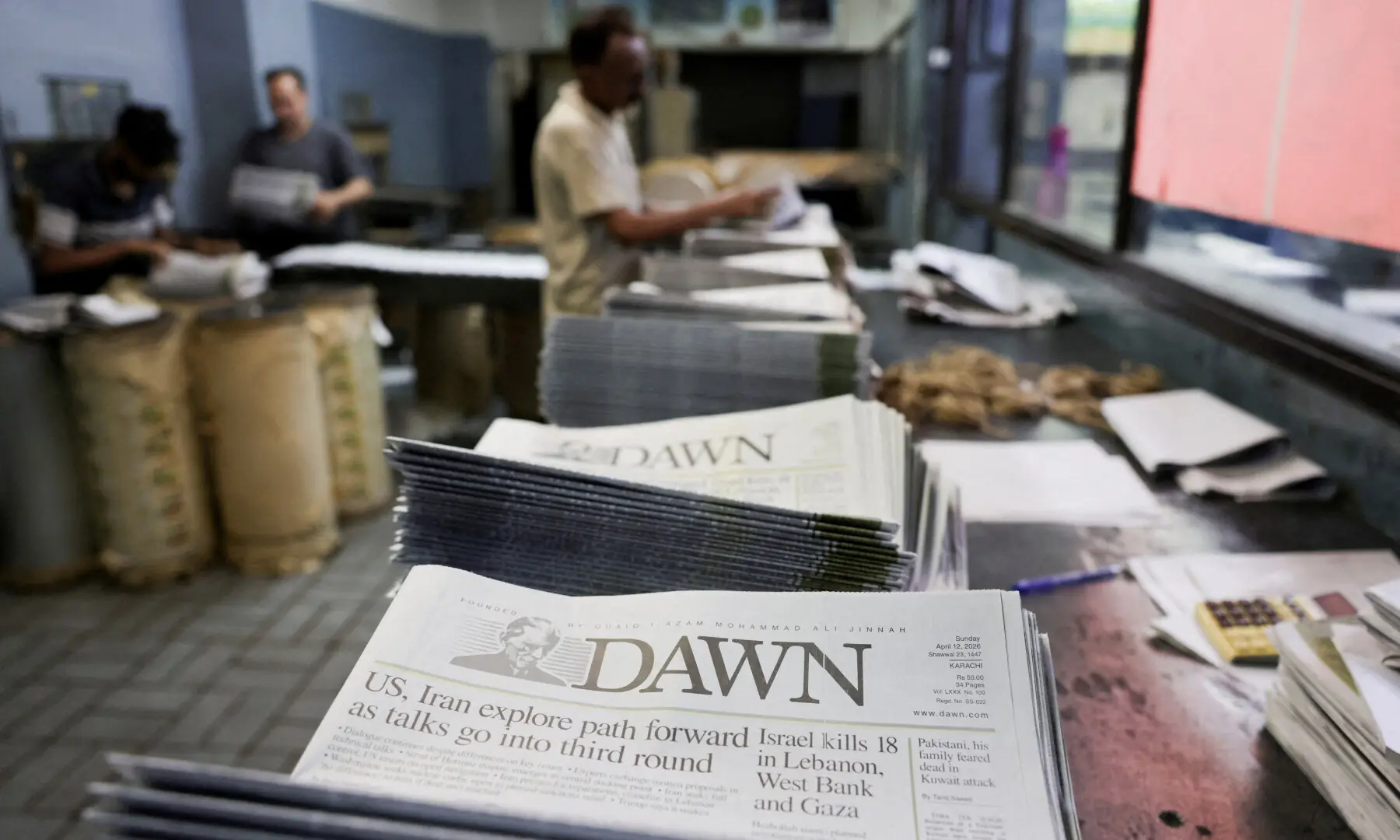 Direct talks between the United States and Iran were continuing into the early hours of Sunday in Islamabad, but within hours, delegations from both sides were heading home. In the morning, US Vice President JD Vance addressed a press conference, noting there had been “a number of substantive discussions”. However, he said the two sides did not reach an agreement. Dawn takes a look at scenes from the day of the noteworthy US-Iran talks concluding. Freshly printed newspapers featuring a headline about the US and Iran peace talks in Islamabad, are kept on a table at a printing press in Karachi on April 12, 2026. — Reuters Vice President JD Vance arrives for a news conference after meeting with representatives from Pakistan and Iran in Islamabad on April 12, 2026. — AFP US Vice President JD Vance and Jared Kushner arrive for a news conference after meeting with representatives from Pakistan and Iran, on April 12, 2026, in Islamabad. — Pool via Reuters Vice President JD Vance (R) speaks during a news conference a...
 -
Dawn - 02:00 Apr 12, 2026
US Vice President JD Vance said on Sunday that the US had not been able to reach an agreement with Iran, after 21 hours of “substantive discussions” under the umbrella of the “Islamabad Talks” which commenced on Saturday afternoon. He was addressing a press conference in Islamabad after the direct talks between delegations from the two countries, mediated by Pakistan, stretched into a second day on Sunday. “We have been at it now for 21 hours, and we have had a number of substantive discussions, that’s the good news,” said Vance. “The bad news is that we have not reached an agreement,” he added. “We have made very clear what our red lines are, what things we are willing to accommodate them on and what things we are not willing to accommodate them on,” said the US vice president, adding that the Iranian delegation had “chosen not to accept our terms”. Vance began the press conference by appreciating Prime Minister Shehbaz Sharif and Chief of Defence Forces and Chief of Army Staff Field Marshal Asim Munir, sayi... -
The Nation - National - 13:53 Apr 11, 2026
As the Islamabad Talks commenced, Shehbaz Sharif held a key meeting with JD Vance, the Prime Minister’s Office stated on Saturday. -
The Nation - National - 09:14 Apr 11, 2026
US Vice President JD Vance arrived in Pakistan on Saturday to participate in the Islamabad Talks with Iran, as diplomatic efforts intensify to resolve the ongoing regional conflict. -
Dawn - 21:04 Apr 10, 2026
The delegation from Iran touched down in Islamabad late on Friday night ahead of talks with the United States, with US Vice President JD Vance and his delegation en route to Pakistan as well. The talks are taking place during a two-week halt in the US-Israeli war on Iran, which began with the former launching attacks on the latter on February 28. An appeal by Prime Minister Shehbaz Sharif earlier this week led to a pause in the fighting, with negotiations scheduled for Saturday. According to the Foreign Office (FO), the Iranian delegation, led by Parliament Speaker Mohammad Bagher Ghalibaf and comprising Foreign Minister Abbas Araghchi, the defence council secretary, governor of Iran’s central bank and lawmakers, was received by Deputy Prime Minister and Foreign Minister Ishaq Dar, Chief of Defence Forces and Chief of Army Staff Field Marshal Asim Munir, National Assembly Speaker Sardar Ayaz Sadiq and Interior Minister Mohsin Naqvi. “DPM/FM expressed the hope that parties would engage constructively, and reit... -
The Nation - National - 13:33 Apr 10, 2026
US Vice President JD Vance has departed for Islamabad to lead the American delegation in the upcoming Iran–US negotiations being hosted under the mediation of Pakistan. -
Dawn - 20:47 Apr 06, 2026
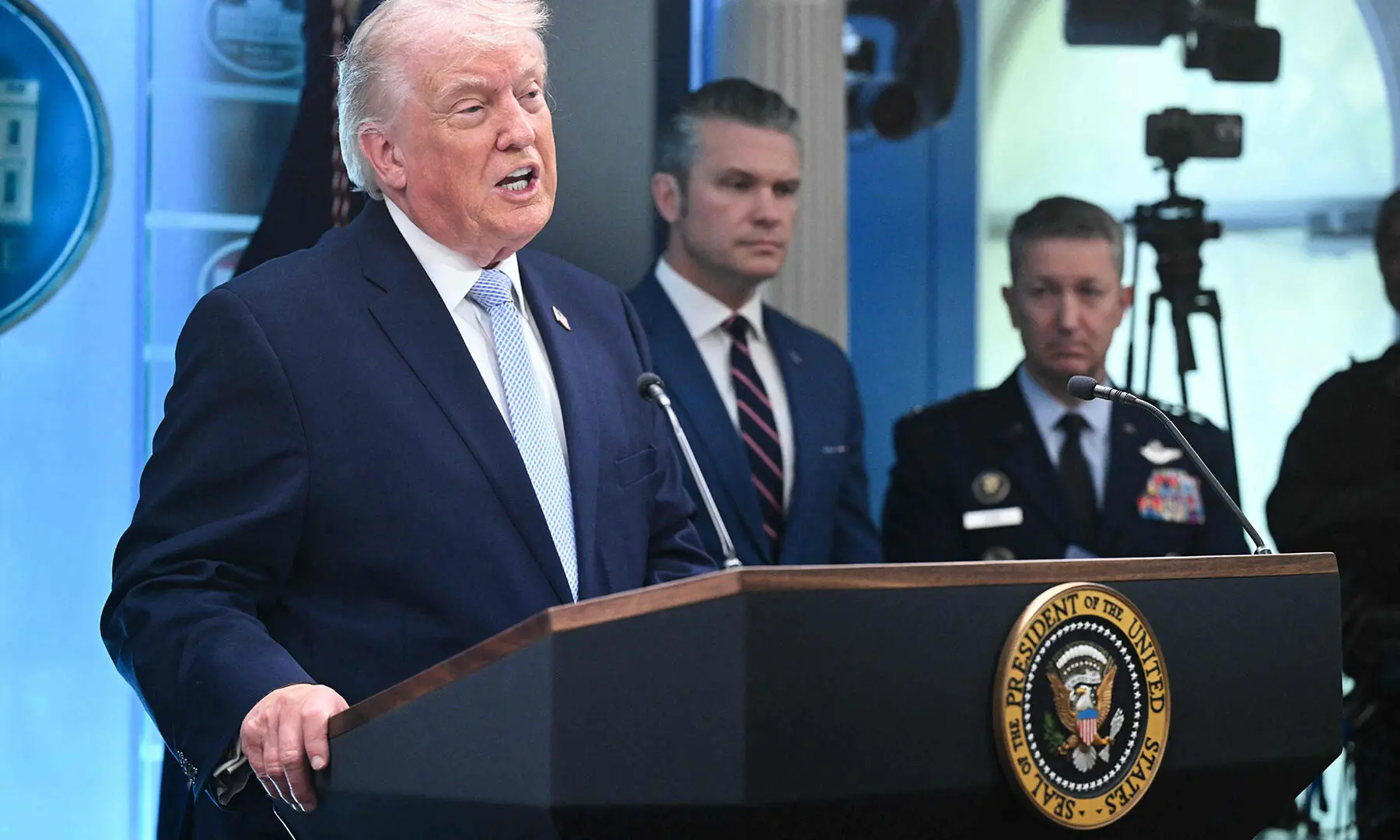 US President Donald Trump asserted on Monday that Iran could be taken out in one night, “and that night might be tomorrow night”, even as he said shortly afterwards that US officials, including Vice President JD Vance, were talking to intermediaries in Pakistan. His statements from two different events came ahead of a looming Tuesday night deadline he gave to Tehran to agree to a ceasefire deal with Washington, warning of wider bombing on power plants and other critical infrastructure. Trump is demanding that Iran forswear nuclear weapons and reopen the Strait of Hormuz oil transit waterway. Iranian media reported on Monday that Tehran had rejected the US ceasefire proposal through intermediary Pakistan, and had instead shared a 10-point proposal, demanding an end to conflicts in the region, a protocol for safe passage through the Strait of Hormuz, lifting of sanctions and reconstruction. Addressing a White House press conference on Monday, Trump told reporters that Iran could be taken out in one night, warni...
 -
Dawn - 12:01 Mar 29, 2026
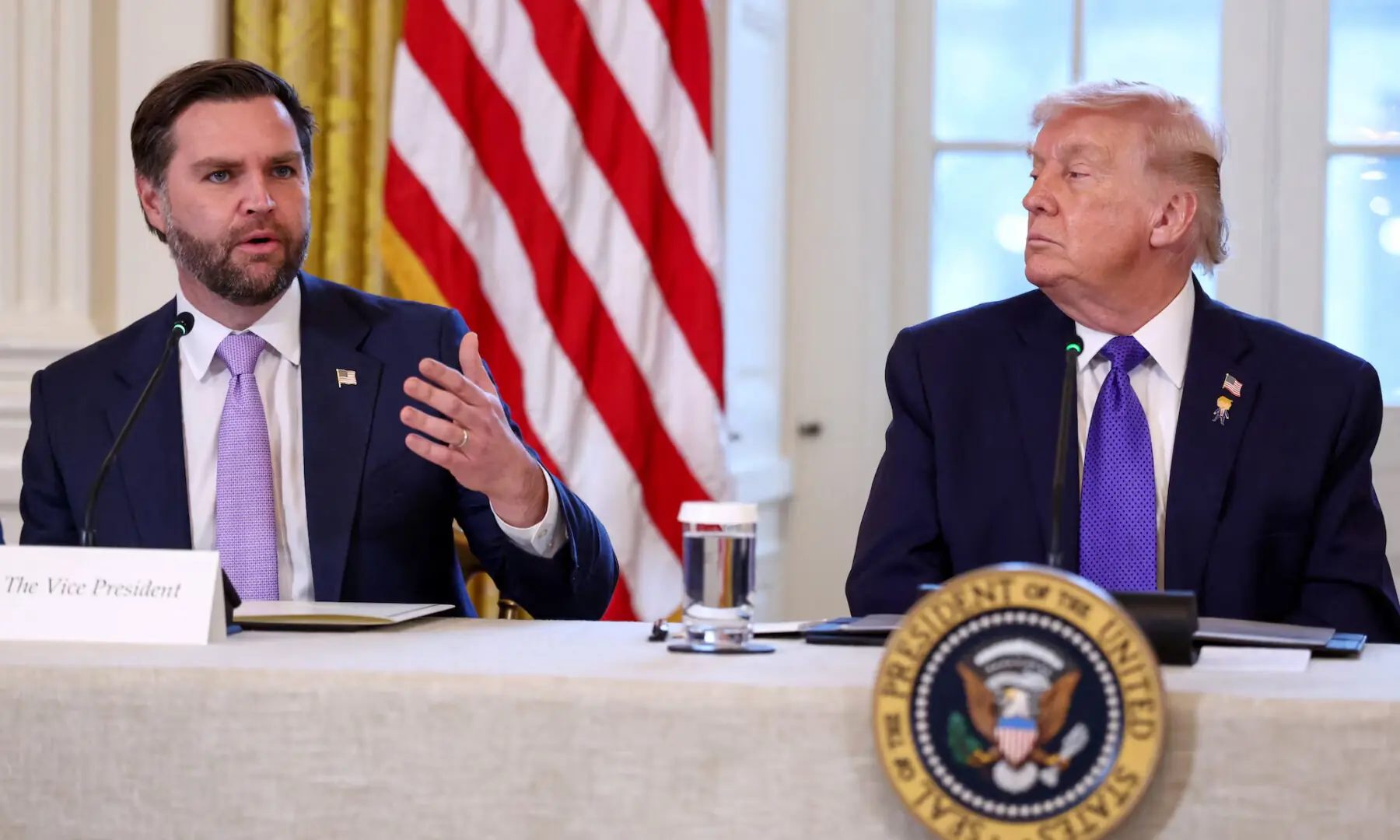 As the war in Iran threatens to imperil United States President Donald Trump’s legacy, the political stakes also are rising for two of his top lieutenants: Vice President JD Vance and Secretary of State Marco Rubio. The pair, widely viewed as potential successors to Trump, have been thrust into still-developing negotiations to end the war at a moment when the Republican Party is already weighing its post-Trump future. Vance has taken a cautious approach, reflecting his scepticism toward prolonged US military involvement, while Rubio has aligned himself closely with Trump’s hawkish stance and emerged as one of the administration’s most vocal defenders of the campaign. Trump has said both men were involved in efforts to force Iran to accept US demands to dismantle its nuclear and ballistic missile programmes and allow oil traffic to pass freely through the Strait of Hormuz. With the next presidential election due in 2028 and term limits barring Trump from running again, the president has been putting the succes...
 -
Dawn - 06:20 Nov 02, 2025
WASHINGTON: US Vice President JD Vance has defended saying that he hopes his wife Usha — who was raised as a Hindu — converts to Christianity. A fervent Catholic who himself converted in 2019, Vance said on Friday that pushback against his remarks reeks of “anti-Christian bigotry“. The 41-year-old was asked about raising their three children in an interfaith marriage at a Turning Point USA event honouring assassinated right-wing activist Charlie Kirk at the University of Mississippi on Wednesday. “Do I hope eventually that she is somehow moved by the same thing that I was moved in by church? Yeah, I honestly do wish that,” he said. “But if she doesn’t, then God says everybody has free will, and so that doesn’t cause a problem for me.” Published in Dawn, November 2nd, 2025 -
Dawn - 16:51 Aug 10, 2025
United States Vice President JD Vance said a negotiated settlement between Russia and Ukraine was unlikely to satisfy either side, and that any peace deal would likely leave both Moscow and Kyiv “unhappy”, adding that the US is aiming for a settlement both countries can accept. “It’s not going to make anybody super happy. Both the Russians and the Ukrainians, probably, at the end of the day, are going to be unhappy with it,” he said on Fox News programme ‘Sunday Morning Futures with Maria Bartiromo’. US President Donald Trump said on Friday he will meet with Russian President Vladimir Putin on August 15 in Alaska to negotiate an end to the war in Ukraine. Trump said Russia and Ukraine were close to a ceasefire deal that could end the three-and-a-half-year-old conflict, possibly requiring Ukraine to surrender significant territory. Ukrainian President Volodymyr Zelensky, however, said on Saturday that Ukraine cannot violate its constitution on territorial issues, adding, “Ukrainians will not gift their land to...