Pakistan
-
Dawn - 03:01 Jul 26, 2026
LAHORE: While a vast area of Punjab, covering nearly 400 square kilometres, has come under water following ongoing torrential rains and the overflow of several drains carrying water far beyond their designed capacity, the Chenab and Ravi rivers are expected to reach medium to high flood levels over the next 24 hours. The warning at a time when the flooding has already caused widespread damage to standing crops, livestock and infrastructure prompted district administrations in several areas to expedite flood-response measures, including the establishment of relief camps. “The situation is very alarming this time, as a vast area of around 400sq-kms has come under water in Sheikhupura, Muridke, Gujranwala, Narowal, Sambrial and Pasrur, which fall within the Lahore and Gujranwala divisions,” a senior official of the Punjab irrigation department told Dawn on Saturday. “The current situation resembles an inland sea because of the vast expanse of floodwater,” the official added, requesting anonymity. Floodwaters swa... -
Dawn - 02:59 Jul 26, 2026
ISLAMABAD: A sub-committee of the federal cabinet, headed by Finance Minister Muhammad Aurangzeb, has approved the prices of 52 life-saving drugs, prompting Health Minister Mustafa Kamal to say that patients would finally have access to cheaper and better-quality medicines. “However, the approval is subject to the final approval of the federal cabinet,” Mr Kamal said while speaking to Dawn on Saturday. The sub-committee, headed by Mr Aurangzeb, has five members, including the health minister. Replying to a question, Mr Kamal said that there were two categories under which medicine prices could be increased. “The first category is hardship [under which prices are increased when production becomes unviable due to rising production costs], and the second category is only the fixation of prices for new molecules. “All 52 medicines were placed under the price-fixation category,” he said. The federal health minister said that the majority of the molecules were either new to the market or alternatives to some of th... -
Dawn - 02:53 Jul 26, 2026
LAHORE: At least seven people, including two children, were killed and 20 others injured in rain-related incidents across Punjab during the last 24 hours, while downpour also damaged houses and killed livestock, according to the Provincial Disaster Management Authority. The PDMA report, available with Dawn, said 14 rain-related incidents were reported across the province up to 2pm on Saturday. These included deaths caused by structural collapses and drowning, injuries from roof collapses and electrocution, the collapse of seven house roofs, and the death of five buffaloes. In Lahore, three people, including a man, a woman and a child, died, while five others were injured in four separate roof-collapse incidents in Bobby Plaza, Garhi Shahu Railway Colony, Saggian Pind and Kahna. Two people, including a man and a child, were killed and three others, including a woman and two children, were injured when the roof of a house collapsed near Adda Dhing Shah on Depalpur Road in Kasur. A woman died after the roof of a... -
Dawn - 02:40 Jul 26, 2026
• Maryam shares video of green buses reaching AJK • PPP alleges code of conduct violations by rivals • Election commissioner warns against new schemes, reviews election preparations • 2,316 polling stations set up across division • MQM-P withdraws candidates in PML-N’s favour MUZAFFARABAD: The Pakistan Muslim League-Nawaz (PML-N) and its coalition partner at the Centre, the Pakistan Peoples Party (PPP), are set to face off in the Mirpur Division elections on Monday, as electioneering ended at midnight amid allegations of pre-poll rigging by the PPP and a warning from the Azad Jammu and Kashmir (AJK) Election Commission that no individual or institution would be allowed to violate the election code of conduct. The Election Commission on Saturday reiterated that no individual or institution would be allowed to violate the election code of conduct, amid a controversy over development promises made during the election campaign. Although the commission’s statement did not name any individual or political party, it... -
Dawn - 02:05 Jul 26, 2026
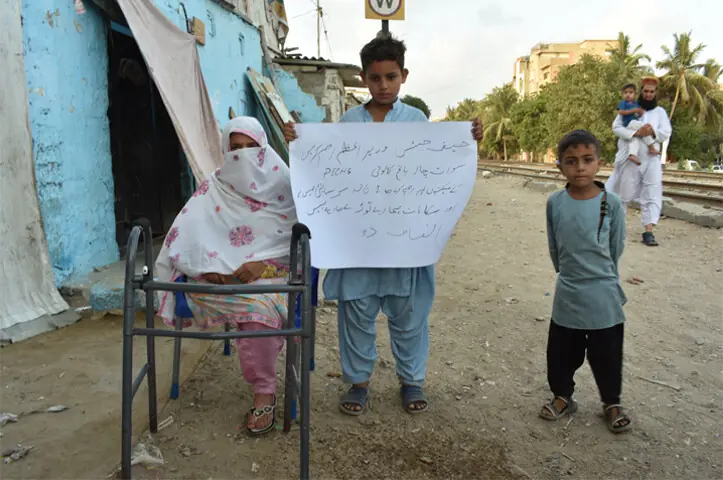 Large infrastructure projects are often presented as symbols of progress. New transport corridors promise faster mobility, greater regional connectivity and economic growth. Yet, the success of such projects depends not only on engineering but also on the way they transform the lives of the people who occupy the spaces through which they pass. In Karachi, the proposed modernisation of Pakistan Railways’ Main Line-1 (ML-1) and the revival of the Karachi Circular Railway (KCR) illustrate this contradiction. Both projects promise substantial improvements to the country’s transport network, but both also require extensive clearance of settlements that have existed for decades along the railway corridors. The discussion surrounding these demolitions has largely focused on removing what are considered ‘encroachments’ and reclaiming public land. Far less attention has been paid to the rehabilitation of the displaced population, despite the fact that it is rehabilitation, not demolition, that ultimately determines th...
 -
The Express Tribune - 01:28 Jul 26, 2026
Met department says Karachi likely to receive light rain, drizzle over next two days -
The Express Tribune - 01:15 Jul 26, 2026
Security sources say forces destroyed multiple militant hideouts, recovered weapons and explosive material -
The Express Tribune - 00:16 Jul 26, 2026
Qatar fully resumes maritime navigation activities after 2-week pause -
The Express Tribune - 00:07 Jul 26, 2026
Three victims critical as police identify suspect with alleged links to Islamist scene, manhunt continues