Europe | News
-
ukrinform.net - 15:18 Mar 23, 2026
Risks to Europe from Russia in the hybrid domain could increase significantly in the coming years, even before Moscow finishes rebuilding its military capabilities. -
Cointelegraph.com - 09:52 Mar 23, 2026
 H100 signed a letter of intent to acquire two Bitcoin treasury companies and their BTC holdings, which could make it the second-largest Bitcoin treasury company in Europe. Sweden-listed health-tech and Bitcoin (BTC) treasury company H100 Group has entered into a letter of intent (LOI) with the shareholders of privately-held Norwegian Bitcoin companies Moonshot and Never Say Die to acquire all shares of the target companies in exchange for newly issued H100 stock. The proposed transaction would be completed with newly issued H100 shares and no cash consideration, a structure intended to preserve the sellers’ Bitcoin exposure while moving the assets into a larger listed vehicle, according to a Monday press release. A definitive agreement is expected by April 22, with closing targeted after H100’s annual general meeting. H100’s public materials currently show inconsistent AGM dates: its investor-relations calendar lists April 21, while a March 12 company notice referred to an AGM on May 21. Read more
 -
FD - 14:11 Mar 19, 2026
De EU wil Europese bedrijven voorrang geven bij aanbestedingen om haar industrie te stimuleren, maar dat is nog niet zo makkelijk. Zo kan Made in Europe afkomstig zijn uit een veertigtal andere landen. -
ukrinform.net - 20:24 Mar 18, 2026
Europe must preserve a strong transatlantic relationship with the United States, while Ukraine's future security depends on a strong military and integration with Western structures. -
Dawn - 18:15 Mar 18, 2026
President Emmanuel Macron on Wednesday announced that France’s next nuclear-powered aircraft carrier will be called “France Libre” (Free France), as the country looks to reinforce its status as a major maritime power. Once completed, the warship, which is set to replace the country’s sole aircraft carrier — the Charles de Gaulle — and due to enter service in 2038, will be the largest warship ever built in Europe. Macron said the vessel was being named after the French Resistance movement that General de Gaulle led against the Nazi occupation of France during World War II. “I wanted our future aircraft carrier to follow in the footsteps of General de Gaulle. His life, his destiny,” Macron said at a shipyard in the western town of Indret, near Nantes, where the vessel’s two nuclear reactors will be built. “Our new aircraft carrier will be named France Libre,” he added. “This name honours the memory of the men and women who stood up against barbarity.” Macron in December announced the start of construction of th... -
ukrinform.net - 16:20 Mar 18, 2026
German Chancellor Friedrich Merz called for joint action by the United States and Europe to increase pressure on Russia in order to achieve a just peace in Ukraine. -
ukrinform.net - 22:01 Mar 17, 2026
The President of Finland believes that Europe could offer Donald Trump military assistance to clear the Strait of Hormuz in exchange for full U.S. support for Ukraine. -
JPost.com - Antisemitism - 14:56 Mar 16, 2026
Will they defend the democratic order that has defined the continent since World War II, or continue the pattern of hesitation that has allowed the Iranian regime to expand their global reach?
-
Haaretz - 17:21 Mar 15, 2026
Trump and Netanyahu's war against Iran, from an energy crisis to a potential refugee emergency, is already spilling over into Europe. Instead of standing on the sidelines, Europeans must stand up to Trump, for reasons of principle as well as self-interest -
Cointelegraph.com - 11:35 Mar 11, 2026
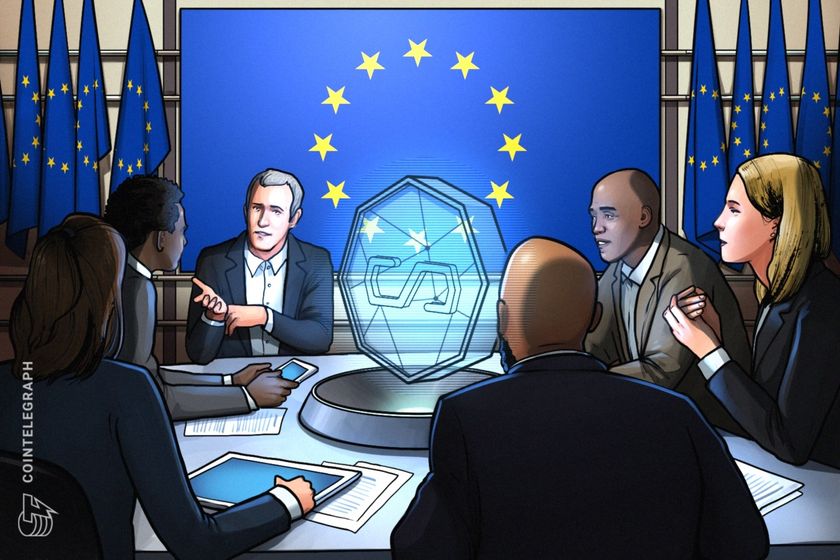
 The European Central Bank has launched Appia to guide Europe’s tokenized financial ecosystem anchored in central bank money, with early Pontes pilots planned for 2026. The European Central Bank (ECB) on Wednesday published its Appia roadmap, setting out a long-term plan for building tokenized wholesale financial markets in Europe anchored in central bank money. The roadmap is built around two linked initiatives. Pontes is the Eurosystem’s distributed ledger technology settlement solution, while Appia is the broader strategic framework for developing a future tokenized financial ecosystem. The ECB said Pontes is scheduled to launch in the third quarter of 2026. “With Appia, we are building a road from today’s financial system to tomorrow’s tokenized markets, firmly grounded in central bank money,” ECB executive board member Piero Cipollone said. Read more
 -
ukrinform.net - 14:00 Mar 08, 2026
Today, security concerns extend beyond the Middle East to Europe as well, and Ukraine is ready to help strengthen the continent’s defense. -
ukrinform.net - 20:15 Mar 07, 2026
Equally effective protection of life must be ensured both in Europe and in the Middle East, President Volodymyr Zelensky said. -
Haaretz - 20:25 Mar 03, 2026
The Iran war puts pressure on Europe to define its position at the edge of a new world order – a particularly delicate spot for Germany -
Cointelegraph.com - 11:35 Mar 03, 2026
 The European Central Bank warns in a new working paper that as stablecoin adoption grows, deposits may leave banks, affecting lending and monetary policy transmission. The European Central Bank said increasing stablecoin use may pull money out of bank deposits and weaken the way monetary policy flows through to lending, according to a new ECB working paper. Growing adoption of stablecoins, which are digital assets often pegged to currencies such as the US dollar or euro, is expected to draw funds away from traditional bank deposits, the ECB said in its latest working paper series, “Stablecoins and Monetary Policy Transmission,” released Tuesday. “Our analysis shows that rising interest in stablecoins is linked to a measurable decline in retail bank deposits and a reduction in lending to firms,” ECB staff said, adding that stablecoins can reduce the amount of credit banks provide to the real economy. Read more
 -
Dawn - 16:56 Mar 02, 2026
President Emmanuel Macron said on Monday that France would increase the number of its nuclear warheads and cooperate with eight European countries to help protect the continent as the clock ticks on his presidency. His speech at France’s Ile Longue nuclear submarine base came after US and Israeli attacks against Iran in a campaign that risks destabilising the Middle East. Macron updated France’s nuclear doctrine as Russia’s war against Ukraine grinds into a fifth year and Nato allies worry about Washington’s wavering commitment to Europe. “We must strengthen our nuclear deterrent in the face of multiple threats, and we must consider our deterrence strategy deep within the European continent, with full respect for our sovereignty,” Macron said. He announced “the gradual implementation of what I would call advanced deterrence”. Macron announced a series of concrete measures in a bid to bolster Europe’s security as France’s allies are concerned that a possible win by the eurosceptic far-right National Rally part... -
CryptoSlate - 10:32 Mar 02, 2026
Five straight weeks of net redemptions from crypto investment products are enough to raise the alarm, as they point to a choice that keeps getting made, with the same logic, on the same cadence, by the same kinds of committees. CoinShares' Feb. 23 weekly report showed digital asset investment products saw $288 million in outflows […] The post Europe buys the dip as US funds keep bleeding – who is buying Bitcoin right now? appeared first on CryptoSlate. -
ukrinform.net - 18:37 Feb 25, 2026
Council of Europe holds commemorative ceremony on fourth anniversary of Russia’s war against Ukraine
On Wednesday, in the square in front of the Palace of Europe in Strasbourg, Council of Europe Secretary General Alain Berset, Moldova’s Permanent Representative Daniela Cujbă, whose country currently chairs the Committee of Ministers, and Ukraine’s Permanent Representative to the Council of Europe Mykola Tochytskyi held a commemorative ceremony marking the fourth anniversary of Russia’s full-scale war against Ukraine. -
Cointelegraph.com - 14:20 Feb 25, 2026
 21Shares debuts the Strategy Yield ETP on Euronext Amsterdam on Thursday, giving Europe regulated access to Strategy’s preferred stock, which is heavily backed by Bitcoin. Crypto exchange-traded product (ETP) provider 21Shares has launched an investment product giving European investors access to a preferred stock issued by Michael Saylor’s Strategy, the world’s largest public holder of Bitcoin. The asset manager will list its 21Shares Strategy Yield ETP under the ticker “STRC NA” on Euronext Amsterdam on Thursday, the company said Wednesday. The ETP is available to institutional and retail investors, offering a dividend backed by Strategy’s Bitcoin (BTC) treasury, which currently holds 717,722 BTC, valued at around $47 billion. With dividends set at a variable 11.25% annualized rate, the ETP represents one of the earliest structured, BTC-backed corporate securities available to European investors. Read more
 -
CryptoSlate - 13:25 Feb 25, 2026
Crypto traders are chasing 10x leverage in the US while Europe tightens the screws behind the scenes
Two regulators converged on the same market from opposite directions in February 2026. The European Securities and Markets Authority warned that derivatives marketed as “perpetual futures” or “perpetual contracts” tied to Bitcoin and Ethereum likely fall within the scope of contracts-for-difference regulations, regardless of what firms call them. Days earlier, US Commodity Futures Trading Commission […] The post Crypto traders are chasing 10x leverage in the US while Europe tightens the screws behind the scenes appeared first on CryptoSlate. -
JPost.com - Business & Innovation - 22:03 Feb 23, 2026
The Technion claimed the top spot in Europe for AI research according to CSRankings, placing 21st globally, and has fueled a surge of successful commercial tech spinoffs.