Europe | Crypto
"Europe" in Crypto feed
-
CryptoSlate - 10:00 Sep 24, 2026
21Shares listed ZCASH in Paris and Amsterdam as ZEC briefly topped $1,600 and ZODL reported elevated privacy use. The post Why Zcash soared to $1,600 as Europe unlocks new ETP access appeared first on CryptoSlate. -
CryptoSlate - 11:30 Sep 23, 2026
The proposed MiCA change challenges mandatory bank deposits as Britain's systemic sterling stablecoin code reaches its consultation deadline. The post Europe’s central banks want to scrap this stablecoin reserve safeguard appeared first on CryptoSlate. -
Cointelegraph.com - 08:50 Sep 18, 2026
 Binance declined to address reports of ECB intervention in its Greek MiCA bid, saying it remains committed to securing authorization in Europe. Binance declined to address a report that European Central Bank President Christine Lagarde intervened in its failed Greek crypto license bid and said it continues seeking authorization under the European Union’s Markets in Crypto-Assets Regulation (MiCA). The Wall Street Journal reported Friday that a vice chair of Greece’s Hellenic Capital Market Commission (HCMC) told Binance that Lagarde had asked Greek Prime Minister Kyriakos Mitsotakis not to approve its application. Greek officials informed the European Securities and Markets Authority in early June that the regulator intended to approve the license, according to the report. Read more
 -
Cointelegraph.com - 13:30 Aug 20, 2026
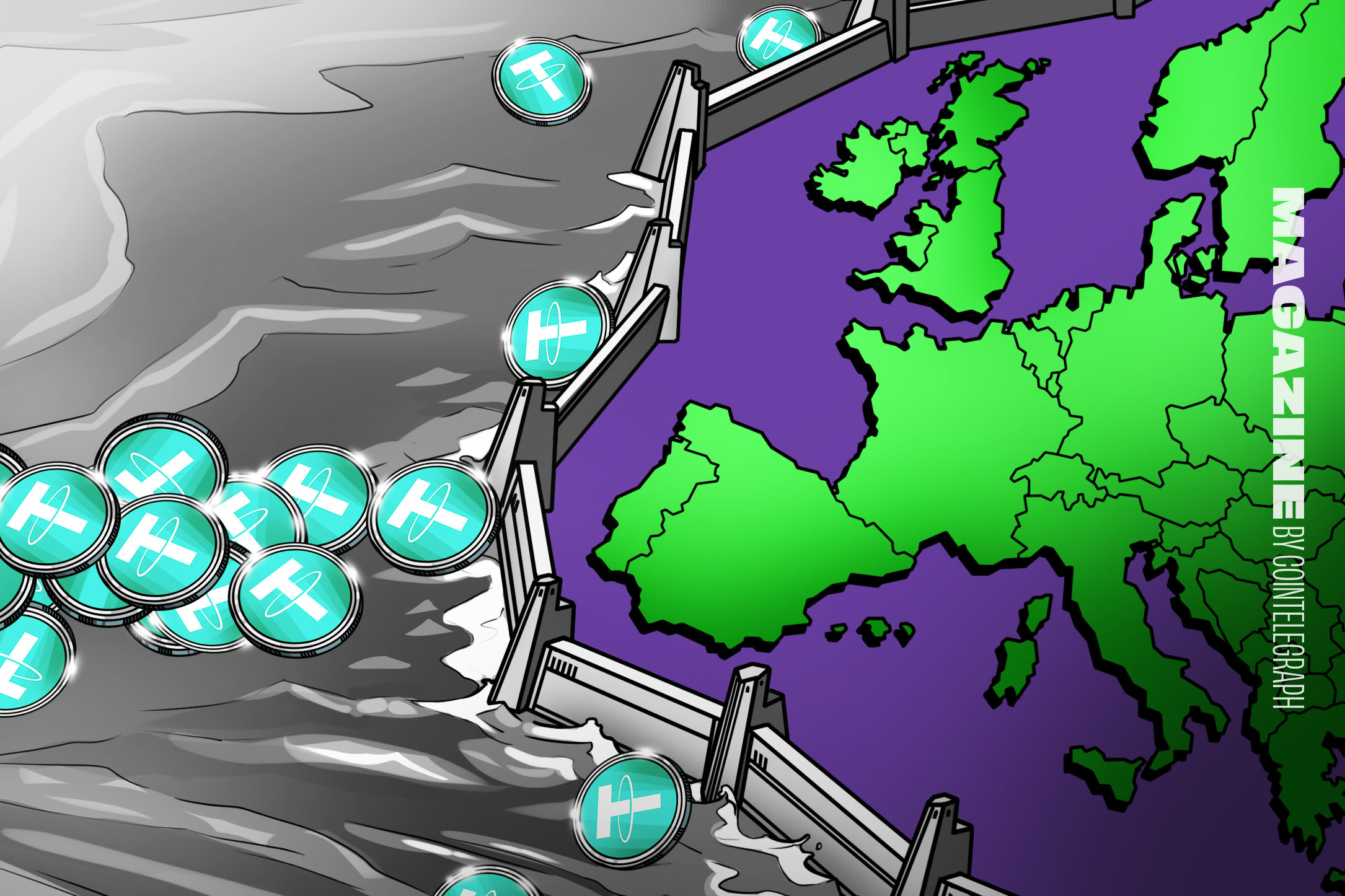 USDT is disappearing from regulated European platforms, but there is little sign that it has resulted in weakening global demand for Tether. Europe’s crackdown on Tether’s USDT is entering a new phase. When Revolut told European users it would delist USDT after Aug. 31, it became another in a long line of European platforms restricting access to the world’s largest stablecoin as firms adapt to the requirements of the EU’s Markets in Crypto-Assets (MiCA) regulation. MiCA’s stablecoin rules have been phasing in since 2024, and the EU-wide transition period ended on July 1, putting further pressure on platforms to drop tokens that don’t meet the rules. Read more
 -
Cointelegraph.com - 10:14 Aug 10, 2026
 Sweden’s H100 more than tripled its Bitcoin holdings to 3,506 BTC after completing an acquisition involving 2,455 BTC. Sweden-listed health-tech and Bitcoin treasury company H100 Group completed its acquisition of Norwegian Bitcoin companies holding 2,455 Bitcoin (BTC), more than tripling its Bitcoin treasury to 3,506 BTC. The transaction involved no cash consideration, with H100 issuing 790.5 million new shares to the sellers, the company said in a Monday press release. The newly issued shares diluted existing shareholders by about 70%. H100 priced them at 1.86 Swedish kronor ($0.20) each, valuing the transaction at about 1.47 billion kronor ($155 million). Read more
 -
Cointelegraph.com - 09:24 Aug 05, 2026
 JPMorgan’s Kinexys platform will tokenize select BlackRock money market fund shares denominated in pounds, euros and US dollars. BlackRock will offer tokenized versions of select European money market funds using JPMorgan’s blockchain infrastructure. According to a Tuesday Bloomberg report, the offering will include pound sterling, euro and US dollar share classes from BlackRock’s Institutional Cash Series, which collectively manage about $311 billion. The figure refers to the broader fund range, not the assets that will be tokenized. Each token will represent a share in an underlying money market fund and can be transferred around the clock between approved digital wallets. Read more
 -
CryptoPotato - 08:38 Jul 23, 2026
[PRESS RELEASE – Dublin, Ireland, July 23rd, 2026] The European-founded, MiCA-licensed fintech Ramp Network expands its full wallet product to its home market, giving EU users a self-custodial, everyday crypto account with a built-in rewards program. Ramp Network, a global crypto infrastructure company founded in Europe and licensed under MiCA by the Central Bank of […] -
Cointelegraph.com - 13:34 Jul 21, 2026
 The UCITS ETF, CoinShares’ first in Europe, began trading on Deutsche Börse Xetra, tracking a rules-based index of publicly listed BTC miners. CoinShares has launched its first UCITS exchange-traded fund (ETF) in Europe, which tracks publicly listed Bitcoin mining companies, giving European investors exposure to the sector through an Irish-domiciled fund listed on Deutsche Börse Xetra. The CoinShares Bitcoin Mining UCITS ETF began trading Tuesday under the ticker MINE. The physically replicated fund tracks the CoinShares Bitcoin Mining Index, a rules-based basket of listed Bitcoin miners administered by Solactive AG, the asset manager said in an announcement. The ETF was last trading at 19.50 euros ($21.74) per share. Deutsche Börse Xetra data showed 60 units traded for a turnover of 1,184 euros. The similar US-traded CoinShares Bitcoin Mining ETF (WGMI) has net assets of $343.6 million. Read more
 -
Cointelegraph.com - 19:29 Jul 06, 2026
 The Luxembourg approval completes the company's MiCA licensing process, enabling it to provide regulated crypto-asset services across the European Economic Area. Ripple said it has received full authorization under the European Union's MiCA crypto framework after Luxembourg's financial regulator granted the company a Crypto Asset Service Provider (CASP) license. The authorization follows Ripple's preliminary approval in June and, together with the company's existing Electronic Money Institution license, allows the blockchain payments company to offer regulated crypto-asset services across the European Economic Area (EEA). Ripple said the approval makes it one of a small number of digital asset companies with full authorization under MiCA. The company now holds more than 75 regulatory licenses worldwide, including authorization from the United Kingdom's Financial Conduct Authority secured in January. Read more
 -
CryptoSlate - 09:00 Jul 06, 2026
The EU’s post-transition crypto regime is deciding who controls the compliant rails for stablecoins, wallets and retail access. The post How MiCA brings banks closer to controlling Europe’s stablecoin access appeared first on CryptoSlate. -
CryptoSlate - 13:30 Jul 01, 2026
Europe's crypto market resets on July 1, when MiCA's transitional period ends and unauthorized exchanges lose the legal right to operate in the EU. Whether the deadline holds depends on the app stores on European phones. Under the ESMA's June 23 statement, unauthorized crypto exchanges must immediately stop onboarding new EU clients, opening accounts, and […] The post MiCA’s July 1 deadline is Europe’s first crypto user-migration test – OKX interview appeared first on CryptoSlate. -
CoinDesk - 06:30 Jun 30, 2026
Dubai lawyer Irina Heaver says European founders are flocking to the UAE for faster licensing, a dedicated crypto regulator and access to markets beyond Europe. -
Cointelegraph.com - 10:48 Jun 29, 2026
 MiCA crypto licensing data shows 244 approved companies across EU and EEA jurisdictions, led by Germany with France and the Netherlands also among top hubs ahead of July 1 cliff. Update 2:00 pm UTC, June 29: Added comment from Germany’s Federal Financial Supervisory Authority (BaFin). The European Union’s Markets in Crypto-Assets Regulation (MiCA) framework is producing uneven crypto licensing across member states and European Economic Area (EEA) jurisdictions, with Germany leading approvals under the new regime that takes effect on Wednesday. Data from the European Securities and Markets Authority (ESMA) interim register, compiled on Friday, shows Germany has 57 MiCA-authorized crypto-asset service providers (CASPs), accounting for about 23% of the 244 total licenses issued. Read more
 -
CryptoSlate - 18:00 Jun 26, 2026
The July 1 deadline will show whether licensed venues can absorb users without weakening execution or stablecoin access. The post Binance will be cut off from Europe on July 1 – Removes the “best liquidity in the world” says CZ appeared first on CryptoSlate. -
Cryptonews.com - 11:49 Jun 25, 2026
Indonesia Law hands OJK full crypto authority as MiCA's hard deadline hits, two enforcement events reshaping global crypto market access. The post Indonesia Crypto Overhaul and Europe’s MiCA Deadline: Who Gets Cut from Major Markets appeared first on Cryptonews. -
Cointelegraph.com - 07:17 Jun 24, 2026
OpenPayd, which provides infrastructure to companies including Kraken crypto exchange, can now offer regulated crypto services across Europe under MiCA. Financial infrastructure provider OpenPayd said Wednesday that it has secured authorization under the European Union’s Markets in Crypto-Assets Regulation (MiCA), allowing it to offer crypto services across the European Economic Area (EEA) via passporting. The license lets OpenPayd operate as a crypto asset service provider (CASP) to offer services such as fiat-to-stablecoin on-ramping and off-ramping, the company said in a statement seen by Cointelegraph. “Stablecoins are rapidly becoming part of mainstream financial infrastructure,” OpenPayd CEO Iana Dimitrova said, adding that MiCA gives businesses greater confidence to use digital asset technology for payments, treasury operations and growth. Read more -
CryptoSlate - 14:05 Jun 23, 2026
Ripple is pursuing a coordinated expansion of its stablecoin infrastructure across Europe and Africa, combining a strategic investment in payments company Flutterwave with preliminary regulatory approval in the European Union to widen the reach of its digital-asset services. The dual-track strategy targets high-volume cross-border payment and remittance corridors in sub-Saharan Africa while giving Ripple a […] The post Ripple gives RLUSD a MiCA foothold in Europe and route into African payments – but is volume there? appeared first on CryptoSlate. -
CryptoSlate - 00:55 Jun 22, 2026
Shareholders are being asked to back more Bitcoin exposure while weighing dilution, credit capacity, and preference-share claims. The post Bitcoin treasury companies in Europe struggle with shareholder cost issues appeared first on CryptoSlate. -
CryptoSlate - 10:06 Jun 19, 2026
Europe’s crypto rulebook is squeezing much of the industry before it has even fully taken effect, with Binance and Tether as the most visible examples of a wider scramble to remain within the bloc’s regulated market. The pressure is building ahead of the July 1 deadline for firms to secure authorization under the European Union’s […] The post Europe’s MiCA July deadline puts Binance access and USDT liquidity on the line appeared first on CryptoSlate. -
CoinDesk - 06:34 Jun 17, 2026
BaFin-regulated BitGo says its Crypto-as-a-Service platform can help eligible crypto players across Europe with an alternative way to navigate MiCA.