News
-
Focus.ua - 14:15 Jun 12, 2025
Гибрид с корабельным бомбометом: в ВСУ "засветили" импровизированную РСЗО, — Defence Express (видео)
В сети появились фото и видео заменителя реактивной системы залпового огня с, предположительно, направляющими от корабельной реактивно-бомбовой установки на вооружении ВСУ. Такая эрзац-РСЗО создана на базе многоцелевого легкого бронированного тягача (МТ-ЛБ). -
Focus.ua - 14:15 Jun 12, 2025
В США нашли заброшенную коллекцию автомобилей. Машины не один год ржавеют на территории заброшенного поместья. -
Cointelegraph.com - 14:15 Jun 12, 2025
 The National Cryptocurrency Association’s 2025 report reveals a surprising normalcy to crypto ownership, spanning construction sites to art studios and challenging long-held stereotypes. Crypto is getting more normal, from the number of people who use it to the type of people who use it, according to a new report. While Bitcoin (BTC) and crypto news have concentrated on politics and institutions as of late, showing governmental policy becoming more accepting and traditional finance avenues like ETFs being the tail that wags the “crypto dog,” a new report concentrates on the other side of the digital coin. The National Cryptocurrency Association’s (NCA) “2025 State of Crypto” report released in May 2025 reveals that the face of crypto in America is no longer a hoodie-wearing tech bro or suit-clad Wall Street savant; it is a construction worker in Oklahoma, an artist in Chicago, a grandmother in Kansas and 55 million everyday Americans using crypto to shop, save and send money home. The Harris Poll conducted t...
 -
FD - 14:14 Jun 12, 2025
De leden hebben zoals verwacht in groten getale ‘ja’ gestemd in een referendum over samensmelting. Bij de PvdA stemde 88% voor, bij GroenLinks 89%. -
Cointelegraph.com - 14:12 Jun 12, 2025
 Bitcoin adoption may benefit from continued global uncertainty until a trade agreement between the world’s two largest economies is finalized. Bitcoin’s institutional adoption is seeing a new wave of corporate investments, which stand to benefit from more global uncertainty before a trade agreement is finalized or a controversial US spending bill is passed. US President Donald Trump is pushing forward the “One Big Beautiful Bill Act,” which he says would cut as much as $1.6 trillion in federal spending. “The great, big, beautiful bill will grow the economy like it has never grown before,” Trump wrote in a Truth Social post on Thursday. “It puts put our country on the right track, plus!” Read more
 -
ukrinform.net - 14:10 Jun 12, 2025
Ukrainian MPs are initiating an audit of the effectiveness of budget funds used by the State Audit Service and the Accounting Chamber for “major construction” projects, in particular, the “Shevchenko Hub” in Kaniv. -
The Nation - National - 14:09 Jun 12, 2025
The National Disaster Management Authority (NDMA) has issued an impact-based weather advisory ahead of predicted cloudy weather, scattered rain, and windstorms in parts of the country between June 13 and 16. -
Focus.ua - 14:09 Jun 12, 2025
С января 2024 года России удалось захватить менее 4 700 квадратных километров новых территорий. При этом человеческие и технические потери являются беспрецедентными. Количество погибших российских военных в Украине уже превысило общие потери советской и российской армии во всех войнах после Второй мировой. -
atn.ua - 14:08 Jun 12, 2025
Фахівці КСП «Харківміськліфт» працюють над ліквідацією наслідків ворожих атак у Шевченківському та Салтівському районах. Про це повідомляє Харківська міськрада. Після огляду внутрішньобудинкових електромереж у пошкоджених будинках комунальники повністю відновили електропостачання.… -
Dawn - 14:04 Jun 12, 2025
US President Donald Trump said on Wednesday that US personnel were being moved out of the Middle East because “it could be a dangerous place”, adding that the United States would not allow Iran to have a nuclear weapon. Reuters reported earlier on Wednesday that the US is preparing a partial evacuation of its Iraqi embassy and will allow military dependents to leave locations around the Middle East due to heightened security risks in the region, according to US and Iraqi sources. The four US and two Iraqi sources did not say what security risks had prompted the decision, and reports of the potential evacuation pushed up oil prices by more than four per cent. A US official said the State Department had authorised voluntary departures from Bahrain and Kuwait. The State Department updated its worldwide travel advisory on Wednesday evening to reflect the latest US posture. “On June 11, the Department of State ordered the departure of non-emergency US government personnel due to heightened regional tensions,” the ... -
FD - 14:03 Jun 12, 2025
Het onderhoud aan de bruggen en sluizen van de drukke vaarroute duurt minstens vijf jaar en zal €33 mln kosten. -
Haaretz - 14:02 Jun 12, 2025
The agreement on Wednesday saved the government but it won't do a thing for conscription, and will discourage the ultra-Orthodox from getting a secular education or a job -
FD - 14:01 Jun 12, 2025
De uitkomsten zouden ertoe kunnen leiden dat Brussel het gebruik van het bestrijdingsmiddel in de Europese Unie heroverweegt. -
FD - 14:00 Jun 12, 2025
De universiteit Yale is dankzij donaties van schatrijke alumni en beleggingsresultaten uitgegroeid tot een zogeheten ‘superendowment’ met $40 mrd aan vermogen. -
CoinDesk - 14:00 Jun 12, 2025
Morpho V2 delivers market-driven fixed-rate, fixed-term loans with customizable terms to meet the demands of institutions and enterprises. -
JPost.com - Banking & Finance - 13:59 Jun 12, 2025
In Israel, there is the added complication of the Israel-Hamas War. Is it business as usual in Israel? What do potential sellers and buyers need to consider?
-
JPost.com - Business & Innovation - 13:59 Jun 12, 2025
-
Dawn - 13:57 Jun 12, 2025
Pakistan was bottom-ranked among 148 countries in the World Economic Forum’s (WEF) Global Gender Gap Report 2025 — with 56.7 per cent gender parity — the highest since 2006, it emerged on Thursday. The annual report benchmarked the current state and evolution of gender parity across four key dimensions: economic participation and opportunity, educational attainment, health and survival, and political empowerment. In the latest report, Pakistan has been ranked below Sudan, (57pc, 147th), Chad (57.1pc, 146th), Iran (58.3pc,145th), Guinea (59.5pc, 144th), Democratic Republic of the Congo (60.1pc, 143rd), Niger (61.3pc,142nd), Algeria (61.4pc, 141st), and Mali (61.7pc, 140th). Occupying the bottom rank of the index, Pakistan saw its overall parity score decline from last year’s edition, from 57pc to 56.7pc, the report said. Overall Pakistan has closed +2.3 of its gender gap since 2006. However, this year’s results were a second consecutive drop from the economy’s best score of 57.7pc, achieved in 2023. Pakistan’s... -
Cointelegraph.com - 13:55 Jun 12, 2025
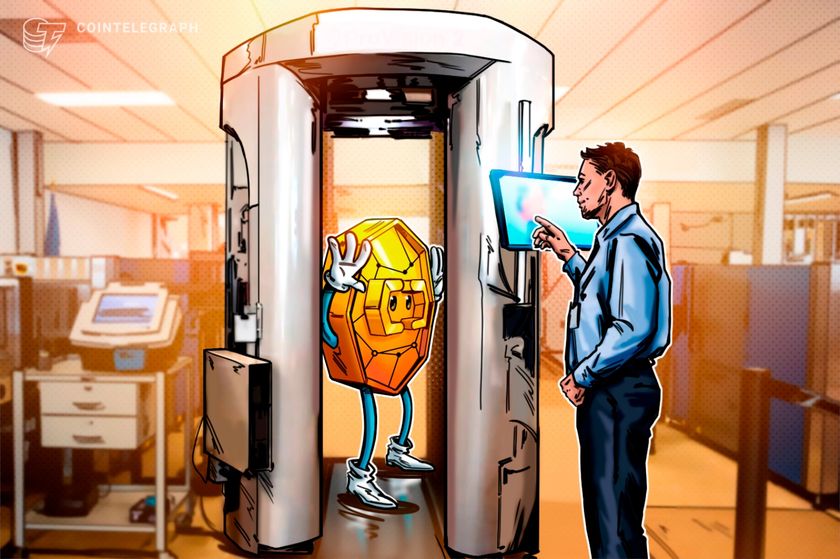 Hong Kong Customs and Excise Department teams up with the University of Hong Kong to build a crypto tracking tool amid a rise in money laundering cases involving digital assets. Hong Kong Customs and Excise Department is partnering with the University of Hong Kong to develop a digital tool to track cryptocurrency transactions in suspected money laundering schemes. On Thursday, Assistant Commissioner Mario Wong Ho-yin said customs officials would expand collaboration with academics, regional finance professionals and law enforcement to counteract increasingly complex and borderless financial crimes. “These money laundering threats are characterized by a transnational and borderless nature, and no single agency can tackle this problem alone,” Wong said during a media briefing, according to a report by the South China Morning Post. Read more
 -
CoinDesk - 13:55 Jun 12, 2025
The hacker laundered the ETH after the asset nearly doubled in the past two months.