Paxos | Crypto
"Paxos" in Crypto feed
-
Cointelegraph.com - 20:55 Mar 09, 2026
 The insurance broker is piloting stablecoin payments for premiums using USDC and PYUSD, testing blockchain settlement rails for faster payments in global insurance markets. Aon, one of the world’s largest insurance brokers, is testing the use of stablecoins to pay insurance premiums, highlighting the growing role of digital dollars in traditional financial infrastructure following the passage of the GENIUS bill last year. In a Monday announcement, UK-based Aon said it completed a pilot that settled insurance premiums for clients, including Coinbase and Paxos, using USDC (USDC) on Ethereum and PayPal USD (PYUSD) on Solana. Tim Fletcher, CEO of Aon’s financial services division, said the pilot reflects the company’s effort to explore stablecoins as a payment rail, predicting that tokenized assets will become more widely used in financial transactions. Read more
 -
Cointelegraph.com - 16:26 Dec 12, 2025
 The conditional approvals clear a path for major crypto companies to operate as national trust banks under the supervision of the US OCC. The US Office of the Comptroller of the Currency has conditionally approved five national bank charter applications for companies tied to the digital assets industry. In a Friday notice, the OCC said it had conditionally approved BitGo, Fidelity Digital Assets and Paxos to convert their existing state-level trust companies into federally chartered national trust banks. In the same announcement, the regulator said it had conditionally approved new applications from Circle and Ripple for national trust bank charters. “New entrants into the federal banking sector are good for consumers, the banking industry and the economy,” said Jonathan Gould, the Comptroller of the Currency, adding: “The OCC will continue to provide a path for both traditional and innovative approaches to financial services to ensure the federal banking system keeps pace with the evolution of finance and su...
 -
Cointelegraph.com - 19:43 Nov 25, 2025
 The addition of Fordefi’s MPC wallet infrastructure broadens Paxos’ regulated capabilities for custody, tokenization and institutional onchain operations. Blockchain infrastructure company Paxos has acquired Fordefi, a New York-based institutional crypto wallet and custody technology startup. Paxos said the deal brings its regulated custody infrastructure together with Fordefi’s multi-party computation (MPC) wallet technology and decentralized finance integrations, providing institutions with a single platform to issue stablecoins, tokenize assets, and manage onchain transactions. While transaction terms were not disclosed in today’s announcement, a Paxos spokesperson told Fortune the deal was worth more than $100 million. Read more
 -
Cointelegraph.com - 20:03 Nov 18, 2025
 The new omnichain token brings fully backed dollar liquidity to Hyperliquid, Plume and Aptos while keeping a single regulated supply across networks. Paxos Labs has launched USDG0, an omnichain extension of its regulated USDG stablecoin, bringing fully backed dollar liquidity to Hyperliquid, Plume and Aptos through LayerZero’s OFT standard. According to an X post from Paxos Labs on Tuesday, USDG0 extends USDG (USDG), a 1:1 dollar-backed stablecoin issued by Paxos and governed by the Global Dollar Network, to new chains without creating separate wrapped versions. By using LayerZero’s OFT standard, USDG0 can move across blockchains as a single native asset while preserving the same regulatory protections and backing as USDG on Ethereum, Solana, Ink and X Layer. Read more
 -
Cointelegraph.com - 21:02 Oct 15, 2025
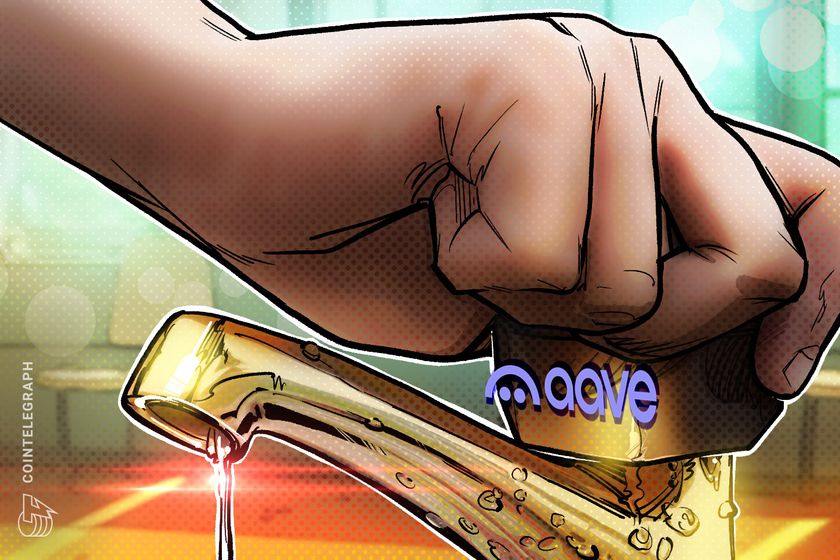 Crypto users were left scrambling on Wednesday after Paxos minted 300 trillion of PayPal's PYUSD stablecoin, then sent it all to a burn address. Blockchain data showed stablecoin issuer Paxos both minted and burned 300 trillion tokens of the PayPal USD stablecoin within 30 minutes, leaving many crypto users scratching their heads. In a Wednesday X post following the mint and burn, Chaos Labs founder Omer Goldberg said Aave would be temporarily freezing trades for PayPal USD (PYUSD) after an “unexpected high-magnitude transaction” of minting and burning the stablecoin. Ethereum blockchain data showed Paxos minting 300 trillion of the US dollar-pegged stablecoin at 7:12 pm UTC and then burning the entire amount 22 minutes later by sending it to an inaccessible wallet. PYUSD, pegged 1:1 to the US dollar, makes the supply of the burned coins worth about $300 trillion. The stablecoin has a market capitalization of more than $2.3 billion at this writing, making it the sixth-largest coin behind Tether’s USDt (USDT),...
 -
Cointelegraph.com - 10:57 Sep 10, 2025
 Paxos updated its bid to issue Hyperliquid’s USDH stablecoin, unveiling a PayPal-backed product with payment integration and a revenue model tied to the DEX’s growth. Stablecoin issuer Paxos has updated its proposal to issue USDH, the planned stablecoin of decentralized exchange (DEX) Hyperliquid, adding support from PayPal and Venmo. In a Wednesday announcement, Paxos updated its Saturday proposal to issue USDH. The firm stated that “PayPal has committed to supporting the Hyperliquid ecosystem,” by listing the HYPE token, supporting the new stablecoin with free on and off-ramps and supporting both USDH and Hyperliquid (HYPE) for PayPal checkout. PayPal would also provide $20 million in incentives committed to the HYPE ecosystem and integrate USDH into its payment app, Venmo, and money remittance service, Xoom. Paxos also stated that its regulatory standing in the European Union would allow its stablecoin to circulate there as well, “ensuring that USDH can scale globally.” Read more
 -
Cointelegraph.com - 07:31 Sep 07, 2025
 Paxos has proposed a fully compliant USDH stablecoin for the Hyperliquid ecosystem, with most of its yield funneled into HYPE token buybacks. Stablecoin infrastructure firm Paxos has submitted a proposal to launch USDH, a Hyperliquid-first stablecoin that would be fully compliant with the Guiding and Establishing National Innovation for US Stablecoins Act (GENIUS Act) and Markets in Crypto-Assets (MiCA) regulatory standards. According to the announcement, published on Saturday, 95% of interest earned from USDH reserves would be used to buy back Hyperliquid’s native token HYPE, redistributing it to users, validators and partner protocols. “We propose the launch of USDH, a Hyperliquid-first, fully compliant stablecoin purpose built to drive adoption, align incentives, and anchor the ecosystem’s next era of growth,” Paxos wrote. Read more
 -
Cointelegraph.com - 21:45 Aug 11, 2025
 Paxos has reapplied for a US national trust bank charter after its 2021 conditional approval expired. Paxos Trust Company, the crypto infrastructure company behind PayPal’s PYUSD stablecoin, has filed to convert its New York limited-purpose trust charter into a US national trust bank charter, renewing an effort that expired in 2023. If approved, the federal charter, issued by the Office of the Comptroller of the Currency (OCC), would allow Paxos to custody customer assets and settle payments nationwide under federal oversight, potentially boosting its appeal to institutional clients. Unlike traditional banks, a national trust bank cannot accept cash deposits or issue loans. “OCC oversight will help build on our historic commitment to maintaining the highest standards of safety and transparency," Paxos co-founder and CEO Charles Cascarilla said in a statement. Read more
 -
CryptoSlate - 17:45 Aug 07, 2025
The New York Department of Financial Services (NYDFS) has imposed a $48.5 million penalty on Paxos as part of its enforcement action against the stablecoin issuer, according to an Aug. 7 announcement. The settlement includes a $26.5 million civil monetary fine and mandates Paxos to spend an additional $22 million over three years to strengthen […] The post New York fines Paxos $48.5M over Binance-linked compliance lapses appeared first on CryptoSlate. -
Cointelegraph.com - 14:53 Aug 07, 2025
 The New York Department of Financial Services (NYDFS) said the fine was due to a lack of anti-money laundering oversight. Update Aug. 7, 21:06 UTC: This article has been updated to add a response from Paxos. The New York Department of Financial Services (NYDFS) reached a $48.5 million settlement with crypto infrastructure company Paxos over its partnership with Binance and alleged failure to uphold sufficient anti-money laundering provisions. Paxos agreed to pay New York state a $26.5 million penalty and will spend an additional $22 million to overhaul its compliance program, according to Thursday’s announcement. Read more
 -
Cointelegraph.com - 17:16 Jul 14, 2025
 Launched in November 2024, the USDG stablecoin has a total circulating supply of around $356 million. Crypto exchange OKX has joined the Global Dollar Network, a consortium promoting Paxos’ relatively smaller USDG stablecoin, in a move the exchange says could help accelerate adoption of a regulated US dollar-backed stablecoin. By joining the network, OKX’s 60 million global users will gain access to Global Dollar (USDG) for trading and transfers, the company announced Monday. OKX already supports several major stablecoins, including market leaders Tether (USDT) and USDC (USDC). Adding USDG — a newer, smaller entrant — could broaden access to regulated digital dollars through a project designed to operate within established regulatory frameworks. Read more