Russia | Crypto
"Russia" in Crypto feed
-
Cointelegraph.com - 18:19 Oct 06, 2026
 The digital ruble’s early uptake comes as BRICS nations explore linking their digital currencies for cross-border trade and payments. Early adoption of Russia’s central bank digital currency, the digital ruble, has vastly exceeded forecasts, with more than 220,000 accounts opened in its first month, offering an early test of whether CBDCs can move beyond pilot programs and gain real-world adoption. As Reuters reported Tuesday, Russian central bank Deputy Governor Zulfiya Kakhrumanova said the figure far exceeded the roughly 60,000 accounts officials had expected following the CBDC’s Sept. 1 launch. The rollout comes as BRICS, the bloc of major emerging economies that includes Russia, China and India, explores ways to link members’ CBDCs for cross-border payments. As Reuters reported, Russia accelerated development of the digital ruble after Western sanctions imposed over the war in Ukraine cut the country off from parts of the global financial system and complicated payments with major trading partners, inclu...
 -
Cointelegraph.com - 12:42 Oct 04, 2026
 Garantex was previously sanctioned by the US, the EU and other jurisdictions for helping Russian entities evade financial restrictions. The Japanese government has added Russian cryptocurrency exchange Garantex to its expanded list of sanctions against Russia, citing the continuing war in Ukraine. Officials added 33 organizations and nine individuals linked to Russia to its asset-freeze list that restricts payments and capital transactions with the targeted parties, according to a joint statement issued on Friday by Japan’s Ministry of Foreign Affairs, Ministry of Finance and Ministry of Economy, Trade and Industry. Garantex was previously sanctioned by the US, the EU and other jurisdictions for helping Russian entities evade financial restrictions. Read more
 -
Cointelegraph.com - 07:16 Oct 04, 2026
 Work on the introduction of the digital ruble to the budget process is being carried out by the Bank of Russia together with the Ministry of Finance. Russia’s Ministry of Finance said on Friday that some of its employees had received their wages in digital rubles for the first time. Being paid in the central bank’s digital currency is available for citizens of Russia on a voluntary basis, and began on Thursday, Oct. 1, according to a Ministry of Finance press release. The ministry did not disclose how many participants were paid in digital currency or the total payroll amount. Read more
 -
CryptoSlate - 16:30 Sep 28, 2026
Applications can begin under the new rules, while firms still need Bank of Russia decisions and retail asset eligibility remains separate. The post Russia lets crypto exchanges apply October 5 – but even Bitcoin lacks final retail clearance appeared first on CryptoSlate. -
CryptoSlate - 13:20 Sep 19, 2026
Trump’s new law sets the clock, but rates, targets and energy-market spillovers will decide whether crypto feels it. The post Bitcoin faces an October 18 test as Trump prepares new Russia tariffs appeared first on CryptoSlate. -
CryptoSlate - 16:35 Sep 01, 2026
All 12 systemically significant banks are ready, while the first retailer mandate applies only above a revenue threshold and with a qualifying bank agreement. The post Russia opens central bank digital currency to millions as 12 major banks and top retailers face rollout rules appeared first on CryptoSlate. -
CryptoSlate - 12:20 Sep 01, 2026
Most provisions took effect Sept. 1, but draft rules and a July 2027 transition limit what can operate now. The post Russia just switched on a crypto market that doesn’t fully exist yet appeared first on CryptoSlate. -
Cointelegraph.com - 09:45 Aug 30, 2026
 Russia’s largest bank, Sber, plans to accept USDT and Ether alongside Bitcoin as loan collateral as the country introduces regulated crypto trading under a new law. Russia’s largest bank, Sber, plans to expand its crypto-backed lending to accept Tether’s USDt stablecoin and Ether as collateral alongside Bitcoin, according to a senior executive. Sber will adapt its existing products and gradually expand its offerings as Russia’s new crypto law takes effect, Deputy Chairman Anatoly Popov said, according to a Friday TASS report. The bank plans to add the assets as collateral after the Bank of Russia permits them for public trading, he said. The plans come as Russia rolls out a regulated crypto market under a law signed by president Vladimir Putin on Aug. 4, with core provisions taking effect Sept. 1. Read more
 -
CryptoSlate - 20:40 Aug 12, 2026
The Bank of Russia’s proposed gate caps non-qualified residents at ₽300,000 per broker while qualified investors retain broader access. The post Russia picks Bitcoin, Ethereum and USDT for public trading as retail faces $58,000 cap appeared first on CryptoSlate. -
Cointelegraph.com - 12:09 Aug 11, 2026
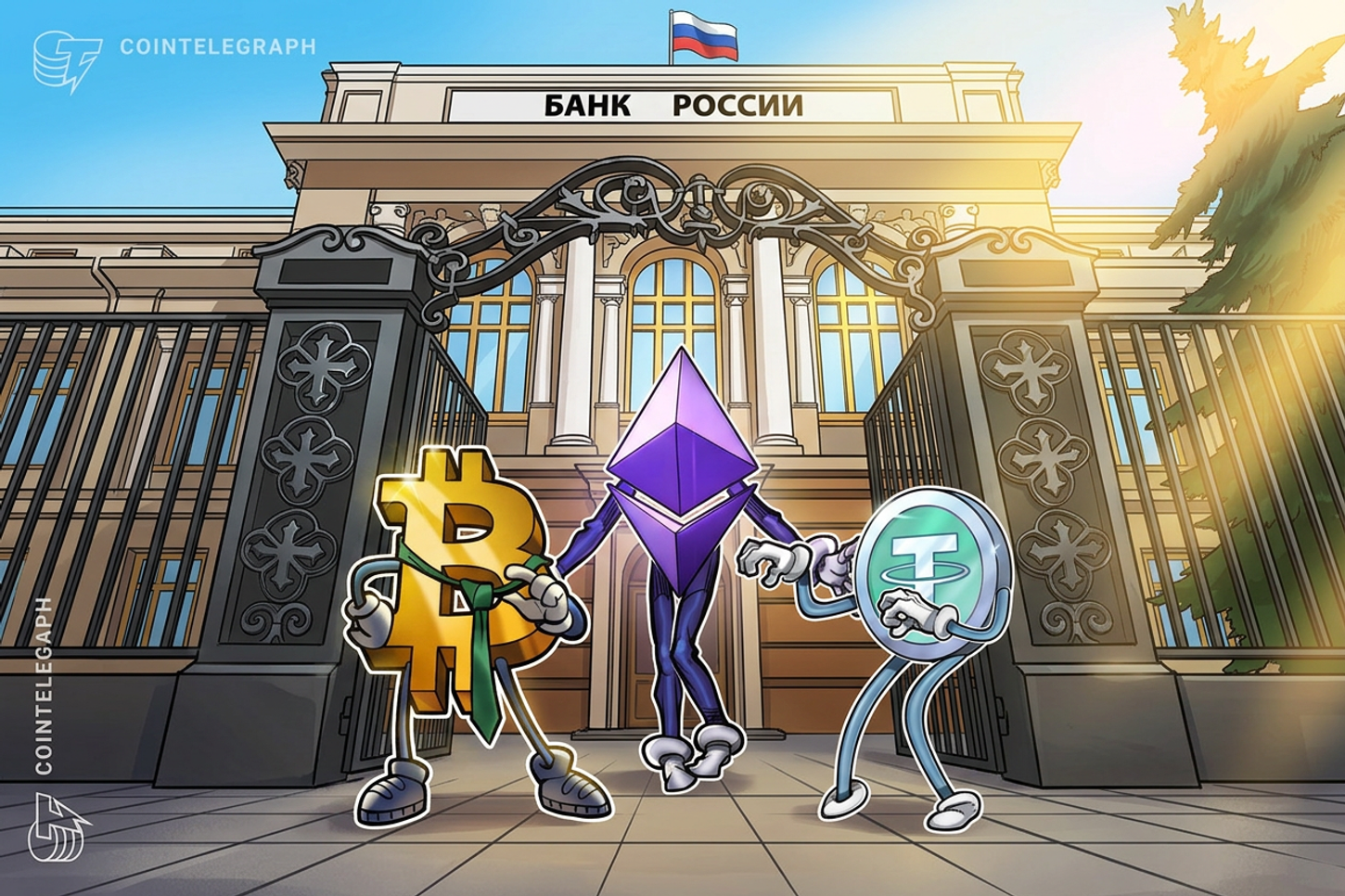 Russia’s central bank proposed allowing Bitcoin, Ether and USDT to trade on regulated exchanges, following a law signed by President Vladimir Putin last week. Russia’s central bank has compiled a proposed list of crypto assets that could be admitted to public trading on exchanges under new rules approved last week. The list includes Bitcoin, Ether and Tether’s stablecoin USDT, the Bank of Russia said Tuesday, adding that the assets meet criteria including market capitalization, average daily trading volume and at least five years of price history on overseas markets. The proposal follows a new law, signed by President Vladimir Putin on Aug. 4, that gives the Bank of Russia authority to determine which digital currencies can be admitted to organized trading and set related rules. Read more
 -
CryptoSlate - 11:45 Aug 10, 2026
U.S. persons must block and report covered property while foreign institutions risk sanctions for significant continued dealings. The post US sanctions exposed a $6.3 billion crypto pipeline linking Iran and Russia appeared first on CryptoSlate. -
Cointelegraph.com - 12:28 Aug 07, 2026
 Russia has shut down nine unregistered crypto exchanges in Moscow, with the FSB alleging they helped move scam proceeds abroad through Ukrainian call centers. Russia’s Federal Security Service (FSB) has raided nine unregistered crypto exchange services in Moscow over alleged money laundering involving fraud proceeds that authorities linked to Ukraine-based scam call centers. The agency said it detained more than 20 employees at the Moscow International Business Center (Moscow City) as part of an operation targeting channels allegedly used to move illicit funds abroad through crypto assets, according to an official statement on Friday. The FSB said the exchanges converted money stolen from Russian victims of phone scams into cryptocurrency and transferred it to accounts belonging to what it described as Ukrainian handlers. Read more
 -
Cointelegraph.com - 10:23 Aug 01, 2026
 Russia has added Moscow, the Moscow Region and parts of Kursk Region to its cryptocurrency mining ban list, citing power supply concerns behind the restrictions. Russia has expanded its cryptocurrency mining restrictions to Moscow, with the ban set to take effect on Aug. 15, 2026, and remain in place through Dec. 31, 2032. Russia’s Resolution No. 936, signed by Prime Minister Mikhail Mishustin on July 25, 2026, amends an earlier mining restriction order issued in December 2024, according to records published on Pravo.ru. The updated rules add Moscow, the Moscow Region and several territories in Russia’s Kursk Region to the list of restricted areas. The measure expands existing restrictions on cryptocurrency mining in areas facing electricity supply concerns. The ban also covers eight municipal districts and the city of Lgov in Kursk Region. Read more
 -
Cointelegraph.com - 19:54 Jul 30, 2026
 The Telegram founder said Russia designated him a terrorist after he refused government demands for mass surveillance and censorship on the messaging platform. Telegram founder Pavel Durov said Russian authorities designated him a “terrorist” after he refused government demands for mass surveillance and censorship on the messaging platform, responding publicly a day after Russia announced charges against him. In a Telegram post on Thursday, Durov also said Russia had barred him from “publishing information on the Internet,” adding that authorities had “got confused about who can ban whom from the Internet.” Source: Telegram, Pavel Durov Read more
 -
Cointelegraph.com - 13:26 Jul 30, 2026
 Russian authorities charged BitRiver founder Igor Runets with alleged fraud tied to a $8 million crypto mining equipment deal involving Russian billionaire Oleg Deripaska. Russian authorities have charged BitRiver founder Igor Runets with alleged fraud involving about 1 billion rubles ($12.5 million), expanding the criminal case against the executive of one of Russia’s largest crypto mining-linked companies. Runets was officially charged with large-scale fraud over an alleged failure to deliver crypto mining equipment under an $8 million contract, local news agency Pravo reported on Wednesday. Investigators allege that Fox, a company controlled by Runets, signed the contract in 2023 to supply the equipment to a company within an industrial group founded by businessman Oleg Deripaska. Authorities say that while the buyer paid $7.9 million upfront, the equipment was not delivered within the agreed 32-day period. Read more
 -
Cointelegraph.com - 11:18 Jul 29, 2026
 Russia’s FSB says Telegram founder Pavel Durov faces a terrorism-related charge and an international arrest warrant, while a separate French case remains open. [Update, 11:13 am UTC: Adds wanted list clarification in third paragraph.] Russian authorities have placed Telegram founder Pavel Durov on an international wanted list as they escalate a criminal case accusing him of facilitating terrorist activity. Russia’s Federal Security Service (FSB) said on Wednesday that it had charged Durov with facilitating terrorist activity and issued an international warrant for his arrest, local news agency Interfax reported. Read more
 -
Cointelegraph.com - 16:07 Jul 26, 2026
 Russia’s biggest bank plans to create cryptocurrency trading infrastructure by Dec. 1 as the country is set to establish rules for market participants while allowing crypto assets to be used in foreign trade operations. Sberbank, Russia’s biggest bank, plans to build cryptocurrency trading infrastructure including a digital depository no later than Dec. 1 as the country brings crypto trading, custody and settlement into its regulated financial system. That digital depository, Interfax reported, will record ownership of cryptocurrency and process most transactions outside of the main blockchain. Sberbank will operate active wallets for client-initiated deposits, withdrawals and transfers. “One of the key elements of the new infrastructure will be a digital depository, which will maintain records of clients’ cryptocurrency rights and account for transactions outside the main blockchain,” said Alexander Vedyakhin, first deputy chairman of Sberbank’s management board, the state-affiliated press service said. “It ...
 -
CoinDesk - 16:59 Jul 25, 2026
New regulations for crypto trading, custody, and settlement in Russia take effect Sept. 1, with requirements for licensed intermediaries applying from July 2027. -
Cointelegraph.com - 10:37 Jul 20, 2026
 Russia’s State Duma is set to consider the crypto regulation bill in second and third readings, with rules for investors and cross-border payments included. Russia’s parliament, the State Duma, is preparing to hold final readings on a bill to regulate the cryptocurrency market. The draft bill No. 1194918-8, titled “On Digital Currency and Digital Rights,” will undergo second and third readings on Tuesday, according to Anatoly Aksakov, chairman of the State Duma Committee on Financial Markets, as reported by RBC. The bill would introduce limits for non-qualified investors, including a 300,000 ruble ($3,800) annual limit on crypto purchases through a single intermediary and a 100,000 ruble limit for transfers abroad. Qualified investors would face higher limits of 3 million rubles for purchases and 1 million rubles for transfers abroad, respectively. Read more
 -
CryptoSlate - 19:45 Jul 07, 2026
The reported December launch matters because Russia’s new rules may make custody, limits, and compliance the price of legal access. The post Russia’s legal crypto on-ramp to arrive with a state-owned bank holding the keys appeared first on CryptoSlate.