South Korea | Crypto
"South Korea" in Crypto feed
-
Cointelegraph.com - 10:47 Mar 20, 2026
 South Korea’s tax agency is seeking a private custodian for seized crypto after a wallet seed phrase leak exposed government-held assets. South Korea’s National Tax Service (NTS) is moving to select a private custody provider for seized crypto assets after a February press release exposed a wallet recovery phrase and triggered the unauthorized transfer of confiscated tokens. On Feb. 26, the NTS accidentally exposed a crypto wallet seed phrase in an official press release, resulting in the unauthorized transfer of crypto tokens valued at about $4.8 million. The release included an image of a Ledger cold wallet and a sheet of paper showing the mnemonic phrase without being blurred. Citing people familiar with the matter, ZDNet Korea reported that the agency is reviewing a plan to outsource custody of confiscated crypto and is drafting selection criteria for providers. The NTS is reportedly aiming to select a provider within the first half of 2026. Read more
 -
Cointelegraph.com - 12:00 Mar 19, 2026
 The ruling Democratic Party responded, saying it has not formed a consensus on abolishing the tax but will review the new proposal. South Korea’s main opposition party has proposed scrapping a planned crypto tax ahead of its 2027 rollout, citing fairness, double taxation and enforcement concerns. According to a Thursday report by local media outlet eDaily, the conservative People Power Party (PPP) introduced a bill to amend the country’s Income Tax Act and remove provisions on digital asset income, aiming to abolish a planned tax on crypto asset gains ahead of its 2027 implementation. Under the upcoming rules, crypto gains exceeding 2.5 million Korean won will be subject to a 20% income tax and an additional 2% local tax starting on Jan. 1, 2027. The measure has already been delayed three times since its initial introduction. Read more
 -
Cointelegraph.com - 12:53 Mar 16, 2026
 Regulators found 6.65 million AML violations at Bithumb, including 45,772 crypto transfers involving 18 unregistered overseas VASPs. South Korea has fined crypto exchange Bithumb 36.8 billion won (about $24.5 million) and imposed a six-month partial business suspension after finding widespread violations of Anti-Money Laundering (AML) rules, according to a Yonhap News Agency report. According to Yonhap, regulators identified about 6.65 million violations during an AML inspection, including failures related to customer identity verification, transaction restrictions and record-keeping requirements. Authorities found Bithumb facilitated 45,772 crypto transfers involving 18 unregistered overseas virtual asset service providers (VASPs), in violation of South Korea’s AML rules. The Financial Intelligence Unit (FIU) under the Financial Services Commission (FSC) reportedly decided on the penalties following a sanctions deliberation committee meeting reviewing the exchange’s compliance with the Act on Reporting and...
 -
Cointelegraph.com - 12:12 Mar 16, 2026
 Hana Financial Group will collaborate with Standard Chartered on digital assets following its stablecoin partnership with USDC issuer Circle earlier in March. Hana Financial Group, one of South Korea’s largest financial conglomerates, has partnered with Standard Chartered on finance and digital assets. On Sunday, Hana Financial said it signed a business agreement with the United Kingdom’s Standard Chartered Group (SC Group) for cooperation in global financial business and digital asset fields, Yonhap News reported. The agreement covers collaboration in various global financial sectors, including investment banking, money markets, foreign exchange and digital assets. Read more
 -
Cointelegraph.com - 12:18 Mar 12, 2026
 The National Tax Service has opened a procurement bid for a platform to analyze crypto trading data and flag potential tax evasion. South Korea’s tax authority is preparing to deploy artificial intelligence to track cryptocurrency investment gains as the government moves closer to implementing a long-delayed tax on digital assets. According to a report by The Korea Times on Thursday, South Korea’s tax authority has opened a bid to build an AI-backed system to analyze cryptocurrency transaction data, as the government prepares for its planned 2027 tax on digital asset gains. The project, valued at about 3 billion Korean won (around $2 million), will establish an integrated platform capable of processing large volumes of crypto trading data. The Korea Times reported that the NTS plans to use AI and machine learning to identify unusual transaction types and patterns and detect possible tax evasion. Read more
 -
CryptoSlate - 09:55 Mar 12, 2026
South Korea's move to suspend Bithumb over AML failures turns a local compliance case into a market-structure story. Enforcement against the country's second-largest exchange threatens to reroute retail flows, deepen venue concentration, and degrade one of crypto's most-watched regional pricing signals: the kimchi premium. Compliance case hits market plumbing The Korea Financial Intelligence Unit sent […] The post Why Bitcoin’s kimchi premium is on life support after South Korea targets crypto exchange appeared first on CryptoSlate. -
Cointelegraph.com - 12:18 Mar 10, 2026
 Authorities sold the recovered Bitcoin in small batches over 11 days to avoid disrupting the market, according to local media reports. South Korean prosecutors have sold 320.8 Bitcoin recovered after a phishing incident temporarily removed the crypto from government custody. The Gwangju District Prosecutors’ Office said it sold 320.8 Bitcoin (BTC) at market prices and transferred 31.59 billion Korean won (about $21.5 million) to the national treasury, The Chosun Ilbo reported Tuesday. Authorities reportedly sold the Bitcoin in small batches over 11 days between Feb. 24 and March 6 to avoid disrupting the market. Read more
 -
Cointelegraph.com - 14:00 Mar 09, 2026
 Crypto exchange Bithumb risks a partial business suspension for negligence around money laundering and customer verification practices, according to local media reports. Bithumb, South Korea’s second-largest cryptocurrency exchange by trading volume, is reportedly facing a possible partial business suspension of up to six months as regulators step up enforcement over anti-money laundering controls. South Korea’s Financial Intelligence Unit (FIU) gave Bithumb a preliminary notice of a six-month partial suspension over alleged anti-money laundering and know-your-customer failures under the Act on Reporting and Using Specified Financial Transaction Information, according to local media reports on Monday. The regulator reportedly cited concerns over dealings with unregistered overseas virtual asset service providers and shortcomings in customer due diligence. The FIU also issued a reprimand warning to Bithumb’s CEO, a warning considered a heavy penalty, which may lead to restrictions on his reappointment or futur...
 -
Cointelegraph.com - 13:01 Mar 04, 2026
 South Korea’s government and ruling party reportedly agreed on a proposal to cap major shareholder stakes in crypto exchanges at 20%, with limited exemptions for new operators. South Korea’s government and ruling party have reportedly agreed on a plan to cap the ownership stakes of major shareholders in domestic crypto exchanges at 20%. The Democratic Party of Korea’s digital asset task force and the Financial Services Commission (FSC) agreed to set the maximum shareholding limit at 20% after discussions, according to a Wednesday report by local media outlet Herald Economy. However, regulators may allow exceptions of up to 34% for new businesses through an enforcement decree. The threshold references the Commercial Act’s 33.3% veto threshold in general shareholders’ meetings, per the report. Read more
 -
Cointelegraph.com - 08:16 Mar 02, 2026
 Deputy Prime Minister Koo Yun-cheol ordered an inter-agency review of seized crypto wallets after the National Tax Service exposed a seed phrase in a press release. South Korea’s Deputy Prime Minister and Minister of Economy and Finance, Koo Yun-cheol, announced a cross-agency sweep of how the government and public institutions handle seized digital assets after the National Tax Service (NTS) accidentally leaked a wallet seed phrase in a press release photo on Thursday. Officials published an image of a hardware wallet showing the full recovery phrase. Authorities lost roughly 4 million Pre-Retogeum (PRTG) tokens worth about 6 billion won ($4.8 million) from a confiscated wallet as a result. In a post on X, Yun-cheol said that the government, alongside the Financial Services Commission and Financial Supervisory Service, would review the status and management of all digital assets seized from delinquent taxpayers and “promptly” strengthen security controls. Read more
 -
Cointelegraph.com - 14:06 Feb 27, 2026
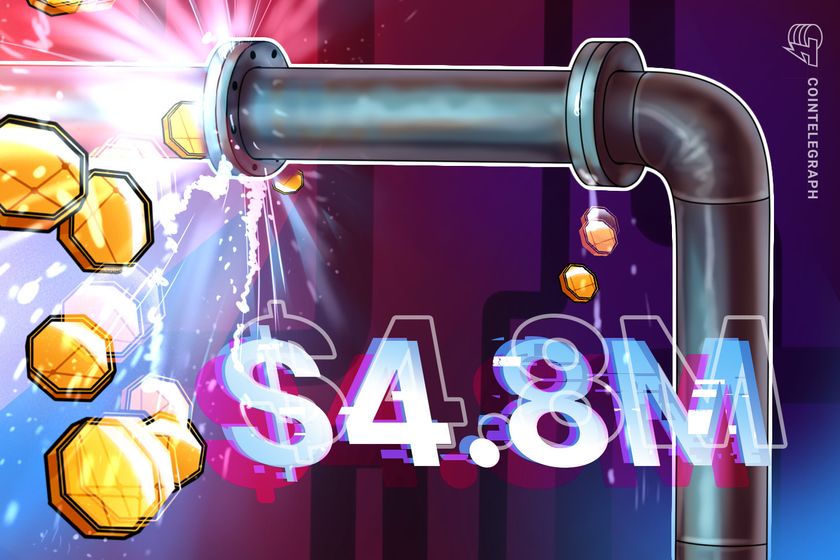 South Korea’s National Tax Service reportedly published a wallet seed phrase in a press release, and tokens worth $4.8 million were swiftly drained in the latest custody blunder for the authorities. South Korea’s National Tax Service (NTS) accidentally exposed a crypto wallet seed phrase in an official press release on Thursday, leading to a loss of 4 million PRTG (Pre‑Retogeum) tokens worth about $4.8 million from the address, according to local media reports. According to multiple Korean media reports on local sites Naver, Chosun and others, the press release related to the National Tax Service’s enforcement campaign against tax delinquents and seizures that the authorities had carried out. The release reportedly included an image of a Ledger cold wallet and a sheet of paper showing the wallet’s full mnemonic phrase without any blur or masking. Blockchain researchers later identified an Ether (ETH) address linked to the leaked phrase that briefly held the 4 million PRTG tokens before the entire balance was...
 -
Cointelegraph.com - 12:43 Feb 25, 2026
 A proposed law would require online investment influencers to reveal their holdings and paid promotions, with penalties potentially comparable to market manipulation violations. South Korea is reportedly preparing new rules that would force social-media personalities promoting cryptocurrencies and stocks to reveal what they own and whether they are being paid. Democratic Party lawmaker Kim Seung-won, a member of the National Assembly’s Political Affairs Committee, is drafting amendments to the Capital Market and Financial Investment Business Act and the Act on the Protection of Virtual Asset Users, according to a report from Korean-language business news website Herald Business. Under the proposal, individuals who repeatedly offer advice or receive compensation to encourage the public to buy or sell financial products or virtual assets must disclose the compensation received and the type and quantity of assets they hold. The requirement would apply to advice delivered through publications, online communicatio...
 -
Cointelegraph.com - 16:27 Feb 17, 2026
 South Korea reopens crypto to corporations with strict caps and asset limits. This is part of a broader strategy that includes stablecoin legislation and potential spot crypto ETFs. South Korea is ending a nine-year ban on corporate crypto trading, allowing listed entities and professional investment companies to reenter the market under a regulated framework. Corporate participation will be tightly controlled, with investments capped at 5% of annual equity capital and limited to the top 20 cryptocurrencies traded on regulated domestic exchanges. Institutional entry may gradually improve liquidity and market structure, but strict limits mean large capital inflows from corporate treasuries are unlikely in the short term. Read more
 -
Cointelegraph.com - 16:52 Feb 12, 2026
 A mistaken Bitcoin payout revealed how exchange ledgers work and why South Korea is rethinking internal controls for crypto platforms. A simple data-entry error allowed 620,000 nonexistent BTC to appear in user accounts for 20 minutes because trades update a private database first, with onchain settlement happening later. Around 1,788 BTC worth of trades were executed before the exchange locked everything down. What could have been dismissed as a harmless error turned into a serious operational and regulatory event. Regulatory filings showed Bithumb held only 175 BTC of its own in Q3 2025, while it held custody of over 42,000 BTC for customers. This highlights how heavily the system depends on accurate internal accounting. Read more
 -
Cointelegraph.com - 11:01 Feb 10, 2026
 South Korean authorities launched an investigation into Bithumb after it mistakenly credited 620,000 BTC to users, adding to concerns about “paper Bitcoin” and internal controls. South Korea’s financial watchdog opened an investigation into Bithumb after the exchange mistakenly credited hundreds of thousands of Bitcoin that it did not actually hold to user accounts. The Financial Supervisory Service (FSS) launched a probe into Bithumb for alleged platform violations around the erroneous crediting of billions of dollars in non-existent Bitcoin (BTC) to user accounts, Yonhap News reported Tuesday. Bithumb acknowledged the incident on Saturday, saying the platform “incorrectly paid” 620,000 BTC ($42.8 billion) to users during a promotional event. Read more
 -
Cointelegraph.com - 08:19 Feb 09, 2026
 South Korea’s financial watchdog detailed planned investigations into high-risk trading tactics as it prepares the next phase of crypto regulation, Yonhap News Agency reported. South Korea’s Financial Supervisory Service (FSS) said it will step up scrutiny of suspected cryptocurrency price manipulation in 2026, outlining a slate of planned investigations that target high-risk trading tactics, including “whale” activity and schemes that exploit disruptions at local exchanges, local outlet Yonhap reported Monday. According to Yonhap News Agency, FSS Governor Lee Chang-jin said that the agency will target high-risk trading practices that undermine market order, including coordinated manipulation and schemes exploiting disruptions in exchange infrastructure. The FSS said the probes will focus on tactics that involve large-scale trading by whales, artificial price swings during exchange deposit or withdrawal suspensions and coordinated trading mechanisms using APIs or social media to spread false information. Re...
 -
Cointelegraph.com - 11:22 Feb 05, 2026
Recent volatility reviews, new surveillance systems and a landmark court ruling show how South Korea is enforcing stricter oversight of crypto markets. South Korean regulators are stepping up oversight of the domestic cryptocurrency market, signaling a faster, more coordinated approach to detecting suspicious trading activity amid renewed volatility. The heightened scrutiny was highlighted after South Korea's Financial Supervisory Service (FSS) said it was reviewing sharp price movements in the ZKsync token listed on Upbit, following extreme volatility concentrated around a system maintenance window, according to The Korea Economic Daily (Hankyung). The FSS said it was analyzing data and could escalate the review into a formal investigation, depending on the findings. Read more -
Cointelegraph.com - 13:19 Feb 04, 2026
Crypto trading may be huge in South Korea, but just over the border, crypto hacking accounts for around 13.5% of North Korea’s GDP. -
Cointelegraph.com - 13:19 Feb 04, 2026
Crypto trading may be huge in South Korea, but just over the border, crypto hacking accounts for around 13.5% of North Korea’s GDP. -
Cointelegraph.com - 13:19 Feb 04, 2026
Crypto trading may be huge in South Korea, but just over the border, crypto hacking accounts for around 13.5% of North Korea’s GDP.