Dawn
Source:
https://www.dawn.com
Found 12682 news
-
Dawn - 02:43 Aug 11, 2026
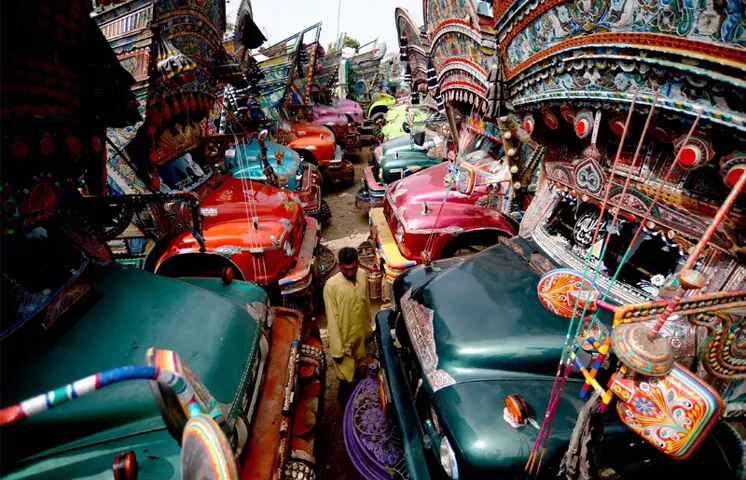 KARACHI: A driver passes between trucks parked at the Shireen Jinnah colony terminal, as a wheel-jam strike called by goods transporters affected the movement of cargo across the country for a third consecutive day. Talks between transporters and the government are expected to continue today.—PPI • Next round of talks with govt today • KCCI offers to mediate between both sides ISLAMABAD/KARACHI: Talks between striking transporters and the government continued until late Monday night with both sides holding firm on their demands as the deadlock persisted, mainly over fuel pricing and taxes. The next round of negotiations will be held today. As oil tankers, edible oil tankers, trailers, goods transport trucks, etc. went off the road on Friday night ahead of the scheduled strike from Saturday, the government offered talks with the collective body of the striking transporters. As the first round of talks held on Monday morning remained inconclusive with both sides unwilling to yield any ground, the second round o...
 -
Dawn - 02:30 Aug 11, 2026
• Says sanctions under ITO 2001 cannot apply to assessments governed by repealed law • Settles conflict between two previous rulings ISLAMABAD: The Supreme Court on Monday ruled that penalties imposed under the Income Tax Ordinance (ITO) 2001 for assessments completed before June 30, 2002 were illegal and legally unsustainable, emphasising that such penalties could not be applied retrospectively. A five-judge SC larger bench, headed by Justice Shahid Waheed, also resolved a conflict between two decisions of three-member benches — the 2009 Eli Lilly Pakistan (Pvt) Ltd case and the 2016 Islamic Investment Bank Ltd case. The question before the SC was whether penalties under Sections 182, 184 and 186 of the ITO 2001 were lawful in view of the provisions of Section 239(3) of the ordinance. Authored by Justice Aqeel Ahmed Abbasi, the 17-page judgement explained that in the Eli Lilly Pakistan case, the court had held that assessments completed under the repealed ITO 1979 must be governed strictly by the old law, wh... -
Dawn - 01:47 Aug 11, 2026
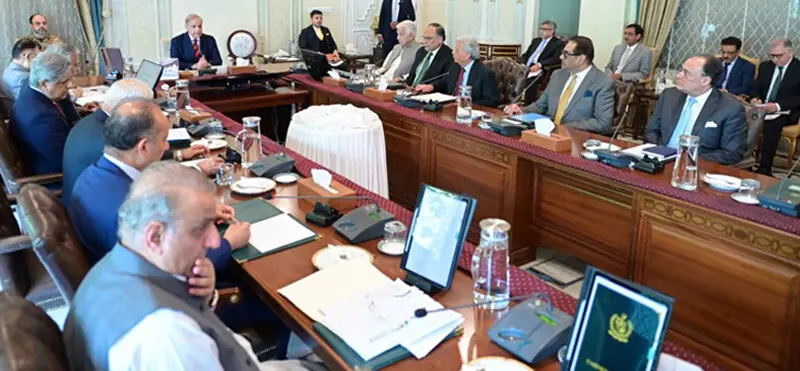 PM Shehbaz Sharif chairs a meeting of the federal cabinet.—Online ISLAMABAD: The federal cabinet on Monday approved the National Housing Policy 2026 along with an action plan for its implementation, directing that housing projects comply fully with zoning laws and that vertical construction be prioritised to make more efficient use of land. The meeting was chaired by Prime Minister Muhammad Shehbaz Sharif in Islamabad. The cabinet was told that the policy had been prepared by a working group made up of national and international experts, and that federal ministries, provincial governments and development partners had been consulted during the drafting process. Its core objective, members were informed, is the provision of sustainable, safe and quality housing for all citizens. Alongside the zoning and vertical-housing directives, the cabinet instructed that energy-efficiency codes be made an integral part of the National Housing Policy, so that new construction conforms to energy-efficient and environmentally...
 -
Dawn - 01:47 Aug 11, 2026
KARACHI: As Pakistan faces one of the gravest development challenges of our time, DawnMedia is set to host a landmark national conference on malnutrition and stunting. ‘Act for Nutrition’ will be held on Sept 2 and 3 at the Serena Hotel, Islamabad, to shed light on “the emergency we can no longer ignore”, DawnMedia said in a statement. According to the statement, about 40 per cent of children in Pakistan under the age of five are stunted, while the country has one of the highest child malnutrition numbers in the world. “Maternal malnutrition, widespread micronutrient deficiencies, food insecurity, poor infant feeding practices, rapid population growth and persistent poverty continue to reinforce a cycle of deprivation that spans generations,” the statement said. According to recent estimates, Pakistan loses nearly $17 billion annually due to the economic consequences of malnutrition and undernutrition. Recognising nutrition as fundamentally an economic, governance and developmental challenge, and not solely a... -
Dawn - 19:56 Aug 10, 2026
The PML-N appeared set to gain at least one seat in Poonch division, where four constituencies went to the polls on Monday amid allegations of rigging, violence and disruption, with polling suspended at some places. The biggest upset was the defeat of Muslim Conference president Sardar Attique Ahmed Khan in LA-14 (Dhirkot), a constituency from where he, and before him his uncle and father, had been elected in all nine elections since 1985. His defeat also appeared to underscore the political decline of what was once the largest and longest-ruling party in Azad Jammu and Kashmir (AJK), but was reduced to a marginal force following the emergence of the PML-N in 2010. Khan was defeated by Sajid Iqbal Abbasi, who contested his first election on the ticket of the little-known Awami Dast-o-Bazu Party, by a margin of more than 21,000 votes, according to unofficial and unverified results from 213 of the 214 polling stations. Observers attributed Abbasi’s victory largely to his hands-on efforts for the development of ... -
Dawn - 18:48 Aug 10, 2026
 At least 100 people were killed after a powerful earthquake struck western Colombia early on Monday, knocking down buildings across several cities and injuring at least 87 more, with still others trapped in the rubble. The quake struck just days after Abelardo De La Espriella was sworn in as president, thrusting the new administration into its first major crisis, with memories still fresh of devastating twin earthquakes in neighboring Venezuela in June. The Colombian geological service and its American counterpart, the US Geological Survey, put the magnitude at 7.4. Colombia had initially put it at 6.6. The quake, according to USGS, struck at a depth of 107km near San Jose del Palmar, in Choco, a sparsely populated province on Colombia’s Pacific Coast, but was felt in major cities nationwide. “Significant casualties and damage are likely and the disaster is potentially widespread,” the agency warned. The highest reported death toll was in the western province of Risaralda in Colombia’s coffee-growing region, ...
 -
Dawn - 18:38 Aug 10, 2026
The government on Monday kept the prices of petrol and high-speed diesel unchanged as Platts prices were not published on August 10. Petrol will continue to be sold at Rs327.62 per litre, while HSD will cost Rs380.86 per litre. The government continues to levy Rs114 per litre in taxes and duties on petrol and Rs100 per litre on HSD. According to the Petroleum Division’s notification, the new prices will be applicable on August 11. The price of HSD has come down from a peak of Rs520.35 recorded on April 3. Its price had started rising from Rs281 per litre after the US-Iran war broke out on February 28. The petrol price had peaked at Rs458.41 on April 3 after beginning its upward trajectory from Rs266 in the first week of March. Earlier, Petroleum Minister Ali Pervaiz Malik announced that fuel prices would now be fixed on a daily basis due to fluctuations in international market prices following renewed hostilities between Iran and the US. The government had been announcing weekly revisions to fuel prices since... -
Dawn - 17:30 Aug 10, 2026
At least 77 people were killed after a powerful earthquake struck western Colombia early on Monday, knocking down buildings across several cities and leaving others trapped in the rubble. The quake struck just days after Abelardo De La Espriella was sworn in as president, thrusting the new administration into its first major crisis, with memories still fresh of devastating twin earthquakes in neighboring Venezuela in June. The Colombian geological service and its American counterpart, the US Geological Survey, put the magnitude at 7.4. Colombia had initially put it at 6.6. The quake, according to USGS, struck at a depth of 107km near San Jose del Palmar, in Choco, a sparsely populated province on Colombia’s Pacific Coast, but was felt in major cities nationwide. “Significant casualties and damage are likely and the disaster is potentially widespread,” the agency warned. The highest reported death toll was in the western province of Risaralda in Colombia’s coffee-growing region, where Governor Juan Diego Patin... -
Dawn - 17:20 Aug 10, 2026
A new investigation team formed by the Sindh IGP on Monday initiated formal proceedings into the murder of business owner Mir Raza Ali, following the findings of a second post-mortem examination. Owner of eatery Wafflix, Ali had gone missing on July 28, and his body was found a day later with a gunshot wound in bushes in Karachi’s Gulistan-i-Jauhar. The deceased’s family, along with their lawyer, Jibran Nasir, met members of the new investigation team at the DIG Crime office. The team also met investigators from the previous team and obtained records related to the case. DIG Crime and Investigation Amir Farooqi, who heads the new team, told Dawn that the investigators heard the family and their lawyer in detail about the circumstances surrounding Ali’s murder. “The police will keep the family informed of all steps being taken to solve the case,” he said. He said the new team had obtained the investigation records from the previous team to review the entire case file. Sindh Home Minister Ziaul Hassan Lanjar sa... -
Dawn - 16:49 Aug 10, 2026
Khyber Pakhtunkhwa Chief Minister Sohail Afridi on Monday said PTI’s political leadership and its ally, the Tehreek Tahaffuz-i-Ayeen Pakistan (TTAP), were on board with the call for a long march to Islamabad on September 27. Speaking on Geo News programme ‘Capital Talk’, CM Afridi said, “The PTI’s political leadership across the country and its ally, the TTAP, are all on board with the long march, and they collectively agreed on September 27 as the date for it.” Responding to a question about Imran Khan’s sister Aleema Khan’s reservations over the date, he said she was a “non-political individual” and would agree to the date once the PTI apprised her of all the facts and figures. CM Afridi also denied allegations by a PTI member currently residing outside Pakistan that he had met Interior Minister Mohsin Naqvi before finalising the date for the long march. “That allegation was rubbish. At the time of the alleged meeting, I was at KP House in Islamabad, contrary to the claim that I had met him in Peshawar,” he... -
Dawn - 16:05 Aug 10, 2026
PESHAWAR: The Peshawar High Court (PHC) on Monday granted transit bail to Noreen Niazi, the sister of incarcerated PTI founder Imran Khan, in a case registered under the Peca Act 2016, directing her to appear before the relevant Islamabad court on or before August 20. In July, the National Cyber Crime Investigation Agency (NCCIA) registered a case against Noreen, accusing her of passing derogatory and inflammatory remarks against state institutions during a podcast interview and in subsequent clips shared on X. A single-member PHC bench comprising Justice Arshad Ali heard Noreen’s petition, represented by a panel of lawyers, including Ali Zaman, Amir Zeb and Barrister Sarwar Muzaffar Shah In its order issued on Monday, the bench stated that the petitioner had approached the court seeking transit bail in connection with a first information report (FIR) registered against her at the NCCIA police station in Islamabad on July 27 under various provisions of the Peca Act 2016 and the Pakistan Penal Code, enabling h... -
Dawn - 16:01 Aug 10, 2026
Police in eastern India used tear gas, batons and water cannon to disperse thousands of youth protesters as they marched on the state legislature in Jharkhand state on Monday over alleged wrongdoing in civil service examinations, TV footage showed. Students and unemployed youth in Jharkhand, one of India’s poorer states, launched the protests late last month over the alleged wrongdoing, including recruitment test paper leaks. The protest follows weeks-long youth-led demonstrations in the capital, Delhi, also linked to exam paper leaks, which led to the resignation of the country’s Education Minister Dharmendra Pradhan last month. Police and paramilitary forces used tear gas, pellet guns and batons in Delhi to scatter some 50,000 youth protesters, some of whom clashed with police. The demonstrations were seen as a reflection of their anger over corruption in education, a lack of opportunities and unemployment. The demands of protesters in Jharkhand include an overhaul of the state’s examination system, cancell... -
Dawn - 15:36 Aug 10, 2026
Prime Minister Shehbaz Sharif on Monday affirmed that the recently signed Makkah Joint Defence Agreement was “entirely for defensive purposes”, and not for any aggression. The joint defence agreement, signed on August 7 between Pakistan, Saudi Arabia and Turkiye, aims to strengthen collective deterrence and empowers its signatory states to treat an attack against one of them as an attack against all of them. Addressing the federal cabinet on Monday, PM Shehbaz recalled that he, Saudi Crown Prince Mohammed bin Salman and Turkish President Recep Tayyip Erdogan signed the pact in Makkah on Friday. The prime minister stressed that the objective of the pact is to “promote peace, progress, and prosperity in the region”. “Its purpose is definitely not that any aggression occurs. It is entirely for defensive purposes, for peace, tranquillity and progress in the region,” he affirmed. “I believe this agreement is a source of strength not just among these three countries, but for the entire Muslim ummah,” he noted. PM S... -
Dawn - 14:12 Aug 10, 2026
The sudden change in the office of the secretary of Iran’s Supreme National Security Council (SNSC), amid the volatile situation in the Gulf and with the Oman-Iran talks on the future of the Strait of Hormuz yet to produce a final arrangement, has implications that extend beyond Iran’s internal affairs. The key appointment in fact signals a shift in the structure through which Tehran’s national security decisions are being processed and, potentially, a resetting of its game plan, even though there is little evidence so far of any change in the strategic objectives that have guided Iran through the conflict. The replacement of Bagher Zolghadr by veteran Islamic Revolutionary Guard Corps (IRGC) commander Mohsen Rezaei is significant because the SNSC, constituted under Article 176 of Iran’s Constitution, brings together the country’s top civilian, military and judicial leadership for deliberation on defence and foreign policy, with its decisions requiring confirmation by the Supreme Leader. Its secretary, howeve... -
Dawn - 12:36 Aug 10, 2026
Polling in four constituencies of Poonch Division’s Bagh and Haveli districts concluded on Monday as part of the third phase of Azad Jammu and Kashmir (AJK) elections. Elections are being held across AJK in phases amid tensions between protesters and the authorities. Citing law and order concerns, the Election Commission had decided to postpone polling in Bagh and Sudhnoti districts that was originally set for today. On Monday, polling began at 8am and continued until 5pm in four Poonch constituencies. The PPP, which has accused the PML-N of rigging in the previous phases, continued to make similar allegations on Monday as well. In response, PML-N leaders said the PPP had no evidence for its claims, and reiterated their confidence to form the government in AJK based on the seats it has already secured so far. The PML-N has so far bagged 24 seats — nine from Mirpur polls held on July 27 and 15 in the second phase comprising Muzaffarabad Division and the 12 refugee seats. On the other hand, the PPP has only won... -
Dawn - 11:53 Aug 10, 2026
The third phase of elections in Azad Jammu and Kashmir (AJK) is currently underway in four constituencies in Poonch Division’s Bagh and Haveli districts, with the PPP alleging rigging in the fresh round of polls as well. Polling began at 8am and will continue until 5pm. Government officials have anticipated clashes in some areas, while the Election Commission has classified most of the 803 polling stations in the four constituencies as either sensitive or highly sensitive. “Apart from the regular police of both districts, we have dispatched an additional 10,300 troops to maintain law and order and provide a fear-free atmosphere to voters,” Election Commission Secretary Raja Mohammad Shakeel told Dawn earlier. Elections are being held across AJK in phases amid tensions between protesters and the authorities. Polling in Mirpur and Muzaffarabad divisions was held on July 27 and Aug 2, respectively, with the PML-N securing 24 seats. The PPP has only secured 10 seats so far. The third phase of the polls was origi... -
Dawn - 11:52 Aug 10, 2026
In a letter to Prime Minister Shehbaz Sharif, National Assembly Opposition Leader Mehmood Khan Achakzai on Monday urged the appointment of a new chief election commissioner of the Election Commission of Pakistan, as well as two members representing Sindh and Balochistan. In the letter, dated August 10 and available with Dawn, Achakzai, who heads the Tehreek Tahafuz Ayeen-i-Pakistan (TTAP) and is chairman of the Pakhtunkhwa Milli Awami Party, drew the prime minister’s attention to a “critical constitutional duty” and stated that the statutory tenure of the CEC and the members representing Sindh and Balochistan had ended on January 26, 2025. To that effect, he urged the “immediate filling” of the offices, terming it “essential for maintaining the operational continuity, independence, and credibility of the commission”. In his letter, Achakzai cited two provisions of the Constitution, including Article 213(2A), which he said “mandates that the prime minister shall, in consultation with the leader of the oppositi... -
Dawn - 11:51 Aug 10, 2026
Sindh Home Minister Ziaul Hassan said on Monday the provincial government had deferred the decision on the formation of a judicial commission to probe the Mir Raza Ali murder case. Lanjar made the announcement on X, saying that Karachi Mayor Murtaza Wahab had spoken to Ali’s family had “confidence in the new police team” constituted to investigate the case and was of the view that it should conduct the probe. “Therefore, the decision of establishing a judicial commission has been deferred for the time being,” he said. An IBA graduate and the owner of eatery Wafflix, Ali had gone missing on July 28, and his body was found a day later with a gunshot wound in bushes in Karachi’s Gulistan-i-Jauhar. While his family was convinced that he was kidnapped, tortured and murdered, police had previously been building the case around the possibility that he died by suicide. A murder charge was eventually added to the first information report after the exhumation and a second postmortem of Ali’s body revealed that he had s... -
Dawn - 11:45 Aug 10, 2026
FIFA President Gianni Infantino came under renewed fire on Monday as a joint letter from three confederations — European football’s governing body UEFA, Confederations of North America, Central America and the Caribbean (CONCACAF) and Asia (AFC) — declared football “belongs to no individual”. Infantino has been the butt of scathing criticism ever since launching, and then withdrawing within days, a plan to bring private investment into FIFA competitions, including World Cups. FIFA had hit back on Saturday at “a concerted and ongoing effort by some to undermine” football’s governing body and Infantino. However, Monday’s letter from UEFA, CONCACAF and AFC showed his critics are unbowed. “Leadership in football is not a possession. It is not about holding — or demanding — power to be held,” they wrote. “When trust is broken through deception, when an individual places himself above the collective that entrusted him with authority, that duty has been abandoned,” the confederations added. The three confederations ... -
Dawn - 10:57 Aug 10, 2026
BANNU/SWAT: A terrorist attack on the Chatkekal police post near Jarogo Waterfall in Upper Swat was foiled after police personnel mounted a strong counterattack late on Sunday night, District Police Officer (DPO) Mushtaq Ahmad said. According to police, more than 12 terrorists surrounded the post and opened fire from all sides. The police personnel deployed at the post immediately retaliated with effective gunfire, forcing the attackers to retreat and flee the area. Initial reports suggest that two terrorists were injured in the exchange of fire. Security personnel have intensified surveillance in the area, while further details are being ascertained. The DPO praised the personnel deployed at the post for their prompt response and bravery, saying Swat police remained at the forefront of the fight against terrorism. “Such cowardly attacks cannot demoralise Swat Police. Our personnel know how to respond effectively to terrorist attacks,” he said. The attempted attack came a week after a suicide bombing near the...
12682 items