Dawn
Source:
https://www.dawn.com
Found 12682 news
-
Dawn - 10:21 Mar 30, 2026
The government is undertaking efforts to provide relief to the lower and middle classes amid a fuel price hike triggered by the global fuel crisis due to the Iran war, Prime Minister Shehbaz said on Monday. Over the past few weeks, the government has rolled out a series of austerity measures to minimise fuel consumption and announced significant cuts in development spending and restrictions on non-essential expenditures. In a meeting chaired by the premier to review the impact of the Middle East war on petroleum stocks in Pakistan and public relief measures being taken, he was informed that the government was working in collaboration with the provincial government to “finalise the process of registration for motorcycle and rickshaw owners so they could benefit from the government’s schemes,” a statement via the Prime Minister’s House (PMO) said. On March 17, the government announced it was planning a subsidised fuel scheme for motorcyclists and rickshaw drivers to cushion the impact of a massive hike in oil p... -
Dawn - 09:31 Mar 30, 2026
Deputy Prime Minister and Foreign Minister Senator Ishaq Dar will embark on an official visit to China on March 31 at the invitation of Chinese Foreign Minister Wang Yi, according to a statement issued by the Foreign Office (FO) on Monday. The FO said that Pakistan and China enjoy an all-weather strategic cooperative partnership, characterised by “close coordination and regular consultations” on regional development and international issues. “In this context, the upcoming visit will provide an opportunity for both sides to hold in-depth discussions on regional developments, as well as bilateral and global issues of mutual interest,” said the FO statement. It added that “FM Dar’s decision to undertake the visit, despite medical advice to rest following a hairline shoulder fracture sustained yesterday, reflects the importance Pakistan attaches to its relationship with China”. Earlier on Friday, Dar held a telephone call with Wang Yi, during which they exchanged views on the evolving regional situation and broad... -
Dawn - 09:10 Mar 30, 2026
Security forces retaliate ‘vigorously’ after Afghan Taliban open fire in KP’s Bajaur sector: sources
Pakistani and Afghan forces exchanged fire in the Bajaur sector of Khyber Pakhtunkhwa on Monday, said security sources. They added that Pakistan’s security forces “retaliated vigorously” after Afghan Taliban fighters opened fire with “small and large weapons” along different areas of the border district. Security sources further said retaliatory fire by Pakistani forces silenced the enemy’s guns and “Afghan posts from which Pakistan was being fired at were also destroyed”. According to local security officials, Pakistan “did not target any civilian population, but only targeted those posts from which continuous firing was being done”. The Foreign Office (FO) on Thursday said that the temporary pause in Operation Ghazab lil-Haq against the Afghan Taliban over Eidul Fitr had concluded, and the operation will continue “until its objectives are achieved”. FO spokesperson Tahir Andrabi made these remarks while responding to questions during his weekly press briefing regarding whether the pause had been extended.... -
Dawn - 08:17 Mar 30, 2026
Prime Minister Shehbaz Sharif on Monday expressed his gratitude towards the foreign ministers of Saudi Arabia, Turkiye and Egypt after a quadrilateral meeting to discuss the situation in the Middle East, appreciating their confidence in Pakistan’s efforts for peace. The meeting, chaired by Deputy Prime Minister and Foreign Minister Ishaq Dar, brought together foreign ministers from Pakistan, Saudi Arabia, Turkiye and Egypt as part of a coordinated regional push to de-escalate the conflict between the United States and Iran that has now completed its first month, raising fears of wider spillover and disruption to global energy supplies. “It was a pleasure to receive His Highness Prince Faisal bin Farhan this evening,” PM Shehbaz said in a post on X early on Monday morning. According to the statement, he reaffirmed Pakistan’s “unwavering solidarity” with the Kingdom and appreciated Saudi Arabia’s “remarkable restraint in these challenging times”. He recognised Saudi Arabia’s leadership role in the Muslim Ummah ... -
Dawn - 08:12 Mar 30, 2026
Lahore Qalandars batter Fakhar Zaman has been charged with ball-tampering in Sunday’s Pakistan Super League (PSL) match against Karachi Kings, the Pakistan Cricket Board (PCB) said in a statement. The incident occurred in the final over with Karachi needing 14 runs to win. Fakhar, Lahore captain Shaheen Afridi and fast bowler Haris Rauf were involved in a brief discussion, during which Fakhar and Rauf passed the ball between them. The umpire then approached Rauf and asked to see the ball. Following consultations with the square-leg umpire, the officials awarded five penalty runs to Karachi and ordered the ball to be changed. The penalty proved costly as Karachi went on to chase down a target of 129 with three balls to spare, Abbas Afridi hitting a four and a six to seal a four-wicket victory. “Fakhar denied the charge levelled against him during a disciplinary hearing led by the match referee Roshan Mahanama,” the PCB said. “Another hearing is set to take place within the next 48 hours after which the match r... -
Dawn - 07:08 Mar 30, 2026
 Israel said the Latin Patriarch of Jerusalem would regain access to Christianity’s holiest site after the decision to block him from entering the Holy Sepulchre on Palm Sunday triggered international condemnation. Israeli police prevented Cardinal Pierbattista Pizzaballa from entering the church, citing security concerns as Israel enforces a ban on gatherings in synagogues, churches and mosques during the ongoing war with Iran, which has brought missile strikes near holy sites. After widespread backlash, Israeli Prime Minister Benjamin Netanyahu said on Monday the Latin Patriarch would get “full and immediate access”. Members of the clergy attend a prayer service in the Church of All Nations held by Latin Patriarch of Jerusalem, Cardinal Pierbattista Pizzaballa, to mark Palm Sunday in Jerusalem on March 29, 2026. —AFP The Latin Patriarchate said in a statement that Pizzaballa and the Custos of the Holy Land, Father Francesco Ielpo, were travelling privately without a ceremonial procession when officers at the...
 -
Dawn - 05:41 Mar 30, 2026
Deputy Prime Minister and Foreign Minister Ishaq Dar suffered a “hairline fracture” in his shoulder after slipping and falling while welcoming Egypt’s foreign minister in Islamabad, his son Ali Dar said late on Sunday. In a post on X, Ali Dar said his father continued to fulfill his “official duties” despite the injury. “Ishaq Dar sahib, despite sustaining an injury during the reception of the Egyptian Foreign Minister today, completed all highly important meetings throughout the day on painkillers, Alhamdulillah, in the best possible manner,” he wrote. He added that around 9pm, following the conclusion of official engagements, a medical examination was carried out at the family’s insistence. “His X-rays are overall fine. There is a hairline fracture in the shoulder. In the coming few days, his pain will be managed through medications and other precautionary measures. Thank you all for your messages, prayers, and kind wishes,” Ali Dar said. The incident occurred on Sunday, during a four-country meeting focuse... -
Dawn - 04:48 Mar 30, 2026
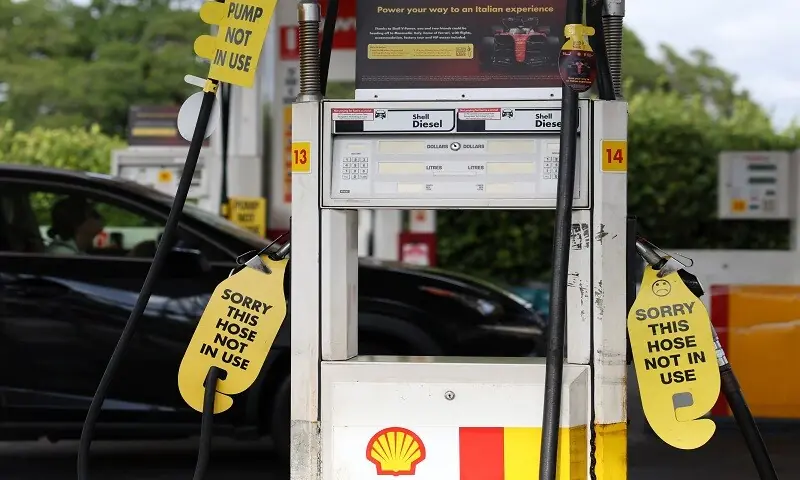 Australia will halve a fuel tax to help motorists experiencing soaring petrol prices due to war in the Middle East, Prime Minister Anthony Albanese said Monday. Albanese announced the step after meeting with the leaders of Australia’s states and territories on Monday, agreeing a plan to tackle fuel shortages as the war in the Middle East continues. Australia charges a sales tax of 52 cents on each litre of petrol sold at the pump, which will be halved for three months. The measure will cost the government $1.75 billion (Aus$2.55 billion), officials said. “We are making fuel cheaper today because we understand that Australians are under serious pressure,” Albanese said. Albanese’s government has sought to reassure motorists that shipments of fuel continue to arrive in Australia, and petrol shortages in rural towns stem from panic buying and distribution bottlenecks. Victoria and Tasmania states have made travel on public transport free, and Albanese urged motorists nationally to do what they can to conserve pe...
 -
Dawn - 22:09 Mar 29, 2026
Lahore Deputy Inspector-General of Police (Operations) Muhammad Faisal brought to the Pakistan Super League (PSL) chief executive officer’s notice on Sunday the alleged breach of security protocols involving Lahore Qalandar players Sikandar Raza and Shaheen Shah Afridi and urged necessary action to prevent the recurrence of such violations. Zimbabwe all-rounder Sikandar is among several overseas players who arrived in Lahore to join their franchises for the 11th edition of the PSL. In his letter, the Lahore DIG said, “As per the contents of the report of the superintendent of police (operations), Civil Lines Division, Lahore, a serious breach of established security protocols occurred on March 28, 2026 at the PC hotel where all PSL participant teams are currently residing under strict security arrangements.” The letter said that at approximately 10:35pm, the Lahore Qalandars liaison officer approached Pakistan Cricket Board (PCB) Security and Anti-Corruption Manager Lt Col (retd) Akhtar Hussain, seeking his p... -
Dawn - 20:08 Mar 29, 2026
Deputy Prime Minister and Foreign Minister Ishaq Dar said on Sunday that both the US and Iran had expressed confidence in Pakistan to facilitate talks between them amid the ongoing Middle East conflict. He made these remarks in a televised address after a quadrilateral moot on the ongoing Middle East crisis. The meeting in Islamabad was also attended the foreign ministers of Saudi Arabia, Turkiye and Egypt. Dar said he had also held “very productive” bilateral meetings with the three foreign ministers, who also called on Prime Minister Shehbaz Sharif. “As you know, the purpose of this visit of the foreign ministers was to participate in the second meeting of consultations among Pakistan, Saudi Arabia, Turkiye and Egypt, which was held today in Islamabad. “You may recall that our first meeting was held in Riyadh on March 19, 2026,” he added. Sharing details of today’s quadrilateral meeting, Dar said the four foreign ministers had a very detailed and in-depth discussion on the current regional situation. “We al... -
Dawn - 18:18 Mar 29, 2026
The first Pakistan International Airlines (PIA) direct flight to London in six years took to the skies on Sunday afternoon after a special inauguration ceremony at Islamabad International Airport and landed at Heathrow airport hours later. The national flag carrier is expected to operate four weekly flights from Islamabad to London. These will be operated from Heathrow Airport’s Terminal 4, according to an earlier statement issued by the PIA spokesperson. PK-785’s voyage was inaugurated by Defence Secretary Lt Gen (r) Muhammad Ali, British High Commissioner Jane Mariott, and Chairman PIA Consortium Arif Habib, who jointly cut the ribbon, state-run Pakistan TV reported. The flight was scheduled to take off at 12:50pm, but faced a slight delay, eventually departing at 1:19pm. On March 26, Defence Minister Khawaja Asif had said that the PIA would commence its first direct flights from Islamabad and Lahore to London’s Heathrow Airport on March 29 and 30, respectively. Last September, PIA had received the go-ahead... -
Dawn - 18:03 Mar 29, 2026
Prime Minister Shehbaz Sharif appreciated the “remarkable restraint” exercised by Saudi Arabia amid the Middle East crisis in a meeting with Saudi Foreign Minister Prince Faisal bin Farhan Al Saud in Islamabad, the Prime Minister’s Office (PMO) said on Sunday. He also assured him of Pakistan’s full and unwavering solidarity and support, the statement said. The Saudi foreign minister called upon PM Shehbaz after the conclusion of quadrilateral ministerial meeting in Islamabad, attended by the FMs of Pakistan, Saudi Arabia, Egypt and Turkiye. PM Shehbaz shared with FM Faisal Pakistan’s extensive diplomatic outreach during the current crisis, including mediation efforts for de-escalation and attempts to bring both the United States and Iran to the negotiating table, the PMO said. The Saudi FM also shared the latest Saudi perspective on the regional situation with the prime minister, who assured the visiting dignitary of Pakistan’s full and unwavering solidarity and support. The premier also emphasised Saudi Arab...
-
Dawn - 16:08 Mar 29, 2026
ISLAMABAD: The PTI expressed concern on Sunday over reports about the health of Bushra Bibi, the spouse of the party’s incarcerated founder Imran Khan, demanding that she be taken to a hospital for diagnosis and treatment. The PTI’s demand came after a document dated March 28 began circulating on social media. The document is titled ‘Information regarding the health condition of female convicted prisoner Bushra Bibi, wife of Imran Khan Niazi’. It states that Bushra Bibi had been examined by a Pakistan Institute of Medical Sciences (Pims) doctor, according to whom the patient had a “history of blurring of vision and a black spot in the right eye for the past 11 days”. “She also complained of headache and flashes in the right eye,” the document said. Dawn has been unable to independently verify the authenticity and veracity of the document, which also carries a signature attributed to the medical officer at the Adiala jail. PTI Central Information Secretary Sheikh Waqas Akram said these reports coming “from the... -
Dawn - 13:58 Mar 29, 2026
The Human Rights Commission of Pakistan, along with several civil society organisations, on Sunday called on authorities to immediately halt all planned and ongoing eviction operations in Islamabad’s low-income areas and katchi abadis (informal settlements). The call was made in a statement issued by the HRCP following a press conference at the National Press Club in Islamabad. “The All Party Alliance for Katchi Abadis, Human Rights Commission of Pakistan, National Commission for Justice and Peace, Awami Workers Party, Aurat March Islamabad and allied civil society organisations strongly condemn the imminent threat of demolition and forced eviction facing residents of Allama Iqbal Colony, a 25-year-old, predominantly Christian working-class settlement reportedly slated for clearance in the coming week,” the statement read. It added: “We unequivocally reject the ongoing pattern of evictions carried out by the Capital Development Authority (CDA), Islamabad, without due process, adequate notice or lawful rehabil... -
Dawn - 13:45 Mar 29, 2026
Israeli police prevented the Latin Patriarch of Jerusalem, Cardinal Pierbattista Pizzaballa, from entering the Church of the Holy Sepulchre to celebrate Palm Sunday mass, the Latin Patriarchate of Jerusalem said. “This morning, the Israeli Police prevented the Latin Patriarch of Jerusalem, His Beatitude Cardinal Pierbattista Pizzaballa, Head of the Catholic Church in the Holy Land, together with the Custos of the Holy Land, the Most Reverend Fr. Francesco Ielpo, OFM, the official Guardian of the Church of the Holy Sepulchre, from entering the Church of the Holy Sepulchre in Jerusalem, as they made their way to celebrate the Palm Sunday Mass,” a statement from the Patriarchate said. It said the two were stopped while proceeding privately without any characteristics of a procession or ceremonial act, and had to turn back. “As a result, and for the first time in centuries, the Heads of the Church were prevented from celebrating the Palm Sunday Mass at the Church of the Holy Sepulchre,” the statement said. “This ... -
Dawn - 13:32 Mar 29, 2026
United States (US) President Donald Trump’s challenge to the longstanding rule that anyone born in the US, with only narrow exceptions, is automatically a citizen echoes a similar dispute that took place on the shores of San Francisco more than a century ago. In the late 19th century, amid a wave of fervent anti-Chinese sentiment, the US government sought to prevent a young man named Wong Kim Ark from re-entering the country upon returning by steamship from a trip to his parents’ homeland of China, contending that, despite being born in the US, he was not a citizen. On March 28, 1898, the US Supreme Court (SC) disagreed, recognising that the Constitution’s 14th Amendment grants citizenship by birth on American soil, including to those like Wong whose parents were foreign nationals. A descendant worries Now his great-grandson, a San Francisco area resident, worries that the principle enshrined by his ancestor’s case may be in peril. “Wong Kim Ark knew he was an American. And he demanded that his citizenship be... -
Dawn - 13:13 Mar 29, 2026
By the 30th day of the US-Israel war on Iran, it has become increasingly clear that the conflict has crossed a critical threshold and is no longer confined to Iranian territory. The conflict is now spilling outward due to Iran’s sustained resilience, the coordinated actions of its regional proxies, and growing domestic unrest in Bahrain. These factors are effectively eroding the tactical gains achieved by US and Israeli forces. Inside Iran, US and Israeli strikes over the past 24 hours continued to target a mix of military, industrial, and increasingly civilian infrastructure, with reported hits on residential blocks in Tehran, academic institutions, aerospace facilities, energy sites and a water filtration plant in Khuzestan, alongside continued pressure on the Bushehr nuclear complex. This expanding target set tells about a shift in the US-Israel alliance’s war focus toward degrading Iran’s broader scientific and industrial base rather than only its military capabilities. Civilian casualties are becoming mo... -
Dawn - 12:39 Mar 29, 2026
Chairman Pakistan International Airlines (PIA) Consortium Arif Habib on Sunday sounded the alarm over the sustainability of PIA operations in the wake of a recent 150 per cent hike in jet fuel rates, calling on the government to reverse the hike in prices. “PIA could be forced to shut down” if jet fuel prices continue to remain high, Habib warned in an interview aired on Bol News. Jet fuel (JP-1) rates have been increased without a formal announcement in recent weeks amid global supply chain uncertainty spurred by the US-Iran war. Official rates seen by Dawn suggest JP-1 prices were raised by Rs84 per litre, or 21.65pc, to Rs472 from Rs388 per litre with effect from March 21. Since March 1, the price has surged by nearly 150pc from Rs190 per litre. Habib connected the hike in jet fuel prices to the government’s subsidisation of the fiscal burden from rising oil prices on ordinary citizens, saying that the government had decided to raise the price of high-octane fuel and aviation fuel to raise money for a cros... -
Dawn - 12:01 Mar 29, 2026
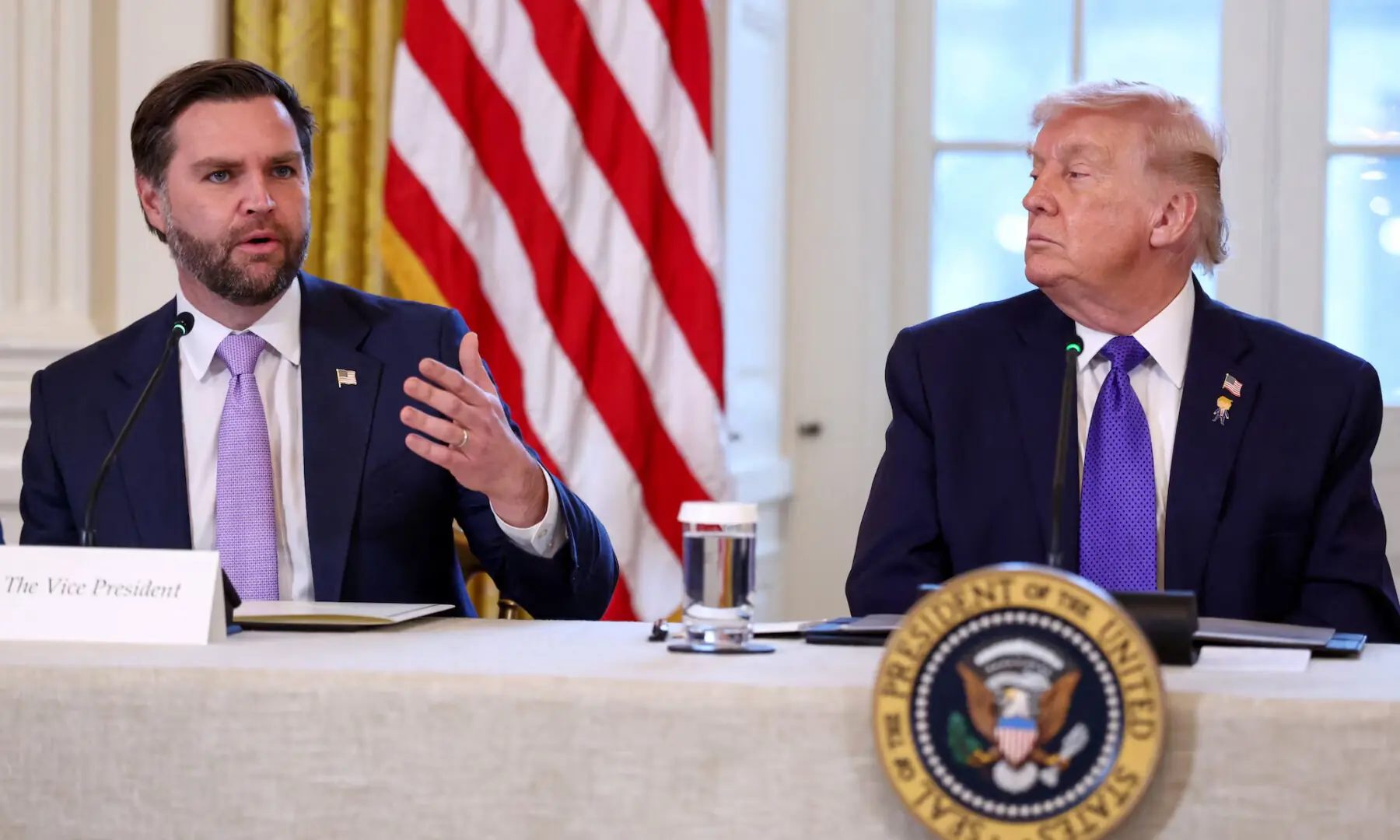 As the war in Iran threatens to imperil United States President Donald Trump’s legacy, the political stakes also are rising for two of his top lieutenants: Vice President JD Vance and Secretary of State Marco Rubio. The pair, widely viewed as potential successors to Trump, have been thrust into still-developing negotiations to end the war at a moment when the Republican Party is already weighing its post-Trump future. Vance has taken a cautious approach, reflecting his scepticism toward prolonged US military involvement, while Rubio has aligned himself closely with Trump’s hawkish stance and emerged as one of the administration’s most vocal defenders of the campaign. Trump has said both men were involved in efforts to force Iran to accept US demands to dismantle its nuclear and ballistic missile programmes and allow oil traffic to pass freely through the Strait of Hormuz. With the next presidential election due in 2028 and term limits barring Trump from running again, the president has been putting the succes...
 -
Dawn - 11:49 Mar 29, 2026
The information ministry on Sunday refuted a notification about a “complete and comprehensive lockdown” across the country on weekends, stating it was fake. In a post on its “fact checker” account on X, the ministry shared the notification being circulated on social media, with “fake” over it. “Avoid sharing fake news and false posts. Be a responsible citizen and only trust verified sources,” the ministry said in its post. The undated fake notification falsely quoted Prime Minister Shehbaz Sharif as directing the enforcement of several additional measures in “view of the continuing Gulf oil crisis”. As per the document, a “complete and comprehensive lockdown throughout the country” was ordered for every Saturday and Sunday, starting from April 5 onwards. “The lockdown shall take effect every Saturday from 12:01am (00:01 hrs) and continue till 11:59pm (23:59 hrs) every Sunday,” the fake order read. Earlier this month, Prime Minister Shehbaz Sharif announced a host of austerity measures in view of the global oi...
12682 items