Dawn
Source:
https://www.dawn.com
Found 12682 news
-
Dawn - 03:06 Feb 15, 2026
• Verdict notes marriage remains legally intact as ‘mere assertion of oral talaq insufficient’ • Justice Abid Chattha observes dowry claims must be determined strictly on evidence, not conjecture LAHORE: The Lahore High Court (LHC) has ordered a man to pay Rs1 million as deferred dower and monthly maintenance to his wife after holding that contracting another marriage without prior permission makes the entire dower immediately payable under the Muslim Family Laws Ordinance, 1961. Justice Abid Hussain Chattha issued the judgement, deciding two cross writ petitions filed by Mehnaz Saleem and her husband Kashif Iqbal, challenging concurrent and appellate findings of a family court and additional district judge (the appellate court), Sialkot. Ms Saleem had filed a suit seeking recovery of deferred dower (Rs1m), maintenance allowance, and dowry articles. The family court had partially decreed her suit, awarding Rs15,000 per month as maintenance for the Iddat period, Rs1m as deferred dower, and dowry articles or t... -
Dawn - 02:55 Feb 15, 2026
• Bangladesh’s PM-to-be pledges to restore governance, economy; vows to fix ‘broken’ systems • Urges unity as BNP sweeps first polls since 2024 uprising DHAKA: Bangladesh’s prime minister-in-waiting Tarique Rahman on Saturday dedicated his party’s landslide election victory to the citizens who “sacrificed for democracy” during the deadly 2024 uprising and pledged to prioritise the restoration of economy and governance. Rahman, the 60-year-old scion of one of the nation’s most powerful political dynasties, called for national unity as he prepared to lead the South Asian nation of 170 million people following the Bangladesh Nationalist Party’s sweeping success in Thursday’s vote. He will take over from an interim government led by Nobel laureate Muhammad Yunus, which has steered Bangladesh since a student-led uprising ousted Hasina in August 2024. “This victory belongs to Bangladesh, belongs to democracy,” Rahman said in his first speech since the vote. “This victory belongs to people who aspire to and have sac... -
Dawn - 02:25 Feb 15, 2026
ISLAMABAD: The consortium led by the Arif Habib Group has announced plans to acquire the remaining 25 per cent government stake in Pakistan International Airlines (PIA), thereby securing full control of the national flag carrier. In December 2025, the group acquired a 75pc stake for Rs135 billion, with the goal of transforming the loss-making airline through operational restructuring, fleet expansion, and improved customer service. To ensure the success of its revival plan, the consortium now seeks to take full control of decision-making. The acquisition will allow the consortium to implement management changes by the end of April. Shahid Ali Habib, CEO of Arif Habib Ltd, told Dawn that this will enable them to operate as a private entity, free from government-appointed board members. “The change of sponsors is scheduled for late April or early May,” he added. Consortium to acquire remaining 25pc stake for Rs45bn The government has given the consortium a 90-day window to purchase the remaining shares, valued ... -
Dawn - 02:07 Feb 15, 2026
It was never going to be easy for the International Cricket Council (ICC) to sideline Pakistan from the T20 World Cup, let alone exclude them from the marquee clash against India. That is precisely why, today on February 15, Pakistan will take on India for the ninth time in T20 World Cup history. It is a rivalry in which Pakistan has managed only one victory so far. Yet win numbers barely matter when these two teams meet, because this contest has grown far beyond cricket and has become arguably the most anticipated fixture in global sport. In the build-up to this match, uncertainty loomed large. Until just days before the game, there was no official confirmation that Pakistan would play. This followed a dramatic political intervention when the Government of Pakistan announced that it would not permit the Pakistan team to participate in the World Cup group-stage match against India. Despite the tournament featuring 20 teams, this single lucrative fixture dominated headlines across the cricketing world. The ten... -
Dawn - 02:07 Feb 15, 2026
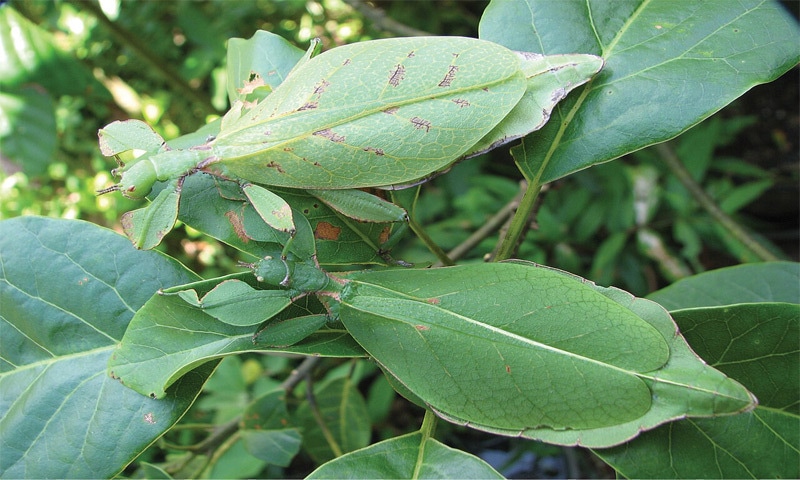 Camouflage and mimicry are among the oldest concepts in biology — taught in classrooms as elegant outcomes of natural selection. Animals that blend in avoid getting eaten. Over many generations, tiny random changes accumulate. Simple, neat, intuitive. But the deeper scientists look, the more the real world looks less like a simple narrative and more like a puzzle with missing pieces. Across the animal and plant kingdoms, there are creatures whose mimicry is so precise — down to texture, colour gradients, behavioural nuance and even spectral reflections invisible to the human eye — that the standard explanation strains at the seams. What mechanisms allow an insect or a plant with no brain, no eyes and no cognitive awareness of its surroundings to develop such astonishing resemblance? Take, for example, walking stick and leaf insects. Some species do more than mimic the general outline of foliage; they reproduce irregular edges, asymmetries and colour variations indistinguishable from real leaves — even under c...
-
Dawn - 02:05 Feb 15, 2026
RAWALPINDI: The Pakistan Meteorological Department (PMD) has predicted rain and thunderstorm in southern parts of the country. The Met Office said a shallow westerly wave is likely to approach the western parts of the country on Feb 16. Under the influence of this weather system, light to moderate rain-wind/thunderstorm is expected in Quetta, Ziarat, Chaman, Pishin, Qilla Abdullah, Qilla Saifullah, Chaghi, Nokkundi, Dalbandin, Noushki, Harnai, Zhob, Kalat, Mustung, Bar Khan, Sibbi, Loralai, Khuzdar, Kech, Turbat, Panjgur, Gawadar, Awaran, Kharan, Pasni, Ormara and Lasbella of Balochistan from Feb 16 (evening/night) to Feb 17 with occasional gaps. Rain-wind/thunderstorm is also expected in Dadu, Hyderabad, Karachi, Thatta, Badin, Jamshoro, Sukkur, Larkana, Jacobabad and Khairpur of Sindh from Feb 17. Gusty and dust-raising winds are also likely during the period. Light to moderate rain-wind/thunderstorm is expected in Waziristan, Bannu, D.I. Khan and Kurram areas of Khyber Pakhtunkhwa on the night of Feb 16 an... -
Dawn - 02:05 Feb 15, 2026
• Insists govt can’t create jobs for millions of people; private sector must lead employment drive • Claims FIR registered against sitting senator over alleged tax evasion • Says tobacco sector ‘not paying taxes’, involved in smuggling • Construction relief package ‘in pipeline’, announcement expected soon • Textile support under review; minister seeks 10-12 days for concrete steps LAHORE: Finance Minister Muhammad Aurangzeb on Saturday warned that Pakistan could not be run with a rapidly increasing population and stressed that the private sector would have to take the lead and create employment opportunities. “If this growth rate (2.5pc) continues, our population can reach 400 million in the coming years. So, you tell us who will run this country in such a situation,” he said while speaking at the Pakistan Economic Growth Conference at the regional office of the Federation of Pakistan Chambers of Commerce and Industry (FPCCI) in Lahore. “So please help us on how to control the population,” he added. On empl... -
Dawn - 17:57 Feb 14, 2026
ISLAMABAD: Parliamentary Affairs Minister Tariq Fazal Chaudhry said on Saturday that the government had decided to shift PTI founder Imran Khan to a hospital, while the opposition continued its sit-in at Parliament House over concerns regarding the ex-premier’s health. In a post on X, the minister said, “Imran Khan has been given the facility to talk to his sons on the phone and considering his health, it has also been decided to shift him to the hospital and form a medical board.” “The government prioritises humanitarianism and legal requirements. It is the government’s responsibility to provide facilities to every prisoner according to the law,” he said. “There should be no politics on a sensitive issue like health. PTI should avoid baseless propaganda or political point scoring. The government is fulfilling its responsibilities. Instead of politicising this issue, show national seriousness and tolerance,” he said. Shortly before Chaudhry, Information Minister Attaullah Tarar said that further medical treat... -
Dawn - 17:43 Feb 14, 2026
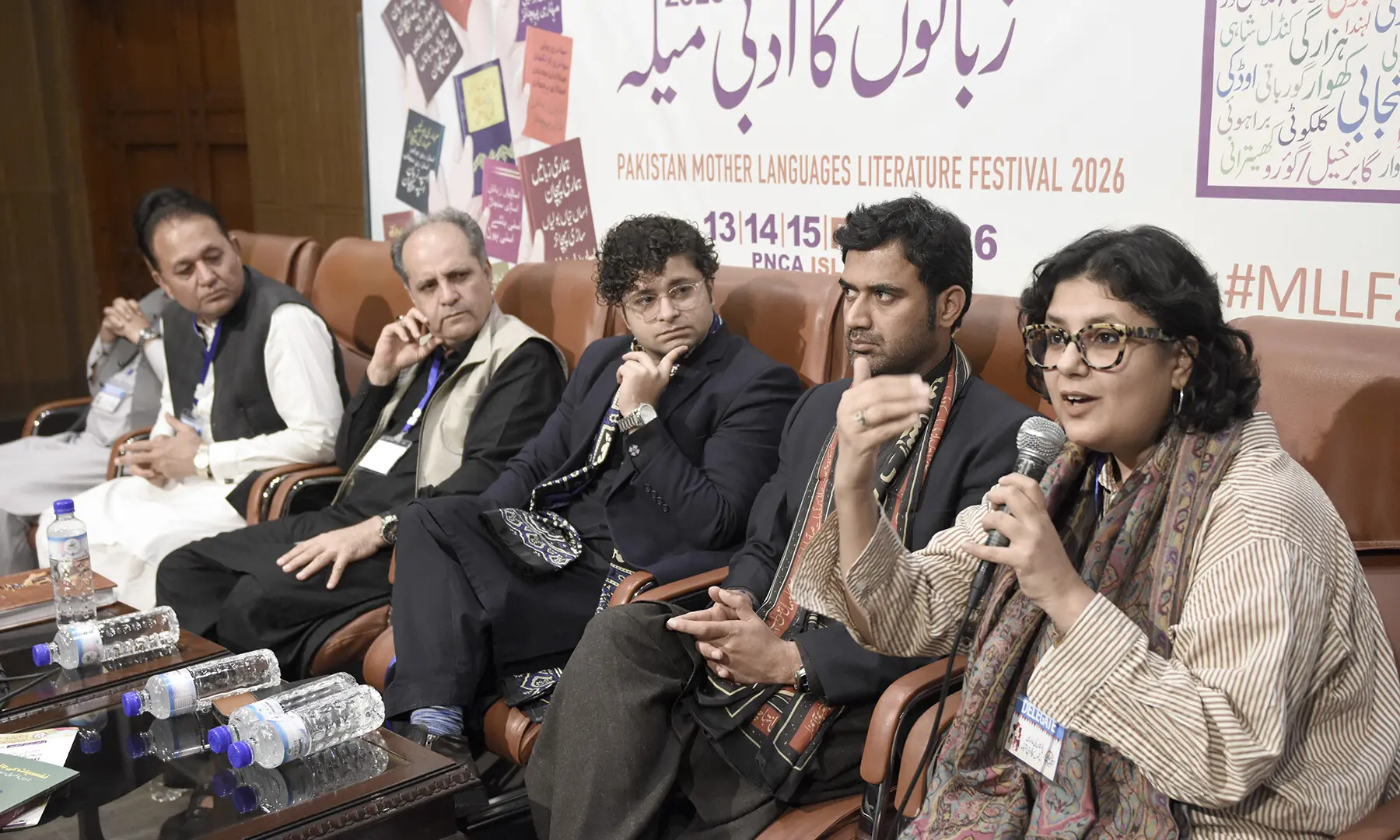 ISLAMABAD: On the second day of the Pakistan Mother Languages Literature Festival 2026 at the Pakistan National Council of the Arts (PNCA) on Saturday, while mother languages were celebrated, the conversations also moved to the sobering reflection that endangered languages may fade, and with them, entire musical worlds are at risk of falling silent. The second day unfolded across two major sessions, one honouring literary legends of mother languages, the other examining endangered arts and musical instruments, yet both were threaded by a shared concern about cultural survival. The opening session, ‘Celebrating the Legends of the Languages’, brought together writers representing Brahui, Seraiki, Punjabi, Urdu, Balochi, Sindhi and Potohari. Yet, behind the tributes lay a pressing question of inheriting these languages. The concern was echoed by panellists representing Gojri, Pahari, Hindko and Gawarbati languages as well, who stressed that recognition without institutional backing risks reducing linguistic heri...
-
Dawn - 17:30 Feb 14, 2026
Switzerland said on Saturday that Oman would host talks between the United States and Iran in Geneva next week, with Washington pushing Tehran to make a deal to limit its nuclear programme. “Switzerland stands ready at all times to offer its good offices to facilitate dialogue between the United States and Iran,” a Swiss foreign ministry spokesman told AFP. On February 6, Iranian Foreign Minister Abbas Araghchi held talks in Oman with US envoy Steve Witkoff and US President Donald Trump’s influential son-in-law Jared Kushner. The talks were indirect, with the Omanis acting as mediators. Trump has recently focused his military threats on Tehran’s nuclear programme, which US forces struck last July during Israel’s unprecedented 12-day war with Iran. Trump said on Friday that a change of government in Iran would be the “best thing that could happen”, as he sent a second aircraft carrier to the Middle East, ratcheting up military pressure on the Islamic republic. Go-between Switzerland has played a key role in di... -
Dawn - 17:28 Feb 14, 2026
Prime Minister Shehbaz Sharif on Saturday announced a Rs38 billion Ramazan Relief Package which will be disbursed among deserving people across the four provinces as well as the people of Gilgit-Baltistan (G-B) and Azad Jammu Kashmir (AJK). “Rs38bn will be disbursed through digital bank accounts among 12.1 million families, without discrimination,” said the premier while addressing the ceremony of the PM Ramazan Package 2026. “Every deserving family will receive Rs13,000 through digital wallet or bank transfer, without discrimination based on party affiliation or point of view,” he said. The prime minister elaborated that out of the Rs38bn, Rs10bn is reserved for those families already registered with the government’s Kafalat programme. “This is the biggest effort at the federal level in terms of volume and challenges for the month of Ramazan,” he said, adding that the government, through coordinated efforts, has undertaken a major challenge to ensure that deserving people across the country receive the funds... -
Dawn - 16:57 Feb 14, 2026
KARACHI: Police clashed with Jamaat-i-Islami (JI) workers outside the Sindh Assembly on Saturday. Footage aired on television showed police using tear gas, with workers running while covering their faces. The JI had announced that it would stage a sit-in outside the Sindh Assembly on Feb 14 to protest what it described as the Sindh government’s “failure to address Karachi’s issues” and alleged interference in the city’s institutions. Speaking on Geo News, Sindh Senior Minister Sharjeel Inam Memon said that police and the provincial government were in contact with the party’s administration since 4pm, telling them that they may protest but not enter the Red Zone. “They were strictly forbidden from entering the Red Zone, but despite that, JI party workers entered the Red Zone, pelted stones at the police, and also tried to enter the assembly,” Memon stated. He added that police were forced to use tear gas and arrest workers. “You cannot enter the Red Zone under [Section] 144; the JI entering like this is a viol... -
Dawn - 15:54 Feb 14, 2026
Deputy Prime Minister and Foreign Minister Ishaq Dar discussed the “evolving regional situation” in a phone call with Saudi Foreign Minister Faisal bin Farhan Al Saud, the Foreign Office (FO) said on Saturday. “The two leaders discussed the evolving regional situation, forthcoming international engagements, and agreed to remain in close contact,” the FO said on X. Dar had also held a phone call with the Saudi foreign minister last month, shortly after landing in Beijing. According to the FO, the pair “deliberated on the recent situation in the region” during the phone call. This was the second call between the two in the same week. On December 30, 2025, the two had exchanged views on “the current regional situation and recent developments”. Both nations have a multifaceted relationship rooted in strategic military cooperation, mutual economic interests, and shared Islamic heritage. These ties have encompassed economic assistance and energy supplies, with Riyadh being a significant source of financial aid and ... -
Dawn - 15:28 Feb 14, 2026
India captain Suryakumar Yadav admitted on Saturday that no matter how much his team tried to prepare for Sunday’s T20 World Cup clash against Pakistan as “just another game”, it would be much more than that. “It’s a big platform, obviously,” Suryakumar told reporters in Colombo, venue for Sunday’s massive Group A showdown. “No matter how much you say that it’s just another game, it is a big game.” The biggest and most lucrative clash in world cricket has sold out the 35,000-capacity R Premadasa stadium with hundreds of millions more expected to watch on television. The game was only confirmed as going ahead late on Monday night after the government reversed its decision to boycott the blockbuster Group A game. “We don’t play them often, don’t even play them regularly,” said the Indian skipper. “But at the end of the day, we try to keep things simple and try to execute our best game. “There is pressure, but there is a big opportunity,” said Suryakumar. “According to me, when you play an India-Pakistan game, i... -
Dawn - 14:43 Feb 14, 2026
Five European countries — including Britain, France and Germany — accused Russia of “poisoning” opposition leader Alexei Navalny in prison in 2024 using a “rare toxin”, on Saturday on the sidelines of the Munich Security Conference. “The UK, Sweden, France, Germany and The Netherlands are confident that Alexei Navalny was poisoned with a lethal toxin,” the countries said in a joint statement, following “analyses of samples” from his body. The staunch critic of Russian President Vladimir Putin died in an Arctic prison in February 2024, while serving a 19-year prison sentence. The epibatidine toxin found in the skin of dart frogs native to South America was found in samples and “highly likely resulted in his death”, the European states said. “Only the Russian state had the means, motive and opportunity to deploy this lethal toxin to target Navalny during his imprisonment in a Russian penal colony in Siberia, and we hold it responsible for his death,” the UK foreign office added in a statement. Navalny’s widow, ... -
Dawn - 13:58 Feb 14, 2026
Aleema Khan, the sister of incarcerated PTI founder Imran Khan, said on Saturday that the former premier spoke to his sons for approximately 20 minutes and was “extremely happy to hear their voices”. The development comes after the Supreme Court on Thursday ordered the formation of a medical team to examine Imran after a report submitted by his lawyer, Salman Safdar, revealed that the former prime minister had lost 85 per cent of the vision in his right eye. The court had also directed that he be allowed to speak to his children. In a post on X on Saturday, Aleema said, “The chief justice of Pakistan had directed that Imran Khan be allowed to speak with his sons. We can confirm that he was able to speak with them for approximately 20 minutes. “His sons shared that he was extremely happy to hear their voices after such a long time,” she said. “We are now awaiting his urgent medical treatment at Shifa International Hospital Islamabad under the supervision of his personal doctors, where specialist doctors must m... -
Dawn - 12:28 Feb 14, 2026
Astronomers have observed a planetary system that challenges current planet formation theories, with a rocky planet that formed beyond the orbits of its gaseous neighbours, possibly after much of the planet-forming material had been used up. The system, observed using the European Space Agency’s Cheops space telescope, consists of four planets — two rocky and two gaseous — orbiting a relatively small and dim star called a red dwarf about 117 light-years from Earth in the direction of the Lynx constellation. A light-year is the distance light travels in a year, 9.5 trillion kilometres. The star, named LHS 1903, is about 50 per cent as massive and 5pc as luminous as our sun. The order of the planets is what caught the attention of scientists. The innermost planet is rocky, the next two are gaseous and the fourth one, which current planetary formation theory suggests should be gaseous, instead is rocky. “The planet-formation paradigm states that planets close to their host star should form small and rocky, with ... -
Dawn - 12:26 Feb 14, 2026
KARACHI: The death toll from a multi-vehicle crash on the M9 Motorway a day earlier rose to 13 on Saturday while police also registered a first information report (FIR) on several charges, including unintentional murder. The executive director of the trauma centre at Civil Hospital, Dr Mohammed Sabir Memon, told Dawn that six injured people were brought to the facility on Friday evening. Of them, a six-year-old boy died during treatment, he said. He added that one patient had been discharged while four others were still under treatment, including one in critical condition. Meanwhile, a spokesperson for the Edhi Foundation said in a statement that the 12 other victims all belonged to the same family. Meanwhile, Gadap police Station House Officer (SHO) Sarfraz Jatoi told Dawn that the police had registered an FIR under sections 320 (unintentional homicide caused by rash or negligent driving) and 337-G (injuries) of the Pakistan Penal Code and relevant sections (3, 4, 5 and 115) of the Motor Vehicles Ordinance o... -
Dawn - 11:16 Feb 14, 2026
 Video games are deeply woven into the daily routines of many young people, especially boys and young men. They are social spaces, entertainment, and in some cases, competitive arenas. But they are also divisive. Parents, educators, and policymakers often worry about screen time, violence, addiction, and social withdrawal. Yet, recent research suggests the story isn’t as simple as “good” or “bad.” A growing body of scientific evidence, including work cited by researchers at the University of Oxford, points out that playing video games does not inherently harm children and may even carry benefits. Traditional concerns like aggression and poor academic performance are not consistently supported by solid data when other factors are accounted for. Instead, outcomes vary widely depending on how, why, and how much games are played. One area researchers highlight is cognitive development. Many games require sustained attention, quick decision-making, pattern recognition and strategic thinking. Some studies show impro...
-
Dawn - 10:41 Feb 14, 2026
ISLAMABAD: Former prime minister and PTI founder Imran Khan and his wife Bushra Bibi have approached the Islamabad High Court (IHC) seeking suspension of their sentences in the Toshakhana-2 (Bulgari jewellery) case, citing grave medical concerns and what their counsel termed legal infirmities in the trial court verdict. Advocate Salman Akram Raja, along with Barristers Salman Safdar, Gohar Ali Khan, and Qausain Faisal Mufti, filed the petition under Section 426 read with Section 561-A of the Criminal Procedure Code 1898, praying for the release of the petitioners till the final adjudication of their criminal appeal. The Special Court Central-I judge, on December 20, 2025, convicted the couple, handing down a 10-year simple imprisonment term under Section 409 PPC (criminal breach of trust by a public servant), along with a fine of Rs16.425 million. Additionally, Imran and Bushra were sentenced to seven years’ simple imprisonment under Section 5(2) of the Prevention of Corruption Act 1947. The petition contende...
12682 items