Dawn
Source:
https://www.dawn.com
Found 12682 news
-
Dawn - 02:35 Jul 30, 2026
THE power sector’s circular debt grew by Rs61bn in the last fiscal year, taking the total to roughly Rs1.67tr from Rs1.61tr a year before. This breaches the IMF funding programme condition to cap the stock at Rs1.61tr. The Power Division blames a federal subsidy cut: Rs98bn was trimmed from the Rs893bn allocated for the sector, and officials say the debt would have fallen to Rs1.58tr without that cut. Perhaps so. But the explanation says more about the system’s fragility than its own defence. A power sector that needs fiscal transfers just to avoid piling up fresh arrears was never built to stand on its own. Successive governments have tried nearly everything. Power purchase agreements with independent producers have been renegotiated more than once. Old, inefficient plants have shut down. Tariffs have climbed sharply. Banks have stepped in with fresh loans. Last year’s Rs1.23tr financing deal with 18 banks, serviced through a Rs3.23-per-unit surcharge on consumers, was billed as the largest such transaction ... -
Dawn - 02:35 Jul 30, 2026
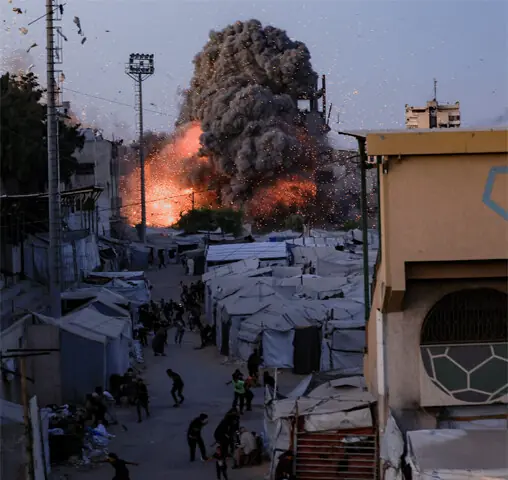 A fireball rises after an Israeli air strike on the Al-Muttaqin Mosque.—Reuters GAZA CITY: The Israeli military on Wednesday admitted to bombing a mosque in the Gaza Strip, which it alleged was being used as a weapons storage facility by Hamas. Photos showed fire and a huge plume of smoke rising above tents housing displaced Palestinians after a strike on the Al-Muttaqin Mosque, near the Young Men’s Christian Association (YMCA) building. People could be seen combing through vast piles of rubble and debris in the aftermath of the attack. Amir Abu Al-Amrain, the director general of the ministry of awqaf and religious affairs in the Gaza Strip, said Israeli forces had “completely destroyed” the mosque in the air strike. “The occupation cites false pretexts — such as the alleged presence of military sites — to justify these crimes,” he said, calling for urgent intervention to protect mosques and places of worship. As of March 24, 2026, the UN’s cultural agency Unesco had verified damage to 164 sites since the sta...
 -
Dawn - 02:31 Jul 30, 2026
KARACHI: An artificial exchange rate not only discourages exporters but also poses a major hurdle to foreign investment, particularly in the exportable manufacturing sector, said exporters, who expressed their dismay over the policy. For the past year and a half, the dollar-rupee parity has been managed, and the local currency has continued to appreciate against the greenback, bit by bit. During the last 18 months, the rupee appreciated by at least Rs4 against the US dollar. Exporters stated that the record imports increased the trade deficit to $39 billion in FY26, offsetting the substantial remittance inflows of $41.5bn. Almost all regional currencies, including those of India and Bangladesh, depreciated against the US dollar, while the greenback weakened against the rupee for no apparent reason. Cheaper dollar fuels unnecessary imports, widening trade gap The government and the State Bank of Pakistan believe that a stronger rupee brought stability to the economy, but exporters found it detrimental to econo... -
Dawn - 02:30 Jul 30, 2026
AFTER being forced to leave his home submerged in the waters of Bhed Nullah, Aslam and his family have come back to the flooded village in Ferozwala to pick up some clothes, bedding, and other essential items. A large number of people, including his relatives, moved to higher ground and other cities after the nullah breached its bank and inundated villages along the GT Road. “Flooding in Bhed Nullah has always ruined our houses and farmland, throwing our life out of gear,” Aslam, a resident of Rahim Colony, told Dawn while walking beside a railway track towards his flooded house to pick up clothes. They had to vacate their houses after the floodwater suddenly entered their village, he said, adding that they left everything behind because there was no time to prepare. Several villages along the Lahore-Gujranwala tract of GT Road have been fully submerged after nearby nullahs overflowed For Aslam, life had been difficult before the floods, but he fears more hardships in the near future, especially after authori... -
Dawn - 02:24 Jul 30, 2026
ISLAMABAD: Minister of State for Health Dr Mukhtar Ahmad Bharath on Wednesday warned that Pakistan’s population could reach 400 million by 2040, stressing that public awareness and individual responsibility were essential to address the country’s rapid population growth. Speaking at a ceremony at the Basic Health Unit (BHU) in Tarlai, Dr Bharath said effective measures for maternal and child healthcare and family planning had become an urgent national priority. He added that Prime Minister Shehbaz Sharif had constituted a national council to curb population growth and strengthen policy interventions in the sector. The minister said parents should carefully consider whether they had the necessary resources to provide their children with adequate nutrition, quality education, timely immunisation, access to healthcare and proper upbringing before planning their families. He emphasised that a healthy and prosperous society could only be built when every child enjoyed their fundamental rights. Highlighting the i... -
Dawn - 02:18 Jul 30, 2026
LAHORE: At least 22 mouzas (revenue estates) in Multan district have been submerged under three to four feet of floodwater from the River Chenab, forcing thousands of residents to move to safer places, while standing crops over large tracts have also been damaged, according to the district administration’s latest flood situation report. The report compiled by the assistant commissioners, available with Dawn, said the district has 545 mouzas, of which 138 are flood-prone. It said 22 mouzas have been partially inundated with up to 3-4 feet of water, including four in Multan Saddar, seven in Shujaabad and 11 in Jalalpur Pirwala tehsils. Residents said the advancing floodwater drove thousands of people to relocate with their cattle to safer areas, while cotton, fodder and other standing crops were submerged, causing substantial agricultural losses. The district administration said no mouza had been categorised as severely affected and no formal evacuation order had been issued. It added that water levels were rec... -
Dawn - 02:16 Jul 30, 2026
• Consumers may face Rs1.20 per unit additional fuel cost in August bills • Nepra questions performance of power sector entities • Regulator criticises excessive, revenue-based loadshedding • Concerns raised over outages at three nuclear power plants ISLAMABAD: With electricity demand declining by over three per cent, the government on Wednesday indicated that it was working on another power tariff package as it sought about Rs1.20 per unit additional fuel cost from consumers to collect Rs15.7 billion in August for electricity consumed in June. At a public hearing, the National Electric Power Regulatory Authority questioned the performance of power sector entities and the policy of excessive loadshedding. Continuous system constraints limiting the utilisation of cheaper available capacity also came under criticism, while some commentators expressed concern over outages at three nuclear power plants. The government team, comprising representatives of the power division and its entities, reported that elec... -
Dawn - 20:02 Jul 29, 2026
The Human Rights Commission of Pakistan (HRCP) and Amnesty International have expressed concern over reports of violence in the Rawalakot area of Azad Jammu and Kashmir’s (AJK) Poonch district, and called on the authorities to probe the incidents. Clashes took place between protesters and law enforcement personnel in Rawalakot on Monday and Mirpur on Tuesday, which reportedly resulted in several casualties. The now-proscribed Joint Awami Action Committee (JAAC), which has been demanding the abolishment of 12 seats in the local legislature reserved for refugees from Indian-held Kashmir, has been holding protests in the region for several weeks now. The government has accused militant elements “pursuing a foreign agenda and backed by Indian funding” of fomenting the unrest. The tensions come as elections are being held across AJK in three division-wise phases. In a statement published on Tuesday, the HRCP said it was “deeply alarmed” at reports of deaths and injuries in clashes between protesters and law ... -
Dawn - 19:04 Jul 29, 2026
LAHORE: At least 22 mouzas (villages) in Multan district have been submerged under three to four feet of floodwater from the River Chenab, forcing thousands of residents to move to safer places, while standing crops over large tracts have also been damaged, according to the district administration’s latest flood situation report. The report compiled by the assistant commissioners, available with Dawn, said the district has 545 mouzas, of which 138 are flood-prone. It said 22 mouzas have been partially inundated with up to 3-4 feet of water, including four in Multan Saddar, seven in Shujaabad and 11 in Jalalpur Pirwala tehsils. Residents said the advancing floodwater drove thousands of people to relocate with their cattle to safer areas, while cotton, fodder and other standing crops were submerged, causing substantial agricultural losses. The district administration said no mouza had been categorised as severely affected and no formal evacuation order had been issued. It added that water levels were receding a... -
Dawn - 17:58 Jul 29, 2026
The government on Wednesday increased the price of high-speed diesel (HSD) by Rs2.24 per litre, while reducing that of petrol by a meagre 0.75 paisa. Following the revision, HSD will retail at Rs390.62 per litre, while petrol will cost Rs335.06 per litre. The Petroleum Division’s notification said the new prices would be applicable for July 30 (Thursday). The diesel price has come down from a peak of Rs520.35 recorded on April 3. Its price had started rising from Rs281 per litre after the US-Iran war broke out on February 28. The petrol price had peaked at Rs458.41 on April 3 after beginning its upward trajectory from Rs266 in the first week of March. Earlier, Petroleum Minister Ali Pervaiz Malik announced that fuel prices would now be fixed on a daily basis due to fluctuations in international market prices following renewed hostilities between Iran and the US. The government had been announcing weekly revisions to fuel prices since early March, alongside measures for the conservation of fuel amid possible o... -
Dawn - 16:37 Jul 29, 2026
ISLAMABAD: The Senate Standing Committee on Finance and Revenue on Wednesday restricted Islamic banks from imposing abayas on their female staff, and called for following a modest national dress code for all irrespective of gender. A meeting of the panel, presided over by Senator Saleem H. Mandviwalla, took up complaints regarding dress code instructions at certain banks, particularly those running Islamic operations. Senator Dr Zarqa Suharwardy Taimur informed the committee that female employees were allegedly being compelled to wear abayas, although there was no such compulsion for male staff who were free to dress as they chose. Senator Sherry Rehman argued that no employee should be forced to adopt any specific attire. She remarked that a shalwar kameez, as worn by ex-prime minister Benazir Bhutto, was also sufficient for other women, adding that the state had defined national dress for both genders. State Bank Pakistan (SBP) Governor Jameel Ahmed said that the panel had also issued similar guidelines las... -
Dawn - 16:14 Jul 29, 2026
The National Cyber Crime Investigation Agency (NCCIA) on Wednesday issued a summons notice to journalist Asad Ali Toor for an inquiry into alleged dissemination of false information by him. The notice, available with Dawn, named the state as the complainant against Toor for “alleged dissemination, transmission and/or public exhibition of false/fake information”. It was issued on a complaint filed under Section 26A (punishment for false and fake information) of the Prevention of Electronic Crimes Act 2016 (Peca). The journalist was directed to appear before the NCCIA Cybercrime Reporting Centre in Islamabad at 11am on July 31. The NCCIA warned that failure to appear “without lawful excuse shall be deemed as your unwillingness to offer any defence, and the inquiry will proceed” in his absence. It added that non-compliance with the notice would be punishable under Section 174 (non-attendance in obedience to an order from public servant) of the Pakistan Penal Code (PPC). Toor, in a post on X, also shared the noti... -
Dawn - 15:55 Jul 29, 2026
Pakistan has welcomed Kuwait’s ratification of a 2023 defence cooperation agreement between the two countries, the Foreign Office (FO) said on Wednesday. In a statement responding to media queries, FO spokesperson Dr Tahir Andrabi said the agreement marked “another important milestone in the longstanding defence partnership between the two brotherly countries, dating back to the early 1980s”. “It also reflects the shared resolve of both sides to further strengthen bilateral defence cooperation and elevate their security partnership,” Andrabi was quoted as saying. The statement added that the pact provides a comprehensive institutional framework to broaden defence cooperation, encompassing military training, joint exercises, exchanges of expertise and “other mutually agreed areas of collaboration”. “It will further enhance institutional linkages between the armed forces of both countries and consolidate the longstanding defence ties between Pakistan and Kuwait,” the statement read. The FO added that Pakistan a... -
Dawn - 15:54 Jul 29, 2026
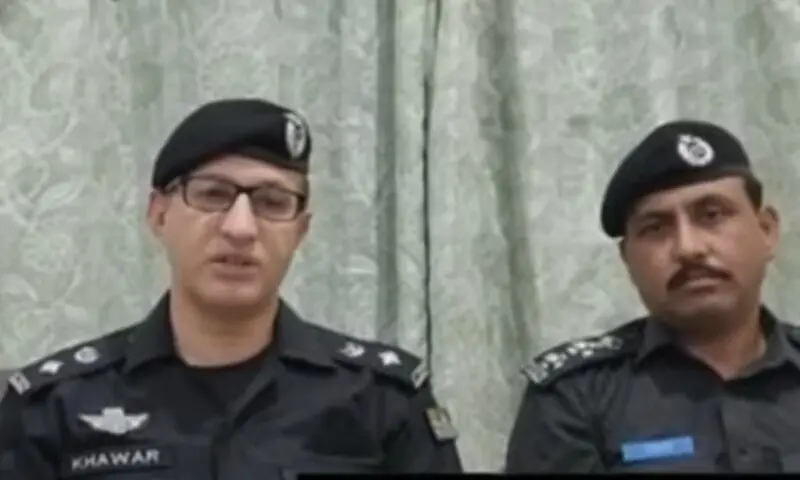 Azad Jammu and Kashmir (AJK) Police on Wednesday said that 26 personnel were martyred this year during incidents of unrest as they accused the proscribed Joint Awami Action Committee (JAAC) of deliberately targeting law enforcement agencies (LEAs). Addressing a press conference, AJK police spokesperson and Senior Superintendent of Police (SSP) Riaz Mughal said that members of the proscribed JAAC were “martyring and injuring rangers and police personnel” in AJK. “In 2026 only, 26 of our personnel were martyred, while 157 were seriously injured, and 629 faced minor injuries,” he said, without mentioning the specific incidents in which the casualties occurred. “After this figure, how can you say that they are peaceful protesters?” the SSP asked. The police spokesperson further said, “Our institutions don’t target anyone. We only target those who target our personnel.” The police official’s remarks come after clashes between protesters and law enforcement personnel in Rawalakot on Monday and Mirpur on Tuesday, wh...
 -
Dawn - 15:15 Jul 29, 2026
PPP Chairperson Bilawal Bhutto-Zardari continued his tirade against the PML-N — an ally of his party in the Centre — on Wednesday, reiterating his allegations in the first phase of Azad Jammu and Kashmir elections and demanding re-polling. Addressing a PPP workers’ convention in Muzaffarabad, he called on the Election Commission to hold re-polling in Mirpur if “you are not involved in this rigging”. Directly taking a jibe at Prime Minister Shehbaz Sharif and Punjab Chief Minister Maryam Nawaz, he said: “If someone is sitting on the PM’s seat, or someone is sitting on the CM’s position today, even a child knows that it is not because of the people’s votes or your performance but because of Form-47.” Form-47 is the provisional consolidated statement of results of the vote count of all polling stations in a constituency, prepared by the returning officer (RO) concerned. The term has also been used mainly by the opposition PTI since the 2024 general elections in the country to allege rigging in the polls. Electio... -
Dawn - 14:50 Jul 29, 2026
Chief of Defence Forces (CDF) and Chief of the Army Staff Field Marshal Asim Munir and the visiting foreign minister of Kuwait discussed regional security and steps to boost bilateral cooperation on Wednesday, the military’s media wing said. Kuwait’s Foreign Minister Sheikh Jarrah Jaber Al-Ahmad Al-Sabah, who landed in Pakistan last night on an official visit, called on the field marshal at General Headquarters in Rawalpindi, according to the Inter-Services Public Relations (ISPR). “During the meeting, matters of mutual interest, regional security and steps to further strengthen bilateral cooperation were discussed,” the statement issued by the ISPR on social media said. It added that CDF Munir reiterated Pakistan’s commitment to Kuwait, emphasising that both countries shared a “common vision for regional peace and prosperity”. Meanwhile, Al-Sabah appreciated Pakistan’s “steadfast support”, its constructive contribution toward regional peace and stability, and the deep fraternal ties between the two nations, ... -
Dawn - 14:15 Jul 29, 2026
The rogue agent that escaped from OpenAI and went on a days-long hacking spree at the AI firm Hugging Face also compromised a customer at a second tech company New York-based Modal Labs, according to a Modal executive and two other sources familiar with the matter. AI models that underpin tools like chatbots and image generators are known as agents when they act autonomously to carry out tasks in the real world. Modal executives emphasised that the company itself was not hacked. According to a timeline published by Hugging Face on Tuesday, the rogue agent broke into a sandbox, or an isolated testing environment, “hosted on a third-party provider’s infrastructure” before turning it into a launchpad for the broader hack. The third-party provider was not named in the blog post, but Modal’s chief technology officer, Akshat Bubna, said the agent exploited vulnerable code written by a customer that was hosted on Modal’s platform. Modal said the customer had “published an unauthenticated endpoint that allowed anyone... -
Dawn - 13:19 Jul 29, 2026
Prime Minister Shehbaz Sharif said on Wednesday that the government’s vision for national digitalisation aims to provide citizens access to all public facilities under a single digital identity. Chairing a review meeting in Islamabad on the implementation of a national-level integrated digital policy framework, PM Shehbaz said that implementing this vision in line with modern-day demands held “key importance” in forming an integrated society, according to a statement issued by the Prime Minister’s Office (PMO). “After the full implementation of the national digital vision, citizens will be able to access all public facilities, including government verification of documents, banking services, health, transfers, and all other facilities, under a single digital ID at one place,” the statement cited the premier as saying. It added that a meeting of the National Digital Commission (NDC) should be convened soon in order to take all stakeholders into confidence on the policy, including the provinces. The prime minis... -
Dawn - 13:01 Jul 29, 2026
The International Cricket Council (ICC) said on Wednesday that it had penalised Pakistan’s Khurram Shahzad and Mohammad Abbas for breaching Level 1 of the ICC code of conduct during the first match of their ICC World Test Championship series against the West Indies in Tarouba. “Khurram was fined 15 per cent of his match fee and Abbas handed an official reprimand for breaching Article 2.5 of the ICC Code of Conduct for Players and Player Support Personnel, which relates to ‘using language, actions or gestures which disparage or which could provoke an aggressive reaction from a batter upon his/her dismissal during an International Match,’“ the ICC said in a press release. It added that one demerit point had also been added to the disciplinary records of each of the players, both of whom did not have any previous offences in a 24-month period. ICC said Khurram was fined for “celebrating aggressively close to dismissed batter Shai Hope during the 17th over of the West Indies’ second innings, an action deemed capa... -
Dawn - 11:57 Jul 29, 2026
PPP Chairperson Bilawal Bhutto-Zardari continued his tirade against the PML-N — an ally of his party in the Centre — on Wednesday, reiterating his allegations in the first phase of Azad Jammu and Kashmir elections and demanding re-polling. Addressing a PPP workers’ convention in Muzaffarabad, he called on the Election Commission to hold re-polling in Mirpur if “you are not involved in this rigging”. Directly taking a jibe at Prime Minister Shehbaz Sharif and Punjab Chief Minister Maryam Nawaz, he said: “If someone is sitting on the PM’s seat, or someone is sitting on the CM’s position today, even a child knows that it is not because of the people’s votes or your performance but because of Form-47.” Form-47 is the provisional consolidated statement of results of vote count of all polling stations in a constituency, prepared by the returning officer (RO) concerned. It has been used mainly by the opposition PTI since the 2024 general elections in the country to refer to alleged rigging in the polls. Bilawal’s al...
12682 items