Dawn
Source:
https://www.dawn.com
Found 12682 news
-
Dawn - 16:11 Jul 15, 2026
State Minister for Interior Tallal Chaudhry on Wednesday said authorities were stepping up security around the Saindak copper and gold mine in Balochistan after supply routes were disrupted in the region by terrorists, and the mine’s operator denied a report that the project could be forced to shut down. The development comes as kinetic operations in the province are being carried out under Operation Shaban, a high-intensity counterterrorism and counterinsurgency campaign launched by Pakistan’s security forces following multiple high-casualty and high-profile terrorist attacks in Balochistan. Chaudhry said Islamabad had received the mine operator’s security concerns in early July and ordered agencies to increase deployment around its installations, personnel and cargo. “We have directed the provincial authorities and all concerned security agencies to beef up deployment for all of their installations, personnel, logistics and transportation,” Chaudhry told Reuters. “It is our priority to safeguard all project... -
Dawn - 15:10 Jul 15, 2026
ISLAMABAD: Pakistan on Wednesday formally appointed the Asian Development Bank (ADB) as the financial and transaction adviser for the outsourcing of Islamabad International Airport’s operations. Last week, the Privatisation Commission Board reviewed the terms of a transaction advisory services agreement (TASA) with the lender and gave its approval. The TASA was signed by Privatisation Commission Director General Shahid Dayo and ADB Country Director Emma Fan, an official announcement said. Adviser to the Prime Minister on Privatisation and Privatisation Commission Chairman Muhammad Ali, Privatisation Commission Secretary Usman Akhtar Bajwa, Privatisation Division Secretary Hammad Shamimi and ADB Deputy Country Director Syed Hussain Haider witnessed the signing. Under the agreement, ADB would provide comprehensive transaction advisory services, including technical, financial, legal, environmental and commercial expertise, to support the structuring and implementation of the transaction in accordance with intern... -
Dawn - 14:16 Jul 15, 2026
Azad Jammu and Kashmir Home Secretary Chaudhry Guftar Hussain said on Wednesday that the proscribed Joint Awami Action Committee (JAAC) had carried out coordinated campaigns using “baseless claims and propaganda” to incite people against the state. Hussain, addressing the media, stated that the banned organisation had resorted to using women and children as “human shields” after its leaders showed indifference towards the party and failed to uphold their promises. The home secretary said the actions of the JAAC were not only unethical but also violated “Kashmiri values”. “Distracting students from their education means playing with their futures.” JAAC promoted anti-state narratives, antagonised people against the Pakistan Army, attempted to damage Pakistan and AJK’s historical relationship, restricted people’s movement by blocking roads and disrupted the lives of ordinary citizens, the home secretary added. “All these actions prove that JAAC’s actual purpose is not to protect the rights of the people but to ... -
Dawn - 13:16 Jul 15, 2026
LAHORE: The Lahore district administration sealed a private water park in Batapur on Monday after a nine-year-old girl allegedly got stuck in a drainage pipe and died due to the alleged negligence of park officials, it emerged on Wednesday. Batapur police arrested three officials of Sozo Water Park after registering a criminal case against them. The incident occurred on Monday, when the park administration allegedly began draining a swimming pool without first evacuating the children who were still swimming in it. Police said the powerful suction created by a high-capacity drainage pump pulled the nine-year-old girl into the pool’s drainage pipe, where she became trapped. Rescue teams searched for the child for around 40-50 minutes before she was found stuck inside the drainage pipe. She could not be revived. Following the incident, the district administration immediately sealed the water park and suspended all activities. A district administration spokesperson said the facility had been sealed on the day of ... -
Dawn - 12:20 Jul 15, 2026
 On a Saturday evening this month, an 11-year-old girl left her home for a friend’s birthday party in a small town in eastern India. She never returned. She was kidnapped, raped, bundled into a sack and thrown into a pond by a gang of men while still alive, according to a local investigating police officer. A health and physical education textbook of an 11-year-old girl who was raped and killed last week, is kept inside her parents’ house in a town near Kolkata, West Bengal, India on July 11, 2026. —Reuters/File The assault was the latest example of the brutal sexual violence that is endemic across India, with over 80 rapes reported to police every day, according to data from the National Crime Records Bureau. Many more assaults go unreported because of victim blaming and shaming, activists say. Deep-seated patriarchy and misogyny, understaffed police forces and severe judicial delays contribute to many perpetrators believing they can escape punishment for assaulting women. That sense of impunity feeds into th...
-
Dawn - 12:05 Jul 15, 2026
The Pakistan Stock Exchange’s (PSX) benchmark index snapped a two-day losing streak on Wednesday, gaining more than 1,700 points to settle above the 175,000 mark. The KSE-100 index rose by 1,766.97 points (1.02 per cent) over the course of the day after a volatile session. It closed at 175,285.78 points, up from its previous close of 173,518.81. The index started with a steep rise, hitting its intraday high of 176,701.38 points at 10:02am — 3182.57 points up from the previous close. By 10:14am, it came down a little but was still up 2,664.88 points. It then reversed its initial gains, with the index up 1,091.77 points at 12:54pm. It stayed well above the previous close, however, hovering above the 174,000 mark between 12:30pm and 2pm, before rising steadily to settle above 175,000 points by the market’s close. Mettis Global, a web-based financial portal, said the KSE-100 index was rebounding from the previous session’s steep losses as investors engaged in value buying after heavy selloffs. Awais Ashraf, direc... -
Dawn - 11:53 Jul 15, 2026
PPP Chairperson Bilawal Bhutto-Zardari said on Wednesday that the situation in Azad Jammu and Kashmir (AJK) since last month was “very concerning”, and the longer it persisted, the more harm would be caused to the Kashmir cause and Pakistan’s reputation. Bilawal expressed these views while addressing his party’s office bearers and ticket holders in AJK, where he arrived on Tuesday for an unscheduled visit ahead of July 27 elections in the region. AJK has been seized by protests and deadly clashes between law enforcers and protesters from the recently proscribed Joint Awami Action Committee (JAAC) ahead of the polls. The matter at the centre of the tensions is JAAC’s demand for the abolition of 12 seats in the region’s Legislative Assembly that are reserved for refugees from Indian-occupied Jammu and Kashmir who settled in mainland Pakistan after 1947. Addressing his party’s workers against this backdrop, Bilawal said, “If someone uses inappropriate language against Kashmiris, we will be heartbroken.” He added... -
Dawn - 11:47 Jul 15, 2026
LAHORE: A sessions court on Wednesday issued a notice to the National Cyber Crime Investigation Agency (NCCIA) on a petition seeking the registration of a case against Jamiat Ulema-i-Islam-Fazl (JUI-F) chief Maulana Fazlur Rehman for allegedly making a controversial statement about security personnel. Fazl made the statement during a recent party rally in Punjab’s Kasur, where he spoke about the security situation and terrorism in Khyber Pakhtunkhwa and Balochistan. In this context, he referred to the frequent mention of soldiers’ martyrdom, adding that security personnel were drawing salaries to fight for the country. The petition, filed by citizen Mohammad Waqar, was heard by Additional District and Sessions Judge Malik Latif. Advocate Mudassar Chaudhry, appearing on behalf of the petitioner, submitted that his client had watched a speech by the JUI-F chief on social media in which he allegedly made derogatory remarks about Pakistan’s martyrs. The counsel argued that the speech hurt the petitioner’s sentime... -
Dawn - 10:41 Jul 15, 2026
Pakistan’s recent diplomatic efforts for achieving sustainable peace in the deserve to be assessed not by whether they produced an immediate US-Iran agreement, but by what they strategically accomplished. First, it helped create diplomatic space at a critical moment, reducing the risk of a disastrous regional escalation. Second, it contributed to bringing Washington and Tehran into direct high-level engagement after nearly five decades of estrangement, demonstrating that dialogue remained possible even amid military confrontation. Third, and perhaps most importantly, the process helped identify the real sticking point around which any future negotiations must ultimately be built. Whenever tensions between the United States and Iran dominate international headlines, the debate almost invariably revolves around Iran’s nuclear programme. Yet, this focus often obscures the deeper strategic issue that has repeatedly frustrated diplomatic efforts. The nuclear file is important, but it is not the decisive obstacle. ... -
Dawn - 10:41 Jul 15, 2026
Ransomware group World Leaks has posted on the dark web a huge cache of files related to India’s largest nuclear plant, including purported blueprints of parts of its facilities and supplier details — information it labelled as coming from Reliance Group. The Kudankulam Nuclear Power Plant, located in the southern state of Tamil Nadu, is the largest of India’s seven nuclear plants and central to Prime Minister Narendra Modi’s ambitious plans to expand the country’s atomic energy capacity. Indian businessman Anil Ambani’s Reliance Group, one of the plant’s contractors, told Reuters in a statement that there had been a “partial breach” of its data on a server hosted by third-party Indian data centre service provider Yotta, and that the government had been informed about the incident. Reliance did not disclose what data had been breached. The data breach could pose a “serious” risk to the safety of the plant, says Nickolas Roth, a senior director at the Nuclear Threat Initiative, which advises governments and... -
Dawn - 09:59 Jul 15, 2026
Deputy Prime Minister and Foreign Minister Ishaq Dar on Wednesday met with the secretary general of the Shanghai Cooperation Organisation (SCO), Nurlan Yermekbayev, and reaffirmed Pakistan’s commitment to advancing its objectives, the Foreign Office (FO) said. In a post on X, the FO said that Dar received Yermekbayev, with the two holding a “productive exchange” on the SCO priorities and ways to further strengthen cooperation among member states in key areas, including economy, transport, and connectivity. “They also exchanged views on regional and international developments. The secretary general commended Pakistan’s constructive contributions to promoting regional peace, stability, and cooperation,” the FO said. “The secretary general shared his perspective and proposals for further enhancing the effectiveness and efficiency of the SCO, and briefed DPM Dar on preparations for the forthcoming SCO Council of Foreign Ministers Meeting in Bishkek, Kyrgyzstan,” it said. According to the FO, DPM Dar reaffirmed Pa... -
Dawn - 09:15 Jul 15, 2026
Three more terrorists have been killed as security forces and law enforcers continue to carry out Operation Shaban in Balochistan jointly, state media reported on Wednesday, citing security sources. According to state-run Pakistan TV, the latest casualties have taken the total tally of terrorists killed during the operation to 88. It further reported that 126 terrorists had been killed in Operation Shaban and other intelligence-based operations in the province since July 5. Interior Minister Mohsin Naqvi commended the security forces after the latest operations and said the ongoing campaign against terrorist elements was progressing successfully, according to state-run APP. Operation Shaban was launched in retaliation for a deadly attack on a police post at the Mangi Dam pumping station in Ziarat. During that assault, armed attackers kidnapped and killed 27 police officers. Troops from the army, Frontier Corps and police are participating in the joint operation. Latest updates reported by Pakistan TV said sec... -
Dawn - 09:11 Jul 15, 2026
KARACHI: Three suspects have been arrested in connection with the murder of a young doctor who was shot dead during a robbery near Teen Talwar in Karachi’s Clifton area, according to a press release issued by South Zone police on Wednesday. Dr Akash Kumar, a doctor at the Jinnah Postgraduate Medical Centre (JPMC), was killed on Monday after robbers intercepted his vehicle near Teen Talwar and escaped with around Rs2 million that he was carrying after withdrawing cash from a private bank. The killing sparked widespread outrage within the medical community, with doctors staging protests at the Jinnah Postgraduate Medical Centre (JPMC), where Dr Akash served as a house officer. The Pakistan Medical Association (PMA) also condemned the killing, describing it as evidence of the deteriorating law and order situation in Karachi. In the press release issued on Wednesday, police provided details of the events leading up to the robbery. They said that Dr Akash arrived at a bank on Monday to withdraw Rs5m, of which he k... -
Dawn - 08:49 Jul 15, 2026
Iran’s Islamic Revolutionary Guard Corps (IRGC) threatened to close “all other export corridors that benefit the US and its allies”, Iranian media reported on Wednesday, after Tehran shut the Strait of Hormuz and the US reimposed a naval blockade of Iranian ports. The IRGC said the renewed US blockade had cut off oil and gas exports to the world, including “America’s economic rivals”, and warned that routes serving US and allied interests could also be shut, Iran’s state news agency, IRNA, reported on Wednesday. “Regional energy exports are either shared by all or denied to all,” the IRGC said in its statement. It also said that the Strait of Hormuz would remain closed until “the end of America’s evils”. The vital Strait of Hormuz, which served as the passage for one-fifth of the world’s oil and gas supply daily during peacetime, is now at the centre of a flare-up in the US-Israeli war on Iran that has rattled the Middle East and pushed up global energy prices. Analysts have said Iran has also been signalling... -
Dawn - 07:53 Jul 15, 2026
The Pakistan Stock Exchange’s (PSX) benchmark index snapped a two-day losing streak on Wednesday, gaining more than 1,000 points during early trade. The KSE-100 index initially rose 3,133 points at 10:06am from the previous close of 173,518.81 points. By 10:14am, it came down a little but was still up 2,664.88 points. However, it then reversed its initial gains, with the index up 1,091.77 points at 12:54pm. Mettis Global, a web-based financial portal, said the KSE-100 index was rebounding from the previous session’s steep losses as investors engaged in value buying after heavy selloffs. Awais Ashraf, director of research at AKD Securities, said that investor sentiment had “turned positive” after United States President Donald Trump replaced the proposed 20 per cent toll on Strait of Hormuz traffic with investment commitments from GCC countries. “Additionally, lower-than-expected US inflation has eased concerns over further Federal Reserve rate hikes, improving the outlook for capital flows into frontier marke... -
Dawn - 06:56 Jul 15, 2026
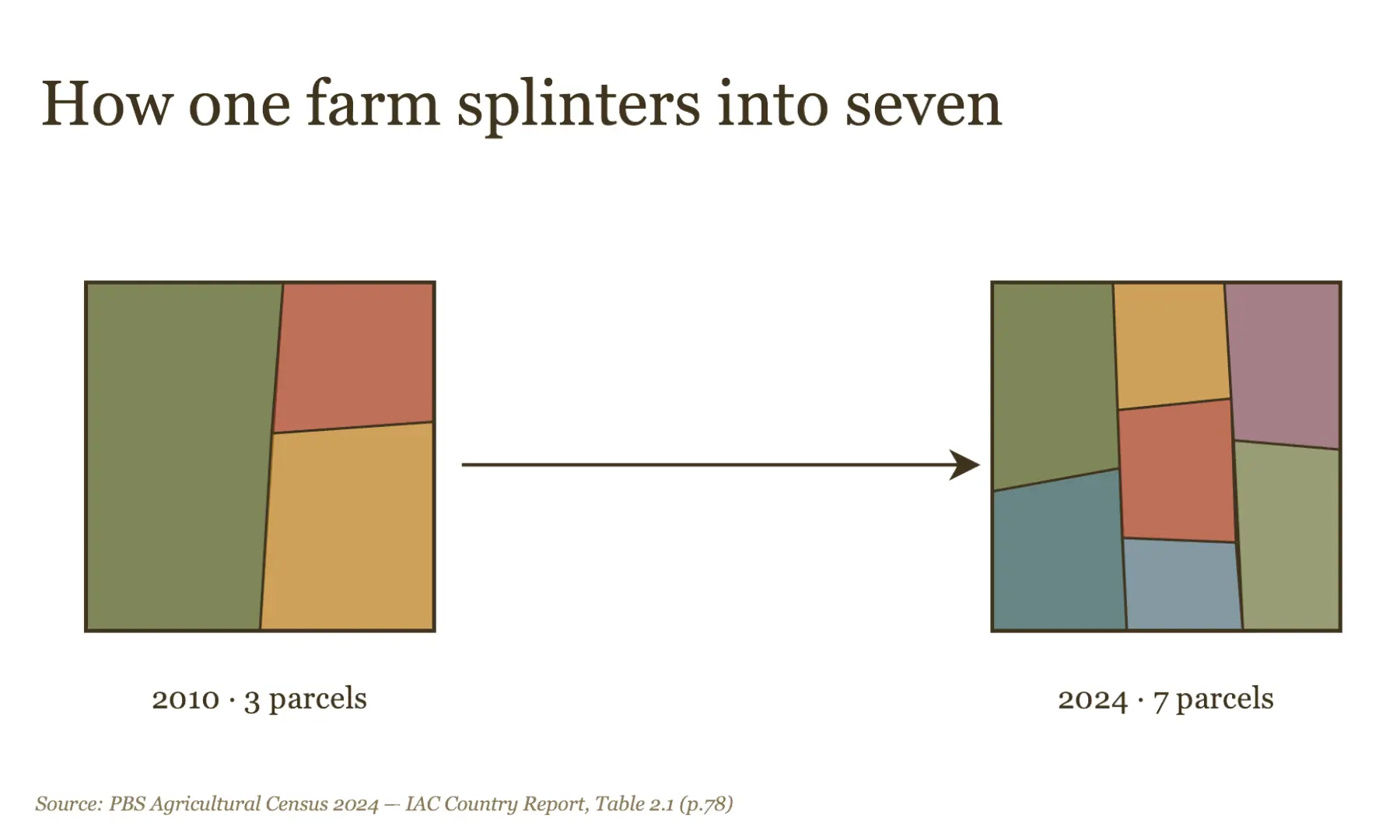 The state’s desire to count is never entirely innocent. British India turned censuses, land records and irrigation maps into technologies of rule: enumeration made people and property legible, while the canal colonies linked land settlement, water allocation and revenue to a powerful bureaucracy. Pakistan inherited that administrative apparatus. Yet the same numbers that can help a state extract can also help citizens see what is changing and demand a response. The Agricultural Census 2024 deserves to be read in that critical but constructive spirit. It is Pakistan’s seventh agricultural census and the first to combine agriculture, livestock and farm machinery in one digital exercise. This 2024 census is the first to combine agriculture, livestock and farm machinery in one digital exercise Fieldwork was carried out in two phases between September 2024 and February 2025. It was sample-based rather than a literal count of every farm. (This was a different approach from work done before 2010 and from that of met...
-
Dawn - 06:53 Jul 15, 2026
ISLAMABAD: Prime Minister Shehbaz Sharif on Wednesday directed the National Disaster Management Authority (NDMA) to maintain close coordination with provinces to avert any emergency situation during the ongoing monsoon rains, the Prime Minister’s Office (PMO) said. In a statement, the PMO said the prime minister issued the directives during a meeting with NDMA Chairman Lieutenant General Inam Haider Malik. The prime minister directed that coordination with provincial governments and Provincial Disaster Management Authorities (PDMAs) be further strengthened during the monsoon rainfall, it added. During the meeting, the prime minister was briefed on the country’s preparedness to respond to any emergency situation arising from the monsoon rains. He was also informed about progress in fully operationalising the early warning system and enhancing cooperation with the Ministry of Climate Change in this regard. Monsoon rains fall across the region from June to September, offering respite from the summer heat and are... -
Dawn - 06:04 Jul 15, 2026
A man was arrested in Utah for stabbing a Muslim man multiple times and stated that he targeted the victim because of the victim’s religion, police said in court records on Tuesday. Police said the suspect told them he “intends to kill Muslims” and that he constituted “a substantial danger to the public if released based on his violent actions … ideologies and pre-planned mass casualty events”. The incident took place inside the Valley Fair Mall in Utah’s West Valley City on Monday. The male victim had “multiple stab wounds all over his body and was bleeding profusely,” police said in an affidavit. Authorities said the suspect was pinned to the ground by bystanders before officers arrived on the scene. The suspect, Peter Michael Larsen, 48, was booked into the Salt Lake County jail for a probe over attempted murder and prohibited dangerous weapon conduct, jail records showed on Tuesday. The victim was a male Muslim kiosk worker. The suspect said “he had targeted the victim with intent to kill him because of h... -
Dawn - 05:53 Jul 15, 2026
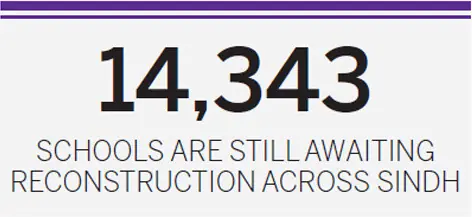 Khanzadi Kapri has lived through this three times. In 2011, when the floods came to her village in Mirpurkhas, the schools went underwater. Her education was disrupted, saved only because her father, a teacher, turned their home into a classroom. Her siblings studied at the kitchen table while the rest of the village waited for the water to subside. In 2022, the floods came back. Then again, in 2024. Each time, Kapri watched the same thing happen. Girls would return to school when the waters receded. They would sit in classrooms with no roofs, with broken furniture, with teachers who showed up on some days and not on others. “There were hundreds, perhaps thousands of girls who completed grade five but never enrolled in grade six,” Kapri recounts. “Climate-related disasters do not just interrupt education temporarily. For many girls, they permanently change the course of their lives.” Kapri has witnessed this herself and has been trying to do something about it. She is now the founder of Aurat Sujag, a grassro...
-
Dawn - 05:26 Jul 15, 2026
The Pakistan Stock Exchange’s (PSX) benchmark index snapped a two-day losing streak on Wednesday, gaining more than 2,500 points during early trade. The KSE-100 index initially rose 3,133 points at 10:06am from the previous close of 173,518.81 points. By 10:14am, it came down a little but was still up 2,664.88 points. Mettis Global, a web-based financial portal, said the KSE-100 index was rebounding from the previous session’s steep losses as investors engaged in value buying after heavy selloffs. Awais Ashraf, director of research at AKD Securities, said that investor sentiment had “turned positive” after United States President Donald Trump replaced the proposed 20 per cent toll on Strait of Hormuz traffic with investment commitments from GCC countries. “Additionally, lower-than-expected US inflation has eased concerns over further Federal Reserve rate hikes, improving the outlook for capital flows into frontier markets while reducing pressure on the Pakistani rupee,” he said. Meanwhile, oil extended its ga...
12682 items