Iran | Pakistan
"Iran" in Pakistan feed
-
Dawn - 14:29 Jun 15, 2026
The Pakistan Stock Exchange’s (PSX) benchmark KSE-100 index gained over 4,000 points on Monday as the US and Iran reached a preliminary agreement aimed at ending a war that began over three months ago and upended the global economy. The KSE-100 index rose by 4,639.92 points (2.69 per cent) to close at 177,039.82 from the previous close of 172,399.90. The market marked an intraday low of 175,085 at 11am, eventually reaching an intraday high of 177,176.72 at 3:25pm. Yousuf M. Farooq, director of research at Chase Securities, said the market opened higher today as sentiment improved following the announcement of a deal between the US and Iran, along with expectations that the Strait of Hormuz would remain open. Oil prices also opened lower, easing concerns over inflationary pressures going forward, he noted. He said that investors were awaiting today’s monetary policy announcement. Later in the day, the State Bank of Pakistan announced that it would keep the policy rate unchanged at 11.5pc. The market continues ... -
Dawn - 09:49 Jun 15, 2026
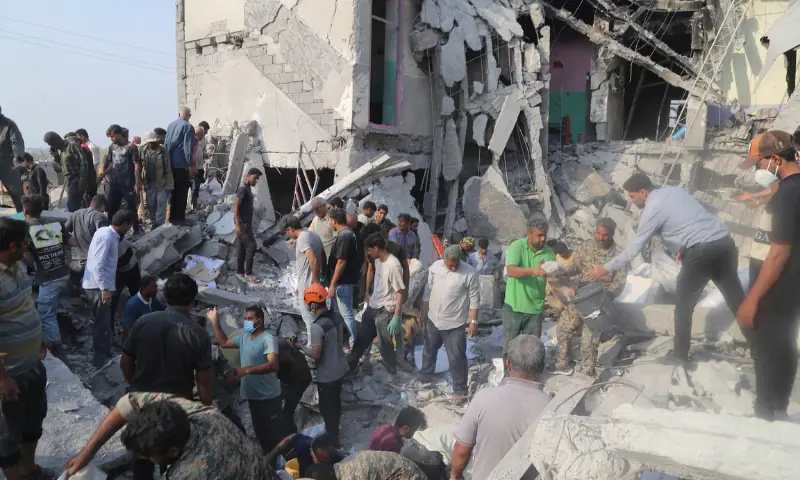 US and Iranian officials have agreed on a framework deal to end the war, halt hostilities on all fronts, and reopen the Strait of Hormuz, with the future of Iran’s nuclear programme and sanctions relief to be settled in later negotiations. US President Donald Trump announced that the agreement was “complete” and ordered an end to the US blockade of Iranian ports, while Prime Minister Shehbaz Sharif confirmed that a peace agreement had been reached after intensive talks, adding that the official signing ceremony would take place on June 19 in Switzerland. Iran also confirmed the framework understanding and ceasefire, saying the fighting would stop immediately, though key issues such as uranium enrichment and the release of frozen assets would be decided in subsequent discussions. Below is a timeline of the key events that led up to the agreement. February 28 The US and Israel launched an attack on Iran via air and sea: a series of explosions in Tehran, including near the residence of the supreme leader. A US-I...
 -
Dawn - 07:17 Jun 15, 2026
US and Iranian officials said they had agreed on a framework to end the war, halt the US blockade of Iran and reopen the Strait of Hormuz, a preliminary pact that sent oil prices falling but leaves the fate of Iran’s nuclear programme to further negotiations. “The Deal with the Islamic Republic of Iran is now complete,” US President Donald Trump wrote on his Truth Social platform around 5:30pm ET local time in Washington (2130 GMT) on Sunday. His post came shortly after Prime Minister Shehbaz Sharif announced a deal had been struck early on Monday local time. PM Shehbaz said in a post on X that “following intensive talks, we are pleased to announce that the Peace Deal between the United States of America and Islamic Republic of Iran has been REACHED. Both sides have declared the immediate and permanent termination of military operations on all fronts, including in Lebanon”. He added that the “official signing ceremony” would be on Friday, June 19, in Switzerland. “We would like to thank the United States of A... -
Dawn - 06:14 Jun 15, 2026
Oil prices slip to their lowest since March as US, Iran reach preliminary agreement to reopen Hormuz
Oil prices slipped to their lowest since March on Monday after US President Donald Trump and Iran’s deputy foreign minister said they had reached an initial deal to end the war and to resume traffic through the Strait of Hormuz. Brent crude futures fell $4.08, or 4.7 per cent, to $83.25 a barrel by 0415 GMT and US West Texas Intermediate was at $80.53, down $4.35, or 5.1pc. Both contracts fell to their lowest levels since March 10 on Monday after tumbling more than 3pc on Friday. The US and Iran will sign a memorandum of understanding in Switzerland on Friday, said Prime Minister Shehbaz Sharif, who first announced the agreement. Trump said on Sunday that the Strait of Hormuz would be open “toll free” and that a US naval blockade of Iranian ports would also end. Iran’s semi-official Mehr news agency said the draft deal called for reopening the Strait of Hormuz within 30 days under Iranian arrangements. “The geopolitical risk premium that had been built into crude is now being unwound quite aggressively as tra... -
The Nation - National - 05:17 Jun 15, 2026
Prime Minister Shehbaz Sharif on Monday announced that the United States and Iran had reached a peace agreement following intensive diplomatic engagement, with both sides agreeing to end military operations and move towards a formal settlement. -
Dawn - 04:41 Jun 14, 2026
• Shehbaz hopes deal will pave way for lasting peace, says Pakistan preparing for ‘electronic signing’ • Trump claims signing scheduled for today; threatens Iran; official says Washington to take part in de-mining • Iran states deal close but rules out signing today; negotiators not going to Islamabad, Geneva soon ISLAMABAD: In what appears to be a historic milestone for Middle East peace, Islamabad is preparing for an electronic signing by the US and Iran on a framework for a peace deal, to be followed by technical-level talks next week, albeit with varying dates for the remote signing as Trump insisted that it would be inked on Sunday while Iranian authorities denied it would be as early. Prime Minister Shehbaz Sharif, in a post on X on Saturday, announced that the agreement was expected to be “finalised in the next 24 hours”. The deal was “closer…than ever before”, he wrote, hoping that the deal would lay a “strong foundation for lasting peace”. Shortly afterwards, US President Donald Trump reposted PM She... -
The Express Tribune - 01:46 Jun 14, 2026
PM Shehbaz says US and Iran reach peace deal, official signing ceremony will be on June 19 in Switzerland -
Dawn - 05:17 Jun 11, 2026
The United States launched fresh attacks against Iran on Thursday, prompting Tehran to retaliate, as US leaders accused their counterparts of dragging out negotiations for a deal to end the three-month war. The second straight day of tit-for-tat strikes, with Iran targeting US bases across the Gulf, sent oil prices rising again. US President Donald Trump, who had repeatedly said negotiations with Tehran were close to an end, said on Wednesday that Iran keeps “playing us for suckers” and will now “have to pay the price”. Hours after, US Central Command (Centcom) said American forces began “additional self-defence strikes” at 5:15pm on Wednesday Washington time — early Thursday in Iran — in response to what it called Tehran’s “unwarranted and continued aggression”. Iranian media reported explosions across the south near the Strait of Hormuz, with explosions heard in Bandar Abbas, Qeshm and Minab, and sources reporting hits by “enemy projectiles” in Kargan and Sirik. Centcom said later that it had “completed” it... -
Dawn - 18:45 Jun 10, 2026
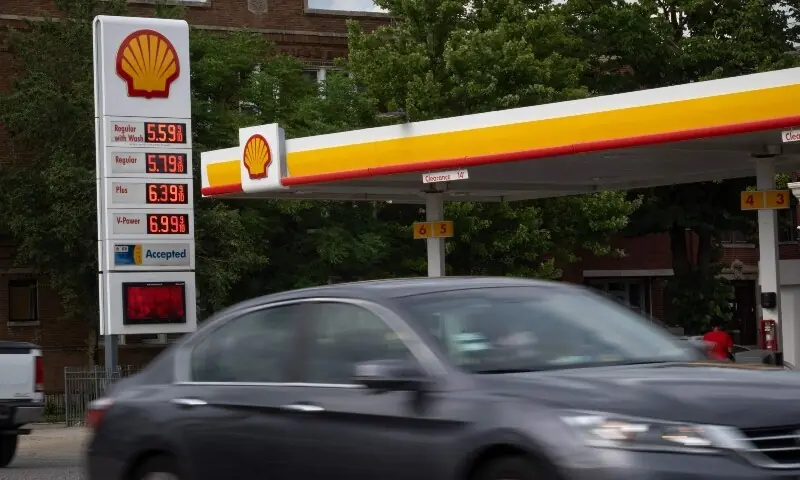 WASHINGTON: Rising inflation and persistent energy price pressures have sharpened political divisions in Washington, with Democrats blaming President Donald Trump’s Iran policy and trade agenda for worsening economic conditions for American households. The latest figures showing inflation at 4.2 per cent in May, compared with wage growth of 3.4pc over the same period, have revived concerns that real incomes are being eroded as the cost of living continues to rise. Senate Democratic leader Chuck Schumer criticised the administration’s handling of the economy and foreign policy in a sharply worded social media post. “Another month of Trump’s illegal Iran war, another month of Trump’s tariffs, another month of Republican control of Congress. The result? A new all-time high for Trumpflation,” he wrote. He also highlighted remarks by economist Heather Long of Navy Federal Credit Union, who warned that inflation was outpacing wages. “Inflation is so high that it’s erasing all wage gains,” she said. “Inflation: 4.2p...
 -
Dawn - 16:37 Jun 10, 2026
As the United States and Iran engage in a fresh round of hostilities, Pakistan has urged all sides to exercise restraint and give peace a little more chance. “As we work earnestly and painstakingly, together with our friends and partners, to find a peaceful diplomatic solution to the conflict, and especially when the final objective is just about to be achieved, we sincerely urge all sides to exercise restraint and give peace a little more chance,” said Pakistan Permanent Representative to the UN Asim Iftikhar Ahmad at a United Nations Security Council (UNSC) meeting on Tuesday. The statement came against the backdrop of the US carrying out attacks in Iran in response to what US President Donald Trump said was the downing of a US Apache helicopter on Tuesday. In retaliation, Iran said it attacked bases and other targets in the Gulf. The clashes mark one of the biggest exchanges in hostilities since the two countries agreed to a Pakistan-brokered ceasefire in April and deepens doubts about the prospects for a ... -
Dawn - 05:49 Jun 10, 2026
Iran’s Revolutionary Guards said they had carried out attacks against a US base in Jordan and 21 other targets in the Gulf on Wednesday in retaliation for American strikes around the Strait of Hormuz. The clashes mark one of the biggest exchanges in hostilities since the two countries agreed to a ceasefire in April. The Iranian strikes, which included attacks in Kuwait and Bahrain, came after the US military said on X it had targeted Iranian air defence, ground control stations and surveillance radar sites near the strait in response to what US President Donald Trump said was the downing of a US Apache helicopter on Tuesday. “I believe the response should be very strong, very powerful, and that’s what this one is,” Trump told ABC News on Tuesday. The escalation in violence deepens doubts about the prospects for a deal to end the war that started on February 28 with joint US-Israeli strikes on Iran. Tehran responded by firing on US bases and assets in Gulf countries and all but choked off the Strait of Horm... -
Dawn - 17:46 Jun 08, 2026
Prime Minister Shehbaz Sharif on Monday urged all sides in the ongoing Middle East conflict to “exercise restraint and give peace a little more chance” after a new round of hostilities between Iran and Israel. “The recent surge in violence in the Middle East is a stark reminder of the dangers associated with a tenuous ceasefire and the unbearable consequences it may lead to,” PM Shehbaz said in a post on X. “We sincerely urge all sides to exercise restraint and give peace a little more chance,” the premier wrote, emphasising that the “final objective is just about to be achieved”. He noted that Pakistan was working “earnestly and painstakingly, together with our brothers and partners, to find a peaceful diplomatic solution to the conflict”. “Let us continue to remain on the path of peace and diplomacy which have bright prospects of success instead of violence and destruction!” PM Shehbaz urged. PM Shehbaz’s statement comes after Israel and Iran exchanged attacks on Monday for the first time since the shaky ce... -
Dawn - 15:01 Jun 08, 2026
Iran on Monday said it was ending its latest military operation against Israel after the first exchanges of fire between the foes since a shaky ceasefire began, but warned it could inflict a more “crushing” response. United States President Donald Trump earlier on Monday told both Iran and key ally Israel to stop fighting, against the background of reports of an increasingly testy relationship between the US leader and Israeli Prime Minister Benjamin Netanyahu. Iran fired dozens of missiles at Israel overnight and Israel responded by targeting military sites in the Islamic republic, sparking fears the escalation could usher in a new full-scale conflict after the April 8 truce. “Israel and Iran must immediately stop ‘shooting.’ President DONALD J. TRUMP,” the US leader wrote on his Truth Social network. Minutes later, he added in a new post that “final negotiations” towards peace were proceeding “subject to ignorance or stupidity getting in its way.” Iran’s military command then said it was halting the operati... -
Dawn - 09:38 Jun 08, 2026
Israel and Iran traded fire on Monday, seriously testing a fragile truce and threatening hopes for a deal to end the Middle East war. The new attacks, including a strike on an Iranian petrochemical complex, came hours after US President Donald Trump called on Israel to refrain from retaliating against Tehran’s missiles. Iran’s Islamic Revolutionary Guard Corps (IRGC) said Tehran retaliated for the strike on its petrochemical complex by attacking similar industrial targets in Israel’s Haifa. AFP journalists in Jerusalem heard a series of explosions as they took shelter and the Israeli army said it worked to intercept a new wave of Iranian missiles. The retaliation followed Israel saying it fired on western and central Iran, tit-for-tat action against Tehran’s strikes on Sunday of 11 missiles, all of which were intercepted, with no casualties. Israel’s military and Iranian local media said Monday that Israel struck a petrochemical company in Mahshahr in southwestern Iran. Trump had sought to rein in Israeli Pri... -
Dawn - 07:35 Jun 07, 2026
 In a Tehran neighbourhood dotted with shops selling football jerseys and sporting goods, 10-year-old Helma was already feeling World Cup fever. “I’m supporting Iran because it’s always the champion!” she said, sporting a bracelet in the green, white and red of the national flag. “This year, it will be number one out of all the countries!” Holding a shopping bag containing a national team jersey, her mother explained that Helma was set to appear in a video clip supporting Iran’s side, adding: “We came to buy Team Melli outfits for the shoot.” But after weeks of war with Israel and the United States — one of the co-hosts of this year’s tournament — not to mention persistent economic hardship and stuttering efforts to bring the conflict to a final close, not every Iranian shares the grade-schooler’s excitement. This handout photograph taken and released by Iran Football Federation Press Office on June 6, 2026 shows Iran’s national football team posing at Antalya Airport in Turkiye before boarding a plane ahead o...
 -
The Nation - National - 06:22 Jun 07, 2026
US strikes Iranian sites after Iran launches drones Trump claims Iran retains 21pc to 22pc of missiles stockpiles after regional strikes Kuwait denounces ‘Dangerous Escalation’ by Iran after overnight attacks on Gulf States Iran calls overnight US attack on radar site ‘flagrant’ violation. -
Dawn - 03:09 Jun 07, 2026
• Cites restricted access to bombed nuclear sites as key reason for inspection gaps, denies seeking nuclear weapons • IAEA warns lack of access poses a ‘proliferation concern’, urges immediate resumption of verification activities TEHRAN: Iran has repudiated an International Atomic Energy Agency (IAEA) report as a “tool of political pressure”, following concerns over restricted access to its nuclear site. Tehran was engaged in discussions with Washington about its nuclear programme when the United States and Israel attacked it on February 28, sparking war in the region. Israel had previously struck Iran in June 2025, also while Washington and Tehran were engaged in nuclear negotiations, with Washington joining with later strikes before a ceasefire was declared. During both conflicts, Iranian nuclear sites were bombed repeatedly. “If the agency wants to be part of a diplomatic solution, it must refrain from turning a technical report into a tool of political pressure,” Deputy Foreign Minister Kazem Gharibabadi... -
Dawn - 02:40 Jun 07, 2026
• Iran launches fresh missile, drone attacks on Kuwait, Bahrain • Kuwait says new attack ‘dangerous escalation’; Bahrain denounces ‘blatant aggression’ • Falling debris causes ‘material damage’ in Kuwait • Centcom says four attack drones downed near Hormuz; Iranian coastal radar sites also hit • Trump says Iran has ‘22pc’ of missiles left • US okays sale of $2bn in anti-drone weapons to Kuwait KUWAIT CITY: Iran launched fresh missile and drone attacks on Bahrain and Kuwait early on Saturday, while the United States said it struck Iranian coastal radar sites after intercepting missiles and drones aimed at Gulf allies and the Strait of Hormuz, further straining a fragile ceasefire. Bahrain and Kuwait intercepted seven Iranian missiles, while Bahrain also destroyed several drones, officials said. It was the second attack on both Gulf states since Wednesday. Iran’s Revolutionary Guards said they had targeted “enemy bases” with missiles after the US military said it struck radar sites in Iran and downed drones hea... -
Dawn - 08:40 Jun 06, 2026
New attacks in the Middle East on Friday threatened to unravel an already fragile US-Iran ceasefire. Weeks of complex talks marked by threats and flare-ups of violence have failed to secure a deal to end the war and reopen the Strait of Hormuz, a key conduit for global energy flows. A ceasefire in the Middle East war, triggered nearly 100 days ago by US and Israeli strikes that wiped out Iran’s top leadership, has been in place since April 8. But tensions surged again on Friday when the US military said it struck radar sites in Iran after downing drones headed toward the strait. Shortly after, air raid sirens sounded in neighboring Gulf nations Kuwait and Bahrain — both US allies — and AFP correspondents in both countries heard explosions. Iran’s Revolutionary Guards said early on Saturday they had targeted “enemy bases in the area” with missiles in response to a US “invasion” of the country’s Sirik and Qeshm islands. US Central Command (Centcom) said Iran launched seven ballistic missiles toward Kuwait and B...