Coinbase | Crypto
"Coinbase" in Crypto feed
-
Cointelegraph.com - 14:38 Feb 15, 2026
Crypto exchange Coinbase reported a net loss in the fourth quarter of 2025, Ether’s price may rebound: Hodler’s Digest -
Cointelegraph.com - 14:38 Feb 15, 2026
Crypto exchange Coinbase reported a net loss in the fourth quarter of 2025, Ether’s price may rebound: Hodler’s Digest -
Cointelegraph.com - 10:19 Feb 14, 2026
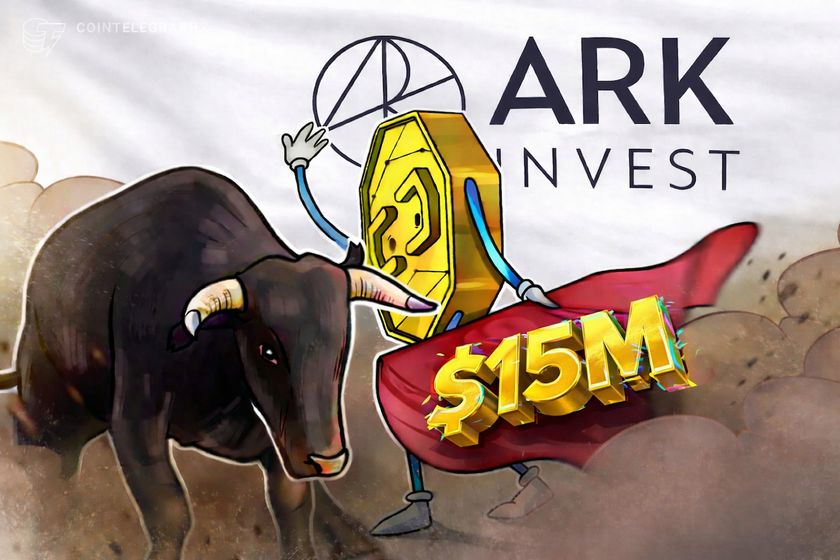 Cathie Wood’s ARK Invest added nearly $15.2 million in Coinbase stock across three ETFs, reversing course days after offloading more than $39 million in shares. ARK Invest has returned to buying shares of Coinbase Global after trimming its position, adding roughly $15 million worth of stock across several of its actively managed exchange-traded funds (ETFs) on Friday. The Cathie Wood-led asset manager purchased 66,545 Coinbase shares through the ARK Innovation ETF (ARKK), 16,832 shares through Next Generation Internet ETF (ARKW) and 9,477 shares through Fintech Innovation ETF (ARKF), according to the firm’s daily trade disclosures. The buying activity coincided with a sharp surge in Coinbase stock. Shares closed the trading session at $164.32, up about 16.4% on the day, before edging higher in after-hours trading, according to data from Google Finance. The surge put the firm’s total purchase at roughly $15.2 million. Read more
 -
CryptoSlate - 15:15 Feb 13, 2026
Coinbase just posted the kind of earnings report that makes two groups of people sweat at the same time. The first group is obvious, COIN shareholders who saw the company swing into a loss while crypto prices and activity cooled. Coinbase reported about revenue of roughly $1.78B for the quarter and a loss of -$2.49 […] The post Coinbase lost $667M but one boring custody detail decides whether crypto ETF holders should worry appeared first on CryptoSlate. -
CoinDesk - 09:50 Feb 13, 2026
JPMorgan said weak crypto markets pressured fourth-quarter results, but backs Coinbase’s strategy of investing through the cycle and returning capital via buybacks. -
Cointelegraph.com - 02:21 Feb 13, 2026
 CFTC chair Mike Selig launched the Innovation Advisory Committee in January, nominating 12 members as charter members before expanding the final list to 35 on Thursday. The Commodity Futures Trading Commission has added a slew of crypto executives, including those from Coinbase and Ripple, to its Innovation Advisory Committee, who will shape how the regulator crafts policy. CFTC chair Mike Selig said on Thursday that the 35 members of the committee will “ensure the CFTC’s decisions reflect market realities” and enable it to “develop clear rules of the road for the Golden Age of American Financial Markets.” The committee launched in January, replacing the Technology Advisory Committee, which drew on the advice of tech leaders to dissect how new technologies were impacting the derivatives markets more broadly. Read more
 -
Cointelegraph.com - 22:55 Feb 12, 2026
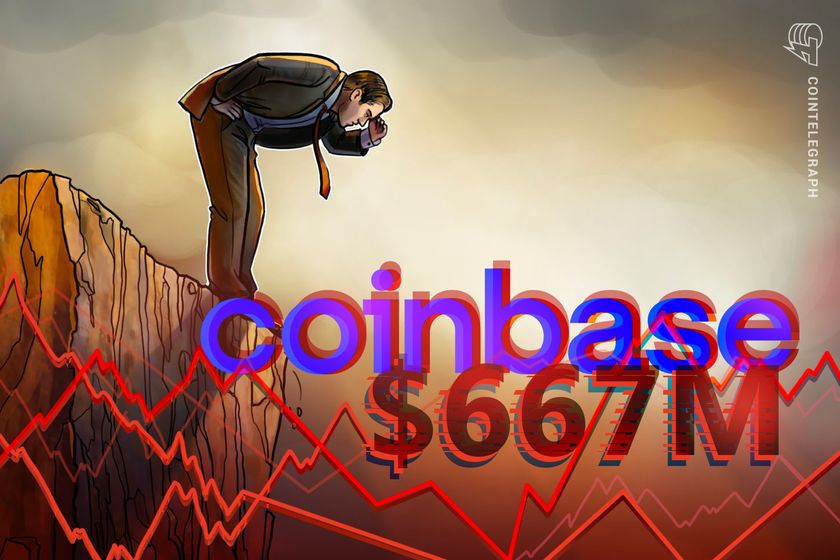 Coinbase’s fourth-quarter earnings missed Wall Street expectations, with the crypto exchange reporting its first net loss since the third quarter of 2023. Coinbase reported a net loss of $667 million in the fourth quarter of 2025, snapping the crypto exchange’s eight-quarter streak of profitability. In its Q4 earnings released on Thursday, Coinbase reported earnings per share of 66 cents, missing analyst expectations of 92 cents by 26 cents. The company said its net revenue fell 21.5% year-on-year to $1.78 billion, falling short of analyst expectations of $1.85 billion. Read more
 -
Cointelegraph.com - 00:20 Feb 12, 2026
 Users can set controls and permissions to allow the AI agent to manage liquidity positions and execute trades at any time of day, Coinbase said. Coinbase has launched crypto wallet infrastructure that allows AI agents — programs that can think and transact without human input — to spend, earn and trade crypto. In a post on Wednesday, Coinbase programmers Erik Reppel and Josh Nickerson said the new Agentic Wallets feature aims to build on today’s agents, which can answer questions, summarize documents, and assist with tasks, but can’t execute trades or orders on behalf of users. “The next generation of agents won't just advise — they'll act,” the pair said, adding that AI agents will be able to do everything from monitoring decentralized finance positions and rebalancing portfolios to paying for compute and API access and participating in creator economies. Read more
 -
Cointelegraph.com - 09:14 Feb 08, 2026
 Cathie Wood’s ARK Invest sold 134,472 Coinbase shares across three ETFs while buying over 393,000 shares of crypto platform Bullish. Cathie Wood’s ARK Invest continued reducing its exposure to crypto exchange Coinbase on Friday, unloading $22 million worth of shares across multiple exchange-traded funds (ETFs) while adding to its position in digital asset platform Bullish. According to ARK’s trade disclosures, the firm sold 92,737 Coinbase Global shares from the ARK Innovation ETF (ARKK), 32,790 shares from the Next Generation Internet ETF (ARKW) and 8,945 shares from the Fintech Innovation ETF (ARKF). The combined transactions totaled 134,472 shares, worth around $22.1 million. The sale came as ARK Invest, led by Cathie Wood, has reversed course on Coinbase, selling 119,236 COIN worth about $17.4 million on Thursday after a brief purchase earlier in the week. The Thursday sale was the firm’s first Coinbase sale of 2026 and its first since August 2025. Read more
 -
CoinDesk - 14:04 Feb 06, 2026
The bank trimmed its Coinbase revenue and earnings forecasts amid a brutal risk-off environment for crypto and delays around U.S. market structure legislation. -
Cointelegraph.com - 11:40 Feb 06, 2026
 ARK Invest sold $17.4 million in Coinbase while buying $17.8 million of Bullish shares, signaling a major shift in strategy as crypto markets stumble. ARK Invest, the asset manager led by prominent Bitcoin bull Cathie Wood, has shifted from buying to selling Coinbase stock, as the shares dipped 13% and hit multi-month lows. On Thursday, ARK offloaded 119,236 Coinbase (COIN) shares, valued at roughly $17.4 million, according to a trade filing seen by Cointelegraph. The sale comes just a day after a modest 3,510-share ($630,000) purchase on Tuesday, following a series of buys at higher prices earlier in 2026. Read more
 -
Cryptonews.com - 10:54 Feb 06, 2026
Tokenised collateral is shifting from experimental pilots into core financial market infrastructure, according to comments from Keith Grose, UK CEO of Coinbase, as central banks and institutions accelerate real-world deployment. The post Coinbase UK CEO Says Tokenised Collateral Is Moving Into Market Mainstream appeared first on Cryptonews. -
Cointelegraph.com - 09:49 Feb 05, 2026
 A Nevada judge declined to grant regulators’ bid to halt Coinbase’s event contract markets, as the exchange presses a CFTC preemption argument in federal court. A Nevada state court denied regulators’ request for an emergency temporary restraining order (TRO) to immediately halt Coinbase’s new prediction market offering. Instead, the court set a hearing for next week so the exchange can respond, according to Coinbase chief legal officer Paul Grewal. The Nevada Gaming Control Board (NGCB) filed a civil enforcement action in Carson City on Monday, accusing Coinbase of offering unlicensed wagers on sports event contracts and asking for a TRO and preliminary injunction to block the products for Nevada residents. Read more
 -
Cointelegraph.com - 06:11 Feb 05, 2026
 Bitcoin’s Coinbase Premium Gap has fallen to a yearly low, a move analysts say may reflect weaker relative demand on Coinbase-linked venues tied to institutional trading. The Coinbase Premium Gap, which tracks the price difference between Bitcoin on Coinbase and Binance, has fallen to its lowest level in over a year. An analyst said the move may point to weaker relative demand on Coinbase-linked venues, which are commonly associated with institutional trading. The Coinbase Premium is the price difference between Coinbase’s BTC/USD pair and Binance’s BTC/USDT pair. Read more
 -
CryptoSlate - 21:45 Feb 04, 2026
Ethereum co-founder Vitalik Buterin has signaled a fundamental shift in the blockchain’s roadmap that declares the era of the “branded shard” effectively over. On Feb. 3, Buterin argued that the industry’s previous “rollup-centric” vision no longer makes sense, citing faster scaling on the main Ethereum layer and the sluggish pace of decentralization among major rollups. […] The post Vitalik Buterin takes shot at Coinbase’s corporate control of Base which dominates 60% of layer 2 income appeared first on CryptoSlate. -
CryptoSlate - 17:35 Feb 04, 2026
The White House's end-of-February deadline for banks and crypto firms to resolve the “stablecoin yield” debate exposes a structural fault line that was never going to stay buried. This isn't a speed bump on the road to crypto-friendly regulation. Instead, it's a core collision that happens when digital dollars scale large enough to threaten the […] The post White House sets February deadline to settle $6.6 trillion fight between Coinbase and banks appeared first on CryptoSlate. -
CoinDesk - 16:54 Feb 04, 2026
Emails show Brock Pierce introduced Jeffrey Epstein to the Coinbase round, while Blockchain Capital later said its fund investment was never completed as Epstein invested independently. -
Cointelegraph.com - 21:39 Feb 03, 2026
 The enforcement action over wagers on sports event contracts followed Coinbase announcing the launch of prediction markets in all 50 US states. The Nevada Gaming Control Board announced that it had filed a civil enforcement action against Coinbase over wagers on sports event contracts. In Monday filings in the First Judicial District Court of the State of Nevada in and for Carson City, the Nevada Gaming Control Board sued Coinbase Financial Markets over allegations the company offered unlicensed wagers on sporting events. Authorities followed by requesting that the court grant a temporary restraining order and preliminary injunction preventing Coinbase from “operating a derivatives exchange and prediction market” related to sporting bets. “The Board takes seriously its obligation to operate a thriving gaming industry and to protect Nevada citizens,” said Mike Dreitzer, chair of the Nevada Gaming Control Board, in a Tuesday statement. “The action taken yesterday reinforces this obligation.” Read more
 -
Cointelegraph.com - 11:27 Feb 03, 2026
 Jeffrey Epstein may have made a $3.2 million investment in Coinbase in 2014 and sold some of it for $15 million in 2018, according to the latest batch of released emails. Newly released US Justice Department emails suggest Jeffrey Epstein, the late financier and convicted sex offender, gained exposure to early cryptocurrency venture investments through intermediaries, including a reported stake in Coinbase. Epstein may have invested $3.25 million into cryptocurrency exchange Coinbase back in 2014, according to files released by the US Department of Justice (DOJ). The emails suggest an entity linked to Epstein acquired 195,910 Series C shares for a total of $3.25 million when Coinbase was valued at $400 million. Read more
 -
Decrypt - 16:45 Feb 02, 2026
Coinbase co-founder Fred Ehrsam appears to have been personally aware and supportive of the convicted sex offender’s early investment in the company.