Treasury | Crypto
"Treasury" in Crypto feed
-
CryptoSlate - 10:35 Apr 11, 2026
Treasury Secretary Scott Bessent and Fed Chair Jerome Powell convened an urgent meeting with Wall Street leaders this week, bypassing the routine briefing cadence and pulling bank CEOs into a direct conversation about AI-driven cyber risk. Reports noted that the meeting aimed to ensure banks understood the risks posed by Mythos and similar models and […] The post Why Fed and Treasury leaders Powell, Bessent just rushed into a critical cyber-risk meeting appeared first on CryptoSlate. -
CryptoSlate - 11:45 Apr 10, 2026
The Trump administration and the broader crypto industry have initiated an unprecedented, multi-agency pressure campaign aimed at forcing the Senate to pass the Digital Asset Market Clarity Act, signaling a decisive final push to overhaul the regulatory framework of the $2.4 trillion cryptocurrency market before the 2026 midterm elections. In a highly synchronized effort this […] The post CLARITY Act faces White House blitz as Treasury and SEC flood Senate with coordinated pressure this week appeared first on CryptoSlate. -
Cointelegraph.com - 21:19 Apr 09, 2026
 The Treasury Department said the move reflects increases in frequency and sophistication of actions targeting digital asset platforms. The US Department of the Treasury’s Office of Cybersecurity and Critical Infrastructure Protection (OCCIP) announced on Thursday that it is expanding its cybersecurity threat identification program to include digital asset companies. Blockchain companies that choose to take part in the program will receive the same cybersecurity threat intelligence provided to traditional financial institutions at “no cost,” according to the Treasury’s announcement. “Cyber threats targeting digital asset platforms are growing in frequency and sophistication,” Cory Wilson, the deputy assistant secretary for cybersecurity at the OCCIP, said. Read more
 -
CoinDesk - 17:05 Apr 09, 2026
The Department of the Treasury announced it's letting crypto firms sign up for timely information-sharing on cybersecurity threats. -
Cointelegraph.com - 19:08 Apr 08, 2026
 The proposed rule would direct payment stablecoin issuers to establish AML/CFT and sanctions compliance programs, and be able to “block, freeze, and reject” certain transactions. Payment stablecoin issuers in the United States will be required to implement a regime targeting illicit finance under the proposed framework for the GENIUS Act. In a Wednesday notice, the US Treasury Department said its Financial Crimes Enforcement Network and Office of Foreign Assets Control (OFAC) had issued a joint proposed rule to implement provisions of the GENIUS Act, signed into law in July 2025. The proposal would direct payment stablecoin issuers to establish and maintain an anti-money laundering (AML) and countering the financing of terrorism (CFT) program, maintain a sanctions compliance program, and have the ability to “block, freeze and reject” certain stablecoin transactions. Issuers would be treated as financial institutions for purposes of the Bank Secrecy Act (BSA). Read more
 -
Cointelegraph.com - 09:24 Apr 08, 2026
 Cathie Wood's ARK Invest increased its Robinhood stake after the platform was selected to operate government-backed “Trump Accounts” for youth savings and investment. Cathie Wood’s ARK Invest has increased its exposure to Robinhood Markets, purchasing roughly $13 million worth of shares after the trading platform secured a role in a new government-backed savings initiative. ARK’s Tuesday trade disclosures show a fresh accumulation of Robinhood shares across multiple funds. ARK Innovation ETF (ARKK) led the charge, purchasing 132,116 HOOD shares. Additional buying came from the ARK Next Generation Internet ETF (ARKW), which added 33,607 shares, and the ARK Fintech Innovation ETF (ARKF), which picked up 16,918 shares. Related: Bernstein sees potential bottom for crypto stocks ahead of Q1 earnings Read more
 -
CryptoSlate - 11:05 Apr 02, 2026
Treasury's first proposed GENIUS rule landed on April 1 as a notice of proposed rulemaking. The text inside it builds the operational architecture for US stablecoin governance, addressing which institutions may issue payment stablecoins, under what conditions, and at what scale before federal oversight becomes mandatory. Why this matters: This shifts stablecoins from a fragmented […] The post US Treasury’s first GENIUS rule now redraws who controls stablecoins at scale appeared first on CryptoSlate. -
Cointelegraph.com - 21:31 Apr 01, 2026
 The Treasury published its notice of proposed rulemaking as the market capitalization of dollar-pegged stablecoins neared $300 billion. The US Department of the Treasury issued a notice of proposed rulemaking (NPRM) on Wednesday and is seeking public comment on proposed regulations for state-level stablecoin governance frameworks under the GENIUS Act. The GENIUS stablecoin regulatory framework, also known as the “Guiding and Establishing National Innovation for US Stablecoins Act,” gives states the authority to regulate stablecoins with a market cap of less than $10 billion, as long as the regulations do not deviate significantly from federal policies. The Treasury outlined several non-negotiable stablecoin regulations that must be in line with Federal regulations, including a 1:1 reserve backing with cash or high-quality cash equivalents and monthly reporting requirements. States must also comply fully with federal anti-money laundering and sanctions policies for stablecoins, while upholding bans on token r...
 -
CryptoSlate - 13:28 Mar 29, 2026
Even the safest corners of the market can start to look uneasy when oil jumps, war drags on, and investors begin to wonder whether inflation is heading back in the wrong direction. That was the message we got from Tuesday’s sale of 2-year US Treasuries. These are short-term government bonds, and they're widely watched because […] The post As Bitcoin weakens even ‘safe’ investments like the 2-year Treasury are starting to crack appeared first on CryptoSlate. -
CryptoSlate - 20:30 Mar 09, 2026
Treasury’s mixer language points to a new U.S. line on crypto privacy A new Treasury report says lawful users may use mixers for financial privacy on public blockchains. The language leaves Treasury’s money-laundering case intact, while opening room for privacy tools that can operate inside regulated U.S. crypto markets. In a report to Congress this […] The post US Treasury signals regulated crypto privacy may have a future in the US appeared first on CryptoSlate. -
Cointelegraph.com - 21:58 Mar 07, 2026
 The Treasury's report to the US Congress was commissioned as part of directives under the GENIUS stablecoin regulatory framework. The United States Treasury Department acknowledged the legitimate use of mixers, which obfuscate crypto transfers to preserve user privacy, in its report to Congress on “Innovative Technologies to Counter Illicit Finance Involving Digital Assets.” “As consumers increase their use of digital assets for payments, individuals may want to use mixers to maintain more privacy in their consumer spending habits,” the report said. The Treasury report continued: However, the report also noted the dangers of “darknet” or non-custodial, decentralized mixers. The Treasury said that non-custodial mixers are used for money laundering or shifting illicit funds by cybercriminals, including North Korea-linked hackers. Read more
 -
CryptoSlate - 16:05 Feb 25, 2026
Meta’s digital dollar comeback could unlock a $1 trillion Treasury shift Washington is not ready for
Social media giant Meta is quietly plotting a return to stablecoins. This time, however, the primary beneficiary may not be Mark Zuckerberg’s metaverse, but the US Treasury market. On Feb. 24, Coindesk reported that Meta was exploring stablecoin-based payments for a possible rollout in the second half of 2026, likely through a third-party provider rather […] The post Meta’s digital dollar comeback could unlock a $1 trillion Treasury shift Washington is not ready for appeared first on CryptoSlate. -
CoinDesk - 13:40 Feb 23, 2026
The bank said stablecoins may generate up to $1 trillion in fresh Treasury bill demand by 2028, allowing the government to ramp up issuance and suspend 30-year bond auctions. -
Cointelegraph.com - 12:46 Feb 20, 2026
 House Democrats are pressing Treasury Secretary Scott Bessent over World Liberty Financial’s push for a national trust bank charter, citing systemic risk. Democrats in the US House of Representatives are pressing Treasury Secretary Scott Bessent over how regulators are handling World Liberty Financial’s bid for a national trust bank charter to issue a dollar-backed token. In a letter on Thursday, 41 House Financial Services Committee Democrats led by Representative Gregory Meeks cited systemic risk, foreign ownership and potential political pressure on the bank chartering process. They asked Bessent to explain what safeguards exist to prevent foreign government officials or politically connected investors from using the charter process to gain leverage over the US financial system. Read more
 -
Cointelegraph.com - 18:10 Feb 18, 2026
 New Keyrock research finds not all newly created money impacts risk assets due to how fresh liquidity flows through the economy. Treasury bill issuance is the primary liquidity metric that impacts Bitcoin’s (BTC) price and not the Federal Reserve or any other central bank’s balance sheet, according to a new report from crypto investment firm and market maker Keyrock. Every 1% change in global liquidity levels impacts BTC’s price by 7.6% the following business quarter in which new money is created. However, not all liquidity impacts risk asset prices equally, Keyrock researcher Amir Hajian said. Treasury bill issuance has about an 80% correlation with BTC prices since 2021, and this metric leads BTC prices by about eight months, according to the report. Hajian wrote: Read more
 -
Cryptonews.com - 08:09 Feb 14, 2026
US Treasury Secretary Scott Bessent says the proposed Clarity Act could reduce uncertainty and stabilize crypto markets. The post Treasury’s Bessent Says Crypto Clarity Act Could Calm Markets appeared first on Cryptonews. -
CryptoSlate - 15:10 Feb 05, 2026
Treasury Secretary Scott Bessent told Congress he has no authority to bail out Bitcoin. The exchange came during a Senate Banking Committee hearing, when Senator Brad Sherman asked whether the Treasury could intervene to support cryptocurrency prices. Bessent's answer was direct: he cannot use taxpayer dollars to buy Bitcoin, and the question falls outside his […] The post Bitcoin faces a brutal irony as the Treasury refuses to save BTC from its own political success appeared first on CryptoSlate. -
CoinDesk - 19:57 Feb 03, 2026
The U.S. Department of the Treasury is scrutinizing crypto platforms, not just wallets, for enabling Iran’s sanctions evasion, according to TRM Labs’ Ari Redbord. -
Cointelegraph.com - 17:32 Feb 03, 2026
 The NYSE-listed BTYB allocates most of its assets to US Treasurys while using options strategies to provide weekly income and Bitcoin-linked exposure. VistaShares has launched BTYB, an actively managed exchange-traded fund (ETF) listed on the New York Stock Exchange that allocates most of its assets to US Treasurys while using options strategies to provide weekly income and Bitcoin-linked price exposure. According to the Tuesday announcement, the fund allocates about 80% of its portfolio to US Treasury securities and related instruments, with the remaining 20% tied to Bitcoin (BTC) price movements through a synthetic covered call strategy. Holdings data shows the fund’s Bitcoin-linked exposure comes from call options on BlackRock’s iShares Bitcoin Trust (IBIT). In this particular context, a synthetic covered call strategy uses derivatives to create Bitcoin price exposure and sells call (buy) options against that exposure to generate income, rather than holding Bitcoin directly. As a result, BTYB does not trac...
 -
Cointelegraph.com - 10:51 Jan 31, 2026
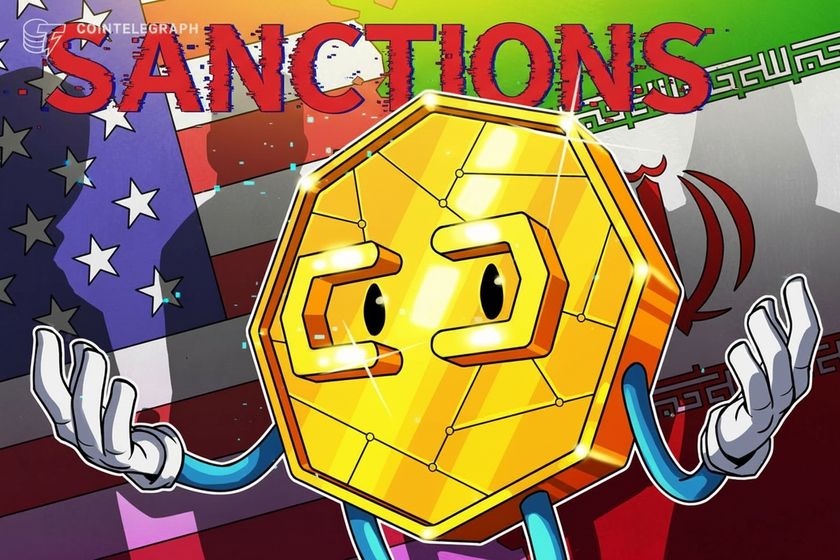 The US Treasury has sanctioned two UK-registered crypto exchanges tied to Iran’s financial system, marking the first time Washington has targeted digital asset platforms. The United States Treasury has sanctioned two cryptocurrency exchanges linked to Iran’s financial system, marking the first time Washington has directly targeted digital asset platforms as part of its Iran sanctions program. In a statement on Friday, the Treasury Department’s Office of Foreign Assets Control (OFAC) said the sanctions are part of a wider move against Iranian officials and networks accused of violently suppressing people at home while using alternative financial channels to get around international sanctions. Among those sanctioned was Eskandar Momeni Kalagari, Iran’s minister of the interior, who oversees the country’s Law Enforcement Forces. “Treasury will continue to target Iranian networks and corrupt elites that enrich themselves at the expense of the Iranian people,” Treasury Secretary Scott Bessent said. Read more