Cointelegraph.com
Source:
https://cointelegraph.com
Found 11893 news
-
Cointelegraph.com - 13:58 Jan 16, 2026
 Renewed spot Ethereum ETF inflows topped $474 million this week while network metrics smashed records, positioning ETH for a rally to $4,500 in the coming weeks. Ether (ETH) traded at $3,310, up 11% year-to-date, as renewed ETF buying and record onchain activity placed it on a path toward $4,500 over the next few weeks. Key takeaways: Spot Ethereum ETFs recorded $474.6 million in inflows over four days, outpacing new supply amid a surge in institutional buying. Read more
 -
Cointelegraph.com - 13:57 Jan 16, 2026
 A growing amount of the blockchain industry’s fees are captured by DeFi protocols rather than the underlying networks, signaling a potential investor shift to front-end facing applications. Revenue in the crypto industry is increasingly flowing to user-facing applications rather than the underlying blockchain networks, according to recent data, signaling a potential shift in where investors and developers focus their attention. Decentralized finance (DeFi) applications now capture five times the fees generated by blockchains, according to data shared by Jamies Coutts, chief crypto analyst at crypto intelligence platform Real Vision. The trend suggests that more of the industry’s fees will be captured by DeFi applications like wallets, decentralized exchanges (DEXs) and other protocols, while the underlying networks will attract a smaller share of revenue. Read more
 -
Cointelegraph.com - 13:46 Jan 16, 2026
 The apparent shutdown follows years of scrutiny of one of crypto’s largest fraud marketplaces. A Telegram-based escrow service linked to an illicit online marketplace appears to be winding down operations after refunding more than $130 million in stablecoins, a move that analysts say may disrupt a major hub for crypto-related scams. Tudou Guarantee, a service linked to the Huione Group, has apparently refunded $130 million in Tether USDt (USDT) to the group’s public merchants since the beginning of 2026, according to data shared by blockchain analytics company Bitrace. Refunds began with about $3.7 million on Jan. 1 and peaked at about $18.1 million on Sunday, Bitrace said. Earlier on Friday, the company seemingly announced the shuttering of operations through its Telegram channel, according to screenshots shared by Bitrace. Read more
 -
Cointelegraph.com - 13:00 Jan 16, 2026
 US President Donald Trump is bringing criminal charges against the head of the Fed in what many see as a political move motivated by a desire for lower interest rates. The US Department of Justice, at the direction of President Donald Trump, has opened a criminal investigation into Federal Reserve Chairman Jerome Powell. The DOJ alleges that the chair has misallocated funds in the course of renovations of Federal Reserve office buildings, a claim that Powell has denied. The Fed chair said that the charges were politically motivated and “a consequence of the Federal Reserve setting interest rates based on our best assessment of what will serve the public, rather than following the preferences of the President.” Read more
 -
Cointelegraph.com - 12:45 Jan 16, 2026
 US President Donald Trump said the “leaker on Venezuela has been found and is in jail” as some Polymarket accounts tied to early bets on Maduro’s ouster go silent. US President Donald Trump said the “leaker on Venezuela” has been jailed, a remark that has renewed scrutiny of prediction markets following a series of well-timed bets earlier this month. “The leaker on Venezuela has been found and is in jail right now,” Trump said in the Oval Office on Wednesday, according to a video posted by The Wall Street Journal. Although Trump did not mention prediction markets, blockchain analysts such as Lookonchain have speculated that the leaker may be linked to a cluster of Polymarket accounts that placed concentrated bets on Venezuela outcomes just hours before the news became public. Read more
 -
Cointelegraph.com - 12:35 Jan 16, 2026
 Jefferies’ Greed & Fear strategist Christopher Wood has slashed a 10% Bitcoin allocation from his portfolio and moved into gold, citing the quantum risk to BTC, Bloomberg reports. Investment bank Jefferies’ longtime “Greed & Fear” strategist Christopher Wood has reportedly eliminated Bitcoin from his flagship model portfolio, citing mounting concerns that advances in quantum computing may undermine the cryptocurrency’s long-term security. According to a report by Bloomberg, Wood said in the latest edition of his Greed & Fear newsletter, that the 10% Bitcoin (BTC) allocation he first added in late 2020 has been replaced by a split position in physical gold and gold mining stocks. He argued that quantum breakthroughs would weaken Bitcoin’s claim to be a dependable store of value for pension‑style investors. Read more
 -
Cointelegraph.com - 11:30 Jan 16, 2026
 The rules allow banks to combine token activity with payments and financial services under central bank and tech park oversight. Belarus has introduced a legal framework for so-called “cryptobanks,” formally integrating digital asset activity into the country’s regulated banking system under direct state oversight. On Friday, Belarusian President Alexander Lukashenko signed Decree No. 19, defining how crypto banks may operate and what conditions they must meet to enter the market. The decree positions cryptobanks as joint-stock companies authorized to combine token-based operations with traditional banking, payments and related financial services. Rather than creating a parallel sector for crypto, the framework ties digital asset activity to existing financial oversight mechanisms and infrastructure. Read more
 -
Cointelegraph.com - 10:39 Jan 16, 2026
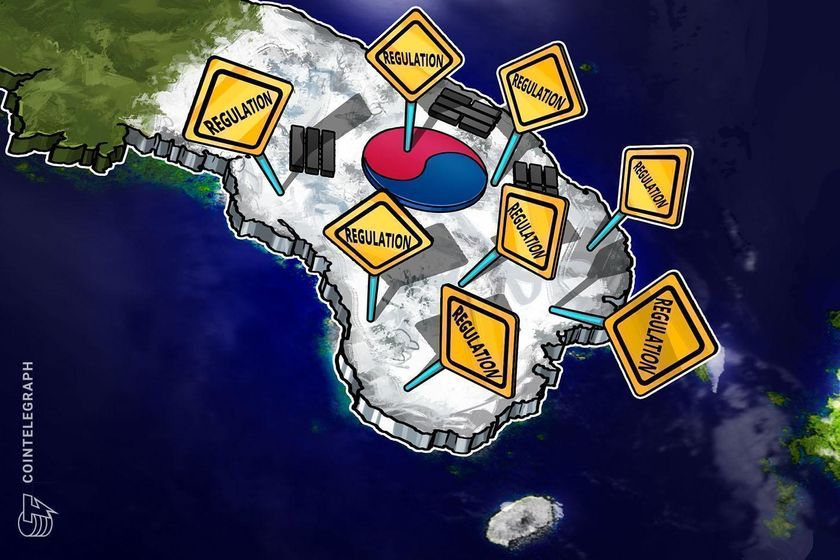 Google will require proof of FIU registration acceptance for crypto apps, raising compliance hurdles for offshore exchanges serving South Korean users. Google is rolling out updated crypto app requirements in South Korea, a move that may significantly restrict access to offshore crypto exchanges by tying app availability to local regulatory clearance. According to South Korean media outlet News1, starting Jan. 28, crypto exchange and wallet apps listed on Google Play in South Korea must upload documentation proving that their Virtual Asset Service Provider (VASP) registration with the country's Financial Intelligence Unit (FIU) has been accepted. Google reportedly clarified that developers listing crypto exchange and custodial wallet apps must upload proof of completed FIU registration acceptance through its developer console. Read more
 -
Cointelegraph.com - 10:28 Jan 16, 2026
 The recovery may continue as long as Bitcoin achieves a daily close above $98,000, with the technical setup projecting 18% gains ahead. Bitcoin’s (BTC) price traded 9.5% above its Jan. 1 open of $87,500, and traders were confident that BTC’s short-term “trend is up” as the price approached a key level of interest. Key takeaways: Bitcoin price consolidates around $95,000 as bulls face a major barrier ahead. Read more
 -
Cointelegraph.com - 10:18 Jan 16, 2026
 Moldova plans to introduce its first crypto law in 2026, aligning with the EU’s MiCA framework while warning citizens about digital asset risks. Moldova plans to introduce its first comprehensive cryptocurrency legislation by the end of 2026, aligning its rules with the European Union’s Markets in Crypto-Assets Regulation (MiCA) framework, according to the country’s finance minister, Andrian Gavrilita. Gavrilita said Wednesday in an interview on the state-owned TVR Moldova that the government is working with regulators to develop a legal framework that would allow citizens to hold and trade cryptocurrencies, while stopping short of recognizing digital assets as a means of payment. “We have the responsibility to regulate them, and it will be the right of citizens to hold these currencies,” he said. “I’m not sure if we'll manage during the next month, but it’s our engagement with the European Union. You can’t prohibit [cryptocurrencies.]” Read more
 -
Cointelegraph.com - 09:54 Jan 16, 2026
 The restructuring comes as the company integrates new payments assets and narrows its mandate, with several employees saying on X that they were affected by the layoffs. Polygon Labs has cut personnel as it pivots more aggressively to a payments-first strategy built around stablecoin rails and what it calls an “Open Money Stack,” a new, vertically integrated set of services designed to move money onchain. The layoffs came just days after announcing a deal worth as much as $250 million to acquire US crypto ATM and payments company Coinme and wallet and developer platform Sequence. Polygon did not publicly disclose how many roles were eliminated, but according to multiple sources on social media platforms like X, a reduction as large of 30% in staff has been linked to the post‑acquisition integration. Read more
 -
Cointelegraph.com - 09:10 Jan 16, 2026
 The lender will offer crypto trading through its Bolero platform as Belgium’s MiCA rules take effect, despite no licenses yet appearing on the ESMA’s register. Update (Jan. 16, 1:15 pm UTC): This article has been updated to add commentary from KBC Bank. KBC, one of Belgium’s largest banks, is set to roll out Bitcoin and Ether trading to retail investors next month via its own custodial solution and investment platform. From Feb. 16, KBC customers will be able to buy and sell crypto assets through the online investment platform Bolero, the bank announced Thursday. Read more
 -
Cointelegraph.com - 06:16 Jan 16, 2026
 Electronic brokerage giant Interactive Brokers says its clients can deposit USDC, which will automatically convert to US dollars to fund their accounts. Electronic brokerage giant Interactive Brokers has expanded its crypto services, allowing clients to fund their brokerage accounts using stablecoins that are automatically converted into US dollars. The firm said on Thursday that it has partnered with crypto infrastructure provider zerohash to enable 24/7 account funding with USDC (USDC) across the Ethereum, Solana and Base blockchains, removing reliance on traditional fiat wire transfers and banking hours. Interactive Brokers said stablecoin deposits are converted into US dollars on receipt and credited directly to client accounts. The company added that support for Ripple USD (RLUSD) and PayPal USD (PYUSD) is expected to launch next week. Read more
 -
Cointelegraph.com - 01:53 Jan 16, 2026
 Bitcoin has become an “element of resistance" in Iran, providing liquidity in an increasingly restricted economic environment, says Chainalysis. Crypto usage in Iran has spiked amid the country’s mass protests, with a surge of Iranians withdrawing Bitcoin to preserve value amid instability, according to Chainalysis. Protests in Iran began around Dec. 28 over worsening economic conditions, after the Iranian rial hit record lows against the US dollar. Demonstrations escalated nationwide, with Iran’s regime responding by cutting internet access, carrying out mass arrests, and reportedly killing thousands. Chainalysis said in a report on Thursday that Iran’s crypto ecosystem hit $7.78 billion in 2025, which accelerated amid the ongoing unrest with a substantial increase in the number of daily crypto transfers and the amounts transacted. Read more
 -
Cointelegraph.com - 01:09 Jan 16, 2026
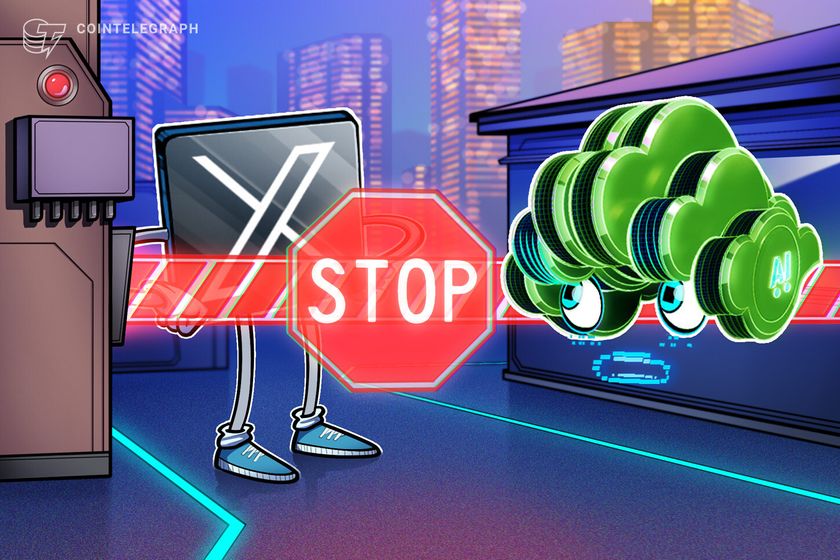 The Kaito.ai and Cookie DAO tokens fell over 15% after X’s ban, a move X’s head of product Nikita Bier said should improve user experience on the social media platform. Artificial intelligence-powered crypto platforms such as Kaito.ai and Cookie DAO have been banned from paying users to post content on X to curb the amount of so-called “AI slop” on the social media site. “We will no longer allow apps that reward users for posting on X (aka ‘infofi’),” X head of product Nikita Bier said on Thursday. “This has led to a tremendous amount of AI slop [and] reply spam on the platform.” “We have revoked API access from these apps, so your X experience should start improving soon (once the bots realize they’re not getting paid anymore),” he added. Read more
 -
Cointelegraph.com - 01:00 Jan 16, 2026
 The integration marks a key step in the crypto exchange's second-phase rollout, bringing Uniswap’s markets directly to its layer-2 network. Uniswap has launched on X Layer, a layer-2 blockchain built by crypto exchange OKX, becoming the chain’s preferred decentralized exchange as OKX expands its decentralized finance footprint. The integration gives X Layer users access to Uniswap’s markets, including crypto token pairs and liquidity pools, with swaps executed at layer-2 costs and no fees charged by Uniswap Labs, the protocol told Cointelegraph. Launched in 2024, X Layer is OKX's Ethereum Virtual Machine-compatible network, serving as core infrastructure for its DeFi applications. The network is integrated with OKX’s wallet and exchange, allowing users to move assets into the layer-2 network. Read more
 -
Cointelegraph.com - 22:30 Jan 15, 2026
 Bitcoin failed to hold $97,000 as its funding rate stalled and retail traders watched from the sidelines. Will TradFi reignite the rally to $100,000? Key takeaways: Retail traders remain sidelined despite BTC’s rebound, as low funding rates and muted interest point to fragile investor sentiment. Institutional investors are buying the spot Bitcoin ETFs again and corporate buyers building BTC treasuries may help send BTC back to $100,000. Read more
 -
Cointelegraph.com - 21:30 Jan 15, 2026
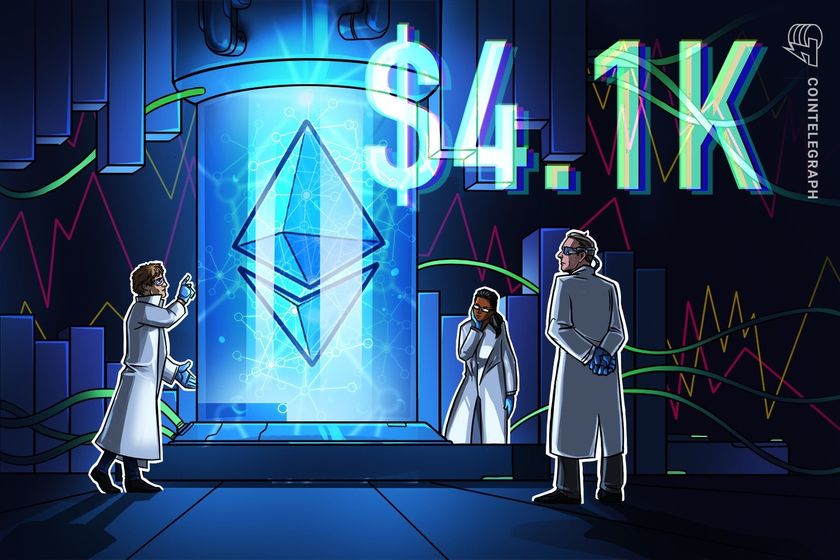 An emerging ETH futures trend is predicting an Ether price rally to $4,100, but other data says the altcoin is overdue for a slight correction. Ether (ETH) is trading near $3,300, and one futures market trend points to another 10% to 25% upside move. However, the market may first see a liquidation-driven price dip before any sustained rally develops. Key takeaways: Ether’s Leverage Ratio is near 0.60, a level that has historically preceded 10% to 25% rallies after short pullbacks. Read more
 -
Cointelegraph.com - 21:23 Jan 15, 2026
 The legislation would allow the state‘s treasury to hold digital assets with a market capitalization of more than $750 billion, which applied only to Bitcoin as of January. West Virginia State Senator Chris Rose has proposed legislation amending the state’s code to allow the treasury to invest up to 10% in precious metals, certain digital assets and stablecoins. In a bill introduced to the West Virginia legislature on Wednesday, Rose proposed that the state’s Board of Treasury be allowed to invest in precious metals, digital assets with a market capitalization of more than $750 billion from the previous calendar year and stablecoins. The bill, called the Inflation Protection Act, if passed and signed into law, could give the state’s treasury exposure to Bitcoin (BTC), the only cryptocurrency to meet the market cap requirement as of January. According to the text of the bill, any digital asset acquired by the state’s treasury could be held by a qualified custodian, in an exchange-traded product or through a se...
 -
Cointelegraph.com - 20:59 Jan 15, 2026
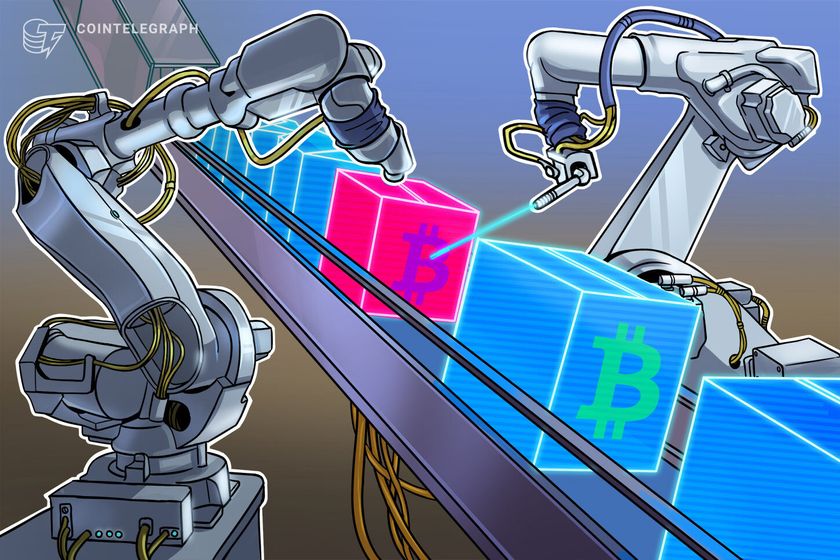 Untagged Bitcoin blocks sparked solo-miner speculation before NiceHash confirmed they were mined during internal testing, highlighting limits of onchain attribution. Social media buzzed this week after Bitcoin blocks 932129 and 932167 were mined without an immediately visible pool tag, prompting speculation that a solo miner had struck it rich, a familiar “Bitcoin lottery” narrative that briefly captured the market’s attention. The excitement, however, had less to do with the blocks themselves than with what their apparent mislabeling revealed about how Bitcoin mining attribution works. It also revealed how quickly assumptions can take hold. Amid the speculation, NiceHash emerged as the miner behind both blocks. NiceHash operates a hashrate marketplace that connects miners with buyers of computing power, rather than running a traditional mining pool. Read more
11893 items