CFTC | Crypto
"CFTC" in Crypto feed
-
CoinDesk - 16:47 Oct 19, 2026
The future of perps in the U.S. may be at stake as the CFTC argues that CME hasn't shown the new policy is hurting it after the agency OK'd its first bitcoin perp. -
CoinDesk - 09:36 Oct 16, 2026
The crypto exchange already paid up, but a court order and restrictions from its 2025 settlement will not be lifted even though the CFTC said the case should have never been presented. -
Cointelegraph.com - 07:43 Oct 16, 2026
 Judge ruled changes in CFTC enforcement priorities and allegations of misconduct by its enforcement division were insufficient to overturn Gemini’s January 2025 settlement. A US federal judge has rejected a joint request by crypto exchange Gemini and the Commodity Futures Trading Commission (CFTC) to overturn a $5 million settlement, despite the regulator’s conclusion that it would not have pursued the case under current enforcement standards. On Thursday, US District Judge Alvin Hellerstein ruled that changes in CFTC enforcement priorities and allegations of misconduct by its enforcement division did not justify overturning the January 2025 settlement. On May 27, the CFTC and Gemini jointly asked the court to overturn the settlement after an internal agency review found alleged misconduct by the regulator’s enforcement division, including reliance on a questionable whistleblower, improper regulatory pressure and efforts to prevent the disclosure of evidence. Read more
 -
Cointelegraph.com - 13:30 Oct 15, 2026
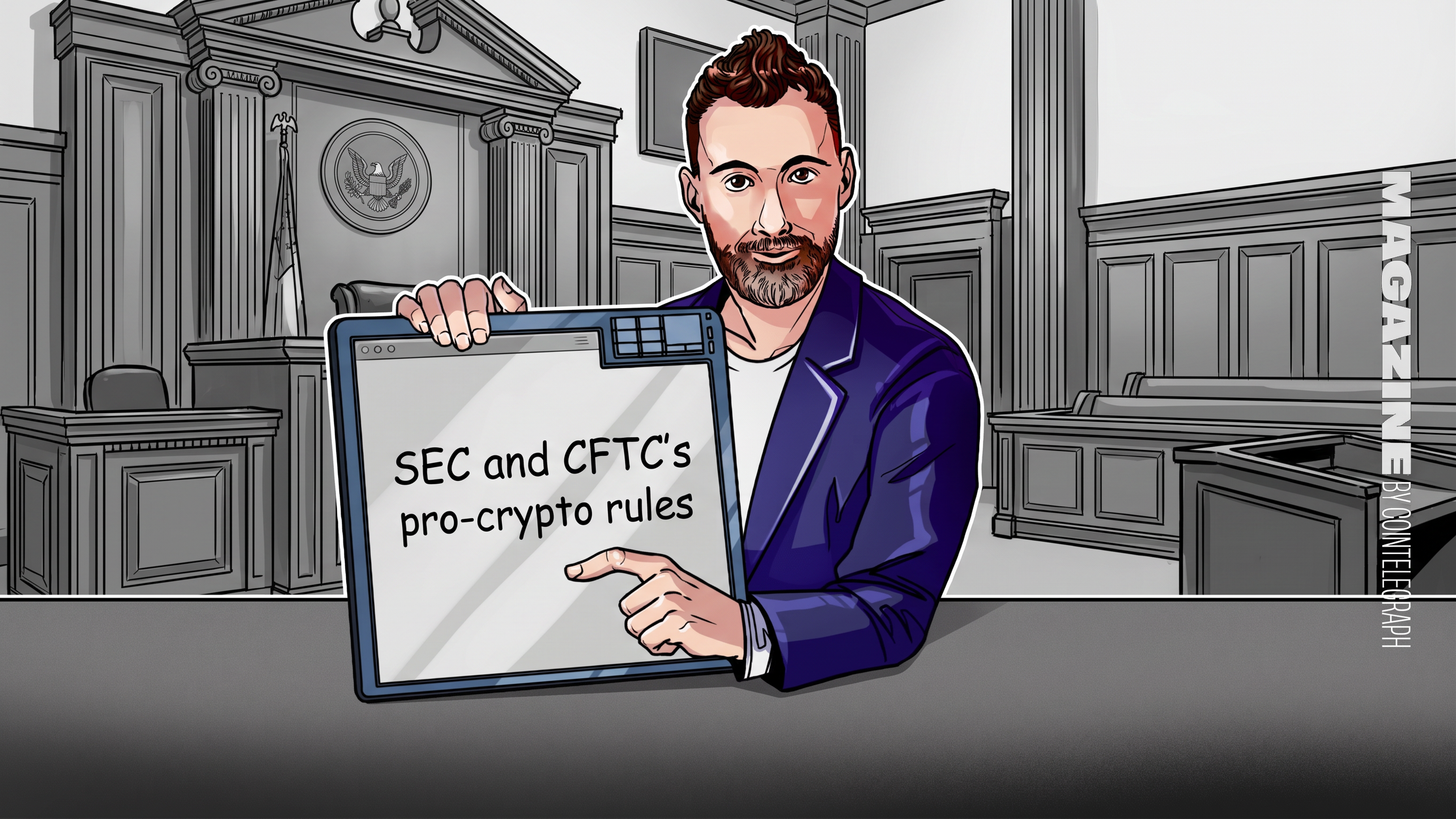 The SEC and the CFTC have issued a raft of pro-crypto rules recently. But will the rules hold up in court, and can they be easily rolled back by the “anti-crypto army”? In the wake of the failed CLARITY cloture vote in the Senate, the SEC and CFTC immediately moved to issue their own rules for crypto markets. Two days after the vote, the SEC unveiled a five-year exemption that permits the issuing and trading of stock tokens. OXK has since teamed up with ICE to launch trading in 63 NYSE-listed stocks and Securitize launched 12 Securitize Stocks, including Apple, Nvidia and Microsoft. The SEC has also issued guidance clarifying that a crypto token doesn’t become a security just because a project is buying back its own tokens, and stated that liquid staking tokens are not securities. It has also proposed new rules for the custody of crypto assets. Read more
 -
Cointelegraph.com - 07:44 Oct 11, 2026
 The two measures attempt to set the stage for a potential US Supreme Court battle over federal and state jurisdiction. The Commodity Futures Trading Commission (CFTC) has issued two proposals, one that would define event contracts as “swaps” under federal law and another that excludes traditional casino gambling from that definition. Several states have sued prediction-market operators, including Kalshi and Polymarket, alleging illegal gambling, and the CFTC has countersued to defend its federal jurisdiction over event contracts, which it claims are beyond the purview of state regulators. The first proposal clarifies the definition of “swap” to include event contracts, including those tied to sports, politics, cultural events and weather. Read more
 -
CryptoSlate - 16:00 Oct 10, 2026
An event-contract proposal and separate casino-wager rule sharpen the federal classification boundary while leaving state-law access disputes unresolved. The post CFTC proposes a divide between prediction contracts and sportsbook wagers appeared first on CryptoSlate. -
Cointelegraph.com - 16:22 Oct 09, 2026
 The crypto company has reportedly applied for two licenses with the US commodities regulatory as the courts weigh prediction markets cases. Blockchain.com has reportedly applied to the US Commodity Futures Trading Commission (CFTC) for approval of prediction market offerings and crypto derivatives. CNBC reported Friday that the exchange filed for two licenses with the CFTC for event contracts and crypto derivatives offerings for US-based retail and institutional investors. The licenses, as a designated contract market (DCM) and futures commission merchant (FCM), would allow Blockchain.com to operate as a futures exchange for event contracts and a broker for derivatives contracts, respectively. Blockchain.com announced in July that it planned to partner with Polymarket as part of a prediction markets integration on the company’s app. However, if approved, the CFTC license would allow the exchange to offer its own marketplace with event contracts. Read more
 -
Cointelegraph.com - 05:43 Oct 06, 2026
 Better Markets said the CFTC’s proposed framework to bring certain cryptocurrency transactions and exchanges under its oversight will leave investors less protected than under the SEC. Better Markets says the US derivatives regulator’s push to develop rules for certain retail crypto transactions could leave investors with weaker safeguards, arguing the agency is ill-equipped to oversee the market. The Commodity Futures Trading Commission on Monday sought public comment on a potential framework for margined, leveraged or financed retail crypto transactions under its existing authority. Benjamin Schiffrin, director of securities policy at Better Markets, a nonprofit financial reform advocacy group, argued that CFTC oversight is less suited than the SEC to protecting retail investors. “Unlike the SEC, the CFTC lacks an investor protection mandate. Its mission is to regulate the commodity and derivatives markets, which historically have been dominated by large institutions with very little retail investor parti...
 -
CryptoSlate - 22:10 Oct 05, 2026
The Commodity Futures Trading Commission (CFTC) is offering US crypto exchanges a federal route to retail leverage as Congress remains stalled on market-structure legislation. On Oct. 5, the financial regulatory agency opened rulemaking for Regulation Crypto Asset Transactions (CTX) and Regulation Crypto Asset Markets (CAM), which would create a national framework for platforms offering retail […] The post CFTC makes its biggest move yet to bring offshore crypto trading back to the US appeared first on CryptoSlate. -
Cointelegraph.com - 17:40 Oct 05, 2026
 CFTC Chair Michael Selig claimed that the agency was using its “existing statutory authorities“ to address crypto regulation after Congress failed to advance a market structure bill. US Commodity Futures Trading Commission (CFTC) Chair Michael Selig said that the agency will move forward on crypto regulation at the direction of President Donald Trump “with or without legislation” from Congress. Speaking at the Fordham Law Blockchain Regulatory Symposium on Monday, Selig announced proposals giving crypto companies the option to operate under the CFTC’s umbrella rather than dealing with the patchwork of regulations offered by individual US states. According to written remarks from the event, the CFTC chair said that it had issued an advanced notice of proposed rulemarking for companies “offering retail customers the ability to trade crypto assets on a margined, leveraged, or financed basis,” calling the regulation ‘CTX.’ Read more
 -
Cointelegraph.com - 01:07 Oct 01, 2026
 The classification could assist the CFTC’s claim that it has exclusive federal jurisdiction over event contracts offered on regulated prediction markets. The US Commodity Futures Trading Commission is seeking to clarify the definition of a “swap” amid a jurisdictional fight with state gambling regulators over prediction markets. An Office of Information and Regulatory Affairs docket shows the agency has submitted a proposed rule to expand the definition of “swap” to include event contracts, along with an interim final rule that would exclude casino-style gambling products. Both are under review. The classification matters because the CFTC has argued that federal law gives it exclusive authority over swaps traded on its regulated exchanges, such as those offered by Polymarket and Kalshi. US state regulators have disputed that position, particularly for sports event contracts, arguing they are subject to state gambling laws. Read more
 -
CoinDesk - 15:19 Sep 30, 2026
As it battles with states over prediction markets, the CFTC sent two related rules on swaps definitions for White House review. -
Cointelegraph.com - 19:59 Sep 29, 2026
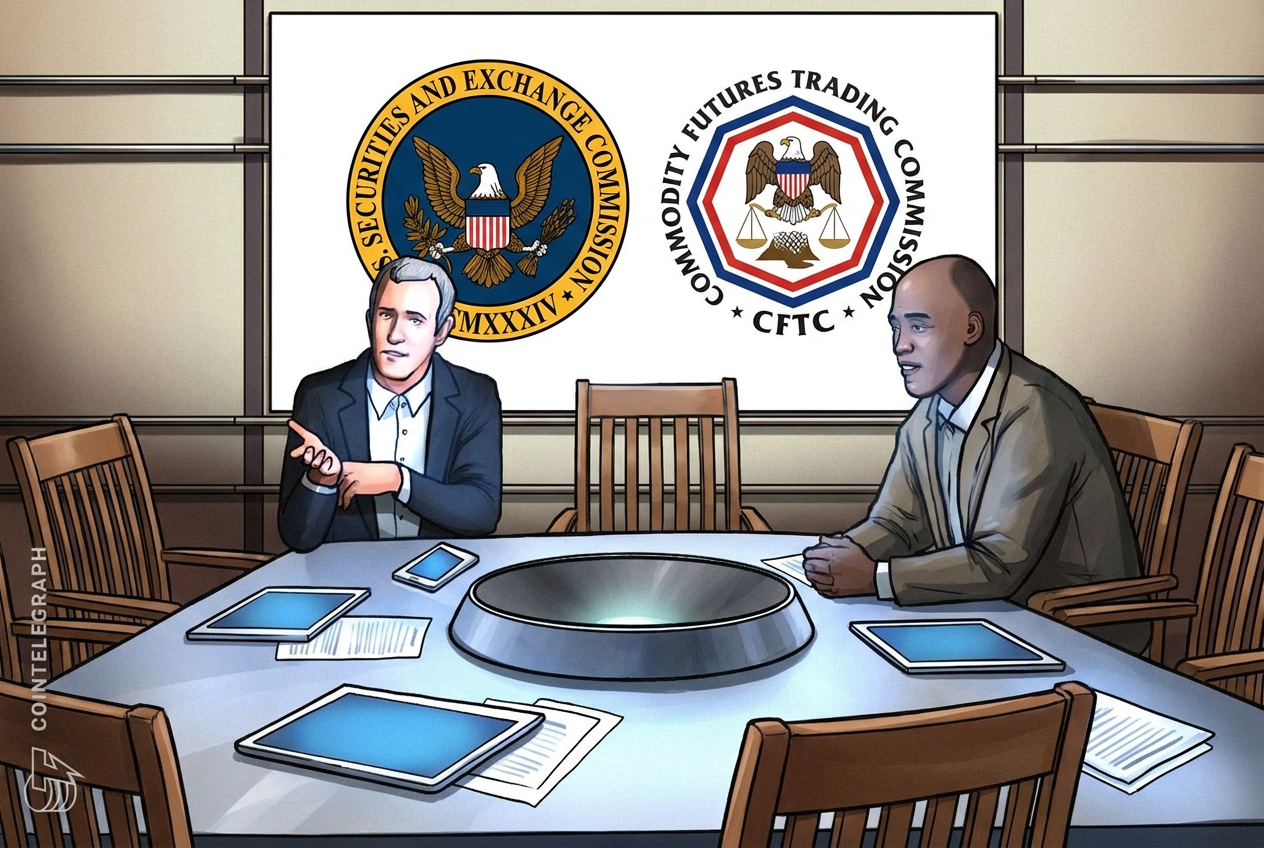 Seven commissioner seats at the SEC and CFTC will be empty after Friday, leaving only a few leaders at financial regulators to oversee aspects of the $3 trillion crypto industry. Update (Sept. 29, 8:45 pm UTC): This article has been updated to include a response from the CFTC. Two of the United States’ financial agencies tasked with overseeing and enforcing digital asset regulation will be down to just three commissioners after Friday, following the departure of a Republican member. On Friday, Hester Peirce, who served as a commissioner with the US Securities and Exchange Commission (SEC) for eight years, will leave the agency about two months before the end of the 18-month extension for her second term. The departure of Peirce, whom many in the industry knew as “Crypto Mom” for her views on digital assets, will mark only the second time in US history the agency has operated with two commissioners. Read more
 -
Cointelegraph.com - 04:02 Sep 29, 2026
 Coinbase joins Kraken in bringing US derivatives infrastructure in-house, after Kraken’s parent acquired Bitnomial and its CFTC-regulated exchange, clearinghouse and brokerage in May. Coinbase has received approval from the Commodity Futures Trading Commission (CFTC) to launch Coinbase Clearing LLC, its own US-based derivatives clearing organization. The registration became effective Monday, permitting the clearinghouse to clear fully collateralized futures, options on futures and swaps, though the registration does not permit the clearinghouse to clear its leveraged products. “Today’s CFTC approval completes Coinbase’s end-to-end derivatives infrastructure, enabling us to bring more regulated derivatives products to market with native USDC collateral and 24/7 settlement,” said Molly Abraham, Coinbase’s general counsel. Read more
 -
Cointelegraph.com - 18:39 Sep 28, 2026
 With the failed cloture vote on the CLARITY Act, the SEC announced updates on how federal securities laws could apply to token issuers, following similar guidance from the CFTC. The US Securities and Exchange Commission (SEC) updated its policies on how securities laws will apply to “certain types of crypto assets and certain transactions involving crypto assets,” following a similar move by the country’s federal commodities regulator last week. In a Friday update to the SEC’s frequently asked questions issued in March, the agency said that the latest interpretation of its rules on crypto was non-binding, had “no legal force or effect, [did] not alter or amend applicable law, and [did] not create any new or additional obligations for any person.” The FAQs would apply to how the SEC considers digital asset products falling under the Howey test for investment contracts. According to the SEC, token issuers could conduct buyback programs for customers provided “a crypto system is functional and has no central pa...
 -
Cointelegraph.com - 06:59 Sep 26, 2026
 The CFTC claimed that Cash FX engaged in minimal forex trading and misappropriated most of the participant funds. The Commodity Futures Trading Commission said it is suing Cash FX Group and three individuals in a $950 million foreign-exchange investment case involving cryptocurrency. The defendants are Cash FX and its CEO Huascar Jose Lopez Castillo of Brazil, The Conversion Pros and its CEO Ronald Pope of Oregon, and Justin Halladay of Florida. The CFTC said its complaint was filed Friday in the US District Court for the Middle District of Florida. It alleges the defendants operated a multilevel marketing Ponzi scheme, soliciting and accepting over $950 million for the purported purpose of trading retail foreign currency contracts in a commodity pool. Read more
 -
Cointelegraph.com - 20:37 Sep 25, 2026
 OG.com, recently spun out of Crypto.com, joins Coinbase, Kalshi and Kraken parent Payward in seeking approval to bring perpetual futures to individual US stocks. OG.com Markets is seeking US regulatory approval to offer perpetual futures tied to individual stocks, as trading platforms push to bring the popular derivatives product to US equity markets. In a Thursday filing with the Commodity Futures Trading Commission (CFTC), OG.com proposed new rules allowing it to list cash-settled single-stock futures that never expire and can trade 24 hours a day, five days a week. OG.com was recently spun out of crypto exchange Crypto.com as an independent prediction markets and derivatives platform valued at $5 billion. At the time, CEO Kris Marszalek said the platform planned to expand beyond prediction markets into futures and perpetual contracts. Read more
 -
Cointelegraph.com - 21:42 Sep 24, 2026
 Although the CFTC chair did not say the failed vote on the CLARITY Act was behind new rules for authorized crypto entities, he said the move was “to provide regulatory clarity.“ The US Commodity Futures Trading Commission (CFTC) has updated its guidance on tokenized assets and using blockchain technology for recordkeeping. In a Thursday notice, the CFTC said that it had updated information under its frequently asked questions on registered crypto-related entities. The guidance originally released in March was updated to specify that authorized companies could invest customer funds in tokenized forms, provided “the tokenized form of the asset grants the holder legal and economic rights that are the same or functionally equivalent to the rights received by holders of the asset in its traditional form.” The regulator added that it “would not object” to companies utilizing blockchain-based recordkeeping under the new rules. Read more
 -
CryptoSlate - 14:30 Sep 24, 2026
The Sept. 22 advisory asks exchanges to explain contract-specific safeguards while Kalshi continues to list speech markets. The post CFTC staff presses exchanges on political speech prediction market bets, asks how to prevent manipulation appeared first on CryptoSlate. -
Cointelegraph.com - 00:53 Sep 24, 2026
 Kalshi said nearly $5 billion in similarly sized Ether perpetual trades reflected its liquidity incentive programs and rejected allegations that the activity was wash trading. Prediction markets operator Kalshi said it has not been contacted by the Commodity Futures Trading Commission and does not believe there is any formal examination, after a report that the regulator was reviewing a flurry of trading activity in its Ether perpetual futures market. On Tuesday, The Wall Street Journal reported that the CFTC is examining a pattern of rapid trades clustered around $5,500, citing a person familiar with the matter. The trading pattern has prompted allegations of wash trading. The scrutiny comes as Kalshi has reported rapid growth in its perpetual futures business. A week after launching its perpetual futures markets in May, the company told CNBC that trading volume had surpassed $1 billion. Read more