Dawn
Source:
https://www.dawn.com
Found 12682 news
-
Dawn - 12:23 Jul 18, 2026
KARACHI: Police on Saturday said they have arrested a man over the alleged rape of a foreign woman in the city’s Defence Housing Authority (DHA). South Deputy Inspector General (DIG) Syed Asad Raza told Dawn that the suspect has been arrested, a day after the Darakhshan police registered a first information report (FIR) on the woman’s complaint. DIG Raza said the woman was a medical assistant in cardiology in the United States. He added that she arrived in Pakistan on Nov 13, 2025 and was residing in Phase VI of DHA. Police Surgeon Dr Summaiya Syed told Dawn that Darakhshan police brought the 49-year-old woman for a medical examination on Friday after she reported the alleged sexual assault. “Her samples have been collected for serology and DNA,” the police surgeon said. The FIR was registered on Friday, hours after the alleged incident, under Section 376 (punishment for rape) of the Pakistan Penal Code. Police said further investigation into the matter was under way. According to the FIR, the complainant was... -
Dawn - 11:41 Jul 18, 2026
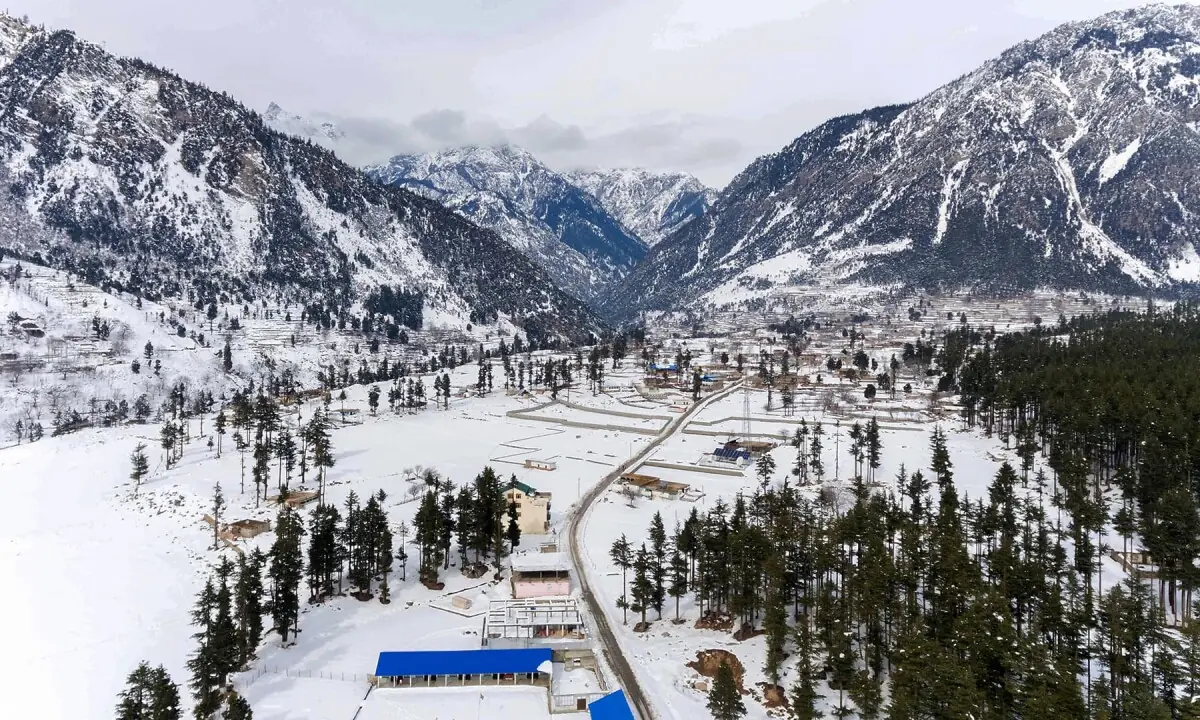 SWAT: Search efforts were underway to trace a person who went missing after a glacier burst incident in Upper Swat’s Kalam Valley, Rescue 1122 said on Saturday. Six others were injured in the incident that took place in Kalam’s Matiltan area a couple of days ago. The glacier burst was reported once the survivors returned to the main Kalam bazaar. A man, identified as Syed Ali Shah, a resident of Khwazakhela, remained missing. According to his companions, he is believed to have died. However, his body has not yet been recovered. Rahimullah, one of the expedition members, told Dawn that Shah was a local guide who was accompanying the team of six. He said dangerous conditions amid a snowstorm had compelled them to leave Shah’s body at the site. Upper Swat Deputy Commissioner Sohail Khan told Dawn that the district administration had coordinated with all relevant departments and formally requested helicopter support and other professional assistance from the competent authorities. “I have also invited members of ...
-
Dawn - 09:59 Jul 18, 2026
QUETTA: A sit-in committee, which included family members of policemen martyred in a deadly terrorist attack in Ziarat, ended its protest on Saturday after reaching an agreement with the Balochistan government last night. On July 6, 27 policemen were martyred in a terrorist attack on a police post in Balochistan’s Ziarat district. Families of the martyred personnel had been holding the sit-in at Quetta’s Koila Phatak since July 9, along with the martyrs’ bodies. “The sit-in has been called off; bodies of seven martyrs had been shifted to their native areas in the early hours of the day; and Koila Phatak has been opened for traffic after 10 days,” the committee announced after the agreement was reached late on Friday night. The provincial government accepted all demands of the bereaved families. Their main demand was establishing a judicial commission for investigating the Ziarat and Hanna Urak incidents that claimed the lives of 32 policemen and civilians. On July 5, armed men attacked the Hanna Urak Valley a... -
Dawn - 09:33 Jul 18, 2026
Indian space startup Skyroot Aerospace on Saturday launched the country’s first privately developed orbital rocket, a key test of national efforts to compete for a bigger share of the global commercial launch market. The Vikram-1 rocket lifted off from the Satish Dhawan Space Centre in Sriharikota at 0635 GMT, leaving behind a plume of fire and smoke, carrying several customer payloads and in-orbit experiments on its maiden orbital mission, dubbed “Mission Aagaman”. It successfully injected its payload into a 450 kilometres orbit about 15 minutes later, making India the third country to achieve orbital launch capability through private enterprise. The launch, which was initially planned to take off at 0600 am GMT, was put on hold temporarily, before it was rescheduled. The mission is intended to validate the rocket’s propulsion, avionics, telemetry, guidance, navigation and control systems in flight while collecting data for future commercial launches, Skyroot said. “Mission Aagaman is a grand success,” the c... -
Dawn - 09:31 Jul 18, 2026
One terrorist was killed as security forces foiled a major terrorist plot in Lower South Waziristan’s Wana by destroying an explosive-laden vehicle “intended for a suicide attack”, state media reported on Saturday, citing security sources. “Security forces foiled a major terrorist plot in Wana through a timely intelligence-based operation, destroying an explosive-laden vehicle intended for a suicide attack,” state-run Pakistan TV said in a post on X. “According to security sources, the operation prevented a potential catastrophe in Wana and surrounding areas, with one terrorist killed and five others injured,” it said. “The successful action averted significant civilian casualties and ensured the safety of the local population,” it added. Interior Minister Mohsin Naqvi paid tribute to the security forces for foiling the “major terrorist” attempt. “Security forces saved the population of Wana and surrounding areas from potential destruction by conducting an intelligence-based operation,” he said in a statement... -
Dawn - 08:49 Jul 18, 2026
 Even before the pehlwans square off in the mud, the air is already wrestling with a mix of bruised earth and olive oil. Men of all ages and build, gleaming like magazine models from head to toe, prep for a day under the July sun in Edirne. For over six centuries, men have gathered in this northwestern Turkish city for Kırkpınar, the yağlı güreş or oil wrestling festival for what is considered the national sport. It has been around for so long that it was ancient by the time the Olympics were revived in 1896. “People say it’s all tall tales about the history of this festival. But whether you believe it or not, it’s all true,” says 59-year-old Yakup Kaya, as he weaves the taxi through Edirne’s cobbled streets and Ottoman-era lanes towards Sarayiçi Er Meydani, where Kirkpinar comes alive. Legend has it that in 1361 Suleyman Pasha, the son of the second Ottoman sultan, Orhan I, and his army of forty soldiers, marched through the Eastern Thracian province of Edirne. To kill time, the men were paired off to wrestle...
-
Dawn - 07:35 Jul 18, 2026
The Counter Terrorism Department (CTD) said on Saturday that a wanted terrorist was killed during an intelligence-based operation in Khyber Pakhtunkhwa’s Dera Ismail Khan district. According to a CTD statement, the slain terrorist was identified as Khalid alias Commander, who was wanted in multiple cases, including the targeted killing of CTD Constable Muhammad Ali, who was martyred on March 17, 2025. The department said that it had received confirmed intelligence through its technical team that Khalid was present in the Korai area within the limits of Shorkot police station. Acting on the information, a CTD Special Weapons and Tactics team launched a targeted intelligence-based operation early on Saturday on the Tank-Dera Ismail Khan Road, the statement said. “During the operation, the terrorist was surrounded, told to surrender several times and attempts were made to arrest him. However, instead of surrendering, he opened indiscriminate fire on personnel,” the statement said. It added that he was killed as ... -
Dawn - 06:29 Jul 18, 2026
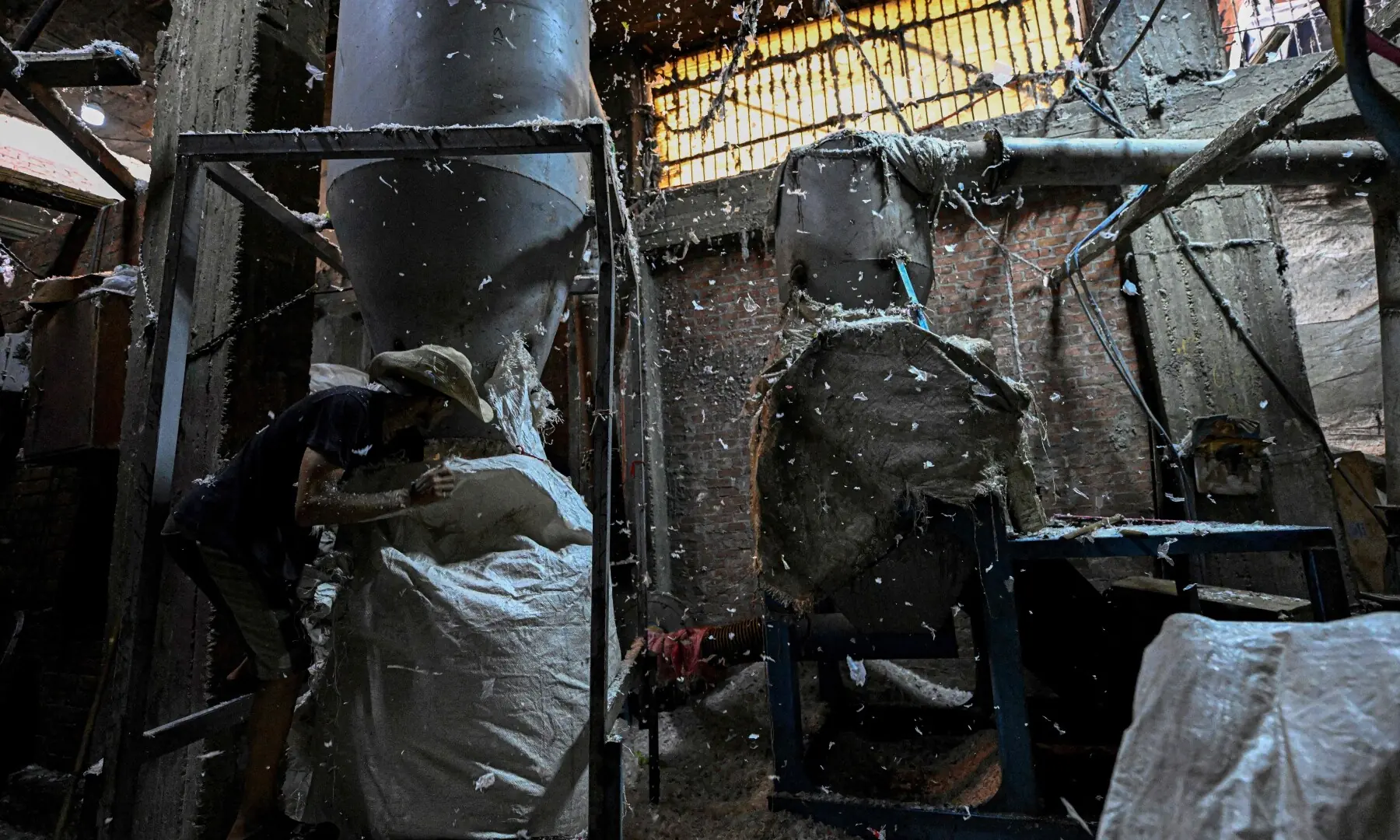 In the labyrinthine alleyways of Cairo’s Garbage City, recycling specialist Peter Romany finds himself fielding calls from factories scrambling for plastic to plug supply shortfalls caused by the US-Israel war on Iran. The 25-year-old is among the hundreds of recyclers and manufacturers across Egypt benefiting from a war-driven surge in demand ever since the United States and Iran choked off the Strait of Hormuz — a major shipping lane for the raw materials from which plastic is made. At the heart of the boom is the sprawling eastern Cairo settlement of Manshiyet Nasser, where generations of garbage collectors have built one of the world’s most sophisticated informal recycling systems. An Egyptian worker pepares plastic for processing at a recycling plant at the garbage city in the Manshiyet Nasser neighbourhood in Cairo on July 6, 2026. — AFP “Before the war, we were the ones calling factories, trying to sell our material,” Romany told AFP, standing beside towering bales of compressed plastic. “But after the...
-
Dawn - 05:47 Jul 18, 2026
Delhi police forcibly moved activist Sonam Wangchuk to a hospital on Saturday over health concerns after 20 days of his hunger strike to protest against India’s examination system. Wangchuk, 59, has been fasting since June 28 to demand the resignation of Education Minister Dharmendra Pradhan over alleged irregularities in examinations to study medicine. A few hundred students have also joined Wangchuk around his stage at New Delhi’s Jantar Mantar in recent weeks, with other protests also organised by the satirical Cockroach Janta Party (CJP) online movement. “As per the orders of … high court and on expert medical advice due to deteriorating health condition of Sonam Wangchuk, he has been shifted to the hospital for essential medical care,” a deputy commissioner of Delhi police said in a statement. “While complying with the orders … the protestors tried to create obstruction, in which slight commotion ensued,” the statement added. “We request the protestors at Jantar Mantar to peacefully vacate the place at t... -
Dawn - 04:30 Jul 18, 2026
Iran launched renewed attacks on US Gulf allies on Saturday after a seventh straight night of US strikes targeting Iranian military sites, including logistics infrastructure, escalating the war one week after a fragile ceasefire agreement fell apart. Both sides also took aim at shipping traffic, with the US saying it was enforcing a naval blockade while Iran said it targeted vessels that violated its rules on navigating the Strait of Hormuz, the vital waterway for one-fifth of the world’s oil supply. Oil prices climbed more than four per cent on Friday to their highest level in more than a month, applying political pressure on US President Donald Trump as his Republican Party tries to hold on to power in November congressional elections. Washington and Tehran have been testing the limits of escalation since their ceasefire agreement collapsed last week, raising the prospect of a return to all-out war. The US military’s Central Command said it concluded its latest round of attacks by hitting surveillance sites... -
Dawn - 03:48 Jul 18, 2026
ISLAMABAD: The Rawal Lake park site has lost 50 per cent of its tree cover over the last two decades, according to images shared by the Pakistan Space and Upper Atmosphere Research Commission (Suparco). The images compare the densely covered Lake View Point in 2004 with the extensive anthropogenic activities witnessed up to 2024. The stark difference highlights Islamabad’s environmental degradation, driven by unplanned urban expansion. The images also show a change in the colour of water in the dam, from greenish in 2004 to a blackish shade two decades later. While some environmentalists argue that the darker shade of water could be due to algae, they also point to the impact of large quantities of sewage flowing into Rawal Dam from upstream areas and surrounding settlements over the years. Suparco images highlight environmental degradation amid urban expansion and pollution concerns In the first week of June, the Pakistan Environmental Protection Agency (Pak-EPA) made a disturbing discovery during a cleanup ... -
Dawn - 03:37 Jul 18, 2026
• Team inspects health facility following emergence of HIV cases among 78 children • Detects syringe needles manually removed and not disposed of in sharps bins • Observes medical waste was not being segregated and disposed of according to infection prevention and control guidelines KARACHI: The Sindh Healthcare Commission has found that at Valika Hospital, needles were manually removed from syringes after use and were not found in sharps bins. “This raised serious concerns about the hospital’s medical waste management practices, as it was unclear where the removed needles had gone or how they had been disposed of,” the healthcare commission said in a statement issued here on Friday. A team of the healthcare commission, which conducted a visit of the hospital to review progress on its recommendations, observed that the technical staff could not explain where the needles were disposed of or whether any other method of disposal was being used. The Sindh Employees Social Security Institution (SESSI)-run Valika H... -
Dawn - 03:32 Jul 18, 2026
WHEN the Taliban entered Kabul in August 2021, the world feared Afghanistan was heading towards an unprecedented humanitarian catastrophe. Those fears proved well-founded. Yet few imagined that nearly five years later, Afghanistan would remain one of the world’s gravest humanitarian crises despite the absence of a nationwide civil war. The United Nations warned in 2022 that almost half the Afghan population was facing acute food insecurity. With the advent of the Taliban, the banking system had collapsed, millions had lost their livelihoods, and the sudden suspension of international assistance had pushed the economy into free fall. More importantly, professionals already in short supply started leaving the country. At the same time, women were progressively excluded from public life, girls were denied secondary education, and poverty became the defining feature of Afghan society. Those early warnings have not simply materialised; they have grown with each passing year. Today, Afghanistan presents one of the ... -
Dawn - 03:23 Jul 18, 2026
THERE are multiple reasons for serious concern about the recent passage of the Powers, Immunities and Privileges Act, 2026, (Act VII of 2026) by the Khyber Pakhtunkhwa Assembly. The first concern is the lack of transparency about the details of the Act. Although the law was passed by the assembly on April 30, 2026 and assented to by the governor on May 6, it took a while for the text of the law to make it to the assembly’s website. Interestingly, the website showed texts of acts passed much later but this particular Act and two other similar ones (Acts VIII and IX) were not there, presumably because of anticipated public backlash. Some of the privileges and powers among the long list of at least 21 privileges in the Act raise serious questions. Many of these privileges were a part of the repealed Act of 1988, but several new ones are included in the 2026 law. Section 4 of the law exempts MPAs from attending court proceedings during the assembly or committee sittings. The courts have been advised to reschedule... -
Dawn - 03:15 Jul 18, 2026
THERE is no glossing over the fact that the country’s leadership faces tough choices in the months ahead. Brussels has delivered its verdict on Pakistan, and it does not make for comfortable reading. While Pakistan’s progress in key areas has been noted and appreciated, the European Union clearly expects Islamabad to ‘do more’ to keep GSP-Plus access to its markets. The pressure will start building as the EU’s new trade rules come into effect in January 2027. Under these rules, Pakistan will not simply be monitored: it must reapply for GSP-Plus, submit a written plan of action, and win Brussels’ approval by the end of 2028. It has also been made clear that the country assessment published on July 16 is the baseline against which Pakistan’s application will be judged. At stake are some €7.5bn annual exports that enjoy preferential access to the EU, and roughly €730m in yearly savings from tariff exemptions. The tariff savings alone can mean the difference between profit and loss for Pakistan’s textile sector, ... -
Dawn - 02:56 Jul 18, 2026
WASHINGTON: Pakistan’s annual Mango Festival returned to the Embassy of Pakistan on Thursday with a message that extended well beyond the country’s celebrated summer fruit. Aptly themed “The Sweet Taste of Friendship”, this year’s gathering reflected the growing warmth in Pakistan-US relations as Islamabad assumes an increasingly significant diplomatic role in the region. The embassy’s flagship cultural event attracted hundreds of guests, including senior US administration officials, members of Congress and their staff, diplomats, business leaders, think tank scholars, journalists and members of the Pakistani-American community. Conversations over slices of Chaunsa, Sindhri and Anwar Ratol frequently turned to expanding trade, regional stability and the renewed momentum in bilateral relations. Among the senior US officials in attendance was Acting Deputy Assistant Secretary of State for South and Central Asian Affairs Konstantin Dubrovsky, who served in Pakistan for three years. “I have a deep appreciation f... -
Dawn - 02:48 Jul 18, 2026
• Bansky Jaroslav dies after fall near Camp I on 7,821-metre peak • Over 30 mountaineering permits granted as summer climbing season draws foreign expeditions to Pakistan’s tallest summits GILGIT: A Czech mountaineer has died after falling during an attempt to climb Masherbrum, one of the most challenging and rarely scaled peaks in Pakistan’s Karakoram Range, as the summer climbing season reaches its peak with foreign expeditions targeting some of the world’s highest mountains. Mr Bansky Jaroslav, a Czech national, was part of a foreign expedition team attempting to summit Masherbrum, also known as K1, which rises 7,821 metres above sea level. The climber died after falling from a cliff near Camp 1 of the mountain on Thursday, sources at the base camp told Dawn. DIG Baltistan Tufail Ahmed Mir confirmed the incident, saying members of the expedition team were attempting to climb the peak when the accident occurred. A base camp source said the family members of the deceased climber had arrived in Islamabad and... -
Dawn - 02:43 Jul 18, 2026
• Balochistan CM’s aide says accord with protesters to form judicial commission to probe Hanna Urak, Ziarat attacks • Province-wide shutter-down strike observed in solidarity with families of martyred cops QUETTA: The Balochistan government and representatives of a multi-party alliance claimed to have reached an agreement with the families of policemen martyred in a deadly attack in Ziarat, late on Friday night. During the day, a shutter-down strike was observed across Balochistan, with shops and markets closed and all business activities remaining suspended, in solidarity with the families of the policemen, who had been holding a sit-in at Quetta’s Koyila Phatak for nine straight days, along with the martyrs’ bodies. Traders’ organisations, including the Central Anjuman-i-Tajran Balochistan, and all opposition parties had supported the strike call. In a statement, the traders’ body said markets remained closed in Quetta, Kuchlak, Pishin, Saranan, Khanozai, Muslim Bagh, Qila Saifullah, Zhob, Sherani, Loralai,... -
Dawn - 02:32 Jul 18, 2026
ISLAMABAD: Pakistan and China on Friday agreed to enhance cooperation in immigration, border management and institutional collaboration. An understanding to this effect was reached during a meeting of Interior Minister Mohsin Naqvi and Minister of State for Interior Tallal Chaudhry with a delegation of China’s National Immigration Administration led by Director General Qi Jingyang here. The two sides agreed to make joint operations more effective against illegal immigration, arms smuggling and cross-border crimes. It was also decided to finalise an agreement soon to expedite the immigration process. A Pakistan-China joint working group on border management and security will be established. Interior Minister Mohsin Naqvi said cooperation with China on land borders, seaports and immigration management would be further enhanced. “The government of Pakistan is pursuing a zero tolerance policy against illegal immigration, border crossing and smuggling,” he said, adding that action was being taken without discrimin... -
Dawn - 02:27 Jul 18, 2026
• DHS limits stays to four years under new framework, citing ‘abuse of immigration system’ • Move likely to deter thousands of foreign students from applying to American universities WASHINGTON: Foreign students will now face stricter immigration requirements in the United States under a new rule that ends the decades-old “duration of status” system, which allowed them to remain in the country as long as they maintained their student status. The US Department of Homeland Security (DHS) announced the new regulation on Thursday, a move that could have a significant impact on thousands of students from countries such as India and Pakistan who travel to the US each year for higher education. The final rule replaces the existing arrangement, under which international students could remain in the US as long as they maintained their academic status, with a fixed period of admission for holders of F, J and I category visas. Under the new system, foreign students on F visas and exchange visitors on J visas will gener...
12682 items