Dawn
Source:
https://www.dawn.com
Found 12682 news
-
Dawn - 05:44 Jul 20, 2026
Brent oil prices rose two per cent to more than $90 per barrel on Monday, as escalating US-Iran hostilities in the Middle East restricted oil shipments through the Strait of Hormuz. Brent crude futures LCOc1 climbed $2.09, or 2.37pc, to $90.19 by 0241 GMT, touching the highest since June 11, extending gains after rising 15.9pc last week, its biggest weekly gain since April. US West Texas Intermediate crude CLc1 was at $84.20 a barrel, up $1.71, or 2.07pc, the loftiest since June 12. Front-month prices gained 15.5pc last week, the largest weekly ascent since early March. The Middle East conflict escalated over the weekend with the US conducting a ninth straight night of attacks against Iran, while US allies Kuwait and Bahrain reported more Iranian strikes. “ICE Brent broke above $90 per barrel this morning with no let-up in the escalation in the Gulf,” said ING analysts in a note on Monday. “The US and Iran continue to exchange strikes, which are proving to be deadly for both sides. If this escalation goes unc... -
Dawn - 05:22 Jul 20, 2026
US forces hit Iran for a ninth consecutive day on Monday as concerns grew over shipping through the Strait of Hormuz after Iran said two oil tankers had exploded and been immobilised, adding that the waterway would remain unsafe as long as US “aggression” in the region continued. In a statement, US Central Command said it targeted “Iranian military command centres, air defense and coastal surveillance sites, maritime capabilities, missile and drone launch sites, and communications networks to further diminish Iran’s ability to attack commercial vessels and civilian mariners transiting the Strait of Hormuz”. The strikes are part of an escalating cycle of attacks between the US and Iran after an interim ceasefire agreement signed a month ago unravelled, deepening a struggle for control over the Strait of Hormuz that has disrupted energy supplies and stoked fears of global inflation. Iran’s semi-official Tasnim news agency, citing its own reporters, said US missiles struck several Iranian cities early on Monday.... -
Dawn - 03:39 Jul 20, 2026
KARACHI: Despite being registered by Pakistan’s drug regulator, around 40 new life-saving medicines remain unavailable to patients because the federal government has yet to approve their prices, forcing thousands of people suffering from cancer, diabetes, haemophilia, Parkinson’s disease and other serious illnesses to rely on expensive smuggled or unregistered medicines, officials and market sources said on Sunday. The delayed price notifications, they said, have stalled the legal marketing of several critical medicines, including advanced cancer therapies such as Keytruda (Pembrolizumab) and Nivolumab, as well as Humador insulin for diabetes, Adalimumab for autoimmune diseases, recombinant Factor VIII for hemophilia A, Carbidopa-Levodopa for Parkinson’s disease, Dabigatran and Heparin for blood clot prevention, Methyldopa for hypertension during pregnancy, Meropenem and Fosfomycin for severe bacterial infections, Ketamine for anaesthesia and emergency care, as well as several vaccines, intensive care medicin... -
Dawn - 03:22 Jul 20, 2026
KARACHI: The Jamaat-i-Islami (JI) has written a letter to Prime Minister Shehbaz Sharif, expressing concern over the city’s worsening water crisis and urging the federal government to ensure the early completion of the K-IV water supply project. In the letter, JI-Karachi chief Monem Zafar referred to a report presented before a National Assembly committee, which indicated that the first phase of the K-IV project — expected to supply 260 million gallons of water per day to Karachi — is now scheduled for completion in December 2029. He called on the Sindh government to complete the K-IV augmentation component on a priority basis, while urging the federal government to release all remaining funds required for the project within the current fiscal year so that its first phase could be completed without further delay. He mentioned that the report had caused widespread concern among Karachi residents, adding that the city’s population of around 35 million was facing an acute water shortage. In letter to Shehbaz, Ka... -
Dawn - 03:13 Jul 20, 2026
The New York Times stunned Americans on Sunday when it revealed a new FBI directive regarding ICE agents — and people who accuse them of violence. Federal agents across the nation received instructions last week not to investigate confrontations with immigration agents, sources told Times reporters. “FBI managers around the country received a written notice informing them of the change on Thursday…The same day, some ICE agents around the country were notified by their F.B.I. counterparts,” Aleaziz and Barrett wrote. “If enacted, such a change would sharply limit law enforcement scrutiny of immigration agents, as the Trump administration draws mounting criticism over killings at the hands of federal officers.” The directive arrived after ICE agents fatally shot Lorenzo Salgado Araujo in Houston and Joan Sebastian Guerrero in Biddeford — and as protests mount nationwide in North Carolina, Oregon, Utah, Arizona, and of course, Texas and Maine. One Maine protesters’ sign read “a man was lynched here.” The Justice... -
Dawn - 02:57 Jul 20, 2026
• JUI-F leader says criticism not aimed at institution • Insists he has utmost respect for martyrs, recalls how many comrades have fallen prey to terrorism ISLAMABAD: JUI-F chief Maulana Fazlur Rehman on Sunday refused to apologise for his controversial remarks about security personnel, saying he had no disagreements with state institutions; rather his misgiving were with those “at the helm of affairs”. In a no-holds-barred address to a party lawyers’ convention in the federal capital, the JUI-F chief slammed what he termed “a propaganda campaign” against him. The Maulana was alluding to his remarks at a political gathering in Kasur last week, where he spoke about security and terrorism in Khyber Pakhtunkhwa and Balochistan, where he reportedly made certain comments about security personnel. The statement had drawn widespread condemnation from political circles, and a number of ruling party ministers and leaders called on him to apologise for his remarks, and withdraw them. The JUI-F chief, however, maintaine... -
Dawn - 02:48 Jul 20, 2026
ISLAMABAD: With less than a week to go in the Azad Jammu and Kashmir elections, the PML-N and the PPP have stepped up their election campaigns, with their top leadership taking charge of the election campaign to galvanise their support base. PPP Chairman Bilawal Bhutto-Zardari is already in AJK for canvassing — just like he did in Gilgit-Baltistan, where his party ended up forming the government. Hoping to prevent a repeat of the GB polls, PML-N President Nawaz Sharif, who has hitherto kept a low profile, has decided to step in and lead the election campaign in Kashmir. He is expected to address multiple rallies in Azad Kashmir. Observers see this election as ‘Nawaz vs Bilawal’ — with some claiming that the election campaign will be trickier for the PML-N because of widespread resentment against the political party over its purported role in the crackdown on protests led by the banned Joint Awami Action Committee (JAAC). They believe that the PML-N is utilising all efforts to win the Kashmir polls because it ... -
Dawn - 02:39 Jul 20, 2026
The release of the Household Integrated Economic Survey and Pakistan Social and Living Standards Measurement data presents a clearer picture of poverty and economic distress in Pakistan. This data has appeared after a gap of nearly six years, during which several important events and shocks took place. In 2018-19, the country had to go through a painful macroeconomic adjustment to counteract the yawning current account deficit left behind by the then departing PML-N government. Between 2020 and 2021, the global economy faced massive contraction on account of the Covid-19 pandemic. The expansionary policies designed to mitigate this contraction then led to increased inflation and monetary tightening the world over, which dried up dollar liquidity and raised commodity prices. During this cycle, the PTI government pursued ill-advised growth via the expansion of domestic consumption, which once again increased imports and reintroduced another balance-of-payments crisis. That crisis, coupled with the global oil pr... -
Dawn - 02:34 Jul 20, 2026
PAKISTAN’S ruling elites have long regarded the country’s geographical location as a strategic asset enabling it to project itself as a significant regional player and bolster its geopolitical position. But location cuts both ways. It has also been a liability. Few countries have faced the headwinds from their geography as Pakistan. An overbearing and hostile eastern neighbour, contested borders inherited from colonialism, unresolved Kashmir dispute, volatile neighbourhood and a western neighbour roiled by strife and foreign interventions, all combined to create a permanent security dilemma. That dilemma drove the country’s enduring search for stability. Pakistan’s long-standing strategic nightmare was having to confront two ‘hot fronts’ simultaneously. The imperative to avert this shaped its strategic thinking, security policy and strategy. The tyranny of geography always weighed heavily on the country. That has not changed. What has changed is the scale and gravity of the threat. Pakistan now faces a three-... -
Dawn - 02:31 Jul 20, 2026
QUETTA: Deputy Prime Minister Ishaq Dar on Sunday reiterated the federal government’s resolve to address Balochistan’s economic and development-related concerns through the constitutional framework. He made these remarks during a meeting with a parliamentary delegation of the National Party (NP) headed by its president, Dr Abdul Malik Baloch. During the meeting, Dar emphasised that the federal government remains committed to supporting Balochistan in tackling its diverse challenges and fulfilling the aspirations of its people for sustainable economic growth, progress, and prosperity. Dr Baloch appreciated the deputy prime minister’s engagement and affirmed that the National Party is prepared to cooperate with all stakeholders to promote the welfare and development of the people of Balochistan. He also stated that the insurgent groups active in the province do not enjoy public backing or legitimacy among the people of Balochistan. He briefed Dar on the political and security situation following the recent tra... -
Dawn - 02:25 Jul 20, 2026
• FFD warns of low- to medium-level flooding in Chenab and Ravi over next 24 hours • Woman, two children killed after landslide buries their house in AJK’s Kotli • At least 11 killed by flash floods in occupied J&K LAHORE/MUZAFFARABAD: The River Chenab swelled to nearly 180,000 cusecs after torrential rains triggered flash floods in India-occupied Kashmir, killing at least 11 people, with the Flood Forecasting Division (FFD) of the Pakistan Meteorological Department forecasting low to medium flooding in the river at Marala and the River Ravi at Jassar over the next 24 hours. Meanwhile, a woman and her two children were killed in the early hours of Sunday after a massive landslide triggered by heavy rainfall buried their house in a village in Kotli district of Azad Jammu and Kashmir (AJK). The influx pushed the River Chenab into the medium flood category, according to a senior official of the Punjab Irrigation Department. He said India had not provided Pakistan with prior information on upstream river flows. ... -
Dawn - 02:22 Jul 20, 2026
THREE reports last Friday — a widening food trade gap, return to a current account deficit, and the government’s shift to daily fuel pricing amid renewed Gulf tensions — reveal how fragile Pakistan’s external sector remains, despite the recent macroeconomic stabilisation. The headline current account deficit of just $139m in FY26 appears reassuring. But the composition of the external account tells an uncomfortable story: Pakistan avoided a large deficit not because it exported more, but because expats sent home $41.6bn. Without those remittances, the external account would have deteriorated sharply. Exports remained largely stagnant. Goods exports declined, while the modest increase in services exports merely offset part of the loss. Meanwhile, imports stayed elevated, producing a merchandise trade deficit exceeding $35bn. The deterioration in agricultural trade is particularly worrying. Pakistan, an agrarian economy, saw food imports rise nearly 12pc to over $9bn while raw food exports plunged almost 30pc. ... -
Dawn - 02:17 Jul 20, 2026
• Move aimed at preserving at least three months of import cover • Petrol, diesel prices to be revised only on working days • Ogra to now publish working details on its website • Govt to retain control over levy, climate levy, customs duty, deemed duty, margins ISLAMABAD: The government may shift back to fuel conservation and austerity measures as early as this week or next, as renewed hostilities in the Middle East raise pressure on oil prices and foreign exchange reserves. At the same time, prices of the two major petroleum products — petrol and high-speed diesel — will be revised only on working days, even though the move has been portrayed as a step towards deregulation and daily pricing. Retail petroleum prices will be announced every working day, from Monday to Friday, and not on Saturdays and Sundays. The announcement will be made by the Petroleum Division late in the evening, as usual, but not on a weekly basis. Effectively, rates announced on Friday will remain in place for the next three days — Satu... -
Dawn - 01:49 Jul 20, 2026
• Strikes reported near Iran’s Darkhovin nuclear facility • Iran targets American bases; Kuwait’s power, desalination plants hit again • Momeni may visit Islamabad today for high-stakes talks • Jordan, Qatar, Iraq press Washington and Tehran to resume dialogue • Arab League warns war could rattle energy & trade GULF nations have called for an urgent return to diplomacy as the United States and Iran continue a widening exchange of attacks, raising concerns that the confrontation could spiral into a broader regional war. Jordan's Foreign Minister Ayman Safadi and Qatari Prime Minister and Foreign Minister Sheikh Mohammed bin Abdulrahman Al Thani have held a phone call, stressing the need for joint efforts to end the dangerous regional escalation, Jordan’s state media reported. They called for an immediate ceasefire and a return to negotiations to secure a comprehensive resolution. They noted that a final agreement must address all root causes of tension and guarantee freedom of navigation in the Strait of Hormu... -
Dawn - 23:02 Jul 19, 2026
 The scoreline said Spain had beaten Argentina 1-0 after extra time. The match said something far more emphatic. For much of the World Cup final in New Jersey, Spain did not merely outplay the defending champions. They controlled the game so completely that Argentina, despite the presence of Lionel Messi in what was expected to be his final World Cup match, were reduced to chasing shadows. The victory gave Spain their second World Cup title, but it was the manner of the triumph that made it particularly significant. Against a team that had built its tournament on resilience, late comebacks and the individual brilliance of Messi, Spain offered something altogether different: control without panic, possession without sterility and pressure without recklessness. Spain’s Lamine Yamal takes a free kick during the 2026 FIFA World Cup final between Spain and Argentina at the New York/New Jersey Stadium, East Rutherford, New Jersey, the US on July 19, 2026. — Reuters Luis de la Fuente’s team represented a modern evolu...
 -
Dawn - 18:48 Jul 19, 2026
Canadian Foreign Minister Anita Anand is set to visit Pakistan on Monday, marking the first such visit in 20 years, Global Affairs Canada (GAC) said on Sunday. Confirming the visit, the Foreign Office (FO) said it would be Anand’s first trip to Pakistan since assuming office. The FO said the visiting dignitary and Dar will hold bilateral talks “covering the entire spectrum of Pakistan-Canada relations”. “The discussions will focus on strengthening cooperation in trade and investment, education, and people-to-people exchanges. The two ministers will also exchange views on regional and global developments of mutual interest,” the FO said. It added that Anand will also call on the leadership of Pakistan. According to GAC, Anand is also expected to meet with Prime Minister Shehbaz Sharif. “Canada-Pakistan relations are underpinned by extensive people-to-people ties, with more than 300,000 Canadians of Pakistani origin in Canada and approximately 20,000 Canadians in Pakistan,” GAC noted. Meanwhile, the FO stated t... -
Dawn - 17:30 Jul 19, 2026
LAHORE: Multan police have booked veteran politician Javed Hashmi and his three sons-in-law in four cases registered over alleged electricity theft, it emerged on Saturday. The four first information reports (FIRs) were lodged at Multan’s Makhdoom Rasheed Police Station on July 17 under Section 462J (interference, improper use or tampering with electric meter by domestic consumer, etc) of the Pakistan Penal Code (PPC). One case each was filed against Hashmi and his sons-in-law Shahid Bahar, Zahid and Shahzeb, against whose names the electricity meters had been registered. According to the FIRs, copies of which are available with Dawn, they were lodged at the complaint of Multan Electric Power Company Limited’s (Mepco’s) Sub-Divisional Officer (SDO) Mohammad Bilal. The complaints, phrased in a near-identical manner, claimed that Mepco’s team checked the consumer’s site and found that the consumer was “stealing electricity by inserting a loop in the terminal of the company’s power meter”. The four electricity m... -
Dawn - 17:27 Jul 19, 2026
KURRAM: Security forces launched an effective and full-scale retaliatory response to unprovoked firing by the Afghan Taliban at border posts in Kurram, security sources told Dawn on Sunday. The Afghan Taliban used heavy weapons, mortars and other arms to target border posts, after which Pakistani security forces responded immediately and forcefully, targeting Afghan Taliban border posts, mortar positions and defensive checkpoints with both light and heavy weapons, including artillery, security sources said. Pakistani security forces maintained complete control over border areas while delivering a strong response to the cross-border aggression, the security sources said, as a result of which the Afghan Taliban were forced to abandon multiple posts and flee. The border situation is being continuously monitored, and security forces are fully prepared and on alert to issue an immediate and decisive response to any act of provocation by the enemy, security sources said. On the night of February 26, following unpro... -
Dawn - 16:00 Jul 19, 2026
There was a time when Spain’s football was defined by fury. Today, it is defined by control. The old La Furia Roja (The Red Fury) was built on passion, aggression and flashes of individual brilliance. The Spain of today is something more complete: technically immaculate, tactically sophisticated and capable of turning possession into sudden, devastating attacks. As Spain prepare to face Argentina in the FIFA World Cup final at MetLife Stadium tonight, they do so unbeaten in 37 matches and as reigning European champions. Their remarkable resurgence is not the product of one golden generation or one exceptional manager — it is the result of a footballing system developed over decades, refined through success and failure, and constantly adapted to the demands of the modern game. For much of its history, Spain failed to translate the strength of its domestic football into international success. The 1964 European Championship remained its only major title for decades. The transformation began not in the national t... -
Dawn - 14:49 Jul 19, 2026
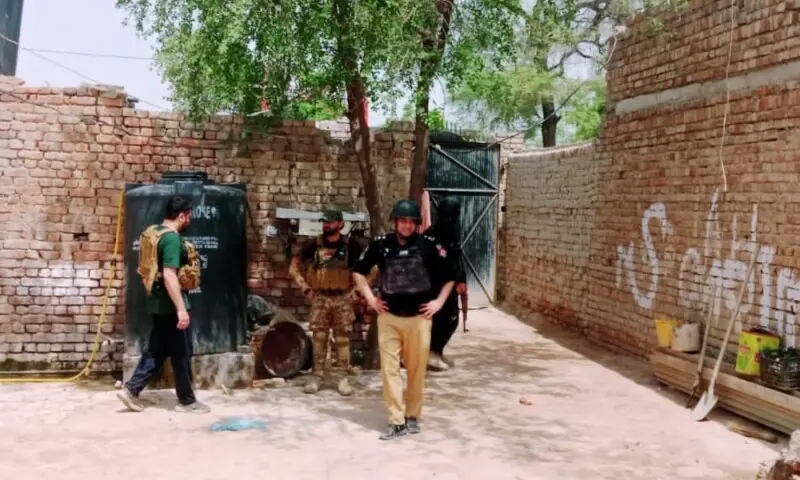 BANNU: An intelligence-based operation (IBO) continued for the third consecutive day across parts of Khyber Pakhtunkhwa’s Bannu district on Sunday, where one terrorist was killed and eight individuals were taken into custody, according to police. The operation was led by Bannu District Police Officer (DPO) Captain (retd) Muhammad Furqan Bilal, and jointly conducted by the district police, Elite Force, Counter-Terrorism Department (CTD) and the army in the village of Grera Shah Jahan. During the operation, the army cordoned off the area and established blocking positions at key locations. A statement from the DPO’s office said a terrorist was killed while he was attempting to plant an improvised explosive device (IED). Authorities also said they recovered an AK-47 rifle, several magazines and a bandolier from his possession. Police further stated that eight suspicious individuals were detained during the operation and have been handed over to the CTD and the district police for joint technical investigation. D...
12682 items