Iran | News
-
Haaretz - 03:07 Jul 19, 2026
After several weeks of gradual escalation, there are growing signs that the war between the United States and Iran may intensify and expand. While both parties wish to exclude Israel, the Israeli government had yet to give the public any explanation, just like the June 2025 war -
Haaretz - 01:26 Jul 19, 2026
Iran's Mehr news agency said the U.S. carried out an attack near Sirik in southern Iran, adding that no casualties or damage to infrastructure have been reported, as intensifying attacks raise the possibility of a return to all-out war -
NU.nl - 20:08 Jul 18, 2026
Het Amerikaanse leger meldt dat twee soldaten zijn omgekomen bij een Iraanse aanval met drones en raketten in Jordanië. Een derde soldaat is vermist. Iran heeft zaterdag hard naar de VS uitgehaald en het principeakkoord met Washington opgeschort. -
Dawn - 15:23 Jul 18, 2026
Iran launched more attacks on Washington’s Gulf allies and Jordan on Saturday after a seventh straight night of US strikes on Iranian military targets, escalating the war one week after a ceasefire collapsed. Kuwait came under sustained attack, with a desalination plant hit and operations at Kuwait International Airport suspended due to repeated missile and drone threats. Iran’s Islamic Revolutionary Guard Corps said it had struck a US military support centre at Camp Arifjan and destroyed a radar facility at Ali Al Salem Air Base. Kuwait Petroleum Corporation later said one of its oil facilities had been hit in “repeated Iranian attacks”, causing significant damage and some injuries, according to the state news agency. Kuwait’s armed forces said they had intercepted Iranian ballistic missiles and drones early on Saturday, adding that a number of firefighters and oil sector workers had been injured while responding to the attacks. Iran was responding to US attacks on bridges, power facilities and other infrast... -
Haaretz - 14:45 Jul 18, 2026
The supreme leader's message came after Iran's deputy foreign minister said the country was suspending the implementation of its commitments under the interim deal ■ Earlier, Iran expanded its attacks across the Gulf, striking Kuwait, Bahrain and Jordan after a seventh consecutive night of U.S. strikes on Iran -
Dawn - 06:29 Jul 18, 2026
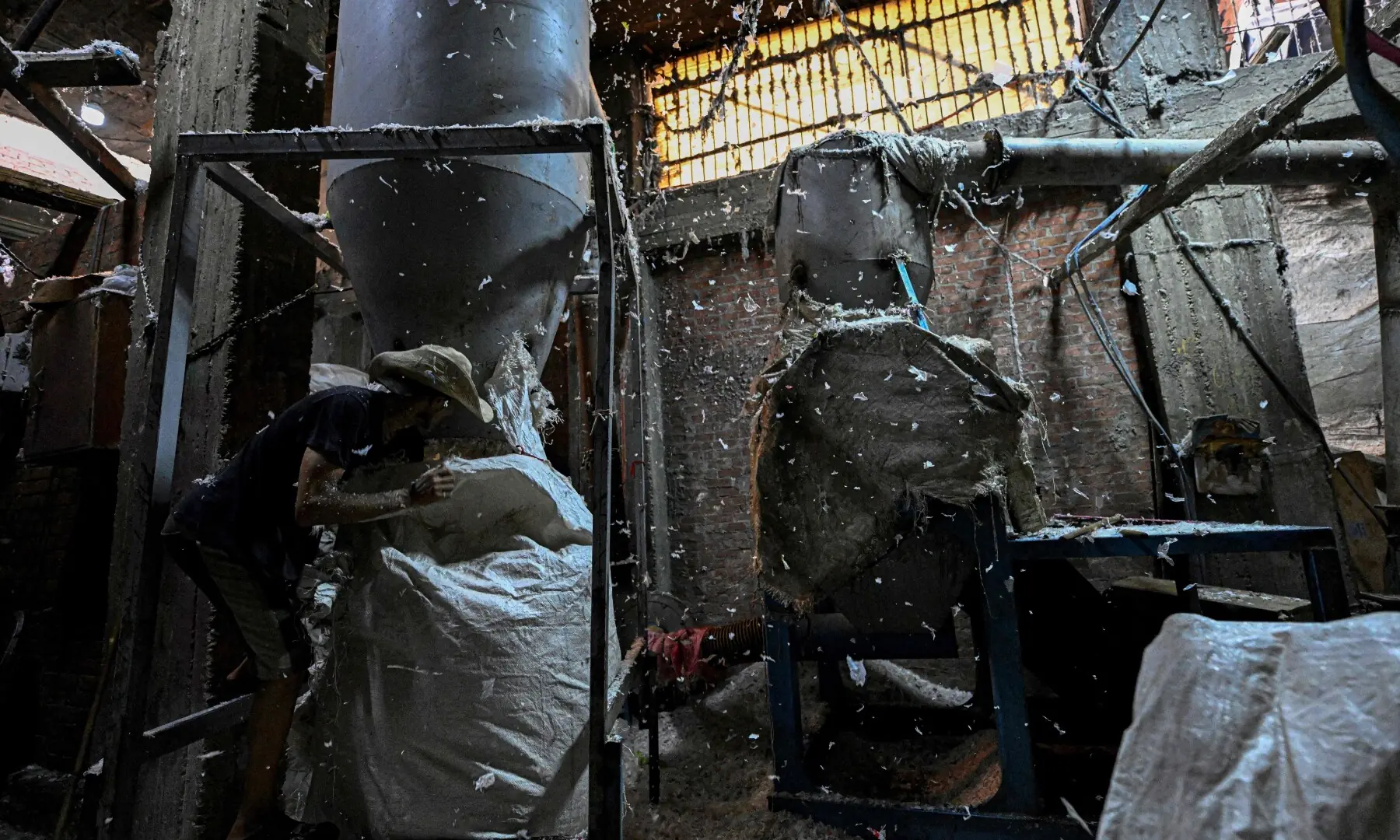 In the labyrinthine alleyways of Cairo’s Garbage City, recycling specialist Peter Romany finds himself fielding calls from factories scrambling for plastic to plug supply shortfalls caused by the US-Israel war on Iran. The 25-year-old is among the hundreds of recyclers and manufacturers across Egypt benefiting from a war-driven surge in demand ever since the United States and Iran choked off the Strait of Hormuz — a major shipping lane for the raw materials from which plastic is made. At the heart of the boom is the sprawling eastern Cairo settlement of Manshiyet Nasser, where generations of garbage collectors have built one of the world’s most sophisticated informal recycling systems. An Egyptian worker pepares plastic for processing at a recycling plant at the garbage city in the Manshiyet Nasser neighbourhood in Cairo on July 6, 2026. — AFP “Before the war, we were the ones calling factories, trying to sell our material,” Romany told AFP, standing beside towering bales of compressed plastic. “But after the...
 -
Dawn - 04:30 Jul 18, 2026
Iran launched renewed attacks on US Gulf allies on Saturday after a seventh straight night of US strikes targeting Iranian military sites, including logistics infrastructure, escalating the war one week after a fragile ceasefire agreement fell apart. Both sides also took aim at shipping traffic, with the US saying it was enforcing a naval blockade while Iran said it targeted vessels that violated its rules on navigating the Strait of Hormuz, the vital waterway for one-fifth of the world’s oil supply. Oil prices climbed more than four per cent on Friday to their highest level in more than a month, applying political pressure on US President Donald Trump as his Republican Party tries to hold on to power in November congressional elections. Washington and Tehran have been testing the limits of escalation since their ceasefire agreement collapsed last week, raising the prospect of a return to all-out war. The US military’s Central Command said it concluded its latest round of attacks by hitting surveillance sites... -
Haaretz - 00:00 Jul 18, 2026
Axios reported that Washington plans to send dozens more aerial refueling aircraft to Israel as Trump weighs a broader campaign against Iran. 'If U.S. strikes continue for several days, we will move into a phase of full-scale offensive operations,' Iran adviser Mohsen Rezaei said -
The Express Tribune - 16:55 Jul 17, 2026
China, Pakistan urge adherence to ceasefire, talks resumption Iran strikes US bases in Gulf countries Kuwait -
Cointelegraph.com - 14:37 Jul 17, 2026
 Bitcoin saw a key rejection at local highs before reversing lower, moving with stocks for a second day as US-Iran war downside took its toll. Bitcoin (BTC) dipped below $62,500 at Friday’s Wall Street open as stocks took a fresh hit from the US-Iran war. Key points: Read more
 -
NU.nl - 11:41 Jul 17, 2026
De hypotheekrentes zijn deze week stevig opgelopen door de geopolitieke situaties in Iran en Oekraïne. Volgens De Hypotheekshop hebben bijna alle geldverstrekkers in Nederland de afgelopen dagen hun rentetarieven verhoogd. Tien partijen deden dat zelfs twee keer. -
Dawn - 09:38 Jul 17, 2026
Iran launches fresh attacks on American facilities in Gulf after sixth consecutive day of US strikes
Iran said it launched fresh attacks on American facilities in the Gulf on Friday after a sixth consecutive night of US strikes on Iranian military facilities, as last month’s truce descended into daily attacks and counterattacks. The US military said it completed another night of strikes on Iran “to further degrade Iranian military capabilities”, including on Qeshm Island and near Bandar Abbas, home to Iran’s largest port and key navy and Revolutionary Guards facilities. “US forces, including fighter jets, aerial drones, and warships, launched precision munitions that hit dozens of Iranian military targets such as coastal surveillance and air defense sites, military logistics infrastructure, and maritime capabilities,” the US Central Command said in a statement. Iran has fired missiles and drones at US military bases in neighbouring states, including an air base in Jordan. In the early hours of Friday, Iran’s military said it had attacked US facilities in Bahrain and Kuwait. Several explosion-like sounds were... -
NU.nl - 09:17 Jul 17, 2026
De Verenigde Staten hebben Iran voor de zesde nacht op rij aangevallen. Volgens Iran werden ditmaal ook bruggen en energie-infrastructuur geraakt en vielen er zeven doden. Iran schoot zelf raketten af richting Qatar, Bahrein, Jordanië en Syrië. -
Dawn - 06:33 Jul 17, 2026
China and Pakistan on Friday called on the United States and Iran to end fighting and return to the negotiating table, after they met in Shanghai, according to a government statement issued by Beijing. China’s Foreign Minister Wang Yi and Deputy Prime Minister and Foreign Minister Ishaq Dar jointly “expressed concern over the deterioration of the current situation, calling on the involved parties to immediately cease hostilities… (and) return to dialogue”, the statement by Beijing’s foreign ministry said. Both countries have sought to mediate in the months-long Middle East conflict, which rekindled with renewed fighting over the Strait of Hormuz a month after the signing of a preliminary deal aiming to end the war. That agreement was “hard-won”, Wang said. “Peace is before our eyes, (we) cannot fall at the last hurdle and even more so cannot lose what we have gained,” he added. It should be mentioned that DPM Dar was in Shanghai for the World Artificial Intelligence Conference. Meanwhile, the Foreign Office (... -
Dawn - 04:26 Jul 17, 2026
Iran said it launched fresh attacks on US facilities in the Gulf on Friday after a sixth consecutive night of US strikes on Iranian military facilities, as last month’s truce descended into daily attacks and counterattacks. The US military said it completed another night of strikes on Iran “to further degrade Iranian military capabilities”, including on Qeshm Island and near Bandar Abbas, home to Iran’s largest port and key navy and Revolutionary Guards facilities. “US forces, including fighter jets, aerial drones, and warships, launched precision munitions that hit dozens of Iranian military targets such as coastal surveillance and air defense sites, military logistics infrastructure, and maritime capabilities,” the US Central Command said in a statement. Iran has fired missiles and drones at US military bases in neighbouring states, including an air base in Jordan. In the early hours of Friday, Iran’s military said it had attacked US facilities in Bahrain and Kuwait. Several explosion-like sounds were heard... -
Haaretz - 03:32 Jul 17, 2026
Iran targeted regional countries in response, including Qatar, a key mediator in negotiations. In primetime address to the American public, Trump insisted the war was going well, saying U.S. is 'winning big in Iran, and you will see the fruits of that labor very, very shortly' -
The Nation - National - 03:27 Jul 17, 2026
ISLAMABAD - Pakistan Thursday expressed deep concern over the continued escalation between Iran and the United States, urging all parties to exercise maximum restraint and return to dialogue while reaffirming that the Islamabad Memorandum of Understanding (MoU) remains the framework for achieving lasting regional peace. -
Haaretz - 22:17 Jul 16, 2026
A security source told Haaretz that the Shin Bet is trying to root out who leaked the timing of the Iran war's opening strike to the broadcaster. The greater effect, however, could be a chilling warning to any journalist criticizing the prime minister -
Haaretz - 15:20 Jul 16, 2026
Sources say the group has deployed missiles and drones near the Bab el-Mandeb Strait, threatening to disrupt the Middle East's two main energy export routes as U.S.-Iran fighting escalates -
Haaretz - 09:58 Jul 16, 2026
The U.S. doesn't want Israel directly involved in the current round against Iran, but still depends on its intelligence and operational capabilities