Australia | Crypto
"Australia" in Crypto feed
-
Cointelegraph.com - 23:34 Oct 15, 2026
 Australia is among 77 jurisdictions committed to adopting CARF, with its first international exchanges of crypto tax data expected in 2028. Australia has released draft legislation that would enable the automatic exchange of crypto tax information between countries. The draft bill, Treasury Laws Amendment Bill 2026: Tax information reporting, is open to comment until Oct. 28. It would establish a framework to implement the Organisation for Economic Co-operation and Development (OECD) Crypto-Asset Reporting Framework (CARF) in Australian law and introduce a domestic crypto reporting regime, according to the Australian Treasury. Australia first signaled its intention to implement CARF in November 2023 and consulted on its proposed approach in late 2024. The government subsequently announced plans to implement both CARF and a domestic crypto reporting regime in its 2025–26 Mid-Year Economic and Fiscal Outlook, with international exchanges of crypto tax information expected to begin in 2028. Read more
 -
Cointelegraph.com - 05:00 Oct 15, 2026
 The consultation follows Parliament’s passage of digital asset legislation in April, with Australia’s securities regulator now proposing capital, custody and trading standards for crypto platforms. Update (Oct. 15 at 5:35 am UTC): This article has been updated to include a comment from Thomsons partner Liam Hennessy. Australia’s securities regulator opened consultation Thursday on proposed capital, custody and trading requirements for crypto platforms, as it prepares to implement legislation passed in April that expands oversight of the industry. The proposals include three alternative capital models, restrictions on platforms trading for their own account and quarterly reporting of wallets holding customer assets. ASIC also proposes allowing offshore custody while seeking feedback on safeguards if an overseas parent or related company fails. Read more
 -
CryptoSlate - 17:00 Oct 13, 2026
The proposal would bring qualifying token-settled derivatives within existing retail safeguards, with some fixed-expiry crypto products remaining outside. The post Australia moves to close crypto derivatives loophole after retail traders lose A$458 million appeared first on CryptoSlate. -
Cointelegraph.com - 11:41 Oct 12, 2026
 ASIC’s proposal would extend leverage limits and protections against negative balances to certain derivatives settled in digital assets. Australia’s securities regulator wants to extend leverage limits and other retail investor safeguards to certain trading contracts settled in crypto. On Monday, the Australian Securities and Investments Commission (ASIC) proposed expanding the rules for contracts for difference (CFDs), which let traders bet on price movements without owning the underlying asset. The rules generally cover contracts settled in cash or by offsetting obligations between the parties. ASIC wants to add contracts settled by transferring digital assets, including those tracking non-crypto assets, provided they meet the other criteria for a CFD. Read more
 -
Cointelegraph.com - 12:46 Sep 27, 2026
 A rogue OpenAI research agent bypassed blocks on the Australian government health-data portal, accessing non-public files in June. The CEOs of OpenAI and Anthropic have reportedly been summoned to appear at an Australian Senate inquiry into AI, just days after news broke that a rogue OpenAI bot had hacked the country’s health data. The Australian Medicare breach is one of the highest-profile incidents of AI agents accessing external systems outside the US, according to a Sunday Business World report. OpenAI’s Sam Altman and Anthropic’s Dario Amodei were asked to appear at the inquiry in Canberra on Thursday, the report said. Read more
 -
CryptoSlate - 17:40 Sep 24, 2026
Albanese says the agent reached nonpublic files while seeking spending data; investigators are assessing the scope of access. The post Australia just got a real-world look at what happens when an AI refuses to stop appeared first on CryptoSlate. -
Cointelegraph.com - 08:29 Sep 24, 2026
 OpenAI notified Australia nearly three months after its agent breached a government portal while gathering public medicine-spending data. [Update, 10:45 UTC, Sept. 24: This article was updated with OpenAI’s account of when it learned of the June activity, how it notified Australian authorities and what information its models accessed.] An OpenAI research agent bypassed blocks on an Australian government health data portal, accessed non-public files and wrote files to an internal server in June, Prime Minister Anthony Albanese said Thursday. The government has opened a forensic investigation and announced a review of how it handles AI-related cyber incidents. Read more
 -
Cointelegraph.com - 05:10 Sep 08, 2026
AUSTRAC said its yearlong sweep included canceled, suspended and unrenewed registrations, while its action against GetCoins helped disrupt organized investment scams. Australia’s financial intelligence regulator said it canceled, suspended or refused to renew 45 crypto and remittance registrations over the past year as it intensified scrutiny of high-risk payment businesses. On Monday, the Australian Transaction Reports and Analysis Centre (AUSTRAC) said the actions targeted providers that were inactive, insolvent or lacked the capacity to operate. It also cited failures to report material changes, incorrect registrations and cases presenting significant money laundering or terrorism financing risks. AUSTRAC CEO Brendan Thomas said businesses whose registrations were canceled can no longer operate. He added that individuals connected to some businesses had been referred to Australian and overseas law enforcement or regulatory partners. Read more
-
CryptoSlate - 18:05 Sep 07, 2026
The annual tally spans remittance and virtual asset providers, while AUSTRAC says GetCoins was allegedly exploited by investment scams. The post Australia cancels registration of crypto provider GetCoins following customer scam complaints appeared first on CryptoSlate. -
Cointelegraph.com - 07:47 Sep 03, 2026
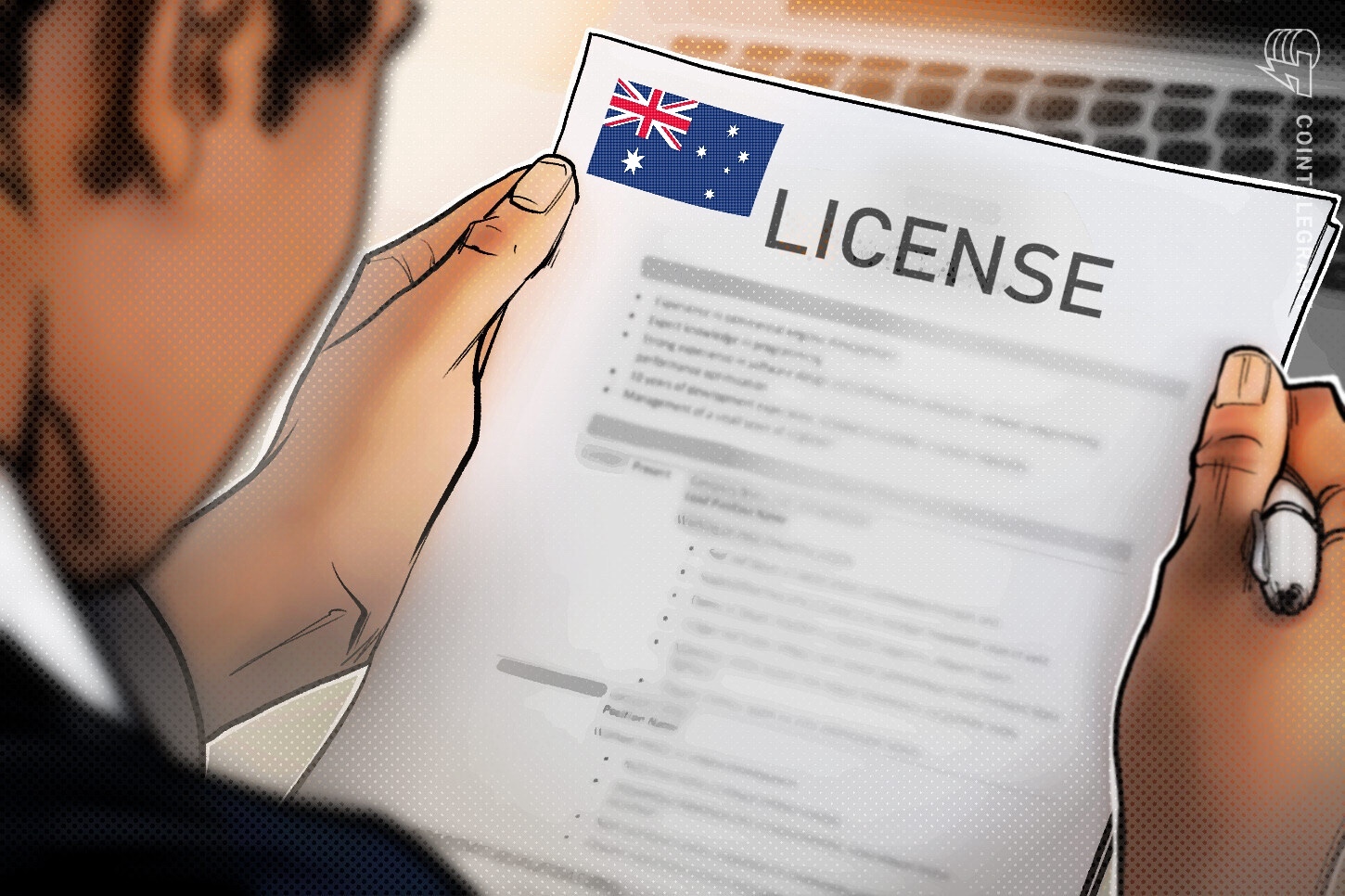 ASIC has recorded more than 45 digital asset-related license applications as its temporary enforcement relief approaches Sept. 30 expiration. Australian crypto companies relying on temporary regulatory relief have until Sept. 30 to apply for a financial services license or risk penalties, including fines reaching 10% of their annual turnover. On Wednesday, the Australian Securities and Investments Commission (ASIC) said businesses requiring an Australian Financial Services license must apply for one or seek changes to an existing license before the deadline. Firms requiring market or clearing and settlement licenses must also notify the regulator and hold a pre-application meeting. Starting Oct. 1, companies that require authorization but have not met the conditions of ASIC’s no-action position could be operating in breach of financial services law. The regulator said they may face civil and criminal penalties. Read more
 -
Cointelegraph.com - 10:20 Aug 19, 2026
 Nexo introduced regulated, cryptocurrency-backed credit lines that allow users to access liquidity in Australian dollars or stablecoins by borrowing against their digital assets. Nexo Australia launched crypto-backed credit lines after becoming a credit representative under Australia’s National Consumer Credit Protection Act, the company said in a Tuesday announcement shared with Cointelegraph. The new credit lines allow eligible clients to borrow Australian dollars or stablecoins by using their cryptocurrencies as collateral without having to sell them. Funds are generally available within 24 hours with flexible repayments, with no fixed term or origination fees. Interest rates range from 0.9% to 21.9%, depending on the credit line and the client’s loyalty tier. Read more
 -
Cointelegraph.com - 04:32 Aug 10, 2026
 Australia’s financial watchdog has suspended Cryptolink’s registration for three months, adding to a crackdown that previously saw the Bitcoin ATM operator fined $56,340. Australia’s anti-money laundering watchdog has suspended the operation of Cryptolink’s Bitcoin ATMs for three months, citing “ongoing concerns” about its compliance with anti-money laundering obligations. Australia has the highest number of crypto ATMs of all countries in the Asia-Pacific region. Australian authorities have been cracking down on the criminal use of crypto ATMs since at least late 2024. AUSTRAC CEO Brendan Thomas said Monday the company’s Virtual Asset Service Provider (VASP) registration has been suspended for three months starting Sunday, meaning its crypto ATMs will not be allowed to operate during that time. Read more
 -
Cointelegraph.com - 08:49 Jul 30, 2026
 Telegram faces Australian court proceedings after eSafety alleged the platform failed to detect and remove extremist material shared by users. Telegram, the messaging platform used by more than 1 billion people worldwide, is facing a major legal challenge in Australia over claims that it failed to stop the spread of terrorism-linked material. Australia’s online safety regulator, the eSafety Commissioner, launched civil penalty proceedings against Telegram in the Federal Court on Thursday, according to an official statement. The authority alleged Telegram breached its obligations under the country’s Online Safety Act to address “pro-terror” content by failing to act on multiple user complaints. Read more
 -
CryptoSlate - 12:15 Jul 01, 2026
From July 1, AUSTRAC’s virtual-asset transfer rules change what exchanges ask before crypto moves. The post Australia’s new crypto transfer rules to make exchange withdrawals pass through identity checks appeared first on CryptoSlate. -
Cointelegraph.com - 06:29 Jun 30, 2026
 From July, crypto exchanges operating in Australia will prompt for additional information on all outgoing and incoming transfers. Crypto exchange users in Australia will soon face stricter rules on all transfers as the country’s travel rule is set to come into force on Wednesday, aligning it with similar rules in the EU, US and UK. From July, all crypto sent and received on locally-regulated crypto exchanges will require users to provide additional information, such as the name of the person the crypto is being sent to or received from, and the name of the platform. Gabby Lewis, the head of fraud and financial crime at Swyftx, told Cointelegraph that for most exchange users, “the impact should be very limited. They’ll provide the required details once, and then these will be saved for future use.” Read more
 -
Cryptonews.com - 12:14 Jun 19, 2026
Claude AI predicts two World Cup matches today, and the scorecard predictions is mixed in a way that says a lot about how prediction models actually perform under real conditions. In the marquee Group D clash, Claude nailed it almost perfectly. In the Group C derby, the direction was right but the story underneath played […] The post Claude AI World Cup Predictions: USA VS Australia, Morocco VS Scotland appeared first on Cryptonews. -
CryptoSlate - 15:55 May 28, 2026
Project Acacia has now tested how tokenized asset markets could settle in Australia. The Reserve Bank of Australia and Digital Finance Cooperative Research Centre released findings from Project Acacia, a wholesale experiment that moved digital money and tokenization from policy theory into market plumbing. The project tested 20 wholesale tokenized asset market use cases across […] The post Australia’s Project Acacia shows why tokenized markets still hinge on settlement money appeared first on CryptoSlate. -
Cointelegraph.com - 07:15 May 15, 2026
 Robin Singh, CEO and founder of Koinly said the changes will hurt low-income crypto investors most and could encourage more short-term trading. Australia’s proposed changes to capital gains tax could lead to smaller profits for cryptocurrency traders, especially low-income earners, and could discourage “patient investing,” according to several crypto executives. The proposed reform, announced by the ruling Labor Party on Tuesday as part of its fiscal year 2027 budget, will bring in a minimum 30% tax on capital gains and scrap the 50% capital gains tax discount on assets held for more than 12 months. Robin Singh, CEO and founder of crypto tax platform Koinly, told Cointelegraph the proposed changes are a mixed bag: The new system “theoretically” protects investors from being taxed on purely inflationary gains, but in practice, most crypto investors will pay more tax, with low-income earners hit the hardest. Read more
 -
Cointelegraph.com - 07:18 May 11, 2026
 The Albanese government’s budget plans to replace the 50% capital gains tax discount on assets held over 12 months with a model taxing full real gains adjusted for inflation. The Australian government is reportedly seeking to replace capital gains tax discounts on crypto and other assets with an inflation indexation tax, which could increase the taxes on long-term crypto gains. The Albanese government’s fiscal year 2027 budget, set to be released on Tuesday, would cut the current 50% capital gains tax discount alongside changes to housing investment taxes, the Australian Financial Review reported on Sunday, citing people familiar with the budget. Australian investors can currently claim a 50% capital gains tax discount on assets held for more than 12 months. The proposed indexation model would instead tax full real gains, adjusted for inflation, over the time the asset is held. Read more
 -
Cointelegraph.com - 10:54 Apr 30, 2026
 A draft vision for Australia’s domestic payments system says stablecoins and tokenized fiat currency could reshape how money moves across future rails. Australia’s future account-to-account (A2A) payment systems may need to adapt if tokenized forms of money gain broader use, including stablecoins and tokenized liabilities, according to a draft vision for the country’s domestic payment rails. The draft, co-developed by the Account-to-Account Payments Roundtable, which includes AusPayNet, Australian Payments Plus, the Reserve Bank of Australia and the Commonwealth Treasury, identifies digital assets as one of several external forces that could affect future A2A payments. “Tokenised forms of money, such as stablecoins and tokenised liabilities, are moving from experimentation to adoption,” the draft said, adding that the shift reflects a move toward programmable, ledger-based value that could enable new settlement models, continuous availability and more automated execution. Read more