Binance | Crypto
"Binance" in Crypto feed
-
Cointelegraph.com - 10:07 Oct 01, 2026
 EU regulators are reportedly examining Binance’s use of a MiCA exemption to serve customers as ESMA seeks stronger enforcement powers. European regulators are reportedly scrutinizing Binance’s use of a legal exemption to continue serving customers in the European Union without authorization under the bloc’s crypto rules. The European Securities and Markets Authority (ESMA) and regulators in France, Germany and Greece are examining Binance’s use of reverse solicitation under the Markets in Crypto-Assets Regulation (MiCA), the Financial Times reported on Thursday. Binance withdrew its Greek MiCA application in June and said it would seek authorization in another EU member state. Read more
 -
CryptoSlate - 08:40 Oct 01, 2026
The September 30 launch supports verified visitors at participating offline stores, with automatic yen conversion and merchant exceptions. The post Japan’s biggest payment network opens its doors for crypto via Binance Pay appeared first on CryptoSlate. -
CryptoSlate - 13:20 Sep 30, 2026
Pay receipts and Convert settlement change now, while Funding-backed recurring sends face a later cutoff. The post Binance ends Funding Account crypto deposits as Pay and Convert move to Spot appeared first on CryptoSlate. -
Cointelegraph.com - 02:25 Sep 30, 2026
 Binance Pay will let overseas users spend USDT at most PayPay-supported merchants in Japan through HIVEX, while stores receive yen. Binance Pay will allow eligible overseas users visiting Japan to spend Tether USDt (USDT) at the vast majority of PayPay-supported merchants starting Wednesday. The service will run through HIVEX, a payment interoperability framework that connects overseas QR payment services to PayPay-supported merchants in Japan. Merchants will continue receiving settlement in yen. Binance told Cointelegraph it is the first crypto payment service to access PayPay-supported merchants through HIVEX. Merchants will not need to opt in separately, it said. Read more
 -
Cointelegraph.com - 13:00 Sep 24, 2026
 Rachel Conlan will oversee institutional partnerships and ecosystem growth, while Jamal Raees will focus on stablecoins and tokenized deposits, following a wave of new partnerships. Solana Foundation has appointed former Binance chief marketing officer Rachel Conlan as chief strategy officer and former Polygon Labs executive Jamal Raees as general manager of payments. Conlan will lead strategy across institutional partnerships, ecosystem growth and efforts to bring businesses onto Solana, the foundation said Thursday. She spent three years at Binance and previously held senior roles at OKX, CAA Sports and Havas. Raees said he would deepen the foundation’s engagement with major payments companies and focus on infrastructure used by teams building payment services on Solana. Read more
 -
CryptoPotato - 04:11 Sep 23, 2026
Binance XRP deposits ran about 663% above their quarterly baseline, while withdrawals also rose substantially in recent sessions. -
CryptoSlate - 02:10 Sep 23, 2026
Circle is doubling down on Binance after USD Coin (USDC) stablecoin customer balances on the exchange nearly quintupled since their first agreement. On Sept. 22, the companies announced a new five-year commercial agreement alongside Binance’s $100 million equity investment in Circle, extending a relationship that has turned the world’s largest crypto exchange into one of […] The post Circle pays millions for Binance distribution while its margins collapse appeared first on CryptoSlate. -
Cointelegraph.com - 12:18 Sep 22, 2026
 Circle sold Binance $100 million in stock and agreed to pay monthly incentives under an expanded five-year partnership promoting USDC. Binance has invested $100 million in stablecoin issuer Circle as part of an expanded five-year agreement to promote USDC on the crypto exchange. Circle issued Binance 1,237,011 shares of its Class A common stock at $80.84 per share in a private placement on Sept. 17, according to a Tuesday filing with the US Securities and Exchange Commission. The purchase price reflected a discount to Circle’s market price before the transaction closed. New York Stock Exchange-traded CRCL shares were up more than 1.3% in Tuesday’s premarket activity after closing Monday at $94.29 apiece, according to Yahoo Finance data. Read more
 -
CoinDesk - 11:07 Sep 22, 2026
Circle sold 1.24 million shares at $80.84 each and will pay Binance a monthly fee tied to USDC held through its wallet infrastructure. -
Cointelegraph.com - 02:22 Sep 22, 2026
 The investigation is reportedly examining whether Binance knowingly allowed trading that violated US sanctions on Iran, months after reports first revealed a Justice Department probe. The Manhattan US Attorney’s Office is investigating whether Binance knowingly allowed trading that violated US sanctions on Iran, Bloomberg reported Tuesday, providing new details about a Justice Department investigation first reported in March. The Justice Department’s Criminal Division in Washington is also involved in the investigation, Bloomberg reported, citing people familiar with the matter. Asked for comment, a Binance spokesperson told Cointelegraph: “We maintain a zero-tolerance policy for sanctions violations. We fully cooperate with law enforcement, and we remain committed to rooting out and shutting down bad actors.” Read more
 -
Cointelegraph.com - 19:06 Sep 18, 2026
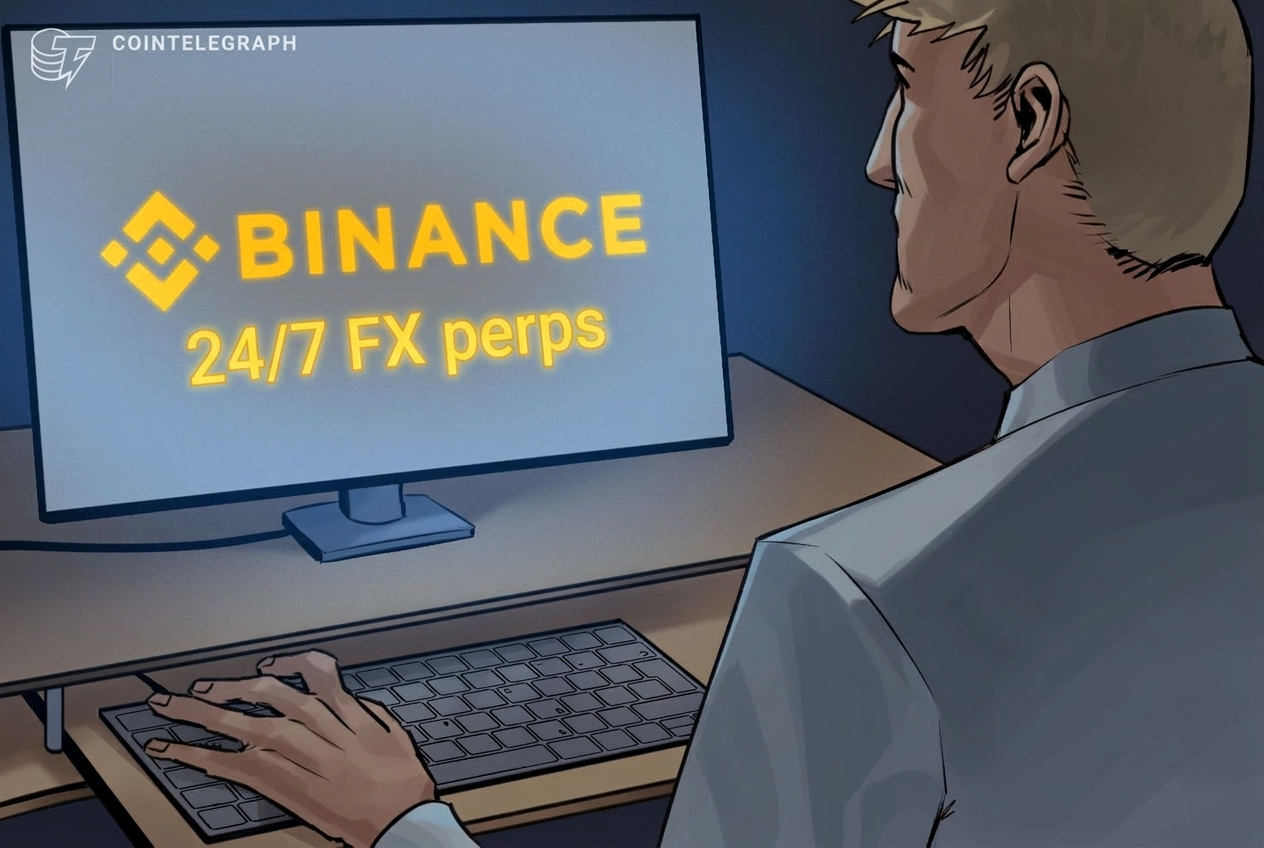 Binance is joining a growing number of crypto exchanges offering around-the-clock exposure to foreign exchange markets through perpetual futures. Binance is expanding its derivatives offering into foreign exchange with the launch of 24/7 perpetual futures, starting with a US dollar-Brazilian real contract on Monday. Unlike traditional FX markets, which close for the weekend, Binance’s contracts will trade continuously using a dual-mode pricing system. During regular FX trading hours, prices will track a weighted index from third-party data providers, while weekends and public holidays will use an orderbook-based pricing mechanism. The USDBRLUSDT contract will go live on Sept. 21, settle in USDT and offer up to 100x leverage, according to a Friday announcement. Binance said the weekend system uses an exponentially weighted moving average of orderbook prices, rather than relying on external price feeds. Read more
 -
CryptoPotato - 12:54 Sep 18, 2026
Large XRP holders are moving more tokens to Binance as 30-day whale inflows reach their highest level since March. -
Cointelegraph.com - 08:50 Sep 18, 2026
 Binance declined to address reports of ECB intervention in its Greek MiCA bid, saying it remains committed to securing authorization in Europe. Binance declined to address a report that European Central Bank President Christine Lagarde intervened in its failed Greek crypto license bid and said it continues seeking authorization under the European Union’s Markets in Crypto-Assets Regulation (MiCA). The Wall Street Journal reported Friday that a vice chair of Greece’s Hellenic Capital Market Commission (HCMC) told Binance that Lagarde had asked Greek Prime Minister Kyriakos Mitsotakis not to approve its application. Greek officials informed the European Securities and Markets Authority in early June that the regulator intended to approve the license, according to the report. Read more
 -
CoinDesk - 15:25 Sep 16, 2026
Hamas’ military wing advised donors not to use Binance to handle funds but rather to use Bybit, OKX, Kast and Redotpay, according to recent U.S. Department of Justice documents. -
CryptoSlate - 23:00 Sep 15, 2026
The September 14 complaint targets ten Tron addresses frozen in 2025 and outlines a planned transfer into FBI custody. The post Tether, Binance and a $1.5 billion Iran oil network converge in new US forfeiture case appeared first on CryptoSlate. -
Cointelegraph.com - 17:22 Sep 15, 2026
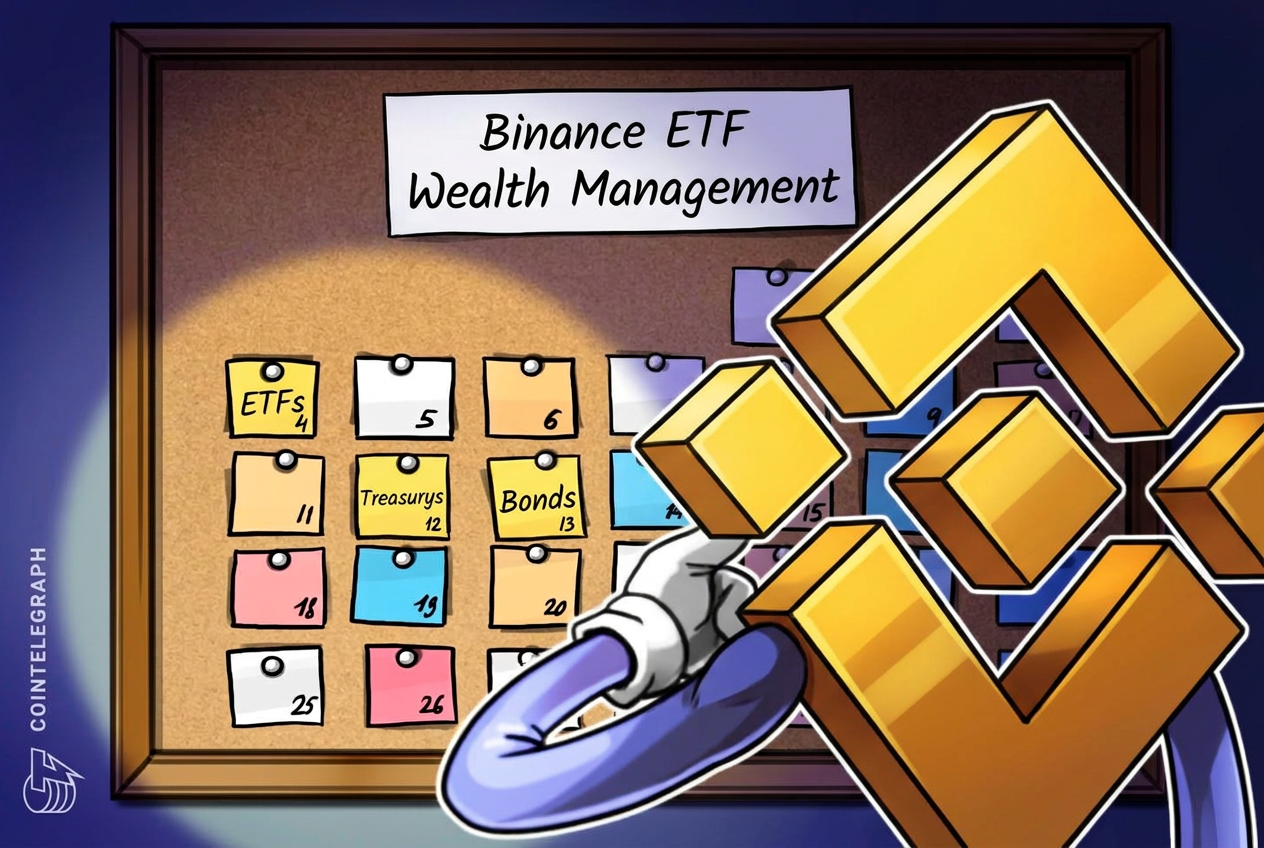 The crypto exchange is expanding its traditional finance offerings with 11 US-listed exchange-traded funds focused on US Treasurys and investment-grade bonds. Binance has launched a wealth management service offering access to 11 US-listed exchange-traded funds focused on short-term US Treasurys and investment-grade bonds. The new Binance Earn offering groups the ETFs into cash management, steady income and yield enhancement products based on investment horizons ranging from less than six months to more than a year. Users can browse the available ETFs and place orders through Binance Earn, with purchases processed through the exchange’s stock trading service. Binance said investors receive the economic benefits of the shares, including price movements and cash distributions. Read more
 -
Cointelegraph.com - 13:30 Sep 14, 2026
 Token buybacks have pushed Hyperliquid to all time highs, but Alice Liu from CoinMarketCap warns that Binance poses a threat to the revenue stream it depends on to pay for them. Despite Bitcoin failing to hold above $80,000 following the recent rally, the cryptocurrency is unlikely to revisit the lower price levels it has hovered near for much of this year, according to CoinMarketCap Head of Research Alice Liu. “I think we might have already touched the bottom,” Liu tells Cointelegraph on Trade Secrets, referring to Bitcoin falling to around $59,000 in June this year, approximately 53% below its October all-time high of $126,100. Bitcoin recently tapped $81,600 at the start of September, an approximate 28% rally since mid-August. It pushed the CoinMarketCap Crypto Fear & Greed Index, which measures overall sentiment in the crypto market, back up to Greed after posting Fear scores for most of the year. Read more
 -
CryptoSlate - 05:10 Sep 11, 2026
Its leveraged contract uses a one-billion-share denominator that can change before IPO terms create an external anchor. The post Binance pre-IPO contract pushes Anthropic to a $2.1 trillion implied valuation appeared first on CryptoSlate. -
CryptoSlate - 10:40 Sep 02, 2026
Eligible users trade physically settled contracts through Binance while Nest routes orders and Alpaca executes, settles and custodies the shares. The post Binance deepens TradFi push with physically settled options on over 1,000 US equities appeared first on CryptoSlate. -
Cointelegraph.com - 20:42 Sep 01, 2026
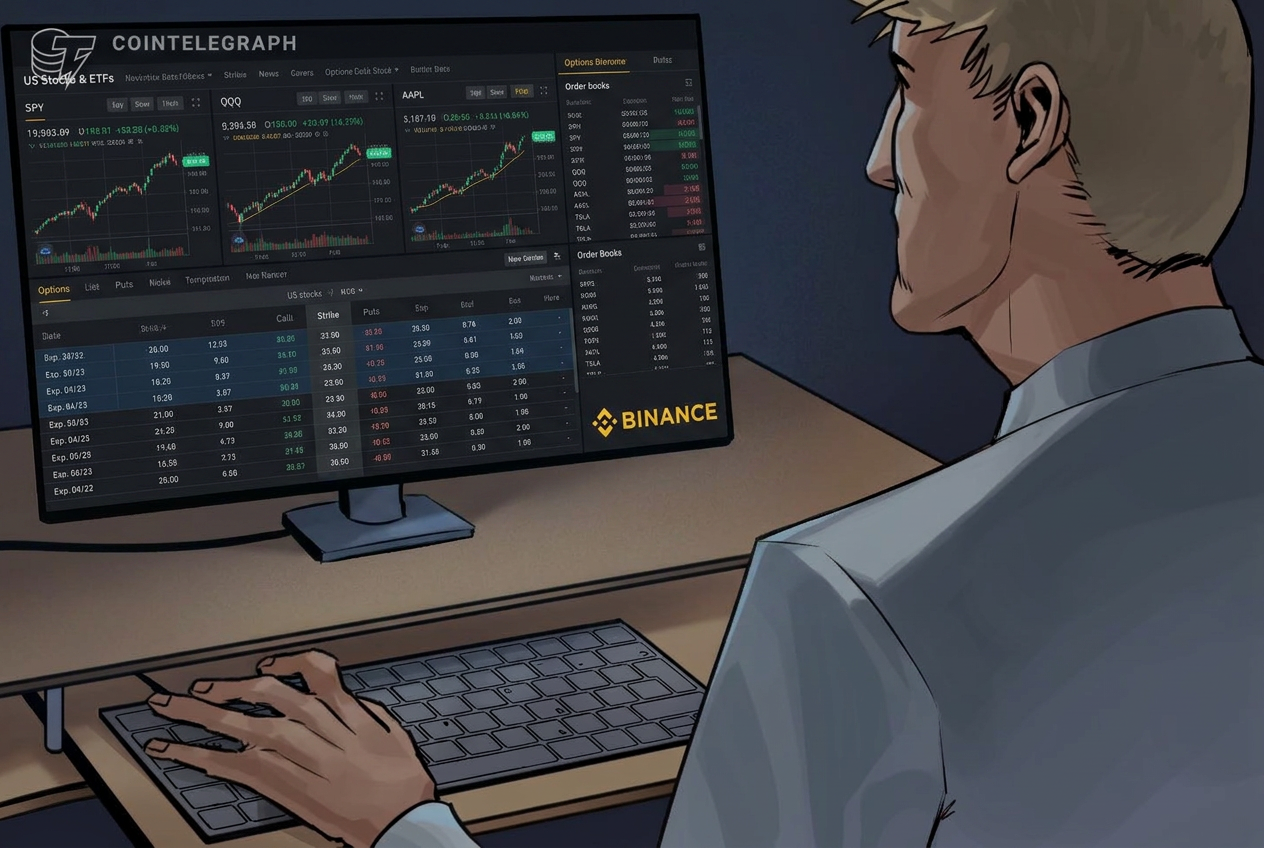 The launch gives eligible non-US users access to physically settled options on more than 1,000 US stocks and ETFs through a single Binance account. Binance is expanding further into traditional finance by launching options trading on more than 1,000 US stocks and exchange-traded funds for eligible users outside the United States. The options will be offered through Binance’s Abu Dhabi-regulated broker-dealer, Nest Trading, with orders routed to US-registered Alpaca Securities for execution, clearing, settlement and custody. The launch builds on Binance’s existing equities offering of more than 7,000 US stocks and ETFs and adds to a growing lineup of traditional financial products available through the platform. Read more